In this article
What you’ll learn
- Never put memory foam in a washing machine or dryer.
- A pillow can gain 10% of its weight in dead skin and dust mites over two years.
- Deep clean your pillow via hand-washing only once or twice a year.
Your pillow is the unsung hero of your health, supporting your neck and spine for roughly 2,500 hours every year. However, if you haven't looked closely at your bedding lately, you might be sleeping on more than just foam. Learning how to clean memory foam pillow surfaces is essential for both hygiene and longevity. Because memory foam is a "viscoelastic" material, it requires a much more delicate touch than standard down or polyester pillows. If you treat it like a regular load of laundry, you risk destroying the very structure that provides your nightly comfort.
The "Never" List: Protecting Your Investment
Before we dive into the step-by-step cleaning methods, we must address the most common ways people accidentally ruin their pillows. Memory foam is essentially a dense collection of tiny open cells. When these cells are mistreated, they lose their ability to "bounce back."
Why the Washing Machine is the Enemy
If you’ve asked yourself, "can you wash memory foam in a machine?", the answer is a resounding no. The mechanical agitation of a washing machine—especially the high-speed spin cycle—is far too violent. It can easily shred the foam from the inside out, leaving you with a lumpy, useless mess. Furthermore, the thick density of the foam makes it nearly impossible for a machine to rinse out all the detergent.
The Danger of High Heat
Similarly, the dryer is off-limits. The high heat used in commercial and home dryers can melt the polyurethane bonds in the foam or cause it to become brittle and crumble. Only the removable fabric cover should ever see the inside of your laundry appliances.
Warning: Never use bleach on memory foam. Bleach is extremely caustic and will cause the foam to disintegrate almost immediately.
The Tiered Cleaning Approach
To maximize the lifespan of your pillow (which should ideally last 2 to 4 years), I recommend a tiered maintenance strategy. You don't always need a full deep clean; often, a surface refresh is the best way clean memory foam pillow materials without risking moisture damage.
Level 1: The Weekly Refresh
Every time you change your bed sheets, you should give your memory foam pillow a quick "dry clean."
- Strip the pillow: Remove the pillowcase and the protective liner.
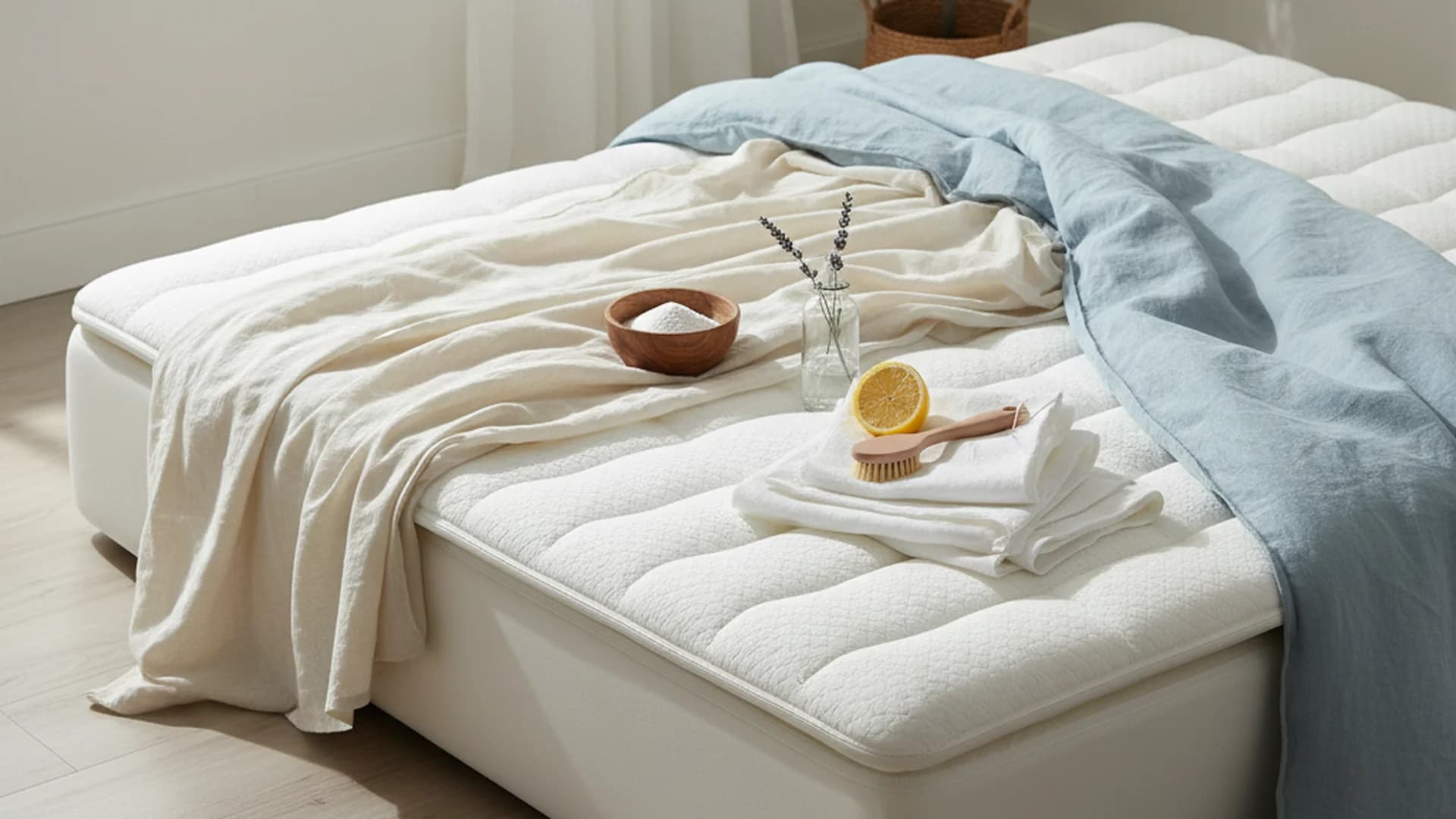
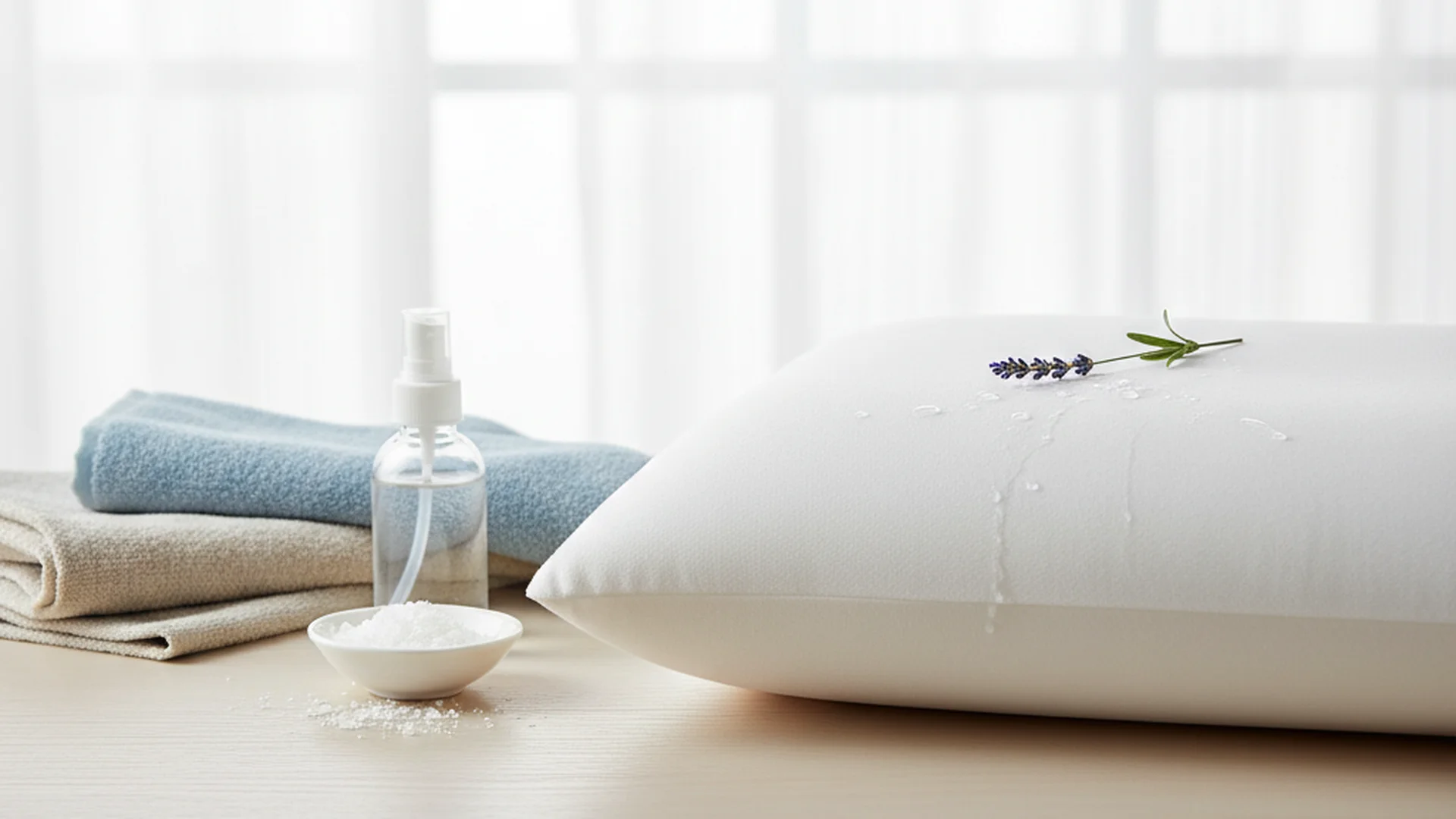
- The Deodorizing Trick: Sprinkle a generous layer of baking soda over the bare foam.
- Wait: Let it sit for at least 60 minutes. The baking soda will pull out odors and moisture.
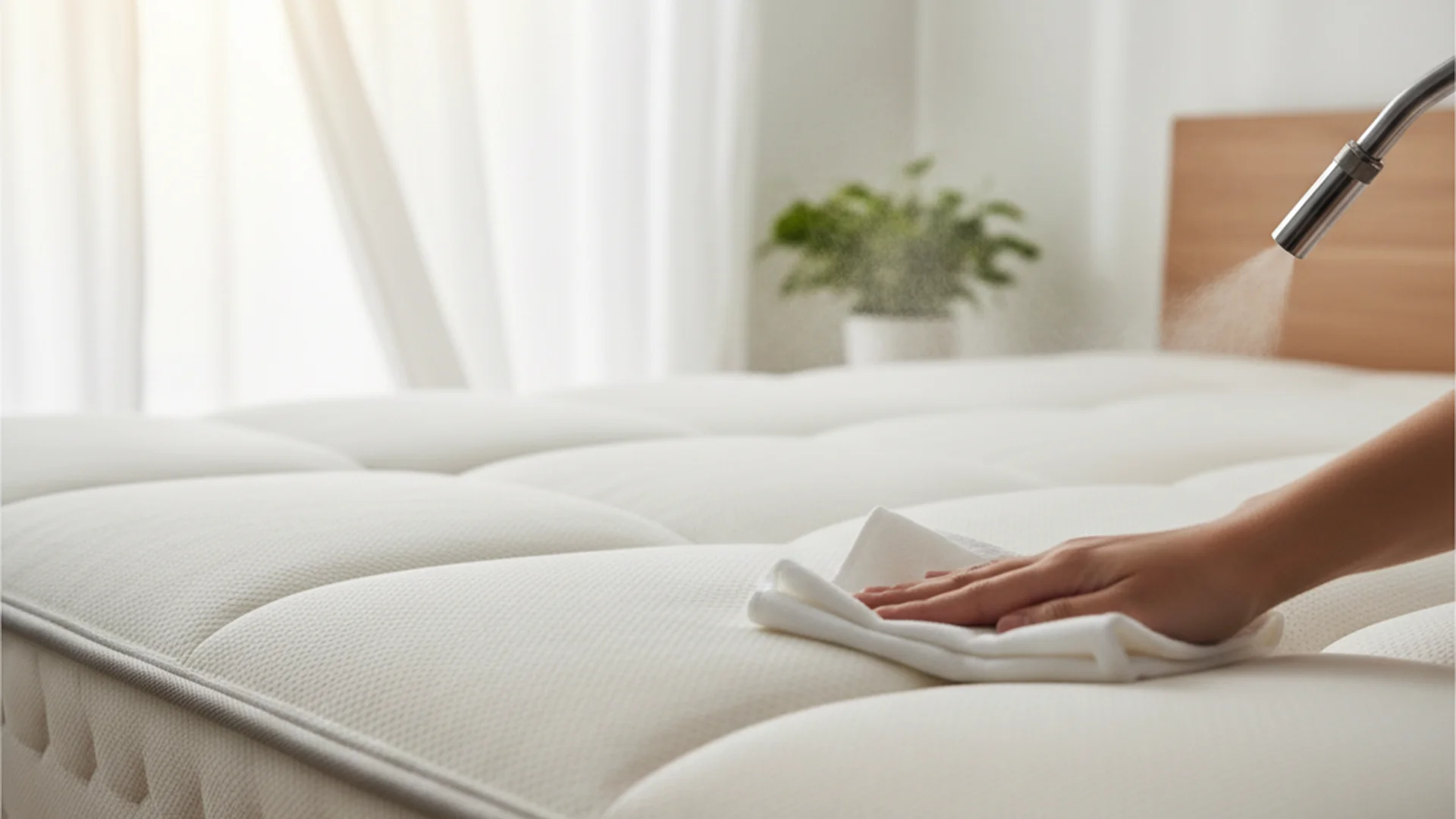
- Vacuum: Use the upholstery attachment on your vacuum cleaner to gently remove the powder.
Tip: Use a HEPA-filter vacuum if possible to ensure you are removing microscopic dust mite waste rather than just redistributing it.
Level 2: Spot Cleaning and Removing Yellow Stains
If you notice yellowing—which is caused by a combination of sweat, body oils, and natural oxidation—it’s time for a spot clean.
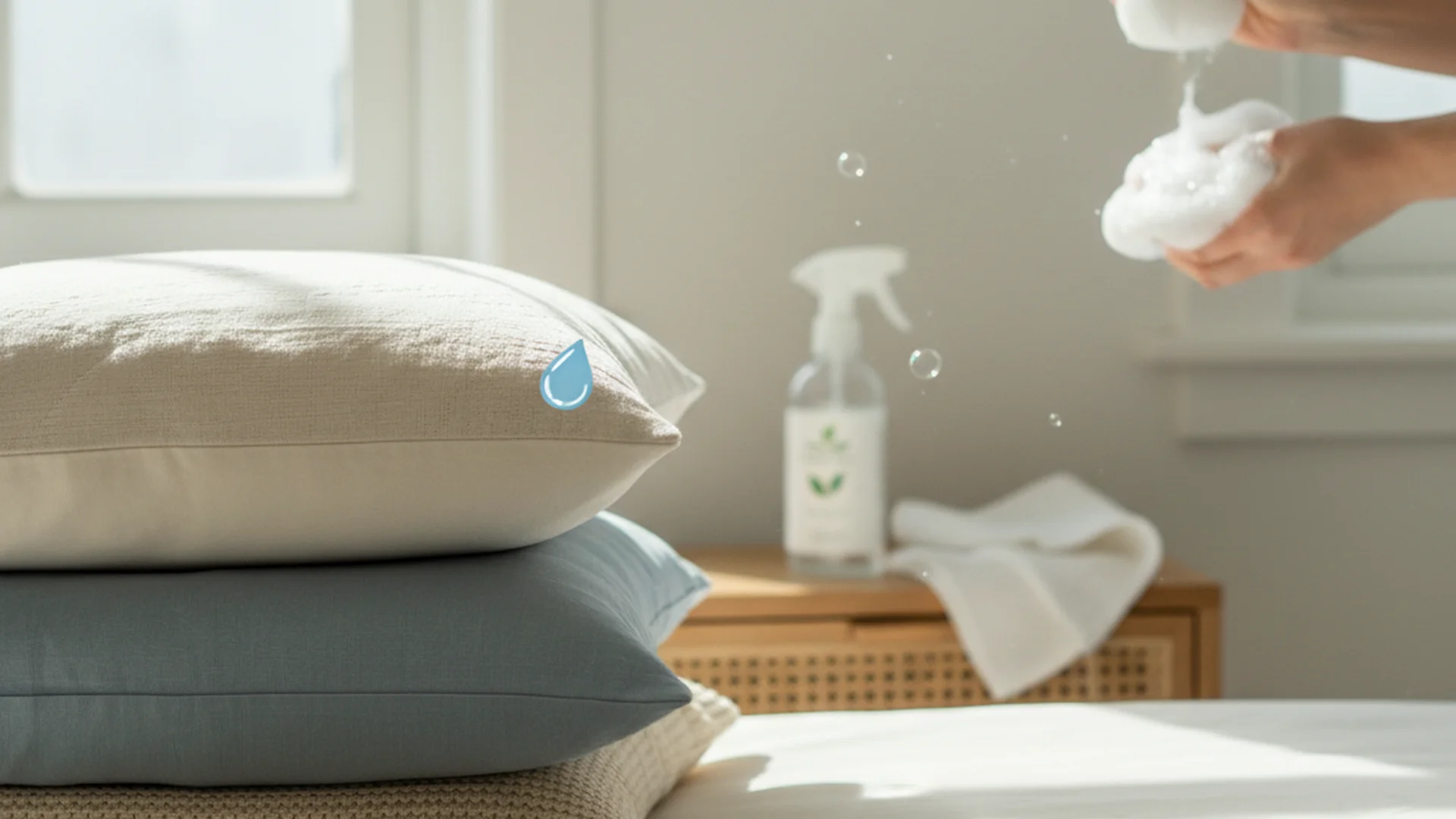
- The Solution: Mix a few drops of a mild, enzyme-based dish soap with lukewarm water.
- The Technique: Dip a clean white cloth into the suds (not the water) and gently blot the stain.
- The Rule: Always "Blot, Don't Rub." Rubbing can tear the surface of the foam.
Success: For stubborn yellow sweat stains, an enzyme cleaner designed for organic stains works wonders by breaking down the proteins without soaking the foam.
Level 3: The Annual Deep Clean (Hand Wash Only)
You should only fully submerge your pillow once or twice a year. Excess water is the primary cause of internal mold in memory foam.
- Fill a Basin: Use a bathtub or deep sink filled with lukewarm water and a teaspoon of gentle detergent.
- Submerge and Squeeze: Gently submerge the pillow and squeeze it to allow the soapy water to penetrate the pores. Do not scrub.
- Rinse Thoroughly: Drain the soapy water and refill with clean water. Repeat the squeezing process until the water runs completely clear.
- The Towel Press: Place the wet pillow between two thick towels and press down firmly to extract water. Never wring or twist the pillow.
| Cleaning Task | Frequency | Method |
|---|---|---|
| Vacuuming | Weekly | Upholstery Attachment |
| Deodorizing | Monthly | Baking Soda |
| Spot Cleaning | As Needed | Enzyme Solution |
| Deep Cleaning | Bi-Annually | Hand Wash & Air Dry |
2025 Tech: The Future of Pillow Hygiene
As a Home Organization Expert, I’ve seen incredible shifts in material science over the last year. If you are in the market for a new pillow in 2025 or 2026, look for these advancements that make cleaning much easier.
Antimicrobial Infusions
Many modern memory foam models are now infused with copper or silver ions. These materials are naturally antimicrobial, meaning they actively kill bacteria and fungi on contact. This doesn't mean you never have to clean them, but it significantly reduces the frequency of deep washes.
UV-C Sanitization
One of the biggest trends for 2025 is the use of portable UV-C light wands. These devices allow you to sanitize the surface of your memory foam pillow, killing 99.9% of bacteria and dust mites without using a single drop of water. This is a game-changer for extending the life of your foam.
Nanotech Covers
New high-end pillows feature self-cleaning nanotechnology in their covers. These covers repel liquids and oils at a molecular level, preventing them from ever reaching the foam core.
Note: Even with a nanotech cover, you should still use a secondary breathable protector (like bamboo) to provide a physical barrier against dust mites.
Real-World Examples
Example 1: The Allergy Sufferer
"Michael" suffered from morning congestion for months. After testing his two-year-old memory foam pillow, he realized it felt significantly heavier. By implementing the weekly baking soda/vacuuming routine and switching to a 140°F (60°C) wash for his removable cover, his respiratory symptoms improved by 50% within a week.
Example 2: The "New Pillow" Smell
"Sarah" bought a high-density memory foam pillow and was bothered by the chemical "off-gassing" scent. Instead of washing it (a common mistake), she placed it in a well-ventilated room near a window for 48 hours. This allowed the volatile organic compounds (VOCs) to dissipate naturally without damaging the foam's cellular structure.
Example 3: The Coffee Spill Recovery
"James" spilled coffee on his wedge pillow. Instead of panicking and running it under the tap, he immediately used a dry towel to blot up the liquid. He then used a mix of water and mild soap to lift the remaining pigment. By keeping the moisture localized to the surface, the pillow was dry and ready for use by bedtime.
Common Mistakes to Avoid
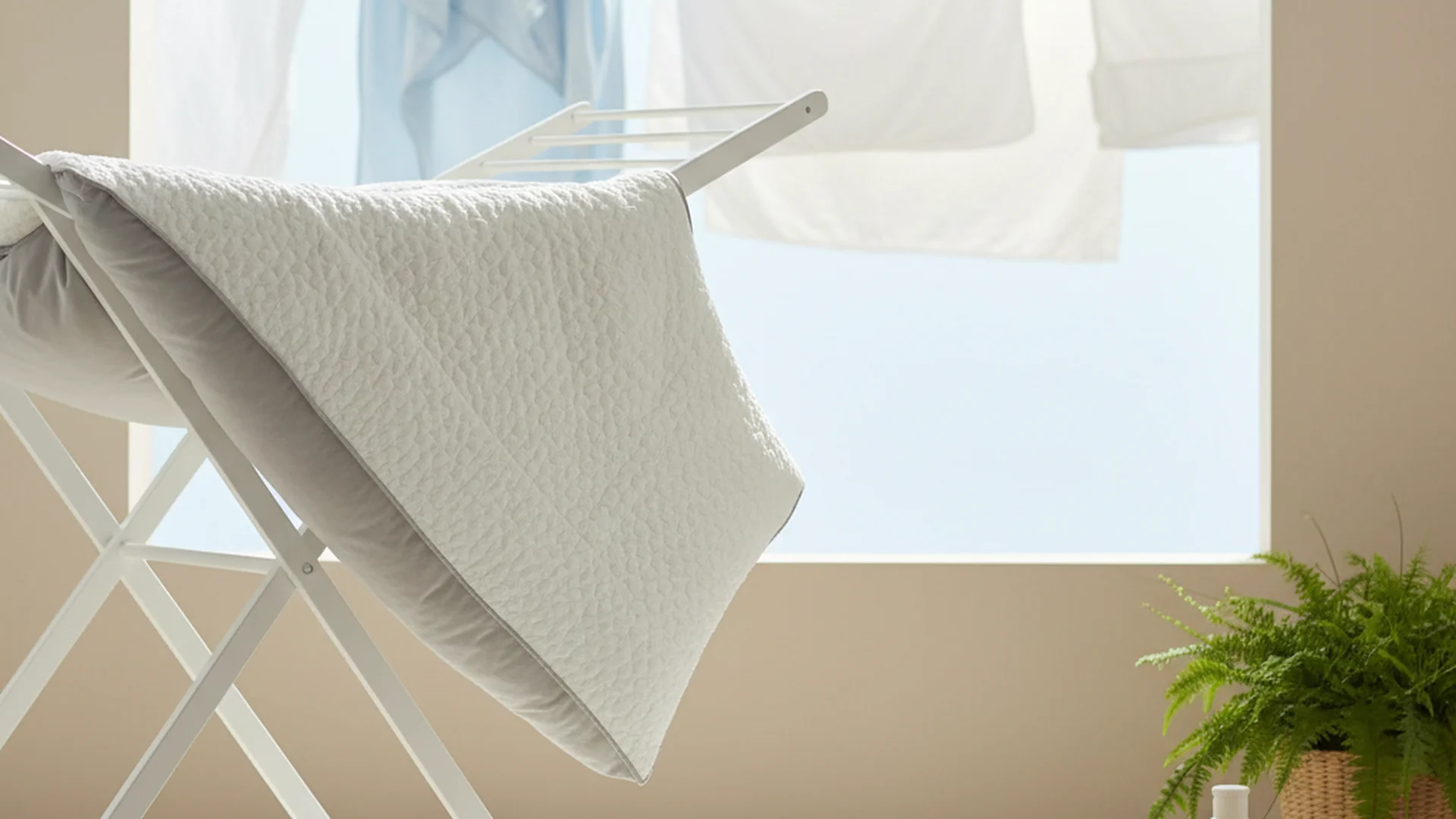
- The Sun-Drying Trap: While many believe the sun’s UV rays are a natural disinfectant, they are actually destructive to polyurethane foam. Direct sunlight makes memory foam brittle and prone to cracking. Always air dry indoors or in the shade.
- Over-Washing: Water weakens the "memory" effect of the foam. If you submerge your pillow every month, it will lose its supportive properties in less than a year.
- Forgetting the Protector: Many people assume the dense foam is enough to keep out debris. However, liquid travels through the pores via capillary action. A waterproof, breathable protector is the single best investment for pillow longevity.
Frequently Asked Questions
Can I put my memory foam pillow in the washing machine?
Can I put it in the dryer?
Why is my memory foam pillow turning yellow?
How do I get rid of the "new pillow" chemical smell?
How long does it take for a memory foam pillow to dry?
Conclusion
Cleaning your memory foam pillow doesn't have to be a daunting task, but it does require patience. By avoiding the washing machine and dryer, utilizing baking soda for odors, and embracing the "blot, don't rub" rule for stains, you can keep your sleep environment hygienic and supportive for years to come. If your pillow fails the "fold test" (if it doesn't immediately spring back after being folded in half) or if it's over four years old, it might be time to retire it and start fresh with one of the newer antimicrobial models.
Cleaning that keeps score
Every task earns points, every streak multiplies them, and Premium adds a household leaderboard plus a monthly Dustagorgon to beat.
- Free forever
- 30 badges to earn
- Up to 6 in a household
No card needed. Set up your rooms in a couple of minutes.