In this article
What you’ll learn
- Modern dish soap is safe for well-seasoned cast iron.
- Never air-dry your skillet; always use the stovetop "flash dry" method.
- Polymerization is the chemical process that creates a non-stick surface.
In an era of disposable kitchen gadgets and "forever chemicals," the cast iron skillet has made a massive comeback as the ultimate sustainable kitchen tool. Whether you inherited a 50-year-old Griswold or just picked up a modern artisan pan, knowing how to clean cast iron skillet surfaces properly is the secret to a lifetime of perfect searing.
Cleaning cast iron isn't nearly as difficult as the internet myths suggest. In fact, once you understand the science of seasoning, you'll realize these pans are nearly indestructible. In this guide, we will break down the modern, expert-approved methods for maintaining your iron to ensure it remains slick, rust-free, and ready for action.
The Science of Seasoning and the Soap Myth
Before we dive into the scrubbing, we need to address the elephant in the kitchen: soap. For decades, the "no soap" rule was the first thing every cook learned about cast iron. This rule originated when dish soaps contained lye and vinegar—harsh, caustic substances that would indeed strip away the hard-earned layers of carbonized oil.
However, modern dish soaps are mild surfactants. They are designed to lift surface oils and food particles without breaking the chemical bond of your seasoning.
What is Seasoning?
Seasoning is not just a layer of grease; it is the result of polymerization. When you heat a thin layer of oil to its smoke point on the iron surface, it transforms into a hard, plastic-like film. This film bonds to the metal, creating a natural non-stick surface. Because this is a chemical transformation, a drop of Dawn won't hurt it.
Note: While soap is safe, you should only use a small amount. The goal is to remove bacteria and rancid surface fats, not to soak the pan in bubbles.
The Best Way to Clean Cast Iron Skillet: A 3-Step Routine
Culinary experts from America’s Test Kitchen and luxury brands like The Field Company recommend a specific maintenance cycle. This routine ensures the pan is sanitized while reinforcing the seasoning every time you cook.
Step 1: The Warm Scrub
The easiest time to clean your skillet is while it is still warm (but not scorching). If you let the pan cool completely, fats and proteins will harden like concrete.
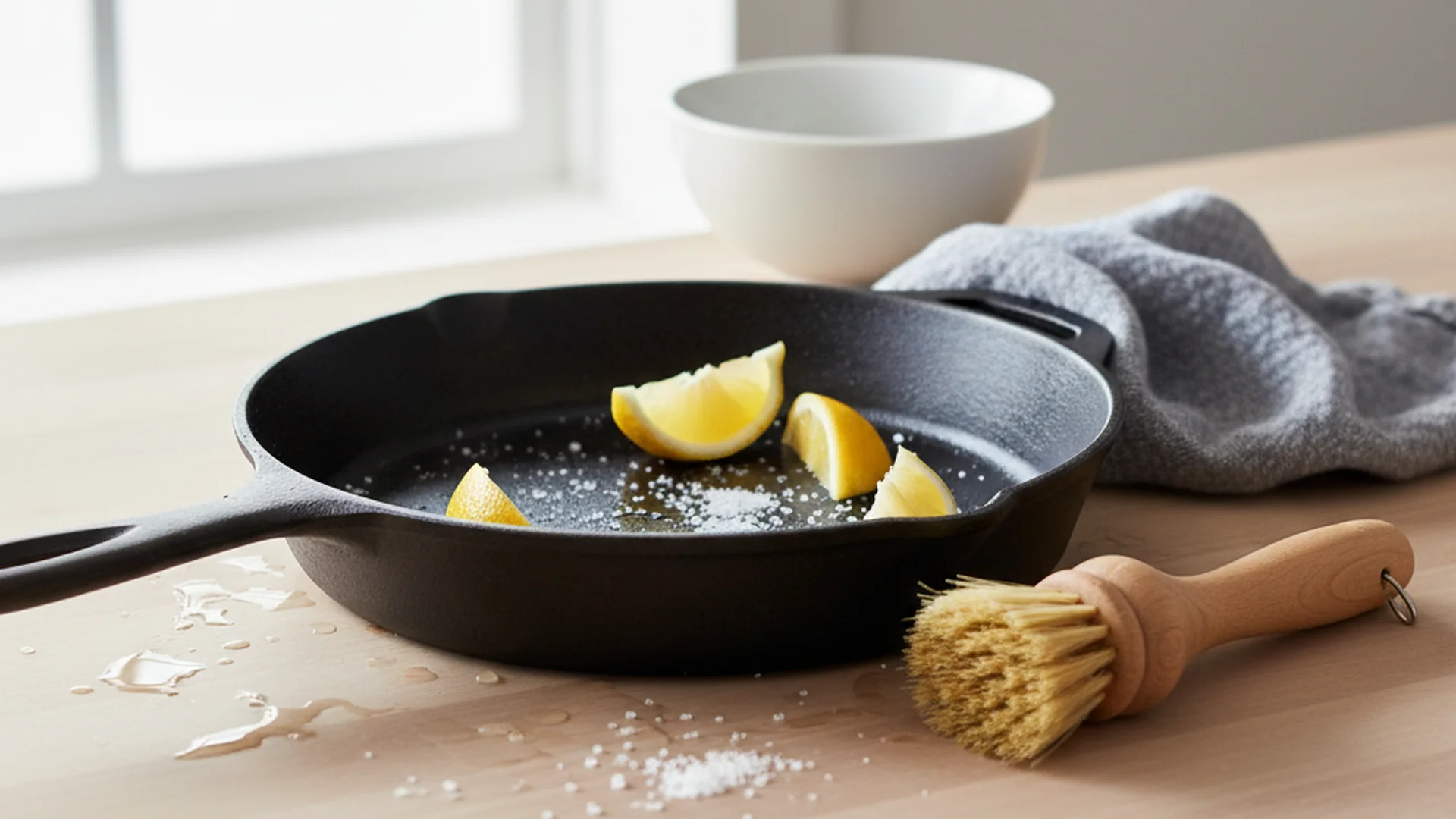
Use a chainmail scrubber or a stiff nylon brush. Chainmail is the gold standard of 2026 kitchen tools because it is dishwasher-safe and removes burnt-on food without gouging the seasoning. For stubborn, stuck-on bits, you can use a "salt scrub"—pour a tablespoon of kosher salt into the pan with a little oil and scrub with a paper towel to exfoliate the surface.
Tip: If food is truly stuck, don't soak it overnight. Instead, add an inch of water to the pan and bring it to a simmer on the stove for 2–3 minutes. The heat will loosen the debris instantly.
Step 2: The Flash Dry
This is the most critical step in the process. Never, under any circumstances, allow your cast iron to air-dry in a rack. Moisture is the enemy of iron, and even a few hours of air-drying can lead to microscopic "flash rust."
After rinsing, wipe the pan with a lint-free cloth or paper towel. Then, place the skillet on a stovetop burner over medium-low heat for 2 to 3 minutes. This ensures that every trace of moisture—even in the microscopic pores of the metal—evaporates completely.
Step 3: The Maintenance Wipe
Once the pan is hot and bone-dry, apply a tiny amount (about 1/4 teaspoon) of a neutral oil with a high smoke point. Grapeseed, canola, or specialized seasoning sprays are ideal.
Using a clean paper towel, buff the oil into the surface. Then, take a second clean paper towel and try to wipe it all off. You want a microscopic layer that looks matte, not wet or greasy.
Success: Regularly following this "Scrub, Dry, Oil" routine will actually make your pan more non-stick over time.
Essential Tools for 2026
The market for cast iron accessories has exploded recently, focusing on durability and eco-friendly materials. Here are the tools actually worth your counter space:
| Tool | Purpose | Why It’s Recommended |
|---|---|---|
| Chainmail Scrubber | Heavy Scrubbing | Removes carbon without stripping seasoning. |
| Grapeseed Oil | Maintenance | High smoke point and thin consistency. |
| Stiff Nylon Brush | Daily Cleaning | Great for getting into the "pebbly" texture of modern pans. |
| Plastic Pan Scrapers | Stuck-on Food | Gentle enough for daily use; prevents scratching. |
Common Mistakes to Avoid
Even seasoned home cooks can fall into bad habits. To keep your iron in peak condition, avoid these four common pitfalls:
- The Dishwasher Death Sentence: This is the #1 mistake. The combination of high-pressure water and harsh detergents will strip your seasoning and leave you with a rusty orange mess.
- Soaking Overnight: Even 30 minutes in a sink of water can trigger oxidation. If you can't clean it immediately, at least keep it dry.
- Fearing Metal Utensils: You don't need to baby your iron with silicone spatulas. In fact, using a metal spatula helps scrape down high spots and carbonized bits, leading to a smoother seasoning surface over time.
- Using Too Much Oil: When seasoning or maintaining, more is not better. If you use too much oil, it will become "gummy" or sticky instead of hard and slick.
Warning: Never put cold water into a white-hot cast iron skillet. This can cause "thermal shock," leading to cracks or warping in the metal.
Real-World Examples: Fixing Common Issues
Example 1: The Thrift Store Rescue
Imagine you find a rusty, crusty skillet at a garage sale. To fix it, you don't need to throw it away. Scrub the rust off with steel wool until you see grey metal. Rinse and dry it immediately on the stove. Then, apply a thin layer of oil and bake it upside down in a 450°F oven for one hour. Repeat this 2-3 times, and the pan will look brand new.
Example 2: The "Sticky" Pan
A reader recently reached out because their pan felt tacky after a seasoning session. This happened because they applied a thick layer of oil. The fix? Place the pan back in the oven at 450°F for another hour. The high heat will finish the polymerization of that excess oil, turning the stickiness into a hard shell.
Example 3: The Tomato Myth
One of my clients was afraid to cook shakshuka because of the acidic tomatoes. I taught her that while long-simmered sauces (like a 4-hour marinara) can break down seasoning, a quick 20-minute acidic dish is perfectly fine on a well-seasoned pan. Just clean it immediately after eating!
Frequently Asked Questions
Can I actually use soap on my cast iron?
How do I get rid of rust on my skillet?
Why is my pan turning my food black?
Is it okay to cook fish in cast iron?
Conclusion
The "art" of cleaning a cast iron skillet is really just a simple matter of chemistry and consistency. By embracing the modern 2026 approach—using a little soap when needed, drying with heat, and maintaining a thin layer of oil—you ensure your cookware remains a high-performance tool for decades to come. Cast iron is nearly indestructible; the only thing it can't survive is neglect and moisture. Keep it dry, keep it seasoned, and it will reward you with the best meals of your life.
Cleaning that keeps score
Every task earns points, every streak multiplies them, and Premium adds a household leaderboard plus a monthly Dustagorgon to beat.
- Free forever
- 30 badges to earn
- Up to 6 in a household
No card needed. Set up your rooms in a couple of minutes.