In this article
What you’ll learn
- Regular filter cleaning can save $150-$300 in repair costs.
- 80% of modern dishwashers require manual filter cleaning.
- Scrape food but do not pre-rinse to allow detergent to work effectively.
In the world of modern kitchen maintenance, knowing how to clean dishwasher filter components is the single most impactful task you can perform to ensure your dishes come out sparkling every time. As a Domestic Efficiency Specialist, I have seen thousands of households struggle with cloudy glassware and lingering odors, only to find that the culprit is a neglected, "sludge-filled" filter.
As we move through 2025 and into 2026, the technology inside our appliances is shifting. While we see more "smart" features and AI-driven sensors, the fundamental mechanics of water filtration remain vital. A clogged filter doesn't just leave spots on your plates; it forces your dishwasher to work harder, consuming more energy and significantly shortening its lifespan.
Why Cleaning Your Filter is Non-Negotiable
For years, many homeowners relied on "self-cleaning" dishwashers that used loud, internal grinders to pulverize food waste. However, trends have shifted. Approximately 80% of modern dishwashers manufactured in the last decade—including premium brands like Bosch, Whirlpool, Miele, and LG—have moved away from these grinders. Instead, they use manual-clean filters to prioritize whisper-quiet operation and energy efficiency.
By maintaining your filter, you aren't just cleaning a part; you are protecting a $1,000 investment. Appliance technicians frequently report that filter neglect is a leading cause of pump failure. Avoiding a service call can save you anywhere from $150 to $300 for a simple drainage repair. Furthermore, a clean filter supports sustainability. When your machine runs efficiently, it saves over 8,000 gallons of water annually compared to hand washing.
Note: If your dishwasher has a mobile app connection, check for "Water Turbidity" or "Soil Sensor" alerts, which are becoming standard in 2025 models to remind you when the filter is obstructed.
Finding and Removing the Filter
Before you can determine the best way clean dishwasher filter units, you have to find them. Luckily, manufacturers have standardized these locations.
Where is it Located?
In almost all modern models, the filter is located at the very bottom of the dishwasher tub. You will need to slide out the bottom rack to access it. Look for a circular plastic component, often situated near the base of the lower spray arm.
The Removal Process
Most filters today utilize a "twist-and-lock" mechanism. To remove it:
- Reach into the bottom of the tub.
- Grasp the cylindrical upper filter.
- Rotate it counter-clockwise (usually about a quarter turn).
- Lift it straight up.
Warning: Be careful when reaching into the filter housing. Occasionally, small pieces of broken glass or toothpicks can become trapped there and may cause injury.
The "Pro" Step-by-Step Cleaning Method
Cleaning the filter requires more than just a quick splash of water. To achieve professional-level results and ensure the longevity of the mesh, follow this structured process.
Step 1: Initial Rinse
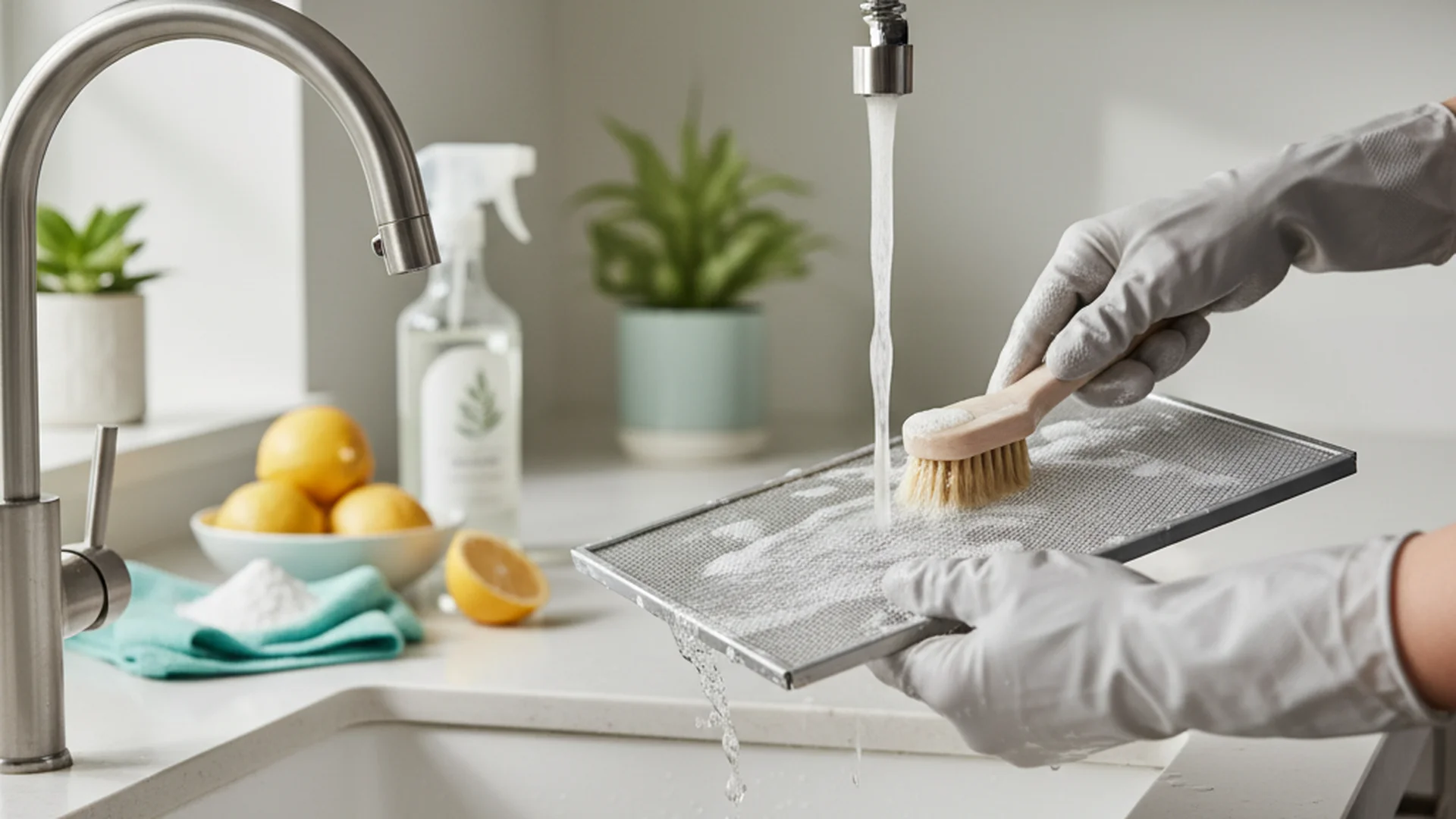
Take the filter to your kitchen sink. Use warm running water to flush out the majority of loose debris, such as rice, seeds, or grease. Do not bang the filter against the side of the sink, as the fine mesh is delicate.
Step 2: The Deep Scrub
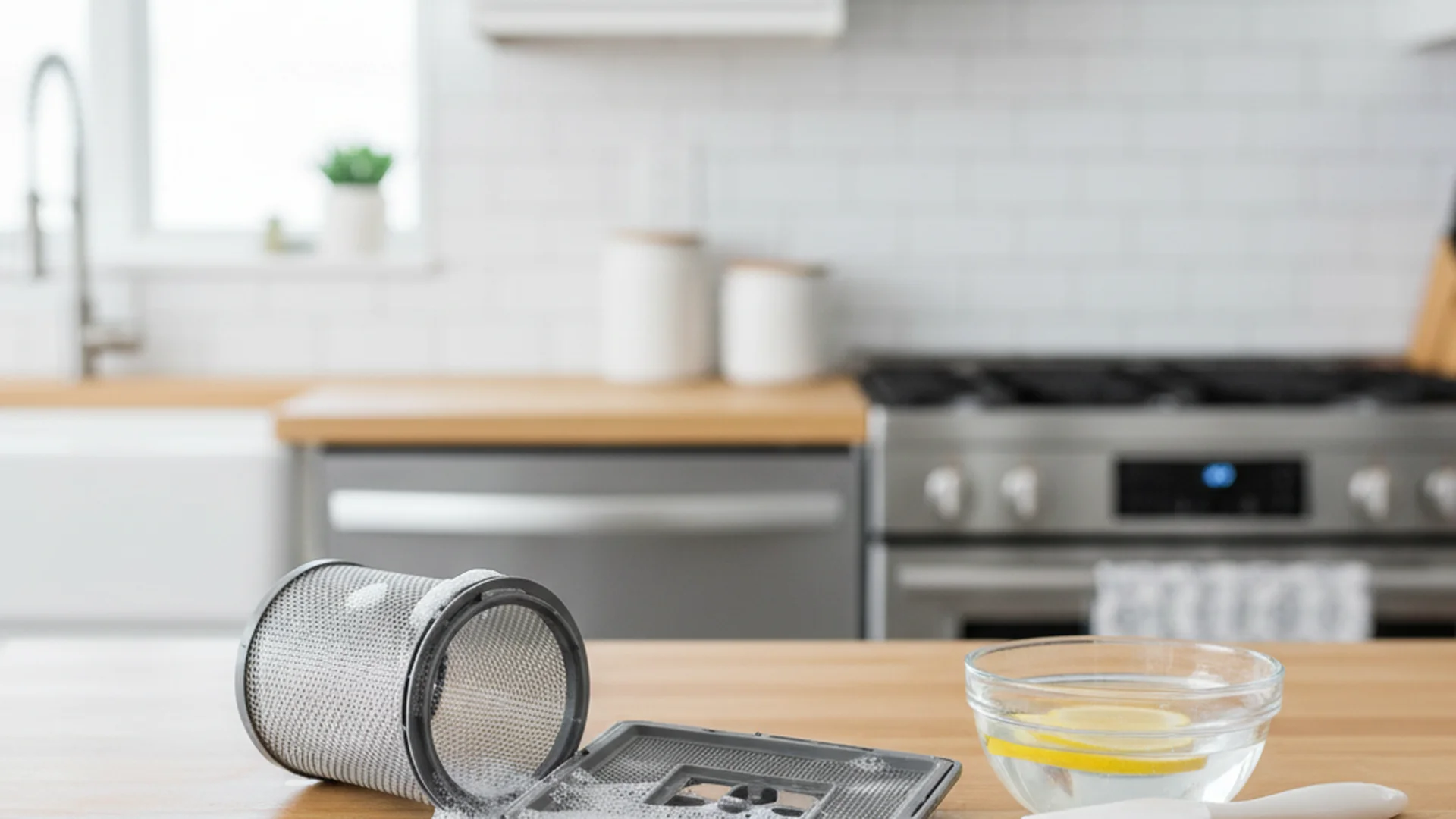
Apply a few drops of a degreasing dish soap to a soft brush. An old toothbrush is the perfect tool for this. Gently scrub both the inside and outside of the mesh. Focus on the areas where the mesh meets the plastic frame, as "biofilm" often accumulates in these crevices.
Step 3: Inspect the Flat Mesh Screen
Many dishwashers have a secondary, flat metal or plastic screen sitting beneath the cylindrical filter. Lift this out as well. Use your soft brush to clear any grease film that may be blocking the tiny holes.
Step 4: Clean the Housing
While the filters are out, take a damp microfiber cloth and wipe the "sump" area (the hole where the filter sits). Food scraps often hide here and will immediately re-clog your clean filter if not removed.
Step 5: Reinstall and Lock
Slide the flat screen back in, followed by the cylindrical filter. This is critical: Ensure you rotate the filter clockwise until it "clicks" or locks into place. If the filter is loose, large food particles can enter the pump, potentially shattering the impeller.
Success: A properly locked filter ensures that only clean, filtered water is recirculated onto your dishes, preventing the "redeposit" of food particles.
Real-World Examples of Filter Neglect
To understand why this process is so important, let's look at three common scenarios I encounter in the field:
- The "Cloudy Glass" Mystery: A family in Seattle noticed their wine glasses looked "etched" and white. They assumed it was hard water. Upon inspection, the filter was coated in a thick layer of undissolved fat. The dishwasher was essentially "washing" the dishes with greasy water. A 10-minute filter clean restored the clarity of their glassware immediately.
- The "Morning Odor": A homeowner complained of a "rotten egg" smell every morning when opening the dishwasher. We found trapped protein (bits of meat and egg) rotting at the base of the filter. Because the filter wasn't cleaned, the bacteria flourished in the warm, damp environment overnight.
- The Drainage Disaster: A user reported that water was standing at the bottom of their machine after a cycle. They were ready to buy a new pump. After removing the filter, we found a single cherry pit had bypassed a loose filter and was blocking the intake. We removed the pit, cleaned the filter, and the machine worked perfectly.
How Often Should You Clean It?
The frequency of cleaning depends entirely on your "pre-loading" habits. Experts from Consumer Reports and manufacturers like Whirlpool suggest the following schedule:
| Loading Habit | 1–7 Loads/Week | 8–14 Loads/Week |
|---|---|---|
| Scrape & Rinse Before Loading | Clean 1x per Year | Clean 2x per Year |
| Scrape Only (No Rinse) | Clean 2x per Year | Clean every 2–3 Months |
| No Scrape, No Rinse | Clean 1x per Month | Clean every 1–2 Weeks |
Tip: In 2025, we recommend the "Scrape Only" method. Modern detergents actually need food proteins to latch onto; if you rinse dishes too thoroughly, the detergent can become abrasive and damage your plates.
Common Mistakes to Avoid
Even with the best intentions, it is easy to make mistakes that can damage your appliance.
- Using Abrasive Tools: Never use a wire brush, scouring pad, or screwdriver to clean the mesh. A single tear in the filter allows debris into the motor, which can lead to a total pump failure.
- The "Vinegar and Baking Soda" Fallacy: While many DIY blogs suggest mixing these, they actually neutralize each other. Use vinegar alone for limescale buildup, and baking soda alone for odors. To clean grease from a filter, use a dedicated degreasing soap or a bio-enzymatic cleaner.
- Ignoring the Spray Arms: While the filter is out, take a moment to look at the spray arms. If the tiny holes are clogged with seeds or calcium, the water pressure drops, rendering even a clean filter less effective.
- Forgetting the Gasket: The rubber seal around the dishwasher door can trap the same sludge found in the filter. Wipe this down monthly to prevent leaks.
2025–2026 Maintenance Trends
The industry is moving toward "set it and forget it" maintenance, but we aren't quite there yet.
- Bio-Enzymatic Cleaners: New eco-friendly cleaners (like the 2025 Affresh or Lemi Shine lines) are now available. These use enzymes that literally "eat" the food proteins and fats trapped in the filter mesh, making manual scrubbing much easier.
- AI Maintenance Alerts: High-end models from Samsung and Miele now track "water turbidity." If the water stays dirty for too long during a cycle, your smartphone will receive a notification specifically stating: "Filter Clean Required."
- Microfiltration Systems: Some 2026 models are introducing "Dual Power Filtration," which claims to reduce manual cleaning to once a year. However, for most of us with 2020-2024 models, the monthly manual check remains the gold standard.
Frequently Asked Questions
Can I put the filter in the dishwasher to clean it?
Do I need tools to remove the dishwasher filter?
Why is my filter covered in a white, chalky film?
Is it normal for there to be water under the filter?
Conclusion
Mastering how to clean dishwasher filter units is the simplest way to ensure your kitchen runs smoothly. By spending just 15 minutes a month on this task, you can prevent foul odors, avoid expensive repair bills, and ensure that your "eco-friendly" appliance is actually running at peak efficiency. Remember: scrape your plates, check your spray arms, and never underestimate the power of an old toothbrush and some soapy water.
Success: Regular maintenance ensures your dishwasher lasts its full 15-year life expectancy while keeping your energy bills low.
Cleaning that keeps score
Every task earns points, every streak multiplies them, and Premium adds a household leaderboard plus a monthly Dustagorgon to beat.
- Free forever
- 30 badges to earn
- Up to 6 in a household
No card needed. Set up your rooms in a couple of minutes.