In this article
What you’ll learn
- Understand that paralysis is a biological "freeze" response, not laziness.
- Utilize AI tools like Goblin.Tools to break down overwhelming tasks.
- Adopt the "Five Things" method to simplify cleaning into manageable categories.
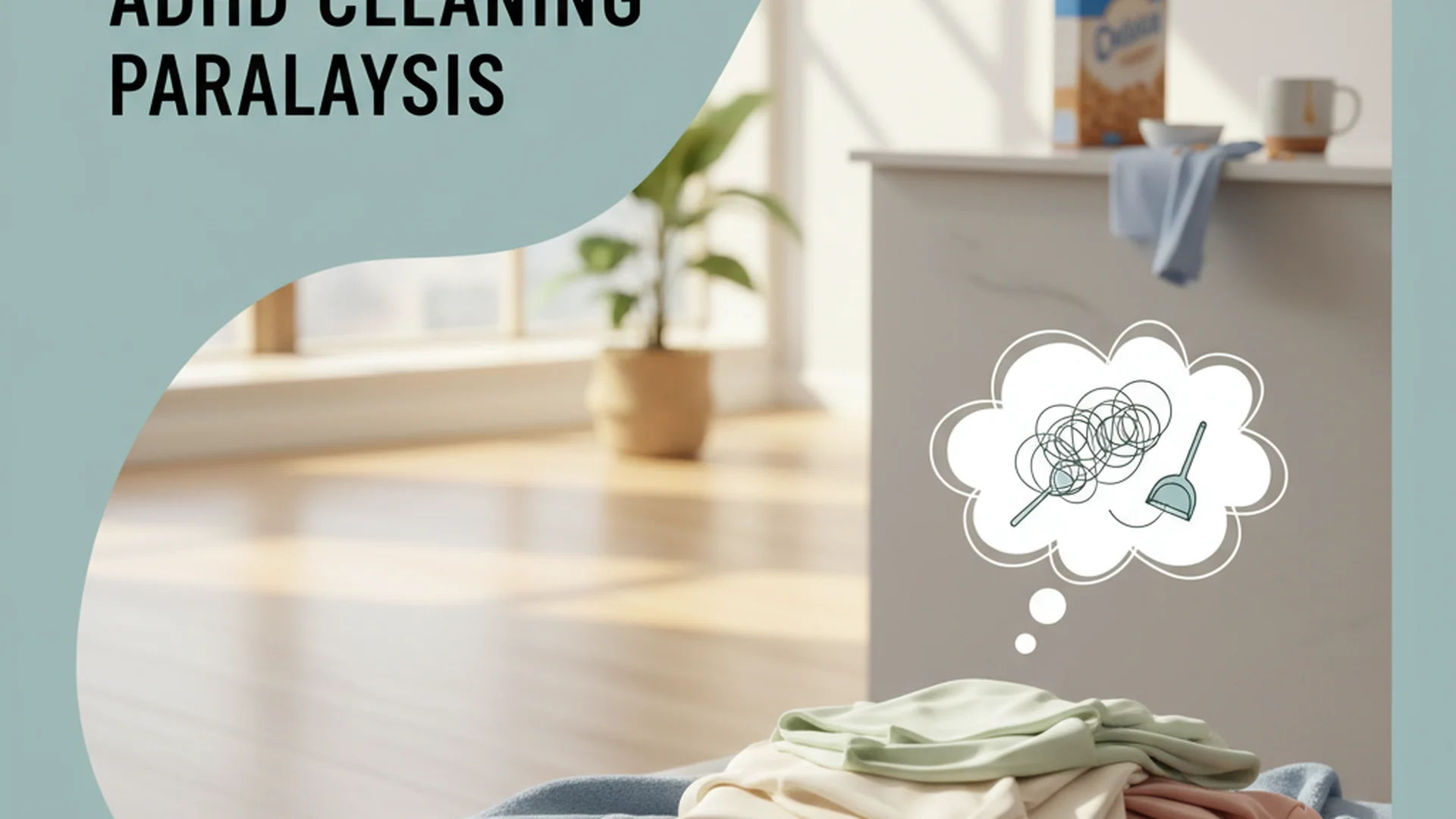
If you have ever stood in the middle of a messy living room, feeling completely overwhelmed and physically unable to move despite knowing exactly what needs to be done, you have experienced adhd cleaning paralysis. It is often described by those in the community as "The Stare"—that frozen state where the gap between wanting to clean and actually picking up a single sock feels like an insurmountable canyon. This isn't a lack of discipline; it is a neurological hurdle that affects millions of neurodivergent individuals daily.
As a Domestic Efficiency Specialist, I have spent years helping people navigate the friction between their brain chemistry and their environment. In this guide, we will dive deep into the science of why your brain "glitches" during housework and provide the most effective adhd cleaning paralysis tips updated for the 2025–2026 landscape.
The Science Behind the "Freeze": Why Your Brain Stops
To conquer the mess, you must first understand the "why" behind the paralysis. ADHD cleaning paralysis is rooted in executive dysfunction. The prefrontal cortex—the part of the brain responsible for planning, sequencing, and task initiation—often operates differently in ADHD brains.
Research from Dr. Sharon Saline and organizations like CHADD shows that between 80% and 90% of adults with ADHD struggle with executive dysfunction daily. When you look at a messy kitchen, a neurotypical brain might see "dishes, counters, floor." An ADHD brain often sees a singular, massive, undifferentiated blob of "work" that triggers a biological freeze response.
The Dopamine and Cortisol Tug-of-War
Dopamine is the "reward" chemical. Cleaning, by nature, is a low-immediate-reward activity. While gaming or scrolling social media provides instant dopamine hits, cleaning offers a delayed reward that an ADHD brain struggles to prioritize.
Furthermore, the environment itself becomes a source of stress. A 2025 study highlighted by Psychology Today found that living in clutter is directly linked to elevated levels of cortisol (the stress hormone). Women, in particular, show significantly higher cortisol spikes when perceiving their home as cluttered. This creates a vicious cycle: the clutter causes stress, the stress causes paralysis, and the paralysis causes more clutter.
Real-World Strategies: Moving Beyond the "Stare"
When searching for adhd cleaning paralysis reddit threads, you will find thousands of people asking the same thing: "How do I just start?" The answer lies in lowering the "activation energy" required to begin.
The Five Things Tidying Method
Popularized by KC Davis, this method is a game-changer for those who feel the "whole house is a disaster" brain crash. Instead of "cleaning," you are only allowed to look for five specific categories:
- Trash: Anything that goes in the bin.
- Dishes: Anything that belongs in the sink or dishwasher.
- Laundry: Anything that needs to be washed.
- Things that have a place: Items you know exactly where they go.
- Things that don’t have a place: Items that need a "home" later (put these in one pile or bin for now).
Tip: Focus only on one category at a time. If you are looking for trash, do not pick up a stray sock. It helps keep your brain from switching tasks too quickly and causing burnout.
Junebugging: The Anchor Point Technique
Named after the way a June bug repeatedly bumps into a screen, this technique involves picking one "anchor point"—like the kitchen sink.
- Start at the sink.
- If you see a toy that belongs in the playroom, go put it away.
- You are allowed to "side quest," but you must immediately return to your anchor point.
- The goal isn't to be "efficient"; the goal is to keep moving without getting lost in a new room.
Body Doubling
Body doubling is the practice of having another person present while you work. They don't even have to help; they just have to be there. In 2025, virtual body doubling via Focusmate or TikTok "Clean With Me" lives has become a primary tool for the ADHD community. The presence of another person acts as a "social anchor," keeping your brain on task through gentle accountability.
Success: "I used a body-doubling app for 30 minutes today and finally cleared the 'DOOM' piles off my dining table. Just knowing someone else was 'working' with me stopped the paralysis." — Elena, Real-World Example
Tech and Trends: ADHD Cleaning in 2025 and 2026
The landscape of domestic efficiency is changing rapidly with the integration of AI. We are moving away from traditional "to-do lists" and toward tools that handle the "thinking" for us.
AI Task Breakdowns (Goblin.Tools)
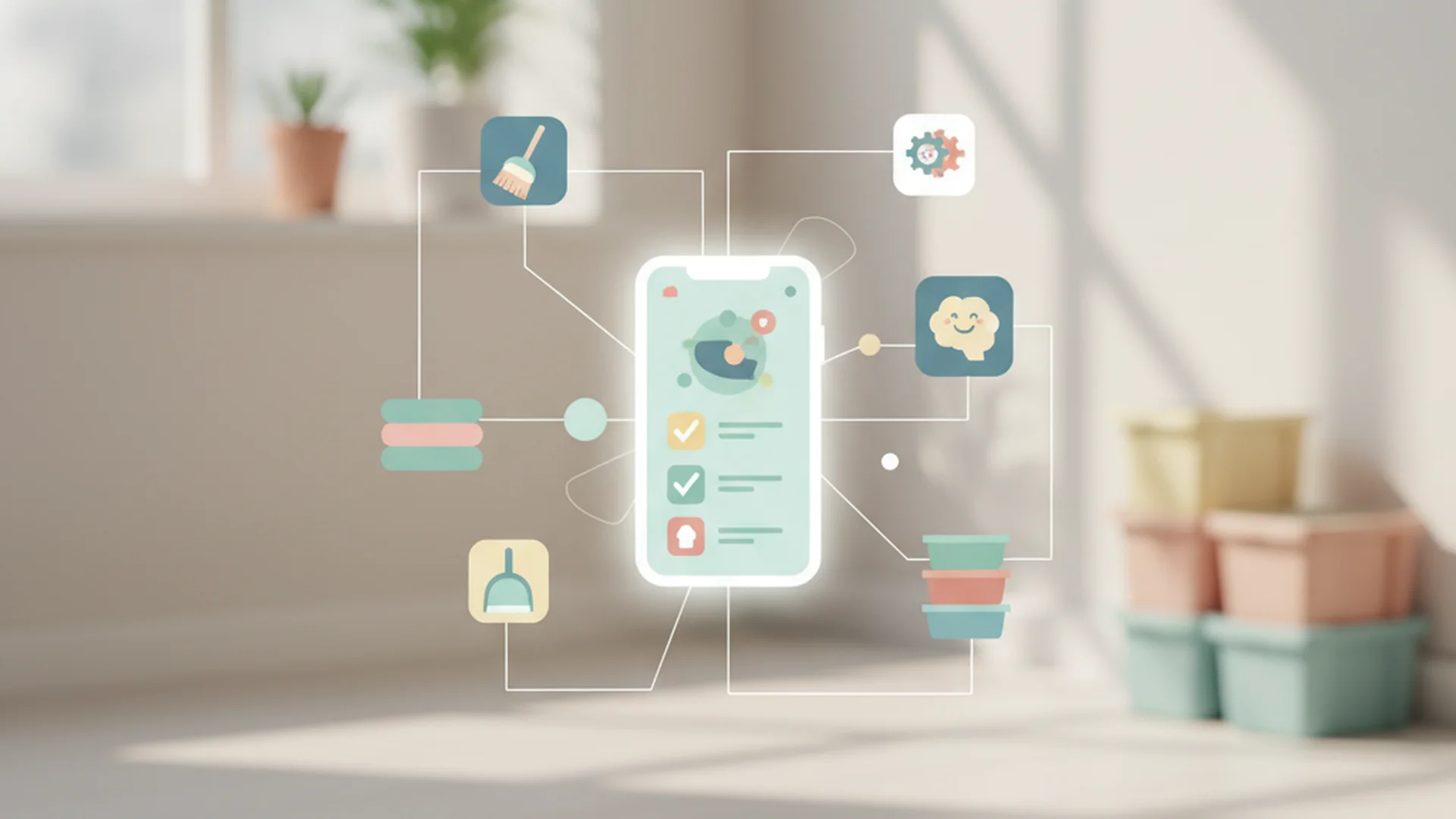
One of the most praised tools in 2025 is Goblin.Tools, specifically the "Magic ToDo" feature. It allows you to type in a vague task like "Clean the Kitchen" and uses AI to break it down into 15 tiny, non-intimidating steps (e.g., "Open the dishwasher," "Take out one plate"). This removes the cognitive load of "sequencing," which is often where the paralysis starts.
Agentic AI and 2026 Predictions
Looking toward 2026, "Agentic AI" systems are expected to revolutionize neurodivergent households. These systems won't just list tasks; they will analyze your energy levels and past habits to suggest the best time to clean. Imagine an AI that says, "Your energy is usually highest at 10 AM on Tuesdays; let's do the 5-minute 'trash sweep' then."
Sensory-Friendly Cleaning
There is a growing shift away from harsh, "chemical-smelling" cleaners that can cause sensory overload.
- Scent-Free Products: Using plant-based, fragrance-free cleaners to avoid olfactory "clutter."
- UV-C Sanitizing Wands: These are becoming popular for high-touch surfaces, allowing for sanitization without the sensory-heavy task of scrubbing with wet sponges.
Note: Sensory issues are a major contributor to cleaning avoidance. If you hate the feeling of wet hands, buy high-quality gloves. If the vacuum is too loud, use noise-canceling headphones.
Common Mistakes to Avoid
Even with the best adhd cleaning paralysis tips, it is easy to fall into old traps. Recognizing these mistakes is the first step toward a more functional home.
1. The "All-or-Nothing" Trap
Many people wait for a "burst of motivation" or "hyperfocus" to clean the entire house in one six-hour marathon. This inevitably leads to burnout and a week of recovery.
- Solution: Practice "micro-cleaning" in 10-minute bursts. Use a timer. When the timer goes off, you are allowed to stop, regardless of how much is left.
2. Organizing Before Decluttering
You cannot organize clutter. Trying to find "homes" for items you no longer need or use leads to the creation of DOOM piles (Didn’t Organize, Only Moved).
- Solution: Focus on removal first. If you haven't used it in a year, it’s likely contributing to your mental load more than it’s adding value to your life.
3. The "ADHD Tax" of Perfectionism
Trying to clean "the right way" often leads to doing nothing at all. This is where the "ADHD Tax" comes in—financial and emotional costs like rebuying lost items or feeling deep shame.
- Solution: Adopt the "Good Enough" standard. A house that is "hygienic enough" is better than a house that is "perfectly clean" in your imagination but "biohazard" in reality.
Warning: Do not buy more organizational bins until you have decluttered. More bins often just mean more places to hide clutter you'll forget about later.
| Strategy | Best For | Effort Level |
|---|---|---|
| Five Things | Total Overwhelm | Low |
| Junebugging | Wandering Minds | Medium |
| Body Doubling | Lack of Motivation | Low/Social |
| AI Breakdown | Sequencing Issues | Very Low |
Frequently Asked Questions
Why can I do other things but not clean?
What are DOOM piles?
Am I just lazy?
How do I clean when the whole house is a disaster?
Conclusion: A Shame-Free Manifesto
Your home exists to serve you; you do not exist to serve your home. In 2025, therapists and efficiency specialists are reframing cleaning not as a "chore" or a moral obligation, but as "Self-Care for your Future Self." When you clear the dishes tonight, you aren't doing it because you "should"—you are doing it so that "Future You" doesn't have to feel that 8:00 AM spike of anxiety when trying to make coffee.
Embrace "clutter-core" or "functional messiness" if that is what works for your brain. A house that is lived-in and slightly messy but functional is a success. Stop measuring your worth by the state of your laundry pile.
Success: By shifting from a "perfection" mindset to a "functional" one, you can break the cycle of paralysis and build a home that supports your neurodivergent brain.
Cleaning that keeps score
Every task earns points, every streak multiplies them, and Premium adds a household leaderboard plus a monthly Dustagorgon to beat.
- Free forever
- 30 badges to earn
- Up to 6 in a household
No card needed. Set up your rooms in a couple of minutes.