In this article
What you’ll learn
- Understand that cleaning struggles are a result of executive dysfunction, not laziness.
- Implement strategies like Junebugging and the 5-Category Method to manage overwhelm.
- Utilize 2025 tools like AI-powered task breakdown and gamification to stay motivated.
If you have ever stood in the middle of a messy room, feeling a heavy sense of paralysis while your brain screams at you to just pick up one thing, you are not alone. For many, the simple act of cleaning with ADHD feels less like a household chore and more like navigating a complex labyrinth without a map. The common misconception is that a messy house is a sign of laziness or a moral failing. However, as a professional cleaning consultant, I can tell you that for the neurodivergent brain, the barrier isn’t a lack of willpower—it is a physiological challenge involving executive dysfunction and dopamine regulation.
This guide is designed to be the ultimate resource for anyone looking to reclaim their space. We will move beyond standard advice like "just use a planner" and dive into the biological reasons why ADHD makes cleaning difficult, the most effective strategies for 2025, and how to build a home environment that works with your brain rather than against it.
The Science: Why ADHD Brains Struggle with Cleaning
To master adhd house cleaning, we must first understand the mechanics of the ADHD brain. ADHD is not just an inability to focus; it is a regulatory issue involving the brain’s executive functions. These functions are responsible for task initiation, working memory, and emotional regulation.
Executive Dysfunction and Task Initiation
Executive dysfunction is the root of "ADHD paralysis." When a neurotypical person looks at a messy kitchen, their brain quickly categorizes the tasks: "dishes, counters, floor." An ADHD brain often sees a singular, massive, undifferentiated "blob" of a task. Because the brain cannot easily break this blob into manageable steps, it perceives the mess as a threat or an impossible obstacle, leading to total shutdown.
The Dopamine Deficit
Cleaning is rarely "fun," but for most people, the reward of a clean room provides enough dopamine to justify the effort. ADHD brains, however, have a lower baseline of dopamine. Tasks that are repetitive, under-stimulating, or lack immediate rewards—like folding laundry or scrubbing a tub—simply do not provide the chemical "spark" needed to stay engaged.
The Cortisol Loop
Clutter isn't just an eyesore; it's a physiological stressor. Studies show that cluttered environments increase cortisol levels, the body's primary stress hormone. For those living with ADHD, this creates a vicious cycle: the mess causes stress, the stress worsens executive dysfunction, and the dysfunction prevents the cleaning. Breaking this loop requires more than just "trying harder"; it requires a change in strategy.
Note: Research suggests that 80% of ADHD organizational success relies on visual cues. If you can't see it, it doesn't exist. This is why "out of sight, out of mind" is a literal reality for many neurodivergent individuals.
Foundational ADHD Cleaning Strategies
When the traditional "top-to-bottom" cleaning method fails, it’s time to switch to neuro-friendly techniques. These strategies are designed to lower the "barrier to entry" for cleaning.
The Junebugging Method
Named after the way a June bug persistently returns to a screen door, this method is perfect for the "wandering cleaner."
- Pick an Anchor Point: Choose one central location, such as the kitchen sink.
- Clean the Anchor: Start cleaning that one spot.
- The Wander: If you see a stray cup that belongs in another room, take it there.
- The Return: The moment you put the cup down, you must return to your "anchor" (the sink). This allows you to address the distractions that naturally occur without losing your place in the overall process.
The 5-Category Method
Popularized by KC Davis, this method is the ultimate "emergency" strategy for when a room is completely overwhelming. Instead of looking at the mess as a whole, look only for these five things in order:
- Trash: Walk around with a bag and grab only trash.
- Dishes: Collect all dishes and move them to the kitchen (don't wash them yet).
- Laundry: Gather all clothes and put them in a hamper.
- Things that have a place: Put away items that have a designated "home."
- Things that don’t have a place: Pile these in one spot to deal with later.
Body Doubling
Body doubling is arguably the most effective tool for adhd cleaning tips in 2025. It involves having another person present—either physically in the room or virtually via video call—while you work. The other person doesn't even need to help; their presence acts as a "social anchor" that keeps your brain tethered to the task at hand.
Tip: If you live alone, you can use "virtual body doubling" through YouTube "Clean With Me" videos or dedicated apps like Focusmate.
2025 Trends: Tech and Gamification
The landscape of home management is shifting. In 2025, we are moving away from "aesthetic minimalism" toward "functional living." Here is how technology and modern trends are helping the ADHD community.
AI-Powered Task Breakdown
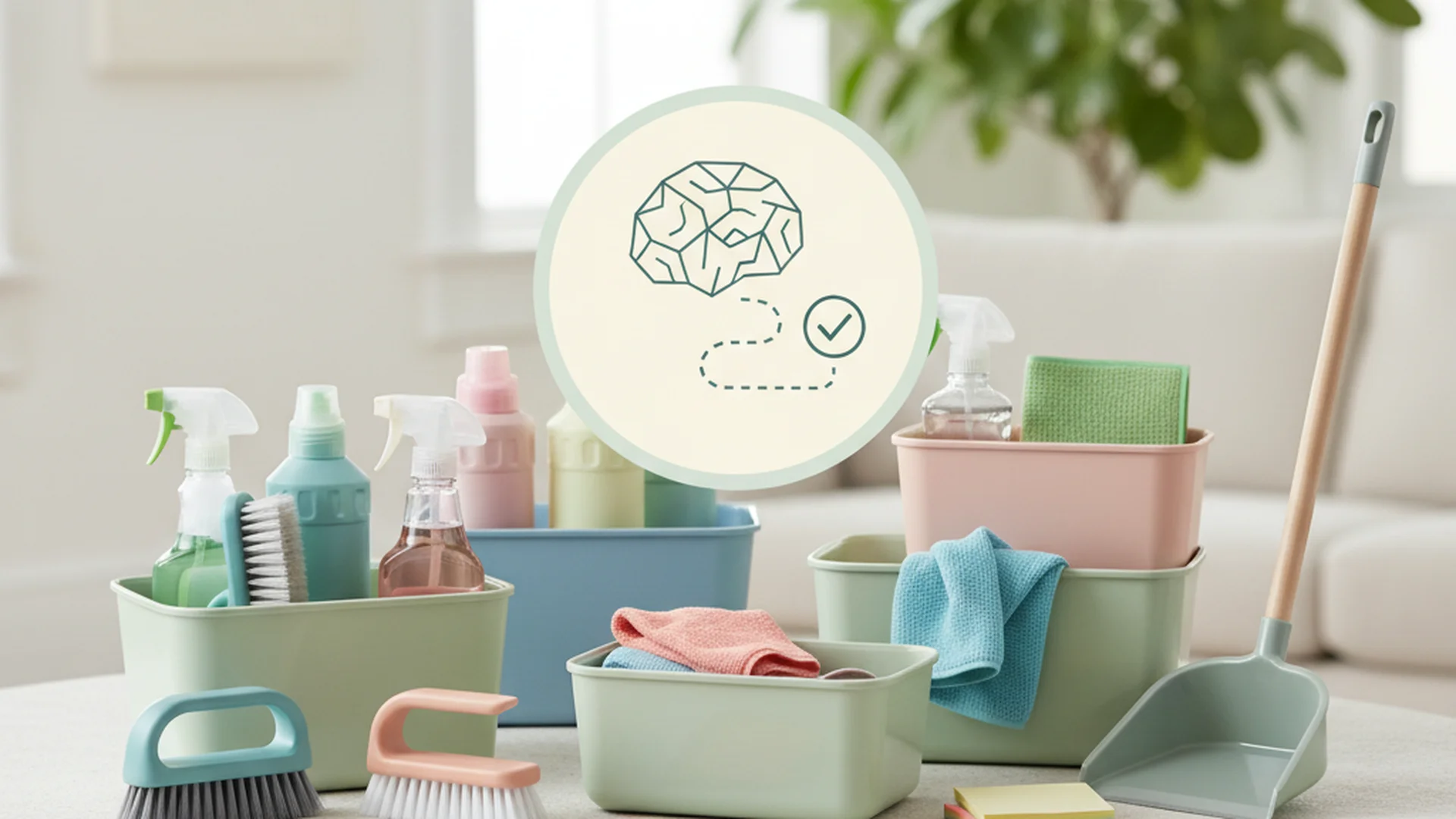
One of the biggest hurdles is the cognitive load of "figuring out where to start." Tools like Goblin.tools use AI to take a prompt like "Clean the Kitchen" and break it down into 20 micro-steps (e.g., "Empty the toaster tray," "Wipe the fridge handle"). By offloading the planning to AI, you save your mental energy for the actual cleaning.
Gamification Apps
If your brain needs dopamine to function, why not turn cleaning into a game?
- Habitica: Turns your to-do list into a Role Playing Game (RPG) where you earn armor and pets for completing chores.
- Sweepy: Categorizes rooms by "dirtiness" levels and tells you exactly what needs the most attention today, removing the "decision fatigue" of choosing what to clean.
Smart Home Integration
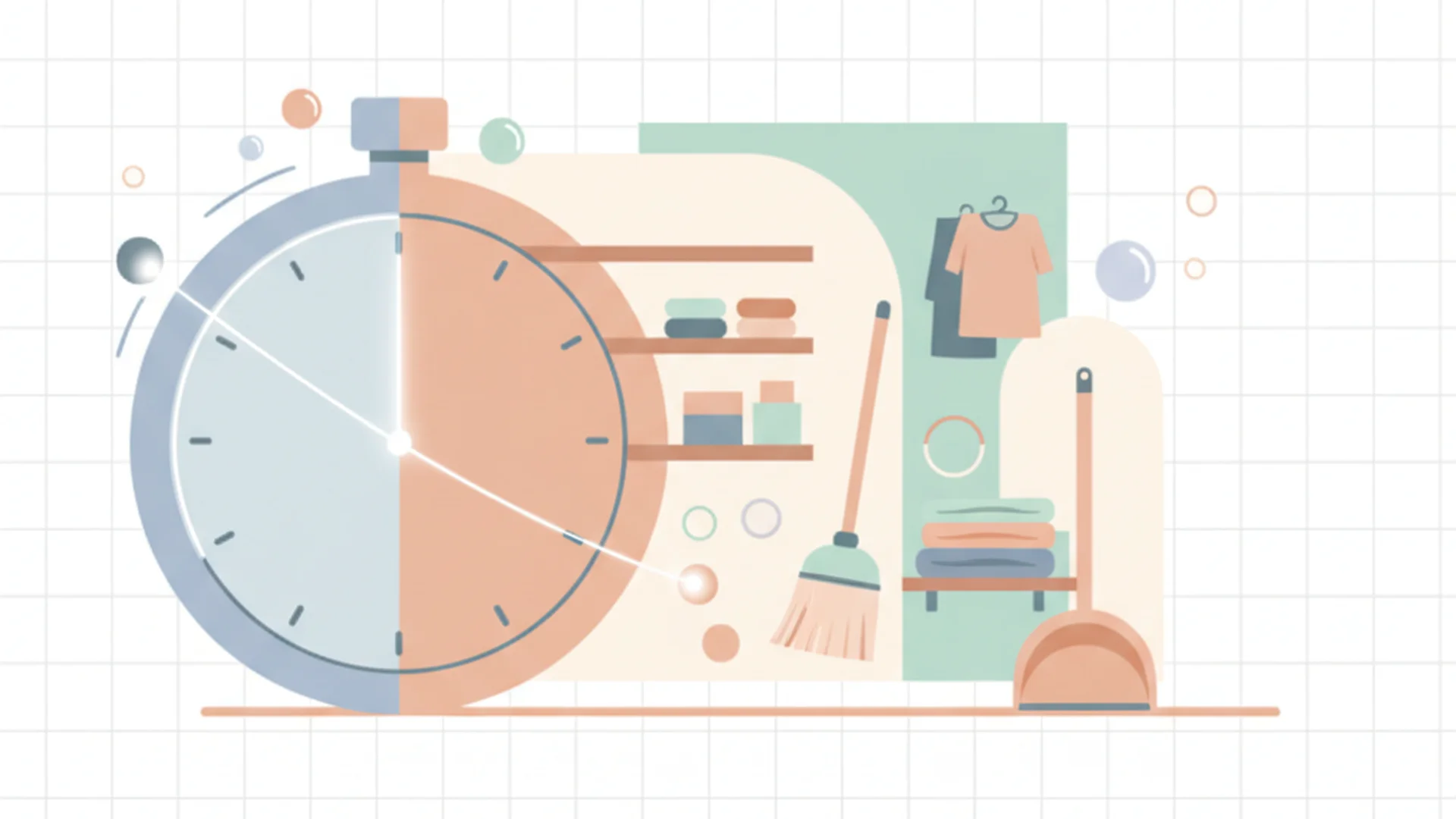
Voice assistants are becoming essential for ADHD time management. Instead of setting one 30-minute timer (which can lead to "time blindness"), use interval timers.
- "Alexa, set a cleaning timer for 10 minutes."
- "Alexa, set a break timer for 5 minutes." By using voice commands, you avoid picking up your phone, which is the #1 source of distraction for ADHD minds.
| Tool Type | Example | Best For |
|---|---|---|
| AI Breakdown | Goblin.tools | Reducing cognitive load |
| Gamification | Habitica | Long-term motivation |
| Tracking | Sweepy | Visualizing cleanliness |
| Interval Training | Alexa/Google | Managing time blindness |
Warning: Be careful of "Procrastivity"—the act of spending hours setting up a cleaning app or buying organizational bins as a way to avoid actually cleaning.
Room-by-Room ADHD Solutions
Applying cleaning with ADHD principles requires a room-specific approach. Here is how to optimize the three most challenging areas of the home.
The Kitchen: The "Closing Duties" Concept
Borrowing from the restaurant industry, treat your kitchen like a business. Instead of cleaning because you "should," perform "closing duties" to set up your "future self" for success.
- The Sink is the Goal: If you do nothing else, clear the sink.
- Dishwasher Strategy: If you can't bring yourself to hand-wash a pot, put it in the dishwasher, even if it’s "not the right way." Anything worth doing is worth doing poorly.
- Visible Storage: Replace opaque pantry bins with clear ones. If you can’t see the pasta, you will forget you have it and buy more, creating clutter.
The Bedroom: Managing the "Doom Pile"
The bedroom often becomes a graveyard for "half-worn" clothes—items that aren't clean enough for the drawer but aren't dirty enough for the laundry.
- The "In-Between" Basket: Place a dedicated basket or a "clothes tree" in your room specifically for these items. It prevents them from hitting the floor.
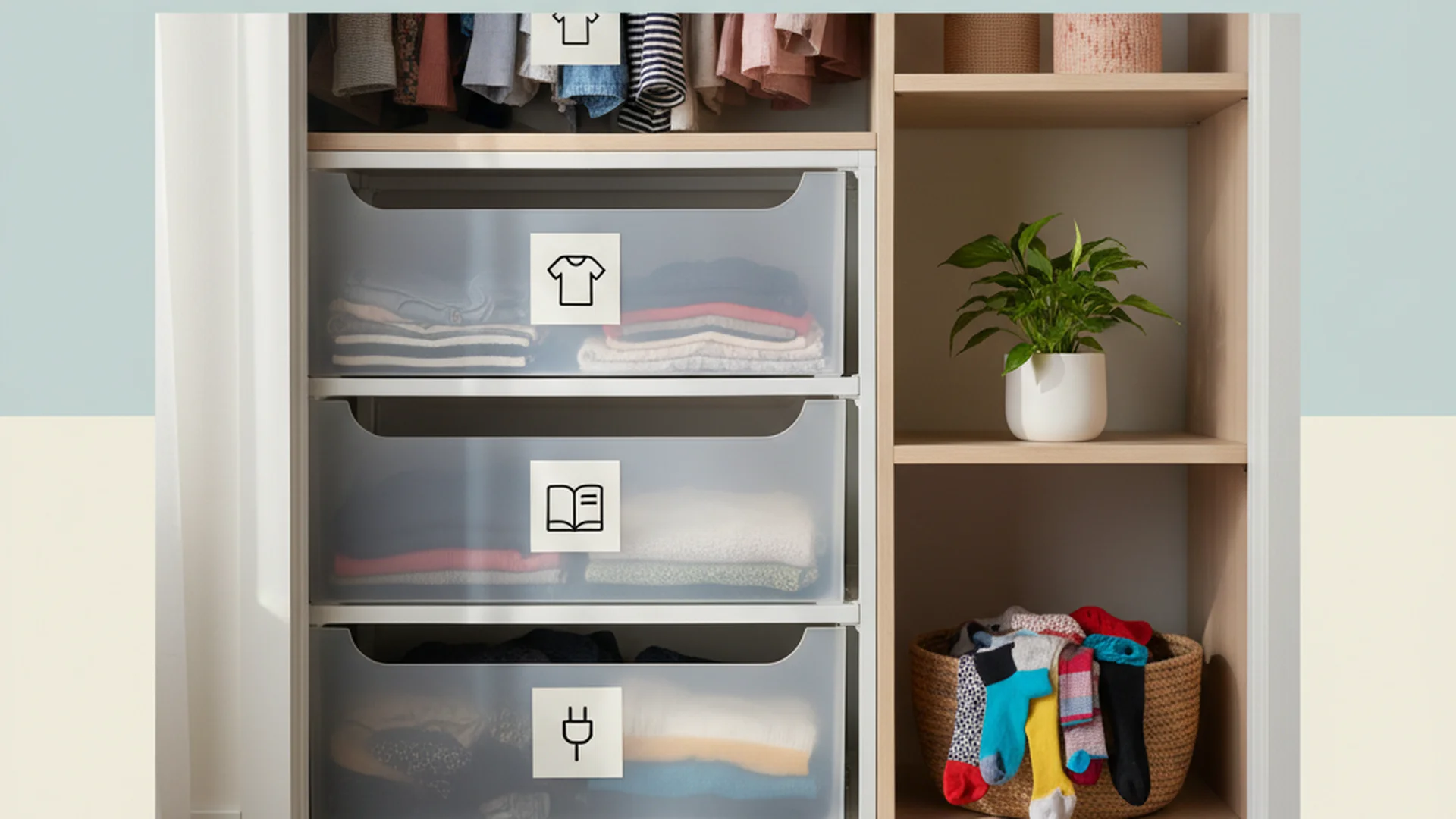
- Open Shelving: Many ADHD individuals find that closets with doors are "black holes." Consider removing closet doors or using open shelving so your clothes stay in your visual field.
The Bathroom: Low-Demand Cleaning
The bathroom requires frequent sanitization, which can be a sensory nightmare.
- Point-of-Use Supplies: Keep cleaning wipes under the bathroom sink. If you have to go to the hallway closet to get the spray, you won't do it.
- Shower Cleaning: Keep a dish wand filled with soap and vinegar in the shower. Scrub one wall while you're waiting for your hair conditioner to sit.
Success: One client reduced their weekly cleaning time by 40% simply by placing a trash can in every single corner where "trash naturally accumulated," rather than trying to force themselves to walk to the kitchen every time.
Real-World Examples of Success
Case Study 1: The "Visual Cues" Transformation
Sarah, a freelance graphic designer with ADHD, struggled with a "Doom Desk." Paperwork, cables, and old coffee mugs made it impossible to work. We implemented visible storage. We replaced her desk drawers with clear acrylic bins on open shelves. By seeing exactly where everything belonged, she eliminated the "search-and-rescue" missions that usually derailed her day.
Case Study 2: The "Low-Demand" Kitchen
Mark found the dishwasher overwhelming. The "All-or-Nothing" mentality told him he had to rinse, load, and run it perfectly. We shifted to "Low-Demand" cleaning. His new rule: "Just load five things." Almost every time he loaded five, he found the momentum to finish the rest. On the days he didn't, he still had five fewer dishes to deal with tomorrow.
Case Study 3: The 10-Minute Reset
A family of four (all neurodivergent) used a "Body Doubling" dance party. Every night at 7:00 PM, they put on loud, high-energy music and everyone cleaned for exactly two songs. The combination of music (dopamine) and communal effort (body doubling) turned a chore into a ritual.
Common Mistakes to Avoid
Even with the best intentions, it’s easy to fall into ADHD-specific traps. Recognizing these is half the battle.
- Buying the "Organization Aisle": Do not go to a container store before you have decluttered. ADHDers often buy bins as a "fix," but without a system, the bins just become more clutter.
- The All-or-Nothing Mentality: Waiting for a "burst of hyperfocus" to clean the whole house for eight hours. This leads to burnout and a "rebound" mess that is worse than the original.
- Moralizing the Mess: Thinking "I am a bad person because I have dishes in the sink." Cleaning is a functional task to make your life easier, not a reflection of your character.
- Hiding Everything: For the ADHD brain, "put away" often means "gone forever." Avoid deep cabinets and opaque boxes. Use "out-in-the-open" organization.
- Ignoring Sensory Issues: If the smell of bleach or the feeling of wet sponges triggers a sensory ick, you won't clean. Invest in high-quality gloves, unscented cleaners, or even a pair of noise-canceling headphones to make the experience more tolerable.
Warning: Avoid "Revenge Bedtime Procrastination" where you try to clean late at night to make up for an unproductive day. This sacrifices sleep, which is essential for managing ADHD symptoms the next day.
A Compassionate Approach: Care Tasks vs. Chores
The most significant shift in adhd house cleaning philosophy in recent years comes from KC Davis’s concept of "Care Tasks." A chore is something you have to do because of a social standard. A care task is a kindness you do for your future self.
When you struggle to clean, ask yourself: "What is the minimum I need to do right now so that tomorrow morning is functional?"
- Maybe it’s not scrubbing the whole kitchen; maybe it’s just clearing a spot for your coffee maker.
- Maybe it’s not folding all the laundry; maybe it’s just putting the clean clothes in a "clean" basket so you can find socks in the morning.
This compassionate approach lowers the emotional stakes, making it easier to initiate the task.
Frequently Asked Questions
Why can’t I just start cleaning?
What is 'Junebugging' and how does it help with ADHD?
How do I stop getting distracted while cleaning one room?
What are 'Doom Boxes' and are they bad for me?
Is there a specific ADHD cleaning schedule that actually works?
How can I clean when I’m completely overwhelmed by the mess?
Conclusion
Cleaning with ADHD is a journey of self-accommodation, not self-discipline. By understanding the neurological roots of your struggle and implementing "brain-friendly" strategies like Junebugging, body doubling, and the 5-category method, you can create a home that supports your mental health rather than draining it.
Remember: Your home exists to serve you; you do not exist to serve your home. If the "standard" way of cleaning doesn't work, give yourself permission to do it differently. Whether it's using AI to plan your day or leaving the closet doors off to help with object permanence, the "right" way to clean is whatever way actually gets the job done for your unique brain.
Try one "five-minute win" today. Pick up the trash in one room, or clear your "anchor point." Your future self will thank you.
Success: Transitioning from "I have to clean" to "I am resetting my space" is the most powerful mental shift you can make. Start small, stay compassionate, and watch your environment transform.
Cleaning that keeps score
Every task earns points, every streak multiplies them, and Premium adds a household leaderboard plus a monthly Dustagorgon to beat.
- Free forever
- 30 badges to earn
- Up to 6 in a household
No card needed. Set up your rooms in a couple of minutes.