In this article
What you’ll learn
- Use the Five Things Method to categorize mess and reduce decision fatigue
- Implement "Junebugging" to maintain a physical anchor during cleaning
- Leverage AI tools and body doubling to bypass task paralysis
For many, adhd room cleaning isn't just a household chore; it is an Olympic-level mental challenge. If you have ever stood in the middle of a messy bedroom, feeling physically paralyzed by the sheer volume of "stuff" while your brain screams at you to just move, you aren't lazy. You are experiencing executive dysfunction. In 2025, we are moving away from the "just do it" mentality and embracing neuro-inclusive strategies that work with the ADHD brain rather than against it.
Understanding the ADHD "Executive Gap"
Before diving into the methods, it is vital to understand the science behind why your room looks the way it does. A large proportion of adults with ADHD live with significant executive function (EF) challenges. These challenges impact behavior initiation (getting started) and working memory (remembering why you walked into the room in the first place).
Furthermore, the "30% Rule" suggests that individuals with ADHD often experience a developmental delay in executive function maturity. This means a 30-year-old may have the "cleaning age" of a 21-year-old when it comes to self-regulation and organization.
Note: ADHD affects a small share of the adult population. Many get caught in the "Stress Loop": the mess brings on shame, but the act of cleaning brings on sensory overwhelm.
The "Five Things" Method: Categorizing the Chaos
Popularized by KC Davis and frequently cited in adhd room cleaning reddit threads, the "Five Things" method is designed to stop the brain from seeing a thousand individual items. When we see a thousand items, we have to make a thousand decisions. When we see five categories, we only make five.
How to Execute the Five Things Method:
- Trash: Walk around with a bag and grab anything that is actual garbage. Do not look at anything else.
- Dishes: Collect every cup, plate, and spoon. Move them to the kitchen counter. Do not wash them yet.
- Laundry: Gather all clothes. Put them in a pile or a basket. Do not start the machine yet.
- Things that have a place: Items that belong in the room but are currently on the floor (e.g., a book that goes on the shelf).
- Things that don’t have a place: Items that don't belong in this room or don't have a designated home. Put these in a "doom box" to be sorted later.
Tip: If you feel overwhelmed during Step 4, skip it and go straight to the "Doom Box." Getting the floor clear is more important than perfect placement.
Junebugging: The Art of the Physical Anchor
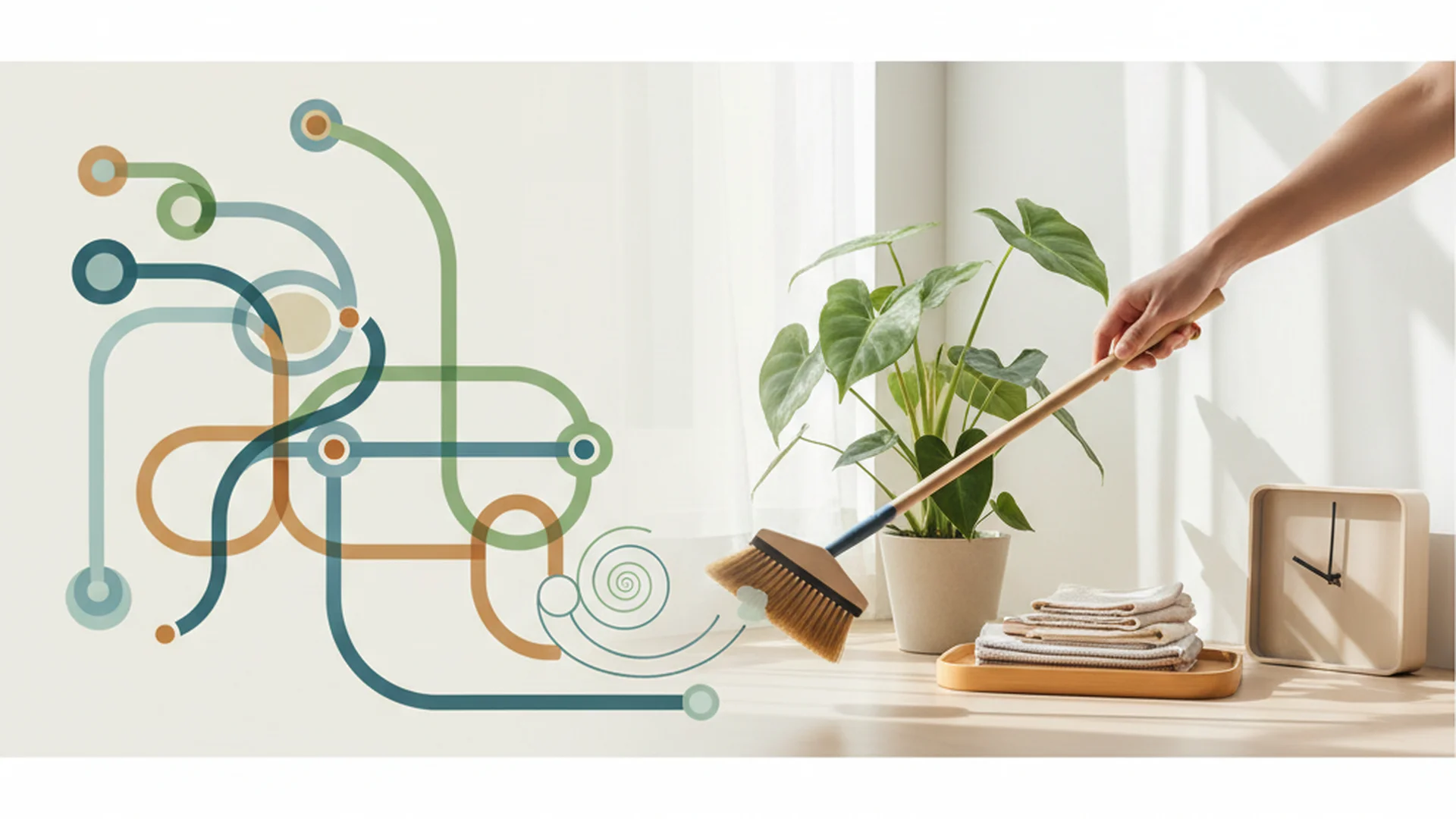
One of the most effective adhd room cleaning tips is a technique called "Junebugging." Named after the way a June bug repeatedly hits a screen door, this method allows for the ADHD brain’s natural tendency to wander while ensuring the work actually gets done.
The Anchor Strategy
Pick one central "anchor" in your room. This is usually the bed or a specific rug. You start cleaning at that anchor. If you find a pair of scissors that belongs in the kitchen, you go to the kitchen to put them away. But—and this is the rule—you must immediately return to your anchor. You are allowed to "flutter" away, but you must always bounce back to your center point.
Success: Junebugging works because it removes the guilt of getting distracted. Instead of fighting the distraction, you build a "return path" into your process.
2025–2026 Trends: The Sunday Butterfly and AI Tools
The landscape of home organization is shifting toward "functional aesthetics" rather than "minimalist perfection." Here is what is trending in the neurodivergent community for late 2025 and 2026.
The Sunday Butterfly Method
This is a newer evolution of Junebugging. Instead of a rigid list, you "flutter" through tasks. You carry a "transfer basket." As you move through the room, anything that belongs elsewhere goes in the basket. You only deal with the basket at the very end of the session. This prevents the "transition tax"—the mental energy lost every time you switch rooms.
AI-Driven Micro-Tasking
Technology is finally catching up to the ADHD brain. Apps like Goblin.tools use AI to take a prompt like "clean my bedroom" and break it into 20 tiny, manageable steps (e.g., "pick up 5 blue things," "find the corners of the bedsheet").
| Tool | Best For | 2026 Trend Rating |
|---|---|---|
| Goblin.tools | Breaking down paralysis | 5/5 Stars |
| Planwiz | Visual scheduling | 4/5 Stars |
| Focusmate | Virtual Body Doubling | 5/5 Stars |
Warning: While AI tools are helpful, don't spend more time setting up the app than actually cleaning. Set a 5-minute timer for "setup" then get to work.
Point-of-Performance Storage
A common mistake in adhd room cleaning is trying to follow traditional organization rules. Neurotypical organization often prioritizes "hiding" items. ADHD organization should prioritize "accessibility."
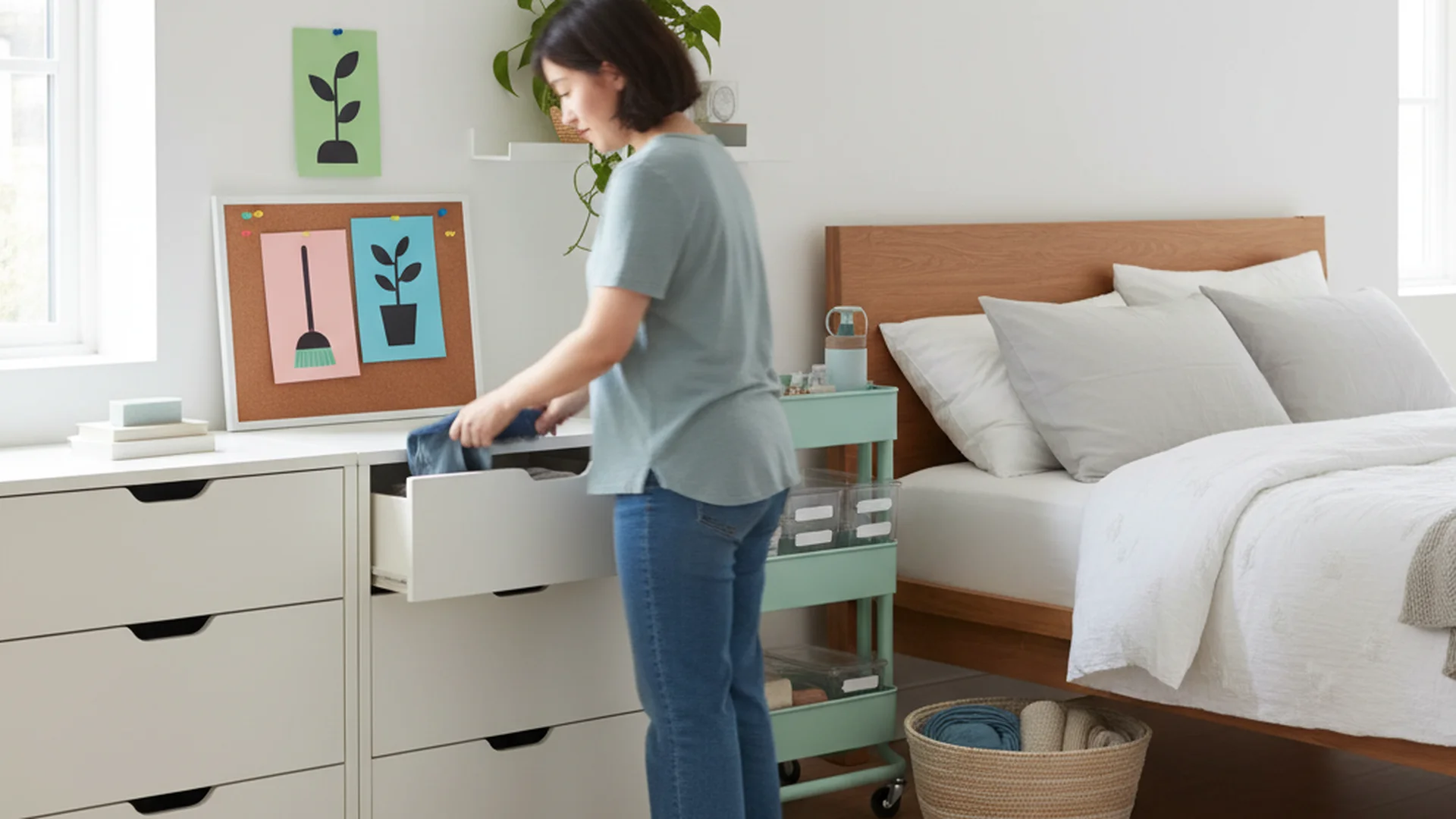
Real-World Example: The "Clothes Chair"
- The Problem: You have a chair covered in "middle-state" clothes—too dirty for the drawer, too clean for the laundry.
- The Traditional Fix: "Just hang them up." (This fails 99% of the time).
- The ADHD Fix: Replace the chair with a "Clean Laundry Bin" or a dedicated row of wall hooks. Hooks remove the "hanger tax" and keep clothes off the floor.
Real-World Example: The Cleaning Station
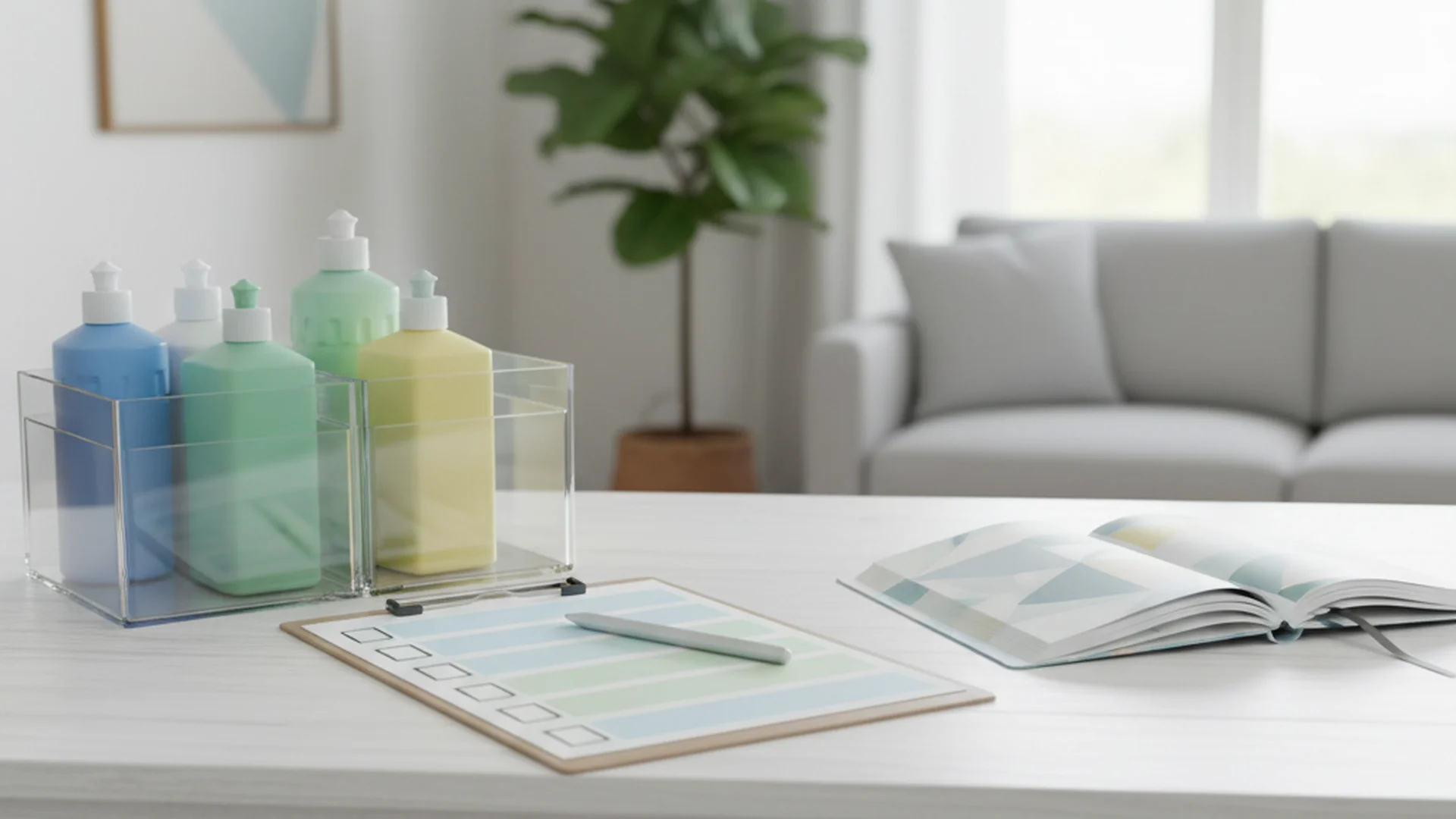
- The Problem: You never clean the mirror because the Windex is under the kitchen sink.
- The ADHD Fix: Keep a bottle of glass cleaner and a cloth behind the mirror or in the bathroom drawer. If you see the smudge, the tool is already in your hand.
Common Mistakes to Avoid
- Waiting for "The Mood": ADHD brains rely on dopamine. If you wait for "motivation," it might never come. Instead, use "Dopamine Pairing." Listen to a high-energy podcast, an audiobook, or eat a specific snack that you only get while cleaning.
- Confusing Cleaning with Decluttering: Cleaning is removing dirt and putting things back. Decluttering is deciding whether an item should exist in your life. Never try to do both at once. If you start "cleaning" and end up reading a diary from 2012, you have accidentally started decluttering.
- The "Put it Away, Not Down" Fallacy: This advice is well-meaning but often ignores the steps involved. For an ADHD brain, "putting it away" might mean opening a closet, finding a hanger, and sliding it onto a rack. That’s three steps too many.
- All-or-Nothing Thinking: Thinking "I can't clean the room until I have four hours to deep clean everything" leads to months of mess. A "functional reset" (15 minutes of the Five Things Method) is always better than a perfect clean that never happens.
Note: Adopt the mantra of "Moral Neutrality." A messy room does not make you a bad person. It is simply a space that isn't functioning for you right now.
Frequently Asked Questions
Should I clean by room or by task?
How do I stop getting distracted halfway through?
What is "Body Doubling" and does it work?
Why is my room always messy again in two days?
Conclusion: Embracing a Functional Home
The goal of the adhd room cleaning method isn't to create a showroom-ready space that looks like a magazine cover. The goal is to create a room that serves your needs—a place where you can find your keys, have a clear path to your bed, and feel a sense of peace. By using methods like the Five Things, Junebugging, and modern AI tools, you can bypass the shame and tackle the mess in a way that respects your brain's unique wiring.
Remember: Your home is there to support you; you are not there to serve your home.
Success: By implementing just one of these methods today—even for ten minutes—you are strengthening your executive function muscles and reclaiming your space.
Cleaning that keeps score
Every task earns points, every streak multiplies them, and Premium adds a household leaderboard plus a monthly Dustagorgon to beat.
- Free forever
- 30 badges to earn
- Up to 6 in a household
No card needed. Set up your rooms in a couple of minutes.