In this article
What you’ll learn
- Utilize "Point of Performance" by keeping supplies exactly where they are used.
- Pivot from perfectionism to functional cleaning to avoid the "shame spiral."
- Use sensory-friendly tools and body doubling to bypass executive dysfunction.
For many, the phrase "it's time to clean the bathroom" is a simple directive. For those of us with ADHD, however, it can feel like a mountain of impossible micro-decisions. ADHD bathroom cleaning isn't just about scrubbing surfaces; it’s a complex battle against executive dysfunction, time blindness, and a chronic lack of dopamine. If you have ever walked into your bathroom to brush your teeth and ended up three hours later organizing the medicine cabinet while the toilet remains unwashed, you aren't lazy—you’re experiencing a neurobiological challenge.
The traditional "top-to-bottom" cleaning advice rarely works for a brain that sees 20 different tasks instead of one single room. In this guide, we will break down the latest 2025 neuro-inclusive strategies to help you conquer the grime without the burnout.
The Science of the "Wall of Awful"
To master ADHD bathroom cleaning tips, we must first understand why the bathroom, specifically, is so difficult. It is a high-sensory environment—often humid, occasionally "gross," and filled with small, fiddly objects.
Executive Dysfunction and Task Multiplicity
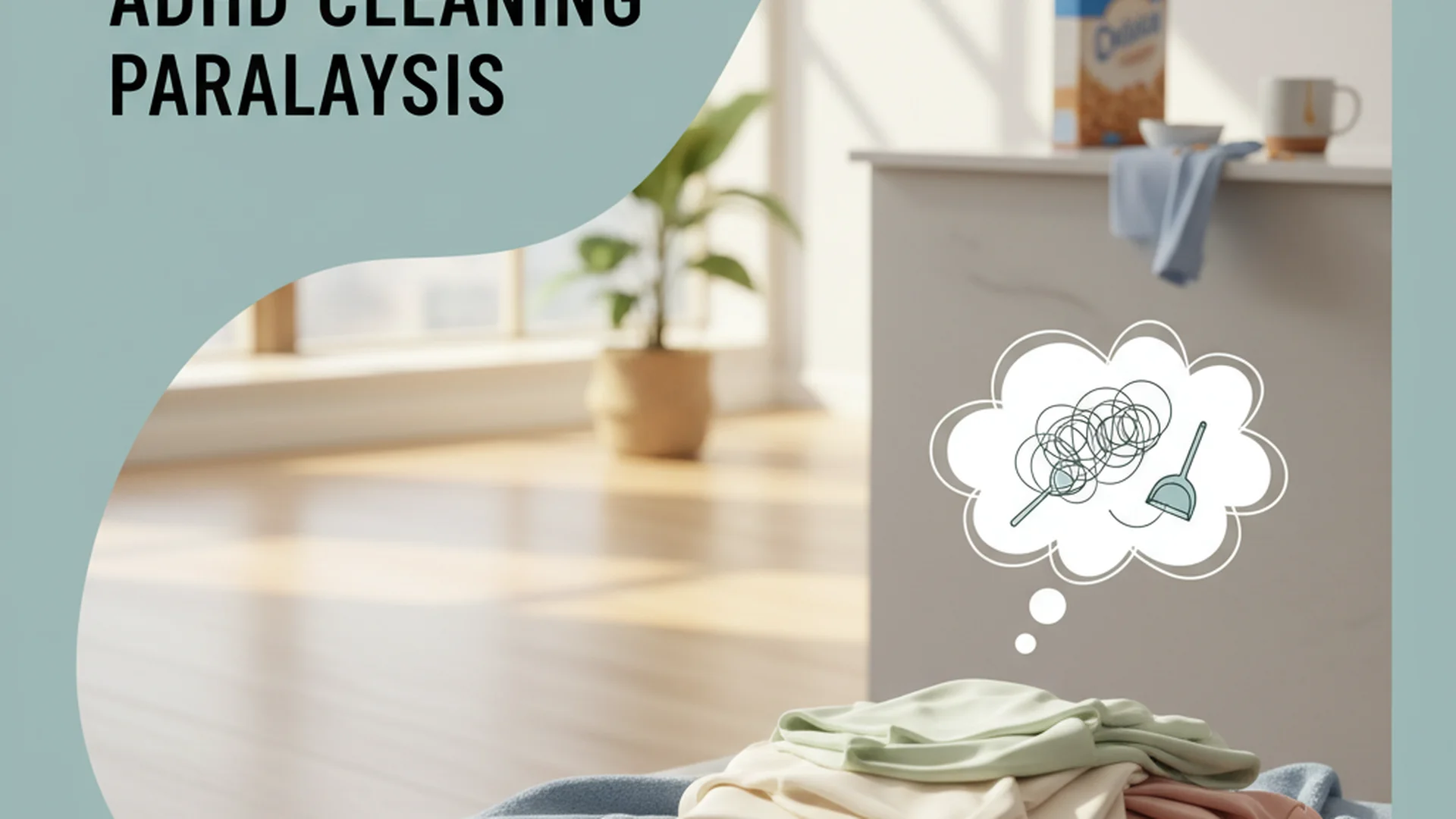
Executive function difficulties are a defining feature of ADHD. A bathroom clean involves a "swarm" of demands: the mirror, the sink, the toilet, the shower curtain, the floor, and the trash. To an neurotypical brain, this is one project. To an ADHD brain, it is a paralyzing list of 15–20 separate tasks. When the brain cannot decide where to start, it often chooses to do nothing at all—a state known as ADHD paralysis.
The Dopamine Deficit
ADHD brains have lower baseline levels of dopamine. Because cleaning a toilet provides zero "instant reward," your brain lacks the chemical ignition switch to start. This is why you can often clean a friend's house (where the novelty provides dopamine) but struggle with your own.
Time Blindness
Many people with ADHD either underestimate how long a task will take, leading them to avoid it entirely, or they lose hours to a "side-quest." This is why you might find yourself deep-cleaning the grout with a toothbrush while the rest of the house is in chaos.
Preparation: The ADHD "Set-Up"
The secret to successful ADHD bathroom cleaning is reducing "friction." Every barrier—like having to walk to the kitchen to grab a sponge—is an exit ramp for your focus.
Point of Performance
The most effective strategy for 2025 is "Point of Performance" cleaning. This means keeping a dedicated set of cleaning supplies inside the bathroom. If you have to leave the room to find the window cleaner, you will almost certainly get distracted by a stack of mail in the hallway on the way back.
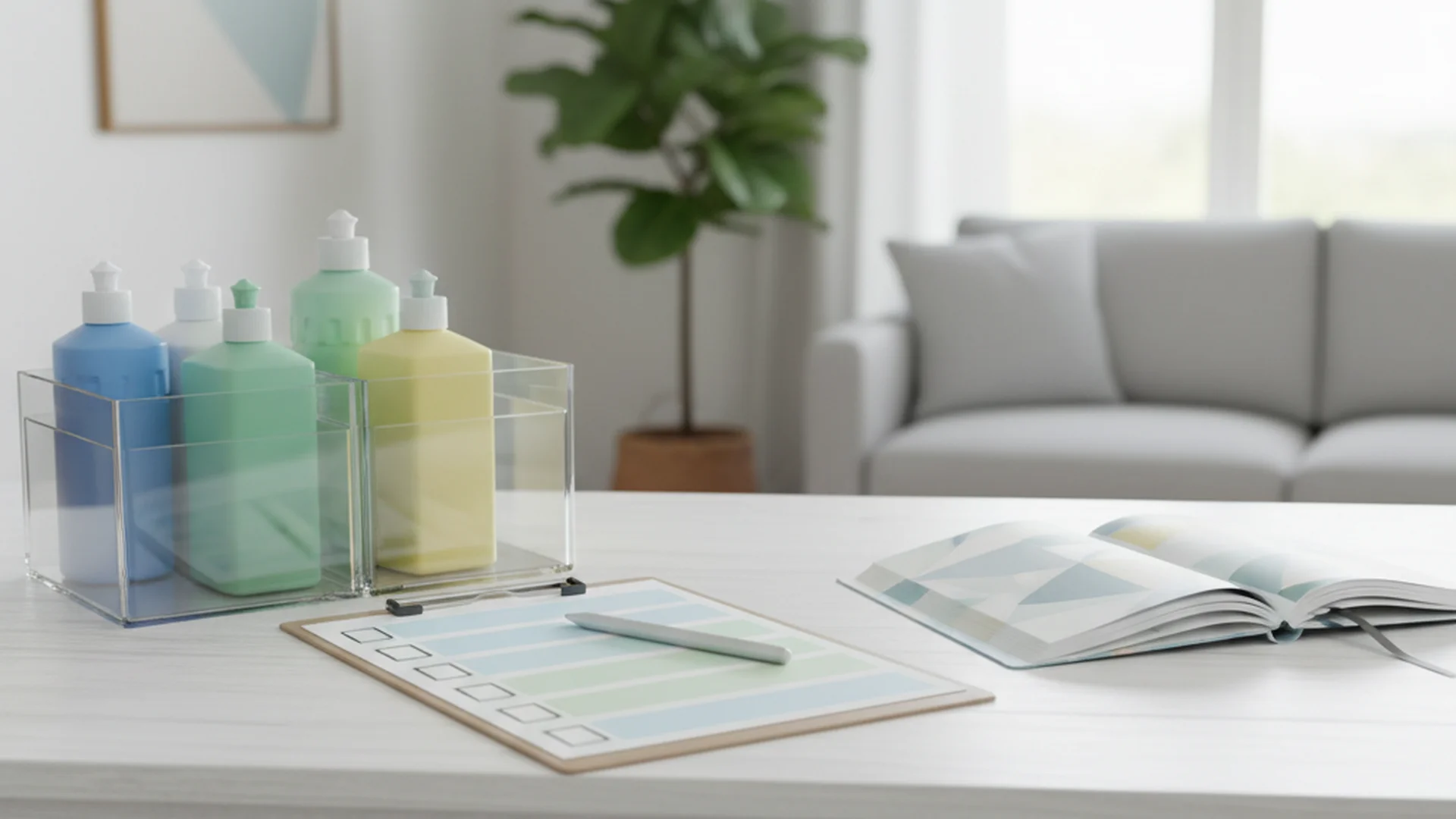
Tip: Keep a "cleaning caddy" or a small bin under every bathroom sink in the house. If the tool is within arm's reach when you notice the mess, you are far more likely to actually clean it.
Visible Storage and Object Permanence
"Out of sight, out of mind" is a literal struggle for those with ADHD. If your cleaning supplies are hidden behind a dark cabinet door, they effectively cease to exist.
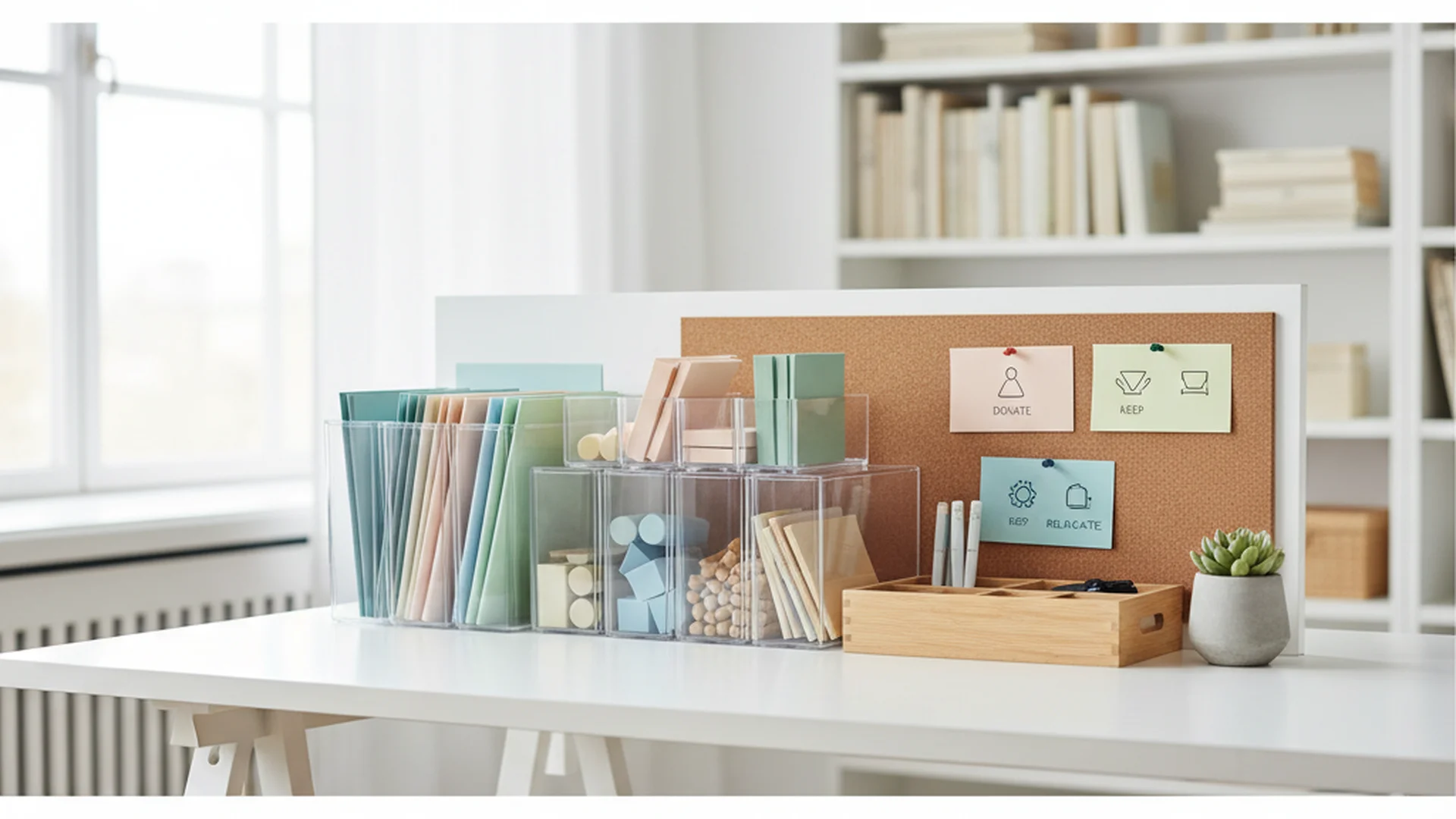
- Use Clear Bins: Use transparent containers so you can see exactly what you have.
- Open Shelving: Switch from closed cabinets to open shelves or baskets.
- The "House Bag": A rising trend in 2025 is the "cleaning purse"—a wearable caddy that keeps your essentials (phone, headphones, and wipes) on your person as you move.
Action: The "Doing" Phase
Once you’ve set the stage, you need a roadmap that prevents side-questing. Many in the ADHD bathroom cleaning Reddit community swear by the "5-Things Method," popularized by KC Davis.
The 5-Things Method
When the room feels like a disaster, look for only these five categories in order:
- Trash: Empty the bin and pick up any stray wrappers.
- Laundry: Toss damp towels and floor mats into a hamper.
- Dishes: Remove any water glasses or coffee mugs that have migrated to the vanity.
- Things with a place: Put away the toothpaste and hair dryer.
- Things without a place: Group these into a single basket to deal with later.
Note: Once these five things are handled, the "clutter" is gone, and the actual cleaning (scrubbing) becomes much less over-stimulating.
Body Doubling
Body doubling is the practice of having another person present—either physically or virtually—while you complete a task. You don't even have to talk. Having another "presence" keeps your brain anchored to the physical world and prevents you from drifting off into a daydream.
Success: Use a virtual body-doubling app or FaceTime a friend. Tell them: "I'm going to clean my bathroom for 20 minutes, stay on the line with me."
Dopamine Cues
Since the task itself isn't rewarding, you must "bundle" it with something that is.
- The Cleaning Playlist: Create a high-tempo playlist that you only listen to while cleaning.
- Audio Cues: Use the "one song" rule. Tell yourself you will only scrub the tub for the duration of one specific song.
- Gamification: Use AI-integrated apps that turn cleaning into a RPG (Role Playing Game), where cleaning the sink "levels up" your character.
| Method | Best For | Effort Level |
|---|---|---|
| 5-Things Method | Reducing Overwhelm | Low |
| Body Doubling | Staying on Task | Medium |
| Gamification | Task Initiation | Medium |
| Power Hour | Deep Cleaning | High |
Modern Trends in ADHD-Friendly Bathrooms (2025-2026)
As we move into 2026, home design is becoming more "neuro-inclusive." We are moving away from minimalist aesthetics that require constant maintenance and toward functional systems.
Neuro-Inclusive Design
Standard towel bars are an ADHD nightmare; they require a "perfect" fold. 2025 trends favor hooks instead of bars. It takes one second to hang a towel on a hook, whereas a bar requires a multi-step motor process that the ADHD brain often skips.
"Dopamine Decorating" for Utility
If your cleaning tools are "ugly" or "boring," you will avoid them. "Dopamine decorating" involves choosing cleaning tools in your favorite colors or with satisfying tactile feedback.
- Electric Spin Scrubbers: These tools do the hard work for you and provide a satisfying "haptic" reward.
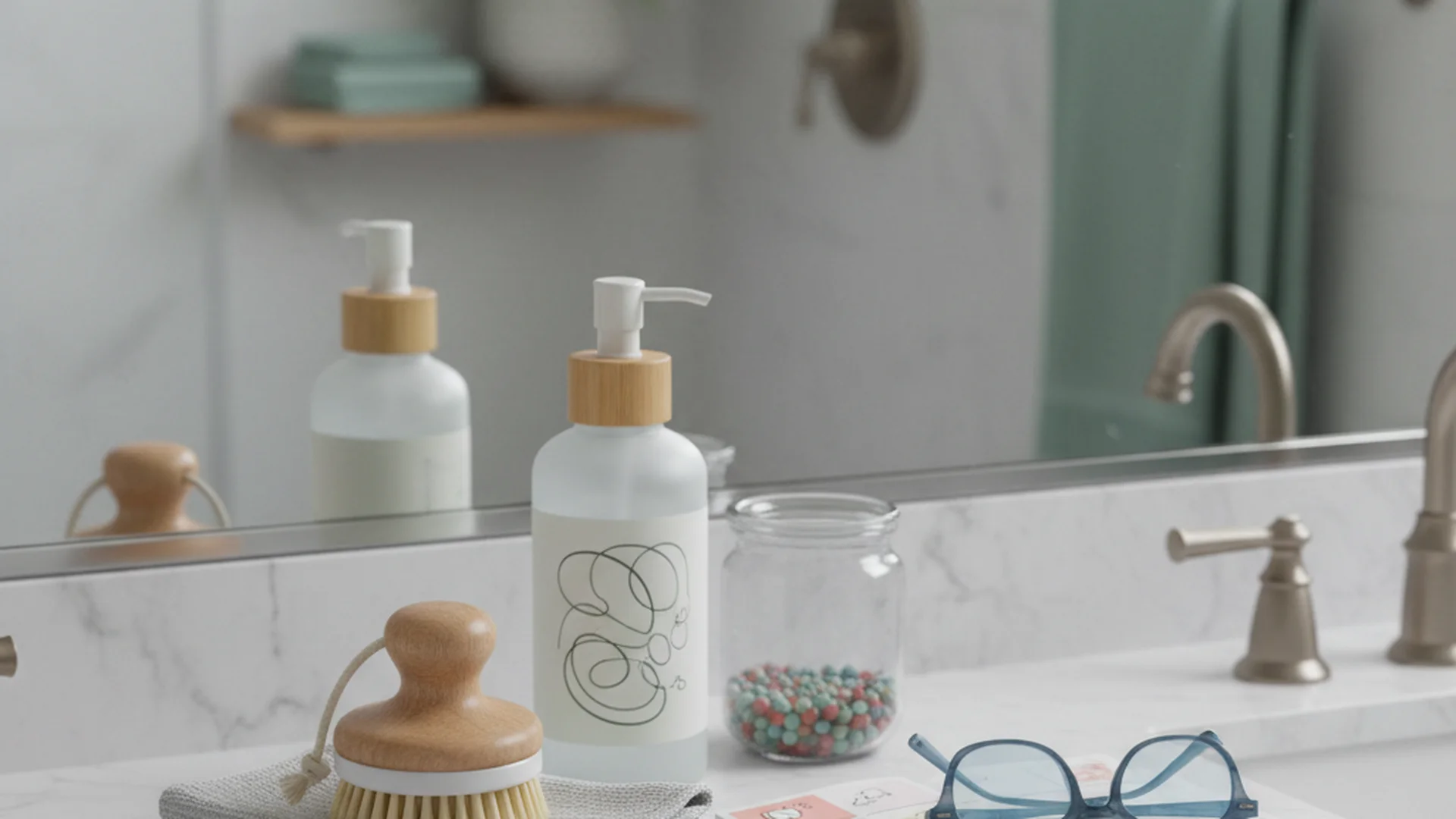
- Aesthetic Spray Bottles: Glass bottles with pretty labels can make the process feel like a ritual rather than a chore.
Sensory-Friendly Chemicals
Many people with ADHD have sensory processing sensitivities. The smell of harsh bleach can be a massive deterrent.
Warning: Avoid cleaning products with overwhelming chemical odors if they cause sensory "bore-out" or headaches. In 2025, there is a shift toward citrus, eucalyptus, and mint-based cleaners that act as focus-boosting stimulants rather than irritants.
Low-Demand Cleaning Hacks
Some days, the executive dysfunction is too heavy to lift. On those days, we practice "low-demand cleaning."
- The Shower Dish Wand: Keep a dish wand filled with a 50/50 mix of dish soap and vinegar in your shower. Scrub the walls while you are already in there waiting for your hair conditioner to sit.
- The Foot-Wipe Method: If you can’t bring yourself to mop, throw a disinfecting wipe on the floor and move it around with your foot while you brush your teeth.
- The Zero-Counter Rule: If you can do nothing else, clear the counter. Reducing the visual "noise" of the bathroom makes the next morning's routine much smoother.
Note: "Anything worth doing is worth doing poorly." A partially cleaned toilet is better than a toilet that hasn't been touched in a month because you were waiting for the "perfect" time to deep-clean it.
Common Mistakes to Avoid
Even with the best adhd bathroom cleaning tips, it is easy to fall into old traps. Here are the most common mistakes:
- The Binge-Deep-Clean Cycle: Waiting until the bathroom is a health hazard and then spending five hours cleaning it until you collapse. This reinforces the idea that cleaning is painful.
- Complex Organization Systems: Buying a 20-piece acrylic organizer set that requires you to decant every product. If a system has more than two steps, an ADHD brain will eventually abandon it.
- The Shame Spiral: Telling yourself "I'm just lazy" or "Normal people don't live like this." Shame is a terrible motivator; it actually freezes the brain's ability to initiate tasks.
- Over-Buying Supplies: Buying ten different "niche" cleaners for every surface. Stick to one high-quality all-purpose cleaner to reduce decision fatigue.
Frequently Asked Questions
How do I stop "side-questing" during bathroom cleaning?
Why is it easier to clean when someone is coming over?
What are the best adhd bathroom cleaning reddit tips?
How can I make cleaning feel less "gross"?
Conclusion
The goal of adhd bathroom cleaning is not to have a "Pinterest-perfect" home; it is to have a functional space that serves your needs. By embracing your neurobiology instead of fighting it, you can move away from the shame of the "messy bathroom" and toward a system that actually works for you. Remember: you don't have to clean the "right" way—you just have to clean the way that works for your brain today.
Success: By implementing "Point of Performance" and "Functional Cleaning," you are reclaiming your environment from the grip of executive dysfunction.
Cleaning that keeps score
Every task earns points, every streak multiplies them, and Premium adds a household leaderboard plus a monthly Dustagorgon to beat.
- Free forever
- 30 badges to earn
- Up to 6 in a household
No card needed. Set up your rooms in a couple of minutes.