In this article
What you’ll learn
- Establish distinct zones for sorting, processing, and finishing
- Maximize vertical space to keep essentials at arm's reach
- Incorporate "Warm Minimalism" to improve the room's aesthetic and mood
Laundry is a universal constant, but for many of us, it feels like an endless cycle of chaos. Research shows the average American spends between 62 and 240 hours per year on laundry tasks, including sorting, washing, drying, and folding. It is currently the third most time-consuming household chore, trailing only behind cooking and general cleaning. Because we spend so much of our lives in this space, effective laundry room organization isn't just about aesthetics—it’s about reclaiming your time and reducing the mental load of home management.
In this guide, we will explore the best laundry room organization strategies to transform your utility area from a cluttered catch-all into a streamlined efficiency hub. Whether you are dealing with a spacious mudroom or a compact hallway closet, these expert-backed tips will help you master your workflow for 2025 and beyond.
Why Your Laundry Room System Matters
With the average American family washing between 300 and 390 loads of laundry per year, the laundry room is one of the highest-traffic areas in the home. Despite this, it is often the most neglected during home organization projects.
Beyond saving time, a well-organized laundry room can actually save you money. Families spend roughly $180–$600 annually on detergents and supplies. When your space is cluttered, you are more likely to over-purchase items you already own or miss opportunities to treat stains before they become permanent.
Note: Proper organization also impacts your property value. In 2025, homebuyers are increasingly looking for "amenity" laundry spaces rather than hidden utility zones.
Designing the Perfect Workflow: The Three-Zone System
To achieve the best laundry room organization, professional organizers recommend dividing your space into three distinct "Zones." This prevents cross-contamination between clean and dirty items and ensures that every tool has a logical home.
1. The Sorting Zone (The "Incoming" Area)
This is where the process begins. Instead of a single, overflowing basket, implement a pre-sort system.
- Multi-Section Hampers: Use divided hampers labeled for Whites, Darks, and Delicates.
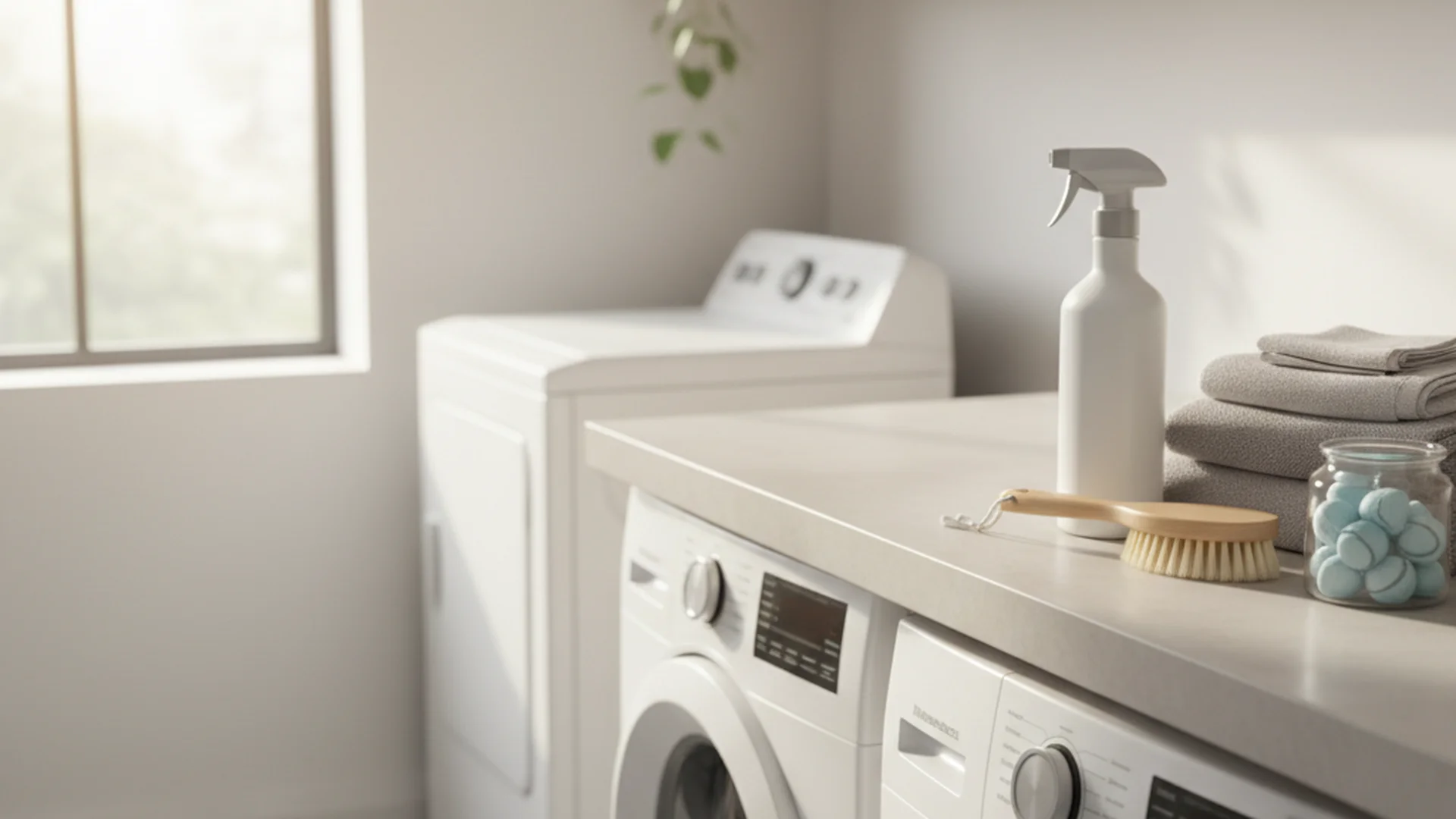
- The Stain Station: Keep a small basket here containing a soft brush, stain stick, and pre-wash spray. Treating a stain the moment it enters the room is the secret to longevity for your wardrobe.
2. The Processing Zone (The "Action" Area)
This zone encompasses your washer and dryer.
- The Arm’s Reach Rule: Store your everyday detergents, dryer balls, and measuring cups between waist and eye level.
- Surface Area: If you have front-loading machines, consider adding a "waterfall" countertop over them to create a seamless surface for sorting or holding supplies.
3. The Finishing Zone (The "Outgoing" Area)
This is where many people fail. Without a finishing zone, clean clothes often sit in the dryer or in baskets, leading to wrinkles.
- Folding Station: A dedicated flat surface is essential.
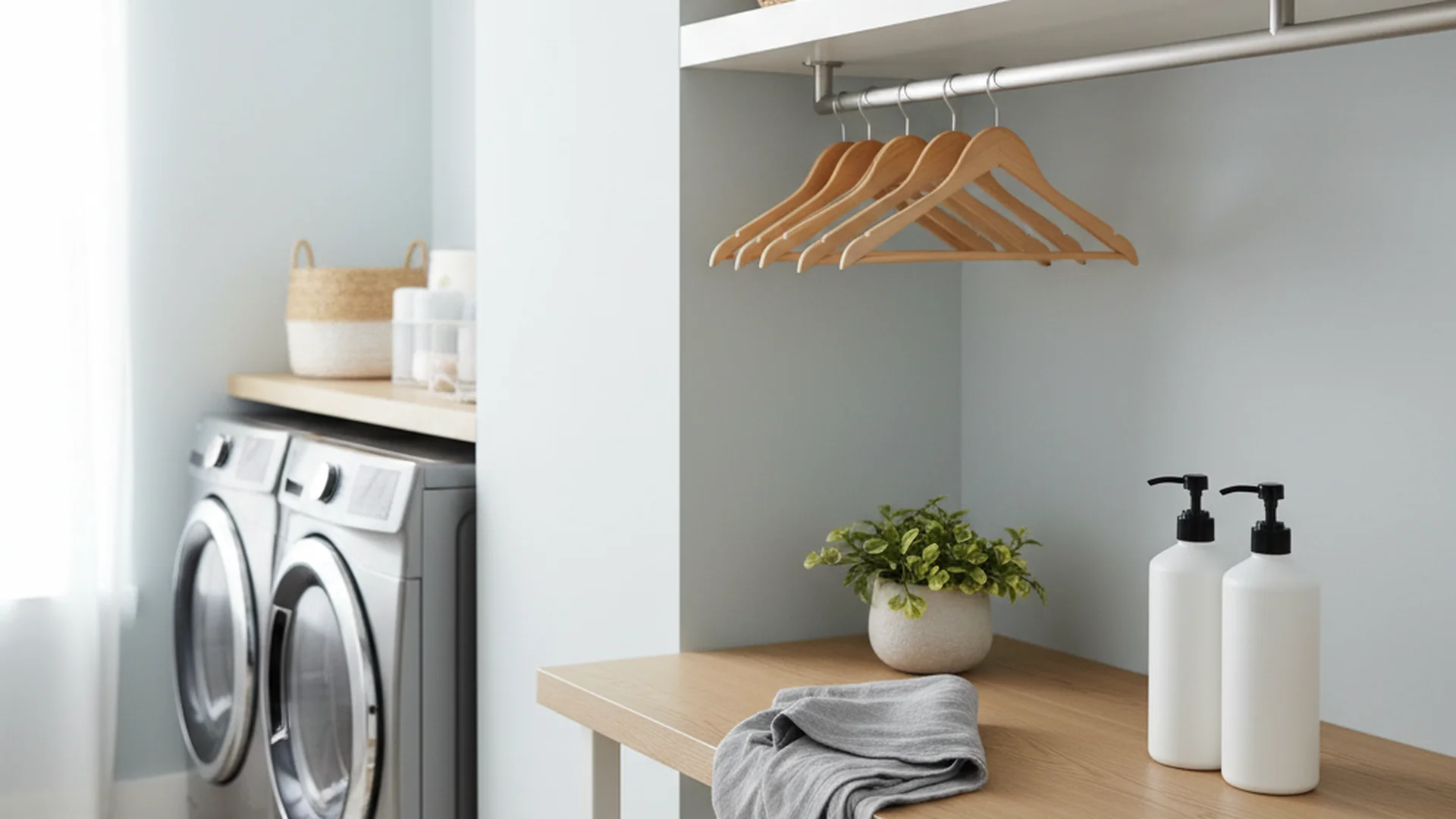
- Hanging Rods: Install a simple tension rod or wall-mounted rack for items that need to air-dry or be hung immediately after the dryer cycle ends.
Tip: Use the "Arm's Reach" rule for high-frequency items. If you use it every load, it shouldn't be on a top shelf.
Small Space Solutions: The "Invisible Laundry" Trend
Not everyone has a dedicated room for laundry. As urban living spaces become more compact, the "Invisible Laundry" trend has taken over 2025 design. This involves integrating high-efficiency appliances into unexpected places like hallways, bathrooms, or even kitchen cabinetry.
Maximizing Vertical Real Estate
If you lack floor space, look up. Install cabinets that reach the ceiling for infrequently used items like seasonal linens or bulk-buy paper products. Wall-mounted drying racks that fold flat against the wall are a lifesaver for small apartments.
Over-the-Door Organizers
Don't ignore the back of the door. An over-the-door rack can hold your ironing board, iron, and various spray bottles, keeping your floor clear and your pathways open.
Warning: Never block the airflow of your dryer. Storing heavy boxes on top of the machine or overstuffing shelves around it can create a fire hazard and reduce efficiency.
2025-2026 Trends: The Laundry Room as a Sanctuary
The clinical, "Millennial Grey" laundry rooms of the past are officially out. The new trend for 2025 is "Warm Minimalism." This design philosophy uses earthy tones like mushroom, putty, and flax to create a "sanctuary" feel. The goal is to make the room a place where you don't mind spending time.
Smart Integration
Modern machines now feature AI-driven "auto-dosing," where the machine determines the exact amount of detergent needed. This reduces waste and eliminates the need for giant detergent jugs to be out on the counter. Syncing these appliances with your smart home ecosystem allows for notifications on your phone, so you never forget a load in the washer.
Sustainable Materials
Eco-friendly materials are at the forefront of laundry room design. We are seeing a shift toward:
- Bamboo Shelving: Naturally moisture-resistant and sustainable.
- Stone Countertops: Quartz is preferred for its durability in high-humidity environments.
- Glass Decanting: While some organizers find it tedious, decanting detergents into glass jars reduces plastic visual clutter and allows you to see exactly when you are running low.
| Feature | Traditional Design | 2025 Trend Design |
|---|---|---|
| Color Palette | Stark White / Grey | Earthy Mushroom / Flax |
| Material | Plastic / Laminate | Bamboo / Stone / Glass |
| Appliance Style | Side-by-Side | Stackable / Integrated |
| Organization | Open Wire Shelving | Hidden Modular Cabinets |
Real-World Examples of Laundry Room Success
Example 1: The Closet Conversion
A homeowner in a small urban condo removed the bifold doors of a hallway closet and installed stackable units. By adding floating wooden shelves above the machines and a slim pull-out cart between the machine and the wall, they created a fully functional laundry "room" in less than 10 square feet.
Example 2: The Multi-Purpose Mudroom
A suburban family combined their laundry room with a pet washing station. They used lower cabinetry for pet food and leashes, while upper cabinets were reserved for laundry supplies. This "Command Center" hybrid approach maximized their footprint and kept all "dirty" household tasks in one waterproof zone.
Example 3: The Eco-Conscious Station
An environmentally-focused user replaced all plastic bins with wicker baskets and installed a ceiling-mounted "pulley" drying rack (a traditional "pulleymaid"). This allowed them to air-dry 80% of their laundry, significantly reducing their energy bill and machine wear-and-tear.
Success: Following a "Zones" approach can reduce the time spent on a single load of laundry by up to 15 minutes.
Common Mistakes to Avoid
Even with the best intentions, certain mistakes can derail your laundry room organization tips.
- Neglecting Ventilation: High-efficiency dryers still produce heat and moisture. Failing to use an exhaust fan can lead to mold and mildew inside your beautiful new cabinets.
- Poor Lighting: Relying on a single overhead bulb makes it impossible to see small stains or distinguish between navy and black socks. Install under-cabinet LED strips for better task lighting.
- Over-Organizing: Don't buy 20 different specialized bins before you know what you actually need. If a system is too complex to maintain, it will fail within a week.
- Ignoring Ergonomics: If you find yourself constantly bending over, consider installing your front-loaders on pedestals. 2026 trends emphasize pull-out folding shelves at waist height to reduce physical strain.
- Storing Perishables: Because laundry rooms fluctuate in temperature and humidity, avoid using them as "overflow" pantry space. Heat can cause food to spoil faster and attract pests.
Frequently Asked Questions
What should (and shouldn't) be stored in a laundry room?
Store: Detergents, stain removers, ironing tools, sewing kits, and cleaning rags. Avoid: Perishables, harsh outdoor chemicals (which can create dangerous fumes when mixed with laundry heat), and bulky furniture that blocks the path to the machines.
How do I organize a laundry room with no space?
Utilize "Invisible Laundry" techniques. Use stackable units, wall-mounted drying racks, and the backs of doors. Vertical space is your best friend in a small laundry area.
Is decanting detergent into glass jars worth it?
It is worth it if it simplifies your workflow. Functional benefits include seeing exactly when you’re low on product and eliminating bulky, neon-colored plastic packaging. However, if you find the process of pouring detergent into a jar frustrating, skip it.
How can I make laundry day faster?
The most effective way to speed up laundry day is a pre-sort system. If your clothes are already divided into Whites, Darks, and Lights at the point of disposal, you can start the machine immediately without a 10-minute sorting session.
Conclusion
Mastering laundry room organization is about more than just matching bins and pretty labels. It is about creating a functional system that supports your lifestyle and respects your time. By establishing clear zones, utilizing vertical space, and avoiding common ergonomic mistakes, you can turn a tedious chore into a streamlined routine.
As we move into 2025 and 2026, remember that your laundry room is a vital part of your home’s "health." Treat it with the same design care as your kitchen or living room, and you will find that the burden of laundry becomes significantly lighter.
Success: A clean, organized laundry room reduces domestic stress and extends the life of your clothing.
Cleaning that keeps score
Every task earns points, every streak multiplies them, and Premium adds a household leaderboard plus a monthly Dustagorgon to beat.
- Free forever
- 30 badges to earn
- Up to 6 in a household
No card needed. Set up your rooms in a couple of minutes.