In this article
What you’ll learn
- Use enzymatic cleaners to break down uric acid crystals permanently.
- Implement the 'Litter Box + 1' rule to prevent out-of-box accidents.
- Leverage 2026 AI technology like smart litter boxes and high-suction robot vacuums.
Owning a cat is one of life’s greatest joys, but for many, the challenge of maintaining a pristine home can feel like a losing battle. Cats live in millions of homes, and their popularity has climbed steadily in recent years. However, despite our love for them, plenty of would-be owners hesitate to adopt because they fear the "cleanliness barrier." If you’ve ever wondered how to keep house clean cats style without spending every waking hour scrubbing floors, you aren't alone. Balancing a hygienic environment with a multi-cat household requires more than just a standard broom; it requires a blend of smart technology, biological science, and strategic daily habits.
The Foundation of a Clean Cat Home
The best way keep house clean cats owners have found is to stop the mess before it spreads. This starts with understanding that cat "dirt" isn't just mud from paws; it is a combination of fur, dander, litter dust, and biological proteins.
The "Litter Box + 1" Rule
One of the most common causes of household messes is the "out-of-box" accident. Behavioral experts and the ASPCA recommend the "plus one" rule: you should always have one more litter box than you have cats. If you have two cats, you need three boxes. This prevents territorial guarding and ensures that if one box is "too dirty" for a finicky feline, they have a clean alternative rather than choosing your living room rug.
Managing Litter Tracking
Litter tracking is the number one complaint among cat owners. To solve this, look at the physical layout of your litter station.
- Top-Entry Boxes: These force the cat to jump out, shaking off excess litter back into the pan.
- Double-Layer Honeycomb Mats: These specialized mats trap granules in a middle layer, preventing them from being kicked across the hardwood.
- The Switch to Sustainable Litters: In 2025, we’ve seen a massive shift toward tofu and pine litters. Unlike traditional clay, these are virtually dust-free and don't create that fine gray film on your furniture.
Tip: Place a high-sided litter box inside a decorative cabinet to contain spray and dust while keeping your home's aesthetic intact.
The Science of Odor: Why Traditional Cleaners Fail
Have you ever cleaned a spot only to have the smell of urine return on a humid day? This is due to the biology of cat waste. Standard household cleaners—and even some labeled "pet safe"—often only mask odors with heavy fragrances.
According to Earthworm Research, 97% of standard cleaners fail to eliminate the source. Cat urine contains uric acid crystals which can stay dormant in carpet fibers for years. When humidity rises, these crystals reactivate and release that pungent ammonia smell.
The Enzyme Rule
To truly keep house clean cats tips usually lead back to one essential product: enzymatic cleaners. These products contain proteases and other enzymes that "digest" the proteins and uric acid crystals at a molecular level.
Warning: Never use ammonia-based cleaners (like Windex) to clean cat messes. Because cat urine contains ammonia, the scent of these cleaners can actually trick your cat into thinking the spot is a territory marker, encouraging them to "re-mark" the area.
| Cleaner Type | Action | Effectiveness on Urine |
|---|---|---|
| Bleach | Disinfects / Whitens | Low (Masks only) |
| Vinegar | Acidic Neutralizer | Medium (Temporary) |
| Enzymatic | Molecular Breakdown | High (Permanent) |
Strategic Furniture and Fabric Choices
If you want to maintain a clean-looking home, you have to choose fabrics that don't act as "fur magnets."
Pet-Friendly Materials
- Microfiber: The tight weave makes it difficult for fur to embed itself, and most stains can be wiped away with a damp cloth.
- Velvet: Surprisingly, cats often dislike the feel of velvet for scratching, and its lack of looped fibers means claws don't get snagged.
- Washable Throws: This is the ultimate "pro tip." Place high-quality, washable throws on the specific corners where your cat loves to nap. Once a week, toss the throw in the wash, and 90% of the airborne fur in that room is gone.
The "Rub Line" Phenomenon
Cats have scent glands in their cheeks. When they rub against wall corners and chair legs, they leave behind oils. Over time, these oils attract dust, creating a dark, grimy "rub line."
Note: Use a damp microfiber cloth with a tiny drop of dish soap to wipe down vertical surfaces (door frames, table legs) once a week to prevent permanent staining of your paintwork.
The 2025-2026 Tech Revolution in Pet Cleaning
We are currently living in the golden age of pet hygiene technology. If your budget allows, moving toward AI-driven solutions can reduce your cleaning workload by up to 70%.
AI-Driven Hygiene
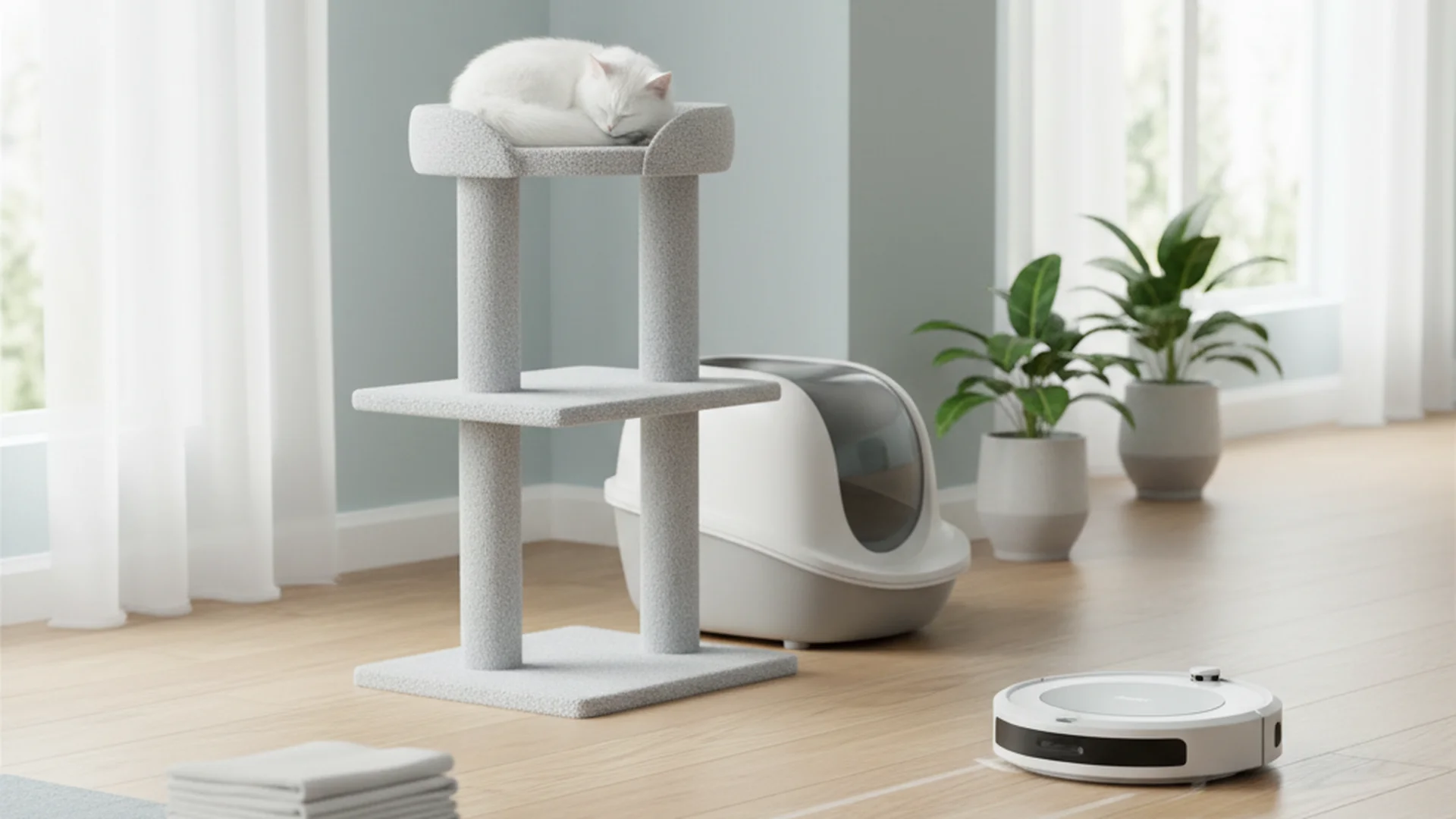
New "Smart Health" litter boxes, such as the Litter-Robot 4 or the PetKit Purroobot Ultra, have changed the game. These devices use AI to track how often your cat visits and even record their weight. Not only do they self-scoop—meaning the litter is always clean—but they alert you via app to potential health issues like UTIs before they result in a mess on your carpet.
Ultra-Suction Robot Vacuums
The latest 2026 models, including the Roborock S8 MaxV Ultra, now feature suction power upwards of 22,000 Pa. More importantly, they feature "Pet Vision" AI. These vacuums are trained on millions of images to specifically identify and navigate around pet waste, avoiding the "poop-pocalypse" scenarios that plagued earlier robot vacuums.
Success: Integrating a HEPA-filter robot vacuum into your daily routine can reduce airborne dander and allergens by 99.97%, significantly improving air quality for both you and your cat.
Common Mistakes to Avoid
Even the most dedicated cat owners often fall into these cleaning traps:
- Thinking "Self-Grooming" is Enough: While cats are meticulous, they don't actually remove dead hair; they swallow it. This leads to hairball vomit. Regular 5-minute daily brushing can reduce household fur and hairball incidents by 50%.
- Using Scented Sprays: Many people try to cover cat smells with essential oil diffusers. This is dangerous. Oils like tea tree, peppermint, and citrus are toxic to cats and can lead to liver failure.
- Ignoring the Vacuum Filter: A vacuum without a HEPA filter often just sucks up dander and blows the smaller particles back out into the air. If you can smell "pet" when you vacuum, your filter is failing.
- Washing Pet Bedding with Human Clothes: Cat hair is stubborn. Always wash pet items separately and use a "pet hair dissolver" additive in the laundry to prevent clogging your machine's drainage system.
Frequently Asked Questions
How do I stop my cat from tracking litter everywhere?
Why does the cat urine smell keep coming back?
How often should I vacuum if I have cats?
Can I use essential oils to make my house smell better?
What is the best fabric for cat owners?
Conclusion
Keeping a clean home while sharing it with cats doesn't have to be a full-time job. By shifting your focus toward enzymatic solutions, embracing AI technology like self-cleaning boxes, and establishing a 10-minute daily maintenance routine, you can enjoy a spotless environment. Remember, a clean house isn't just for your comfort—it’s vital for your cat’s health too. Reducing dust, dander, and bacteria creates a safer "territory" for your feline friend to thrive in.
Success: By implementing the "Enzyme Rule" and daily grooming, you can reduce household pet odors and fur by over 70% within the first two weeks.
Cleaning that keeps score
Every task earns points, every streak multiplies them, and Premium adds a household leaderboard plus a monthly Dustagorgon to beat.
- Free forever
- 30 badges to earn
- Up to 6 in a household
No card needed. Set up your rooms in a couple of minutes.