In this article
What you’ll learn
- Air sealing and cleaning can take a real bite out of monthly energy bills.
- Always use a HEPA-filter vacuum to avoid circulating allergens.
- Never sweep rodent droppings; always disinfect and vacuum to prevent disease.
For many homeowners, the attic is a "set it and forget it" space—a dark corner of the house reserved for holiday decorations and old photo albums. However, learning how to clean attic spaces is one of the most impactful maintenance tasks you can perform for your home’s health. In 2025, we are seeing a massive shift in how homeowners view their attics, moving from simple storage areas to critical components of home efficiency and indoor air quality. A neglected attic isn't just dusty; it can be a source of rising energy costs, respiratory irritants, and even fire hazards.
In this comprehensive guide, we will walk through the modern standards for attic maintenance, incorporating the latest safety protocols and sustainable cleaning technologies to ensure your home remains a sanctuary.
Why Attic Cleaning Matters in 2025
The connection between your attic and your living room is closer than you might think. Due to a phenomenon known as the "Stack Effect," warm air rises and escapes through the top of your house, creating a vacuum that pulls air—and whatever is in it—from the attic down into your living spaces through recessed lights and cracks.
Energy Efficiency and Cost Savings
Homeowners can cut a meaningful slice off their heating and cooling costs simply by air sealing their attics and ensuring insulation is clean and properly distributed. In an era where energy prices are volatile, a clean attic is a financial asset. Small energy leaks quietly cost you money year after year, and they are often only discovered during a deep clean.
Improving Indoor Air Quality
The air inside a sealed-up house is often dirtier than the air outside it. A neglected attic acts as a reservoir for dust mites, mold spores, and rodent dander. When your HVAC system runs, these particles circulate throughout your home. Cleaning your attic is, in many ways, cleaning the very air you breathe.
Preventing Structural Damage and Fire Hazards
Neglect can be costly. Rodents chewing through electrical wiring in attics are a well-known cause of house fires. Regular inspections during cleaning also catch most common structural issues, such as roof leaks or wood rot, before they turn into five-figure repairs.
Success: More and more homeowners are prioritizing preventative maintenance like attic cleaning to avoid the skyrocketing costs of emergency home repairs.
The Ultimate Attic Cleaning Checklist
Before you head upstairs, you need a plan. Use this attic cleaning checklist to ensure you don't miss any critical steps.
- Safety Prep: Gather PPE and check lighting.
- De-cluttering: Sort items into Keep, Donate, and Trash.
- Dusting and Surface Cleaning: Work from top to bottom.
- Vacuuming: Use a HEPA-certified machine.
- Inspection: Check for pests, mold, and leaks.
- Sanitization: Use enzyme-based cleaners for organic waste.
- Air Sealing: Close gaps around pipes and wires.
Step 1: Safety and Preparation
Cleaning an attic is not like cleaning a bedroom. The environment can be hazardous due to extreme temperatures, cramped quarters, and potential biohazards.
Essential Personal Protective Equipment (PPE)
- Respirator: A NIOSH-approved N95 or N100 respirator is non-negotiable to protect against insulation fibers and mold.
- Clothing: Wear long sleeves, long pants, and disposable coveralls if possible.
- Eye Protection: Wrap-around safety goggles prevent dust from entering your eyes.
- Gloves: Heavy-duty work gloves protect against sharp nails and pests.
Warning: Never step off the wooden rafters (joists). Stepping on the insulation or the drywall between joists can result in you falling through the ceiling into the room below.
Timing Your Clean
Early spring or late autumn are the best times for this project. During the summer, attic temperatures can soar above 130°F, posing a significant risk of heatstroke.
Step 2: The De-Cluttering Phase
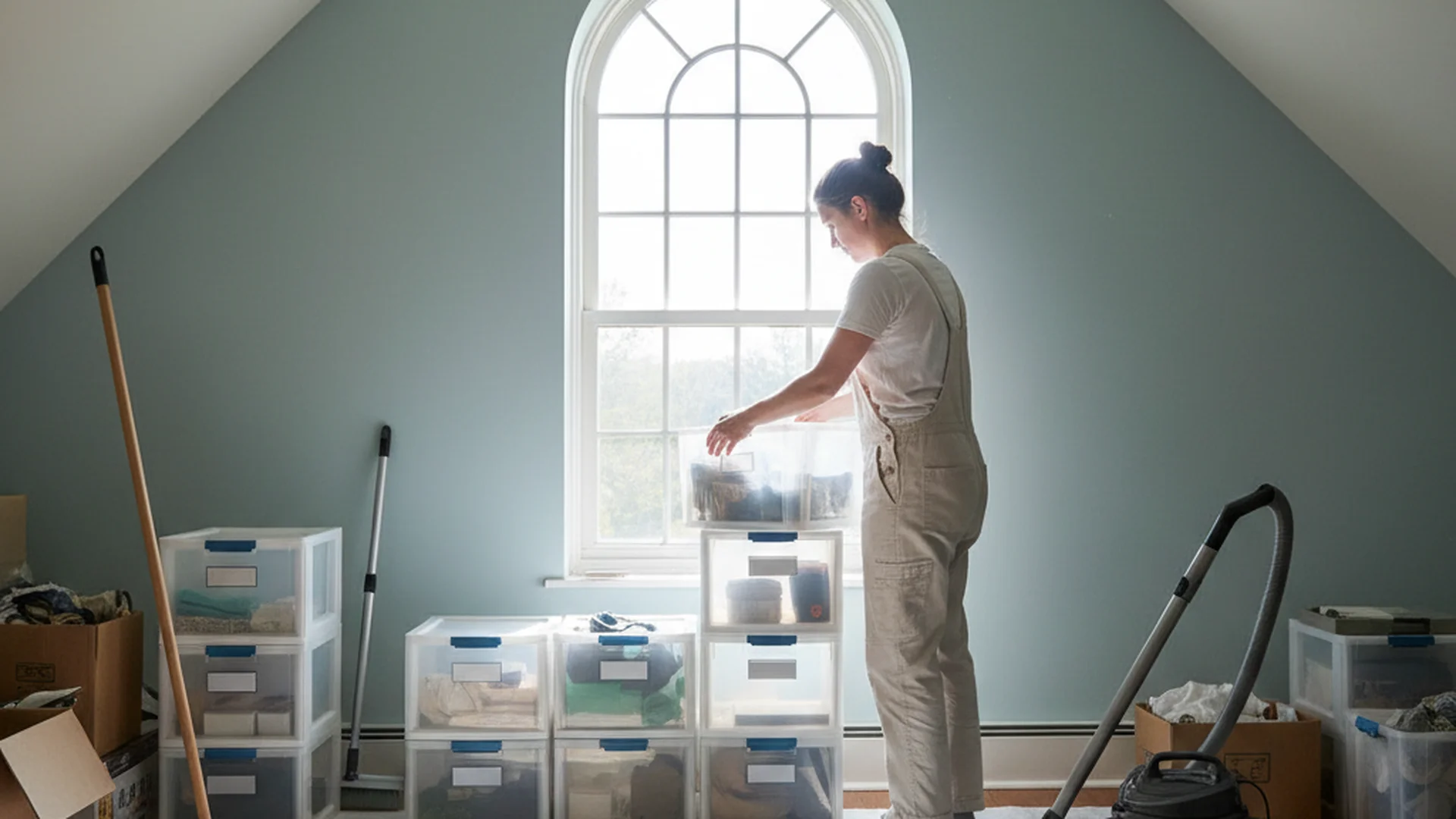
You cannot clean what you cannot see. The first step in how to clean attic spaces effectively is removing the "stuff."
The Three-Pile Method
Sort everything into three categories:
- Keep: Items you actually use or have deep sentimental value.
- Donate: Functional items that no longer serve you.
- Trash: Broken items or anything showing signs of pest damage.
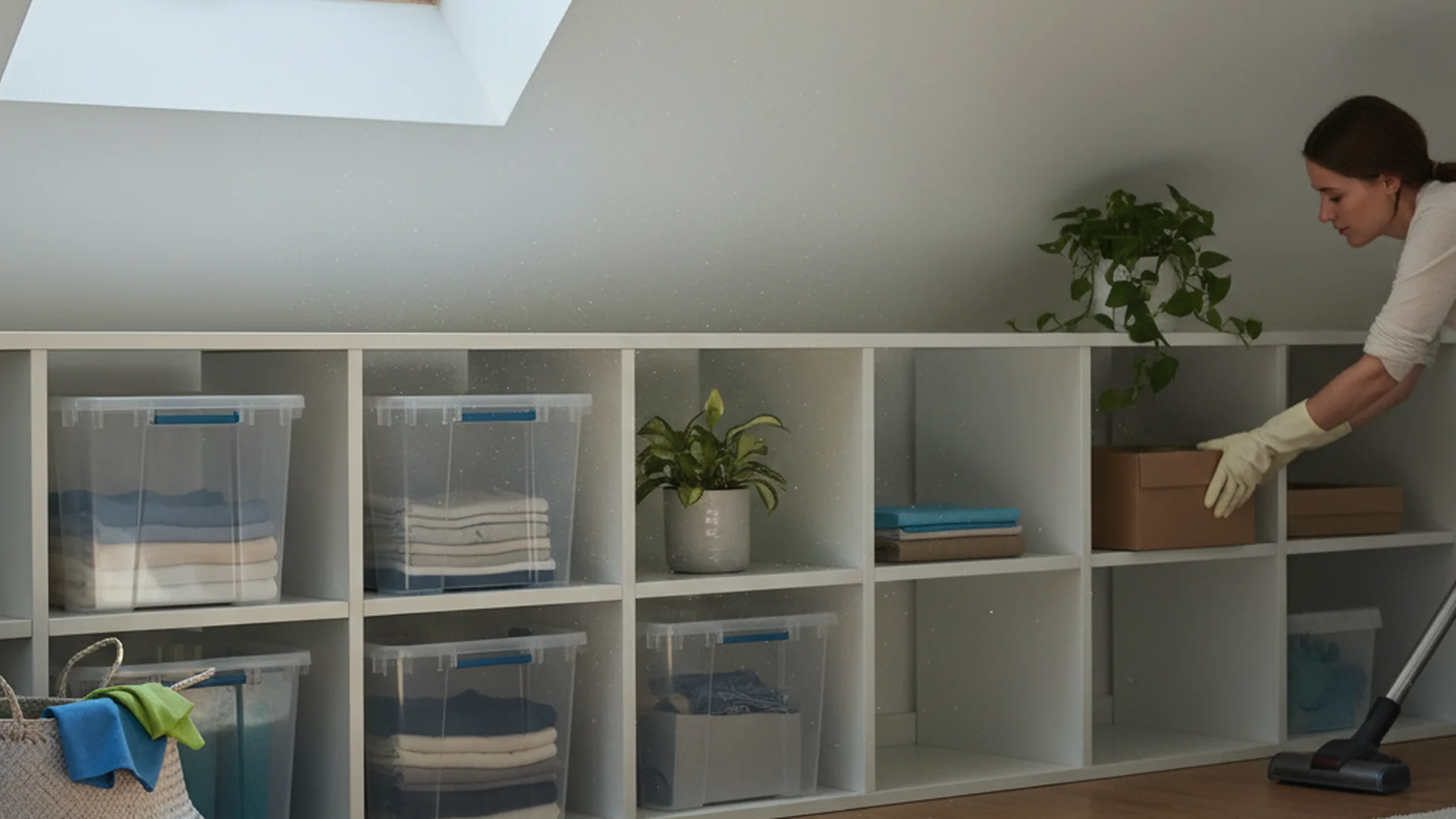
Tip: Replace old cardboard boxes with clear plastic bins. Pests like silverfish and mice eat cardboard, but plastic bins provide a sealed barrier that keeps your belongings safe and makes it easier to see what’s inside.
Real-World Example: A homeowner in Seattle recently discovered that their "mystery allergy" was actually caused by a collection of damp cardboard boxes in the attic that had developed a colony of black mold. By switching to plastic bins and cleaning the space, their symptoms disappeared within a week.
Step 3: Deep Cleaning Techniques
Once the floor space is clear, it's time to tackle the dust and grime.
HEPA Vacuuming
Standard household vacuums are insufficient for attics. They often lack the filtration necessary to trap fine dust and instead exhaust it back into the air. You must use a vacuum with a High-Efficiency Particulate Air (HEPA) filter. This is especially critical if you suspect any history of rodents or mold.
Electrostatic Dusting
Instead of using a broom, which kicks dust into the air, use electrostatically charged cloths. These "magnetize" the dust, trapping it within the fibers. Focus on:
- Rafters and cross-beams
- Ventilation fans
- Light fixtures
- The tops of storage bins
Sanitization and Odor Removal
If you find signs of past rodent activity, standard soap and water won't cut it. Use an enzyme-based cleaner. These specialized formulas break down the pheromones left behind in animal urine and droppings, which prevents other pests from being attracted to your home.
Step 4: 2025–2026 Trends in Attic Care
As we move further into 2025, new technologies are making attic maintenance easier and more eco-friendly.
Smart Attic Sensors
Many modern homeowners are installing IoT moisture and temperature sensors. These small devices connect to your smartphone and alert you to humidity spikes or leaks the moment they happen. This "set it and forget it" technology prevents mold growth before it starts.
Bio-Based Insulation
If your cleaning reveals that your insulation needs replacing, consider the shift toward sustainable materials. In 2026, bio-based options like Hempcrete, sheep’s wool, and recycled denim are replacing traditional fiberglass. These materials are non-toxic, have higher fire resistance, and are much easier to handle during cleaning.
AI-Driven Energy Audits
You no longer need an expensive professional to find air leaks. New smartphone apps can now interface with thermal sensors to identify "hot spots" in your attic. During your clean, use these tools to see exactly where your home is losing heat.
| Technology | Benefit | Estimated Cost (2025) |
|---|---|---|
| IoT Moisture Sensors | Early leak detection | $30 - $60 per unit |
| HEPA Shop Vac | Superior dust filtration | $150 - $300 |
| Thermal Camera Attachment | Identify insulation gaps | $200 - $400 |
| Enzyme Cleaners | Neutralize pest pheromones | $15 - $30 |
Common Mistakes to Avoid
Even with the best attic cleaning tips, a few common errors can compromise your hard work.
Mistake 1: Sweeping Rodent Droppings
Never sweep or use a standard vacuum on rodent droppings. This aerosolizes dangerous pathogens like Hantavirus.
- The Fix: Mist the area with a bleach solution or disinfectant first to weigh down the particles, then use a HEPA vacuum while wearing a respirator.
Mistake 2: Blocking Soffit Vents
When homeowners reorganize or add insulation, they often push items all the way to the edges of the attic, blocking the soffit vents. This kills airflow.
- The Fix: Use baffles (plastic chutes) to ensure a clear path for air to travel from the eaves to the ridge vent.
Mistake 3: The "More is Better" Insulation Myth
Adding more insulation without sealing air leaks is like putting a thick sweater over a mesh shirt. The air will still blow through.
- The Fix: Focus on the "Air Seal" first. Use spray foam or caulk to seal gaps around wires, pipes, and the attic hatch before worrying about the thickness of the insulation.
Frequently Asked Questions
How often should I clean my attic?
Can I clean my attic myself?
How do I know if I have a pest problem?
What is the best time of year to clean?
Does cleaning the attic help with allergies?
Conclusion: A Healthier Home Starts at the Top
Mastering how to clean attic spaces is about more than just aesthetics; it is about protecting your family's health and your biggest financial investment. By following this 2025 guide—utilizing HEPA filtration, enzyme-based sanitizers, and smart monitoring technology—you can transform your attic from a dusty liability into a clean, energy-efficient asset.
Real-World Example: A homeowner in Chicago spent a weekend and a few hundred dollars on a DIY attic deep clean and air sealing project. By the following winter, their gas bill had dropped noticeably, and their daughter's chronic nighttime cough had significantly improved.
Success: A clean attic ensures your home operates at peak efficiency while providing the highest possible air quality for your family.
Cleaning that keeps score
Every task earns points, every streak multiplies them, and Premium adds a household leaderboard plus a monthly Dustagorgon to beat.
- Free forever
- 30 badges to earn
- Up to 6 in a household
No card needed. Set up your rooms in a couple of minutes.