In this article
What you’ll learn
- Master the top-to-bottom cleaning flow for maximum efficiency
- Understand the importance of "dwell time" for true disinfection
- Learn to avoid dangerous chemical mixtures and common scrubbing errors
The half bath—often referred to as the powder room—is one of the most hardworking spaces in any home. While it lacks a tub or shower, its high frequency of use, especially by guests, makes half bath cleaning a top priority for maintaining a healthy and inviting home. Beyond simple aesthetics, a clean half bath is a significant financial asset; a well-maintained powder room is one of the details buyers notice, and it lifts the impression a home makes on viewing day.
Whether you are prepping for a holiday party or simply performing your weekly maintenance, having a structured half bath cleaning checklist ensures that no corner is overlooked and no germ is left behind. In this guide, we will dive into professional protocols, emerging 2026 trends, and the science of sanitization to keep your small space sparkling.
Why the "Powder Room" Requires Special Attention
The term "powder room" dates back to the 17th and 18th centuries, when it was a literal room where aristocrats would retreat to re-powder their elaborate wigs. By the Victorian era, it became a polite euphemism for a place to "powder one’s nose." Today, it serves as the primary restroom for visitors, making it a "public-facing" part of your private life.
Because these rooms are typically small and lack the high-moisture ventilation of a full bath, they face unique challenges. For instance, the "toilet plume" effect is a major concern. Flushing with the lid up sends aerosolized particles (including E. coli) out in every direction. In a compact half bath, that spray reaches the sink, the hand towels, and even the mirror.
Warning: To prevent the spread of bacteria, always close the toilet lid before flushing. This simple habit protects every other surface in the room from aerosolized contamination.
The Professional Half Bath Cleaning Checklist
To clean like a professional, you must follow the "Top-to-Bottom" flow. This ensures that any dust or cleaning solution that drips or falls lands on a surface you haven't cleaned yet.
1. Dusting and High-Level Surfaces
Always start at the highest point. Dusting first prevents you from getting "gritty mud" on surfaces later when you apply liquid cleaners.
- Light Fixtures: Use a microfiber cloth to remove dust from bulbs and shades.
- The Mirror: Dust the frame before cleaning the glass.
- Air Vents: Use a vacuum with a brush attachment. A clogged exhaust fan prevents air circulation and can lead to hidden mold.
Tip: Never apply liquid cleaners directly to a dusty surface. Dry dust first to avoid creating streaks that are difficult to buff out.
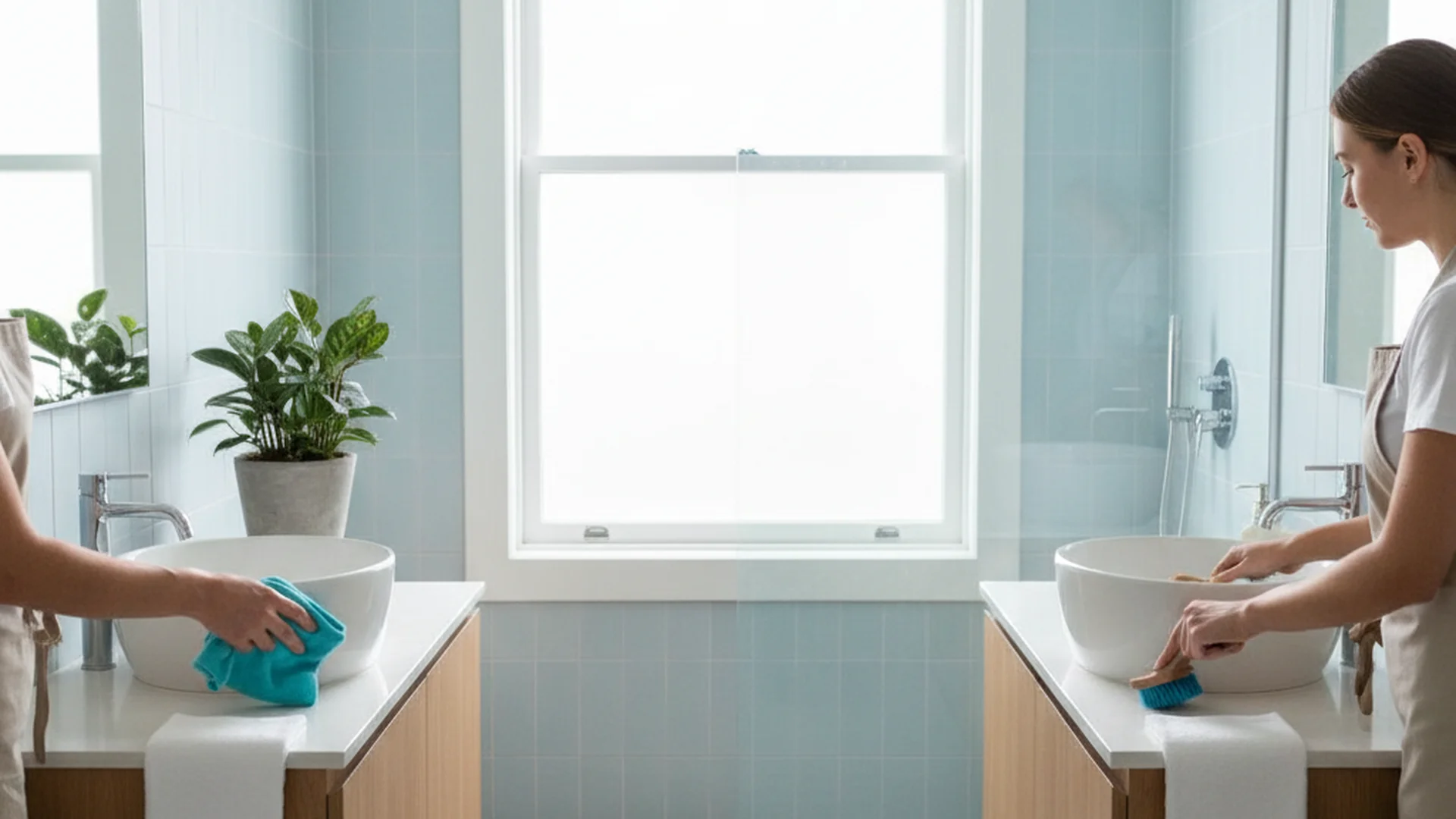
2. The Vanity and Sink
The sink is a high-touch area that requires both cleaning (removing dirt) and disinfecting (killing germs).
- The Sneeze Test: Check the mirror at eye level from different angles to ensure no "invisible" water spots or streaks remain.
- The Faucet: Use a soft cloth. Avoid abrasive green scouring pads on chrome or matte black finishes, as they can cause permanent scratching.
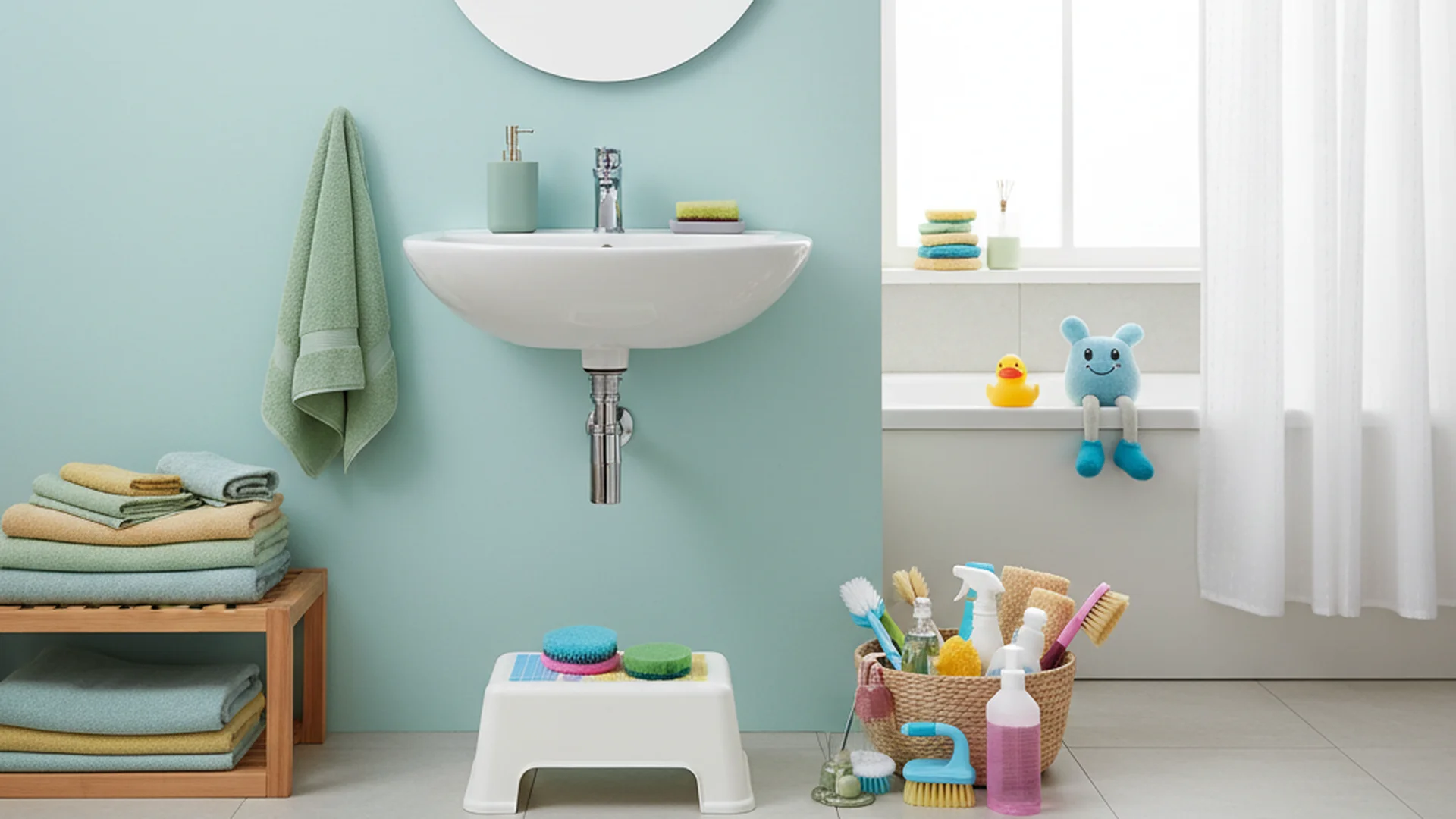
- Pedestal Sink Undersides: If you have a pedestal sink, don't forget the underside of the basin. Dust and drips often collect here, out of sight but within reach of curious toddlers or pets.
3. The Toilet: The 10-Minute Dwell Time Rule
The most common mistake in half bath cleaning is wiping away disinfectant too quickly.
- Dwell Time: Most disinfectants require 10 minutes of "wet contact time" to effectively kill 99.9% of germs. Spray the exterior of the toilet and let it sit while you clean the floor or mirror.
- The "Splash-Back" Zones: Focus on the toilet base and the hinges of the seat. These areas are the primary source of persistent bathroom odors.
- The Brush Hack: After scrubbing the bowl, sandwich the brush handle under the toilet seat so it can drip-dry into the bowl before you put it back in the holder.
Note: Storing a wet toilet brush immediately creates a "bacteria soup" in the holder. Always allow it to air dry for at least 10 minutes.
4. High-Touch Disinfection
Before leaving the room, you must hit the spots that everyone touches but few remember to clean.
- Door Knobs and Locks: These should be disinfected on both sides of the door.
- Light Switches: Use a damp cloth with disinfectant rather than spraying the switch directly to avoid electrical issues.
- The Toilet Handle: This remains a top-five high-touch contamination point in the home.
| Surface | Cleaning Method | Frequency |
|---|---|---|
| Mirror | Glass Cleaner/Microfiber | Weekly |
| Sink | All-Purpose Disinfectant | Daily Touch-up |
| Toilet | Bleach-free Disinfectant | Weekly Deep Clean |
| Floor | Damp Mop/Steam | Weekly |
2025-2026 Trends in Bathroom Hygiene
The world of home maintenance is evolving. By 2026, we expect to see a massive shift toward "smart" and "biological" cleaning solutions.
Probiotic Cleaners
A major 2025 trend is "microbiome-friendly" cleaning. Unlike traditional disinfectants that kill everything, probiotic sprays leave "good" bacteria on surfaces. These beneficial microbes continue to consume organic waste and odors for up to 72 hours after you finish cleaning.
Sustainable "Forever" Bottles
Eco-consciousness is no longer optional. Many homeowners are moving away from single-use plastics toward glass or high-grade silicone refillable bottles. Brands like Blueland or Branch Basics use concentrated tablets, significantly reducing the carbon footprint associated with shipping water-heavy cleaning products.
Diatomaceous Earth Mats
Traditional fabric bath mats are being replaced by "stone" mats made of diatomaceous earth. These mats dry almost instantly and are naturally antimicrobial, preventing that "damp towel" smell common in small, windowless half baths.
Success: Transitioning to probiotic cleaners and stone mats trims your weekly cleaning time by preventing buildup before it starts.
Common Mistakes to Avoid
Even experienced cleaners can fall into traps that damage fixtures or compromise safety.
The "Bleach on Rust" Error
If you have an older sink with rust rings around the drain, never use bleach. Bleach oxidizes iron, which actually sets the stain and makes it permanent. Instead, use an acidic cleaner like lemon juice or white vinegar to dissolve the rust.
Mixing Chemicals
This is the most dangerous mistake possible. Mixing cleaners—specifically bleach and ammonia, or bleach and vinegar—creates toxic chlorine or chloramine gas. These fumes can be fatal in the small, enclosed space of a half bath.
The Color-Code Rule
To prevent cross-contamination (moving toilet bacteria to the sink where you wash your face), adopt the professional "Color-Code Rule":
- Blue Cloth: Only for the toilet.
- Pink/Yellow Cloth: For the sink and vanity.
- Green Cloth: For mirrors and glass.
Frequently Asked Questions
Why is it called a "half bath"?
How often should I clean a half bath?
Can I use the same cloth for the whole room?
What is the best way to clean a pedestal sink?
Conclusion
Maintaining a clean half bath doesn't have to be a grueling task. By following a consistent half bath cleaning checklist and employing professional techniques like "dwell time" and "top-to-bottom" flow, you can keep this vital room hygienic and guest-ready in under 30 minutes a week. Remember to stay updated with 2026 trends like probiotic cleaners and stone mats to make your maintenance even easier.
A clean powder room is more than just a reflection of your cleaning habits—it's a testament to your hospitality and a boost to your home's overall value.
Success: By implementing these expert protocols, you are not just cleaning; you are preserving your home’s infrastructure and protecting your family’s health.
Cleaning that keeps score
Every task earns points, every streak multiplies them, and Premium adds a household leaderboard plus a monthly Dustagorgon to beat.
- Free forever
- 30 badges to earn
- Up to 6 in a household
No card needed. Set up your rooms in a couple of minutes.