In this article
What you’ll learn
- Shift from 'helping' to 'owning' using the Conception, Planning, and Execution (CPE) framework.
- Utilize 2025 AI tools like Familymind and Jam to automate the cognitive labor of household management.
- Introduce chores as early as age 2 to foster long-term self-esteem and professional success.
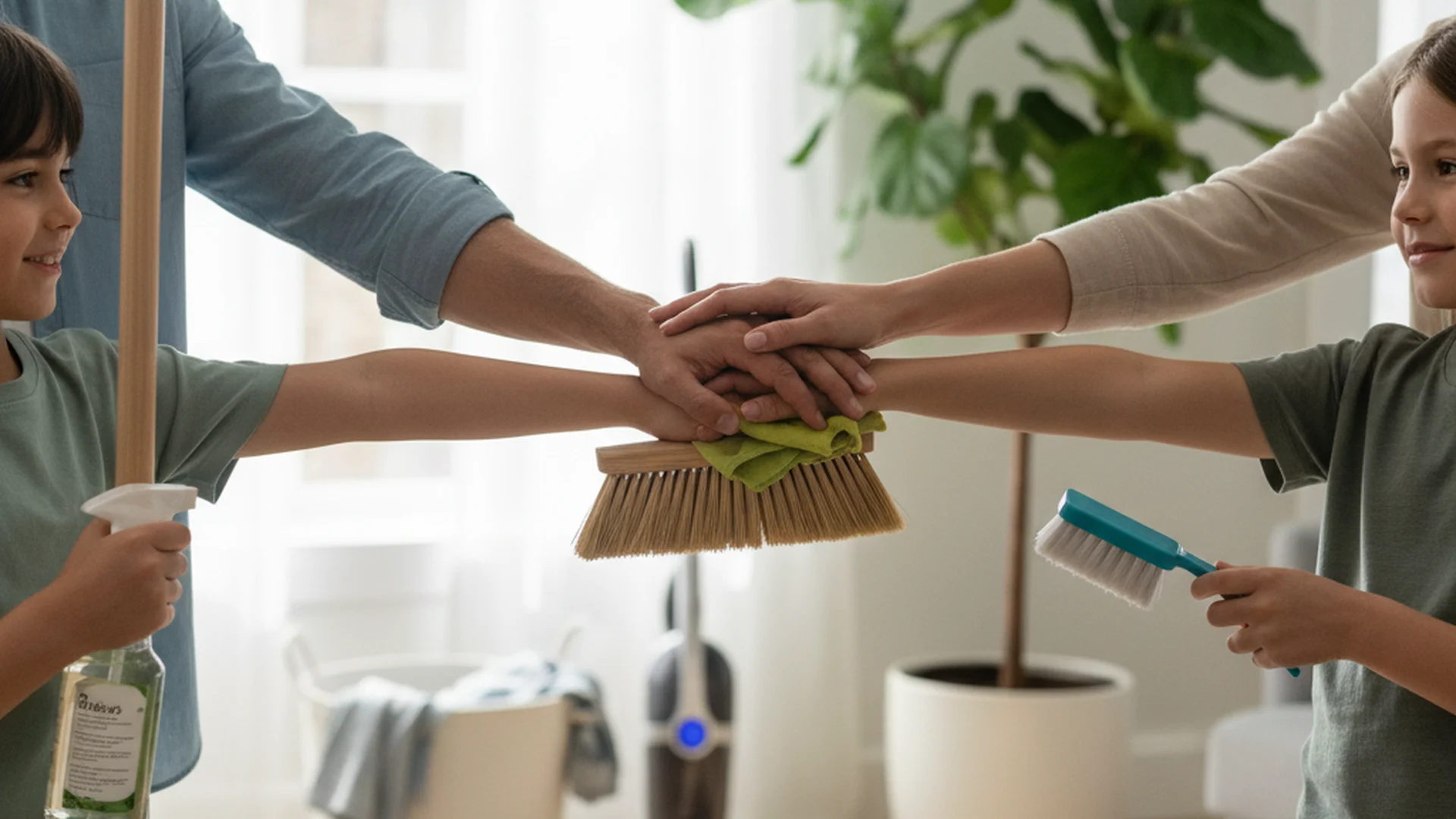
The modern home in 2025 is more than just a living space; it is a complex ecosystem that requires constant maintenance, logistical precision, and emotional intelligence. For many, family chore management remains the single greatest source of friction within the household. We have moved beyond the era of simple paper charts taped to the refrigerator. Today, effective management requires a sophisticated understanding of the "mental load," the integration of AI-assisted scheduling, and a shift toward equitable ownership rather than a mere division of labor.
Whether you are a parent struggling to get toddlers to pick up blocks or a partner feeling the weight of the "invisible work," this guide provides a comprehensive roadmap. We will explore how to transition from a chaotic "reactionary" cleaning style to a proactive family cleaning system that builds character in children and restores balance to adult relationships.
The Evolution of the Mental Load in 2025
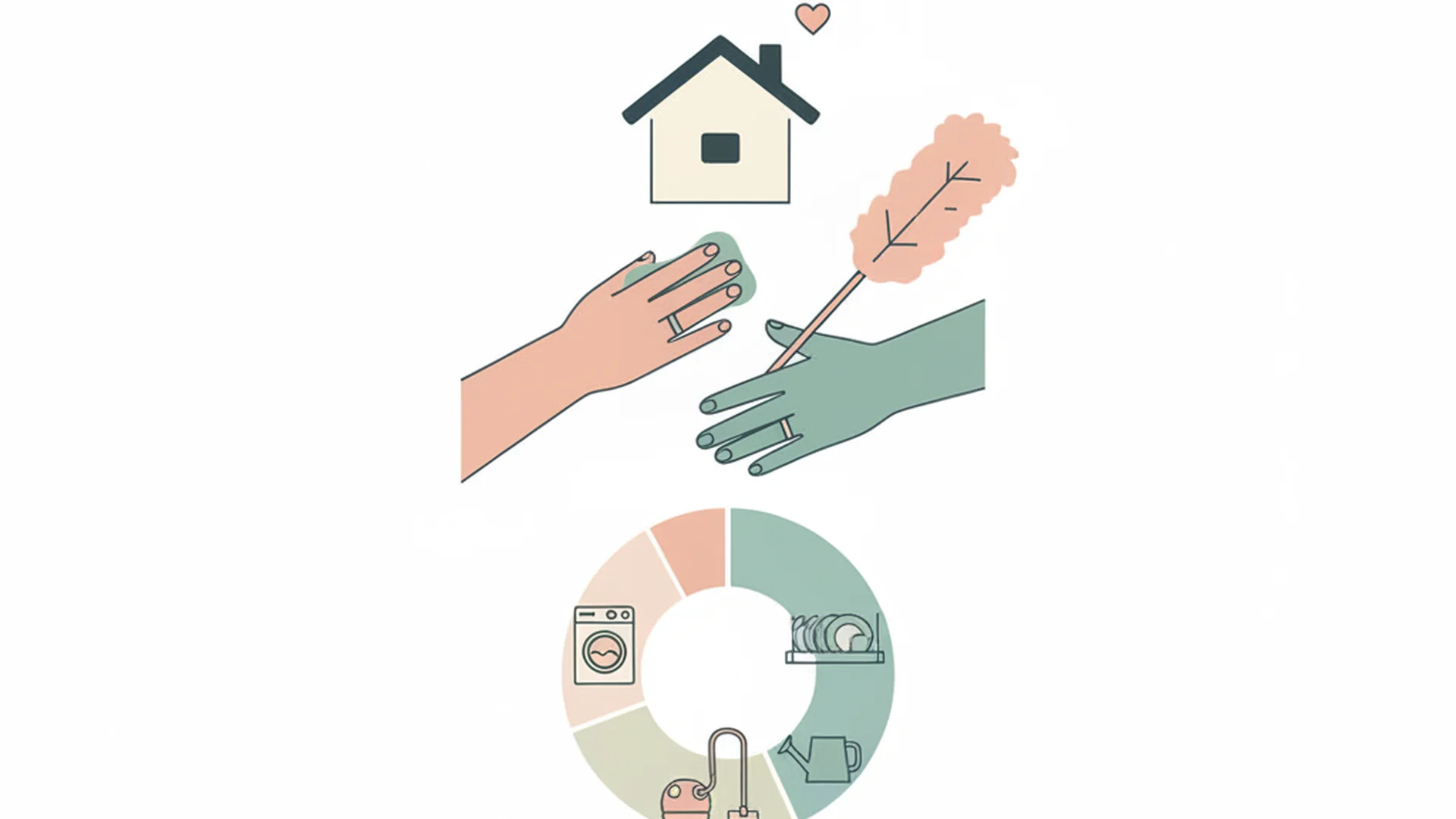
For decades, household labor was measured in physical output: dishes washed, floors swept, and laundry folded. However, as we head into 2026, the conversation has shifted toward "cognitive labor." This is the invisible work of noticing that the milk is low, remembering that it is "crazy sock day" at school, and knowing which child needs a new pair of cleats before Saturday’s game.
While the physical gap in chores is slowly narrowing, the mental load gap remains stubbornly wide. In plenty of households, mothers are still the ones managing most of the tasks that require high-level planning. To achieve true household chore division, we must address the brain work, not just the hand work.
Understanding the CPE Framework
The "Fair Play" method, developed by Eve Rodsky and further refined by home organization experts in late 2024, introduces the concept of CPE: Conception, Planning, and Execution.
- Conception: Noticing that a need exists (e.g., "The guest bathroom is dirty").
- Planning: Deciding when it will be cleaned and ensuring supplies are available (e.g., "I will clean it Tuesday; we need more glass cleaner").
- Execution: The physical act of cleaning.
Note: A common failure in family chore management occurs when one person handles the Conception and Planning, while the other only handles Execution. This is not "helping"—it is "supervising," which adds to the manager's mental fatigue.
Designing Your Family Cleaning System
A successful system is one that runs on autopilot. In 2025, the most successful families are moving away from the "Saturday Morning Deep Clean"—which often ruins the weekend—and toward "Micro-Maintenance."
The "Closing Shift" Protocol
Adopted from the professional restaurant industry, the "Closing Shift" is a 15-minute nightly ritual where the family "puts the house to bed."
- Clear the Decks: All dishes are moved to the dishwasher and counters are wiped.
- Reset the Launchpad: Backpacks, shoes, and keys are placed in their designated zones for the next morning.
- Floor Sweep: A quick 5-minute visual sweep of the common areas to clear tripping hazards.
Success: Families who keep up a 15-minute nightly closing shift usually find mornings far less stressful and the workday starts on a more positive note.
The 1-in-1-out Rule
Clutter is the primary obstacle to efficient cleaning. To manage the influx of "stuff" in a consumer-heavy world, many families now follow the 1-in-1-out rule. For every new toy, gadget, or clothing item that enters the home, one must be donated or recycled. This keeps the total volume of items manageable, making family chore management significantly easier because there is simply less to move around.
Age-Appropriate Chores: A Developmental Roadmap
One of the most frequent questions parents ask is: "When should kids start doing chores?" The answer is as early as possible.
Toddlers and Preschoolers (Ages 2–5)
At this stage, chores are about identity, not efficiency. You are teaching the child that they are a "contributing member of the family."
| Age Group | Recommended Tasks | Goal |
|---|---|---|
| 2–3 Years | Putting toys in bins, matching socks, "dusting" with a clean cloth. | Motor skills & Routine |
| 4–5 Years | Making the bed (70% rule), clearing their own plate, feeding pets. | Responsibility |
Tip: For non-readers, use a visual chore binder. Instead of writing "Clean your room," use a photo of a clean toy box. This creates visual ownership.
Elementary and Middle School (Ages 6–12)
By this age, children can begin to take on "Citizenship Chores." These are unpaid tasks that keep the household running.
- The 70% Rule: If a child completes a task to 70% of your personal standard, accept it. If you immediately re-do their work, you signal that their effort was worthless, killing future motivation.
- Laundry Independence: By age 10, most children are capable of managing their own laundry from start to finish.
Teens (Ages 13–18)
Teens should be managing tasks that prepare them for independent living. This includes meal planning once a week, basic car maintenance, and managing a small grocery budget.
Warning: Avoid using chores as a punishment for bad behavior. This creates a psychological association between "care for the home" and "shame," making household management feel like a burden rather than a lifestyle.
The Partner Dynamic: Beyond "Asking for Help"
The language we use in household chore division matters. When one partner asks the other to "help," they are inadvertently stating that the home is their primary responsibility and the other person is merely a guest assistant.
Example 1: The Grocery Store Shift
The Old Way: Partner A says, "Can you help me by picking up milk on the way home?" The 2026 Way: Partner B "owns" the Grocery store "card." They are responsible for noticing the milk is low (Conception), checking the budget (Planning), and buying it (Execution). Partner A never has to think about it.
Example 2: The School Paperwork
Managing school forms is a classic "invisible chore." The Solution: Assign a "Digital Manager" role. This person owns the school portal, signs the forms, and adds dates to the shared calendar. The execution is the signature; the planning is the deadline tracking.
Tip: Aim for an equal amount of free time, not an equal amount of tasks. If one partner’s chores take 5 hours and the other’s take 2, but the first partner enjoys their tasks while the second finds theirs draining, the system will eventually fail.
Technology and AI Trends in 2025-2026
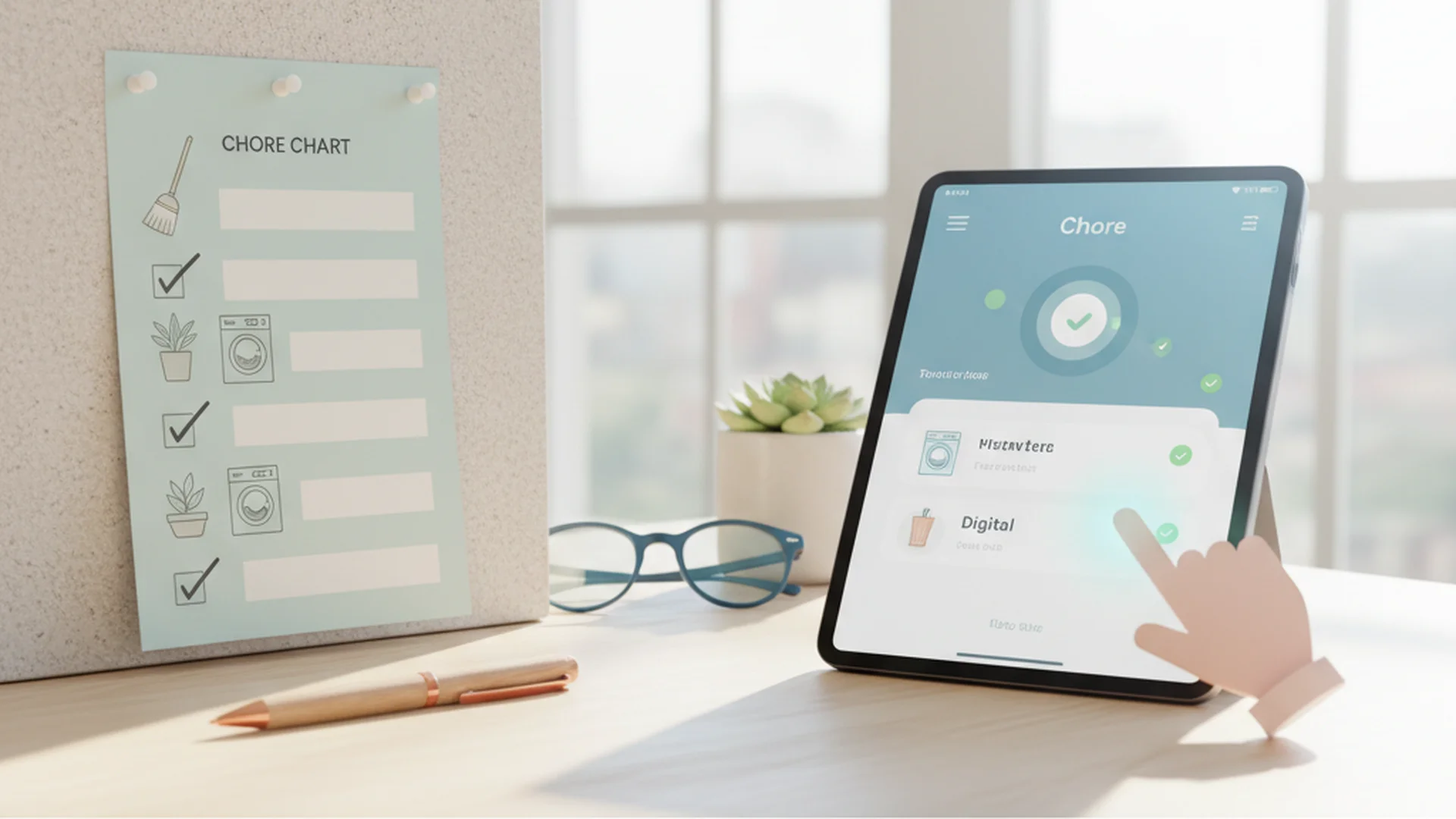
We have officially entered the era of the "AI Home Manager." Static magnet charts are being replaced by dynamic, predictive systems.
AI Family Assistants
Apps like Familymind and Ohai.ai have revolutionized family chore management in 2025. These tools can:
- Scan your emails for school events and automatically assign "prep chores" (e.g., "Bake sale tomorrow; buy flour").
- Adjust chore schedules based on the family's shared calendar (e.g., "No heavy cleaning tonight; soccer practice ends late").
- Send gentle, non-nagging reminders to children’s devices.
Gamification 2.0
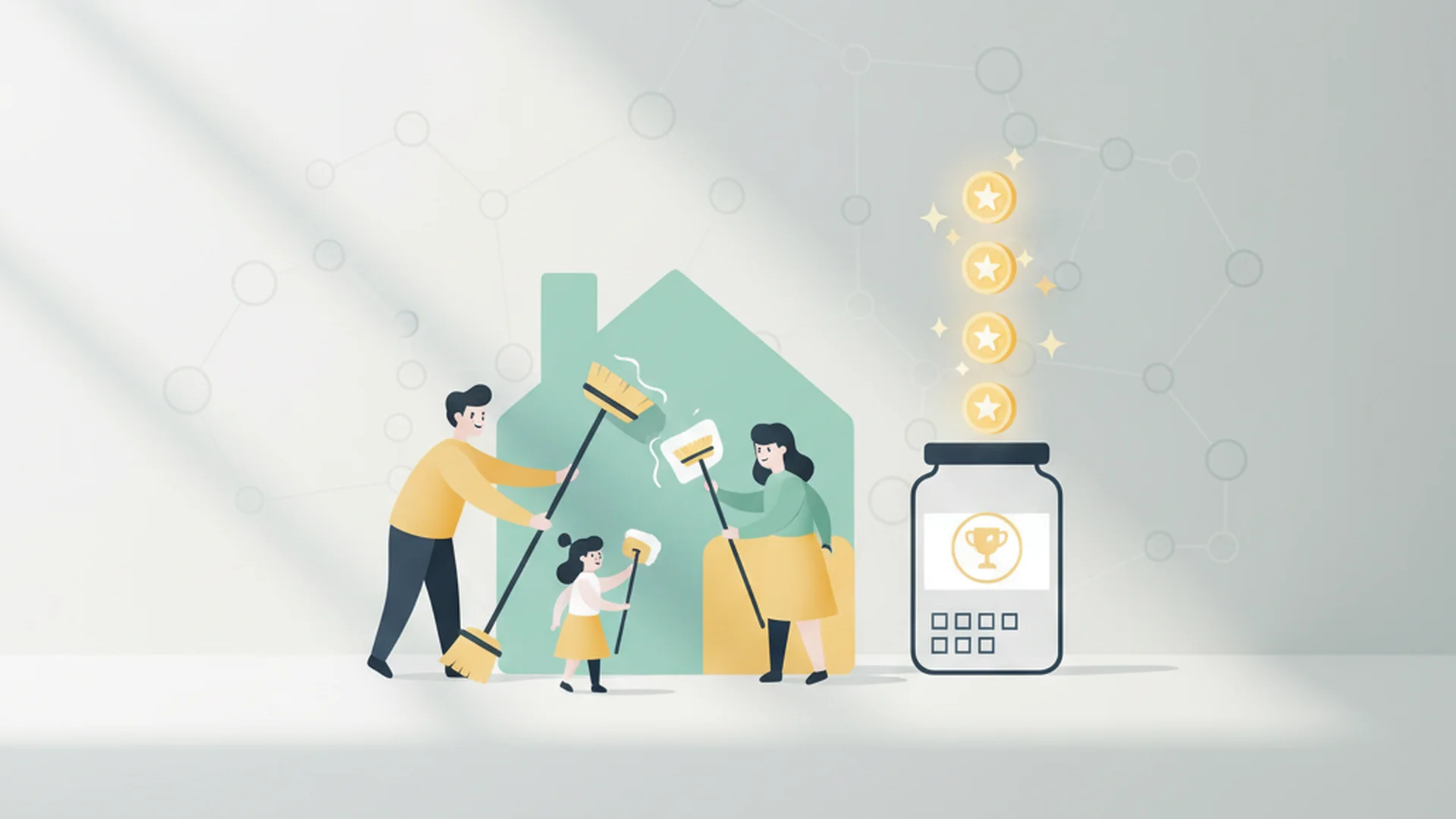
New platforms like KiddiKash and AFFiNE use "point-decay" timers. If a chore isn't done by a certain time, the "reward points" begin to drop. This uses behavioral psychology to encourage timely completion without parental intervention.
Note: While AI is a powerful tool, it cannot replace the "Family Sync" meeting. Spend 10 minutes every Sunday night reviewing the week ahead to ensure the tech is aligned with human needs.
Common Mistakes to Avoid
Even with the best intentions, families often fall into traps that undermine their family cleaning system.
1. The "Weaponized Incompetence" Trap
This occurs when a family member performs a task poorly on purpose—such as "accidentally" shrinking a favorite sweater in the wash—so they aren't asked to do it again.
- The Fix: Establish a "Minimum Standard of Care" (MSC). Everyone agrees on what "clean" looks like for each task. If the MSC isn't met, the person must redo it until it is.
2. Ignoring the "Invisible" Labor
Focusing only on physical tasks leads to resentment.
- The Fix: Explicitly list "Planning" as a chore. If you are the one who researches the best vacuum to buy, that counts as labor time.
3. The "Nagger" vs. "Naggee" Cycle
If you have to remind someone to do their chore, you are still doing the mental labor of that chore.
- The Fix: Use visual cues or app notifications. If the chore isn't done, the consequence should be natural (e.g., "If you don't put your laundry in the bin, it won't be washed for the week") rather than a lecture.
4. Over-complicating the System
If your chore chart looks like a NASA flight manual, it will be abandoned within two weeks.
- The Fix: Start with three "anchor" chores per person. Once those are habits, add more.
Green Cleaning: The 2025 Wellness Shift
A major trend for 2025-2026 is "Clean-as-Self-Care." Many families are moving away from harsh chemicals toward eco-conscious DIY solutions. Not only is this better for the environment, but it also makes chores safer for young children to assist with.
- Aromatherapy Integration: Using essential oils like lemon, peppermint, and eucalyptus can turn a boring cleaning session into a sensory wellness routine.
- The DIY Kit: A simple mixture of white vinegar, water, and a few drops of dish soap can handle 80% of household surfaces.
Success: One family found that switching to "scent-based" cleaning goals (e.g., "We clean until the house smells like lavender") made their children far more willing to volunteer for dusting duties.
Frequently Asked Questions
When should kids start doing chores?
Should I pay my children for chores?
How do we divide chores fairly between partners?
What if my child does a poor job?
How do we manage chores during busy weeks?
Conclusion
Mastering family chore management is not about achieving a perfectly spotless home; it is about creating a functional, respectful environment where no one person feels buried by the "invisible load." By utilizing the CPE framework, embracing 2025's AI advancements, and starting children early with age-appropriate responsibilities, you can transform cleaning from a point of contention into a shared rhythm of family life.
Remember, the goal of a family cleaning system is to buy back your time and peace of mind. Start small, be consistent, and prioritize the "Closing Shift" to ensure you always wake up to a home that welcomes you, rather than one that demands work from the moment you open your eyes.
Success: Consistency over perfection. A house that is "lived in" but "managed" is the ultimate goal for a happy 2026 home.
Cleaning that keeps score
Every task earns points, every streak multiplies them, and Premium adds a household leaderboard plus a monthly Dustagorgon to beat.
- Free forever
- 30 badges to earn
- Up to 6 in a household
No card needed. Set up your rooms in a couple of minutes.