In this article
What you’ll learn
- Lace curtains can trap up to 56% of household dust and pollen.
- Never use chlorine bleach; opt for oxygen-based whiteners or Epsom salts instead.
- Cleaning without removal is possible using dry steam or specialized vacuum attachments.
Lace curtains have long been the gold standard for adding a touch of elegance and soft, filtered light to a home. However, many homeowners are intimidated by their delicate appearance, often wondering exactly how to clean lace curtains without causing them to disintegrate or lose their shape. Beyond just aesthetics, keeping these textiles clean is vital for your home’s health. Recent research indicates that the open-weave structure of lace and net curtains can trap and filter up to 56% of household dust and pollen, making them a primary reservoir for allergens if left unmaintained.
In this guide, we will explore the safest, most efficient methods for maintaining your window treatments—from traditional hand-washing techniques to modern 2026 "dry steam" innovations. Whether you are dealing with antique heirlooms or modern recycled polyester blends, these expert steps will ensure your curtains remain a functional and beautiful part of your "microbiome-friendly" home.
Why Regular Maintenance Matters
In the world of domestic efficiency, we often see curtains as the "lungs" of the room. By trapping airborne particles, they improve immediate air quality, but only if that buildup is removed regularly. The American Cleaning Institute (ACI) currently recommends a deep clean every 3 to 6 months. For homes with pets, smokers, or high-pollen environments, this frequency should increase to every 1 to 3 months.
Furthermore, neglecting your lace can be an expensive mistake.
Warning: Fiber fragility is real. Sunlight exposure can make lace fibers 30–50% more brittle within just three years. Always handle older curtains with extreme care.
Assessing Your Fabric Type
Before you begin, you must identify what your lace is made of. This determines the cleaning "aggression" level you can use.
Natural Fibers (Cotton, Silk, Linen)
These are the most delicate. Cotton lace is prone to shrinkage, while silk is highly sensitive to pH levels in detergents. If you have antique lace, it is almost certainly a natural fiber and should never see the inside of a washing machine.
Synthetic Fibers (Polyester, Nylon, Bamboo)
Modern lace is often made from polyester or the newer 2026 trend: sustainable bamboo fiber. These are more resilient, naturally resistant to mold, and can usually handle a "delicate" machine cycle if protected correctly.
| Fabric Type | Recommended Method | Risk Level |
|---|---|---|
| Antique Cotton | Hand Wash Only | High |
| Modern Polyester | Machine (Mesh Bag) | Low |
| Silk Blends | Professional/Hand Wash | High |
| Bamboo Fiber | Machine (Cold) | Medium |
The Best Way to Clean Lace Curtains: A Step-by-Step Guide
Step 1: Pre-Cleaning Preparation
The most common mistake people make is rushing the process. Before the curtains touch water, you must remove all hardware. Metal hooks can rust when wet, and plastic rings can snag the delicate lace patterns during the wash.
Tip: Before washing, take the curtains outside and give them a gentle shake to remove loose surface dust. This prevents the dust from turning into "mud" once it hits the water.
Step 2: The Washing Process
If you are using a washing machine for modern lace, the "Mesh Bag Rule" is non-negotiable. Place the lace in a large mesh laundry bag to prevent it from tangling around the agitator.
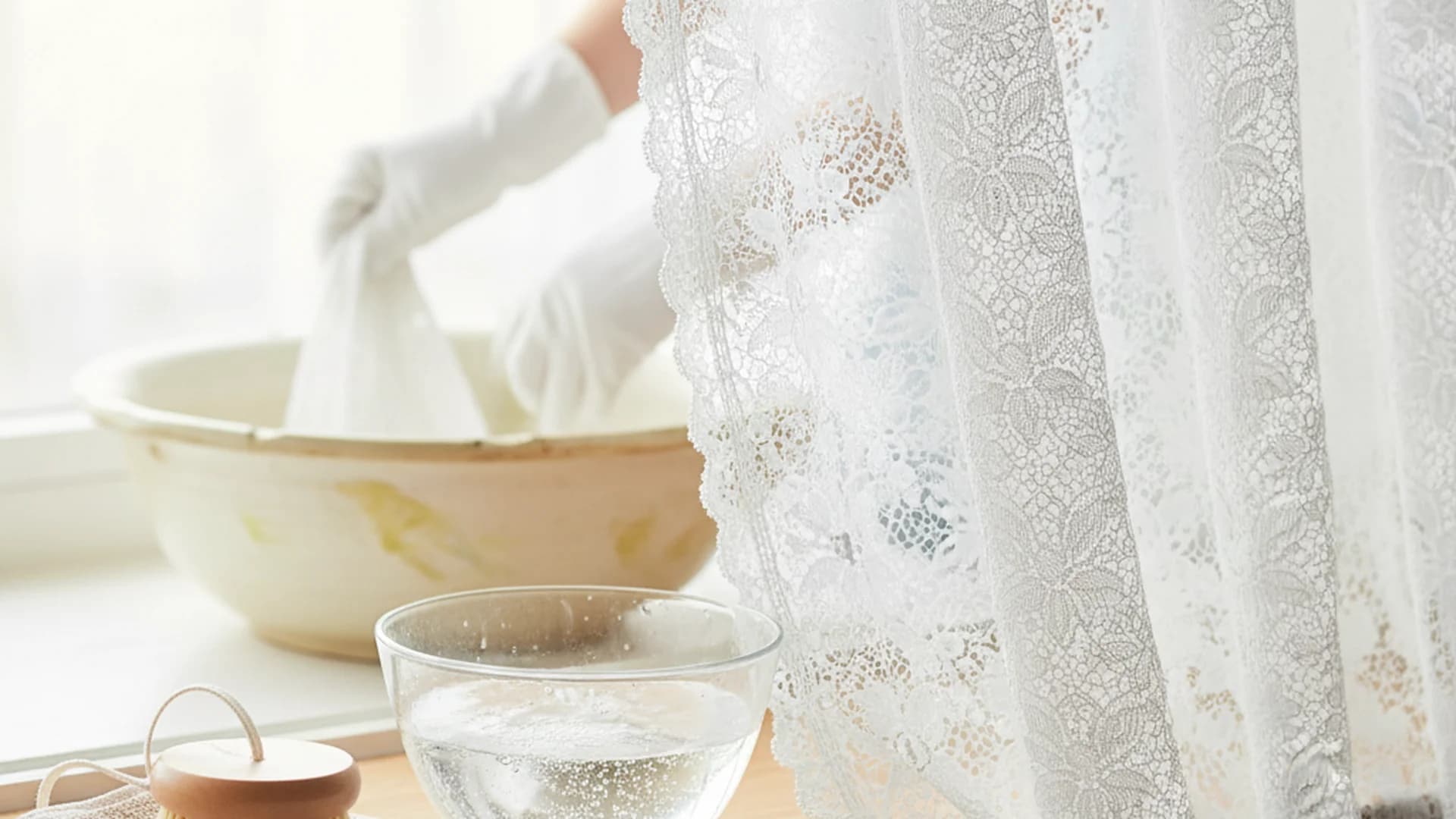
For hand-washing (the preferred method for antiques):
- Fill a clean bathtub or large basin with lukewarm water.
- Add a mild, pH-neutral detergent or even baby shampoo.
- Submerge the lace and gently squeeze the soapy water through the fabric. Never wring or twist.
- Let it soak for 15–20 minutes.
Step 3: Whitening and Brightening
If your curtains have turned yellow due to age or sunlight, do not reach for the bleach. Chlorine bleach reacts poorly with many synthetic finishes and can cause natural fibers to disintegrate.
Instead, use an oxygen-based whitener. A popular 2026 "laundry hack" involves a soak in a mixture of hydrogen peroxide and water. For a completely natural approach, a diluted lemon juice soak followed by drying in indirect sunlight can lift mild yellowing safely.
Success: To get that "crisp" store-bought feel back, try an Epsom salt soak. Submerge freshly washed lace in cold water with one cup of dissolved Epsom salt for 10 minutes. Do not rinse; the salt adds body and volume as it dries.
How to Clean Lace Curtains Without Taking Them Down
Sometimes, a full immersion wash isn't practical. If you are looking to refresh your home quickly, you can clean lace curtains without taking them down using these two methods:
High-Pressure Dry Steam
New 2026 steamer models, such as the Dupray Neat, utilize "dry steam." This technology uses high heat but very low moisture. By holding the steamer roughly 6 inches away from the hanging lace, you can kill dust mites and loosen surface grime without leaving the curtains soggy or prone to mold.
The "Nylon Vacuum" Hack
You can vacuum hanging lace, but you must be careful not to suck the fabric into the machine.
- The Technique: Take a piece of cheesecloth or an old nylon stocking and secure it over your vacuum’s upholstery nozzle with a rubber band. This allows suction to pull out the dust while providing a physical barrier that protects the delicate lace.
Note: While these methods are great for maintenance, they do not remove deep-seated oils from cooking or heating. A full wash is still required twice a year.
Common Mistakes to Avoid
- Using Chlorine Bleach: As mentioned, this is the fastest way to ruin lace. It causes permanent yellowing in synthetics and "eats" natural cotton fibers.
- The Tumble Dryer: Never, under any circumstances, put lace in a dryer. The heat and mechanical action cause permanent distortion and shrinkage.
- Wringing the Fabric: Squeezing lace breaks the fine threads. Instead, lay the wet curtain on a clean white towel, roll it up like a sleeping bag, and press firmly to absorb the water.
- Cleaning Only "Visible" Dirt: By the time lace looks dirty, the dust has become abrasive. It acts like sandpaper on the fibers every time a breeze moves the curtain.
- Direct Midday Sun Drying: While sunlight aids whitening, the harsh UV rays of midday can "scorch" wet fibers, making them brittle. Line dry in a shaded, well-ventilated area.
2025-2026 Trends in Curtain Care
The interior design world is currently obsessed with "Grandmillennial" styling—layering lace as a functional filter behind heavier, eco-friendly drapes like hemp. Along with this aesthetic shift, we are seeing a rise in Probiotic Cleaning Sprays.
Brands like Counter Culture now offer sprays containing beneficial bacteria that actively break down organic odors and allergens on the fabric surface. This is a game-changer for people who want to extend the time between deep washes while maintaining a healthy indoor microbiome.
Frequently Asked Questions
Can I machine wash antique or delicate lace?
How do I whiten yellowed lace curtains?
Is it safe to clean them without taking them down?
How can I get that "crisp" store-bought feel back?
Conclusion
Cleaning lace curtains doesn't have to be a source of anxiety. By understanding the fragility of the fibers and employing modern techniques like Epsom salt soaks and dry steaming, you can preserve these beautiful window treatments for decades. Remember that regular maintenance is not just about looks—it’s about removing the 56% of household dust that these fabrics work so hard to trap.
Keep your home bright, airy, and allergen-free by giving your lace curtains the specialized care they deserve.
Success: Regular cleaning and the "gravity-dry" method (hanging curtains while slightly damp) will keep your lace looking professional and crisp without the need for an iron.
Cleaning that keeps score
Every task earns points, every streak multiplies them, and Premium adds a household leaderboard plus a monthly Dustagorgon to beat.
- Free forever
- 30 badges to earn
- Up to 6 in a household
No card needed. Set up your rooms in a couple of minutes.