In this article
What you’ll learn
- Use multi-directional vacuuming for deep-pile carpets.
- Rubber tools and moisture are the most effective way to break static bonds.
- Preventive grooming and HEPA filtration reduce cleaning time by 50%.
We love our furry companions, but for many of us, our homes have become a secondary habitat for their coats. Whether you own a "velvet-furred" Pitbull or a "double-coated" Husky, figuring out how to clean dog hair efficiently is a challenge shared by millions. Most U.S. households share their space with a pet, and for a great many of those owners, "pet hair everywhere" is the number one household cleaning struggle.
Living in a home filled with fur isn’t just an aesthetic issue; it impacts your indoor air quality and the longevity of your appliances. However, with the right strategy and a few modern tools, you can reclaim your furniture and floors from the "glitter of the pet world."
Why Dog Hair Is So Hard to Clean
Before we dive into the solutions, it helps to understand the enemy. Have you ever noticed how a single Labrador hair seems to "sew" itself into your couch cushions? This happens because of a combination of static electricity and the physical structure of the hair.
Double-coated breeds have a soft undercoat and a coarse outer coat. These hairs have microscopic scales that act like Velcro, latching onto fabric fibers. When you add the static charge generated by walking across a carpet or sitting on a polyester sofa, the hair becomes magnetically attracted to the surface.
Note: Indoor air can be 2 to 5 times more polluted than outdoor air, largely due to organic debris like pet fur and dander. Using a HEPA H14 filter in your home can significantly mitigate this risk.
Surface-Specific Strategies for Dog Hair Removal
Different surfaces require different tactics. What works for a hardwood floor will be completely ineffective for a car's trunk or a velvet armchair.
Carpets and Area Rugs
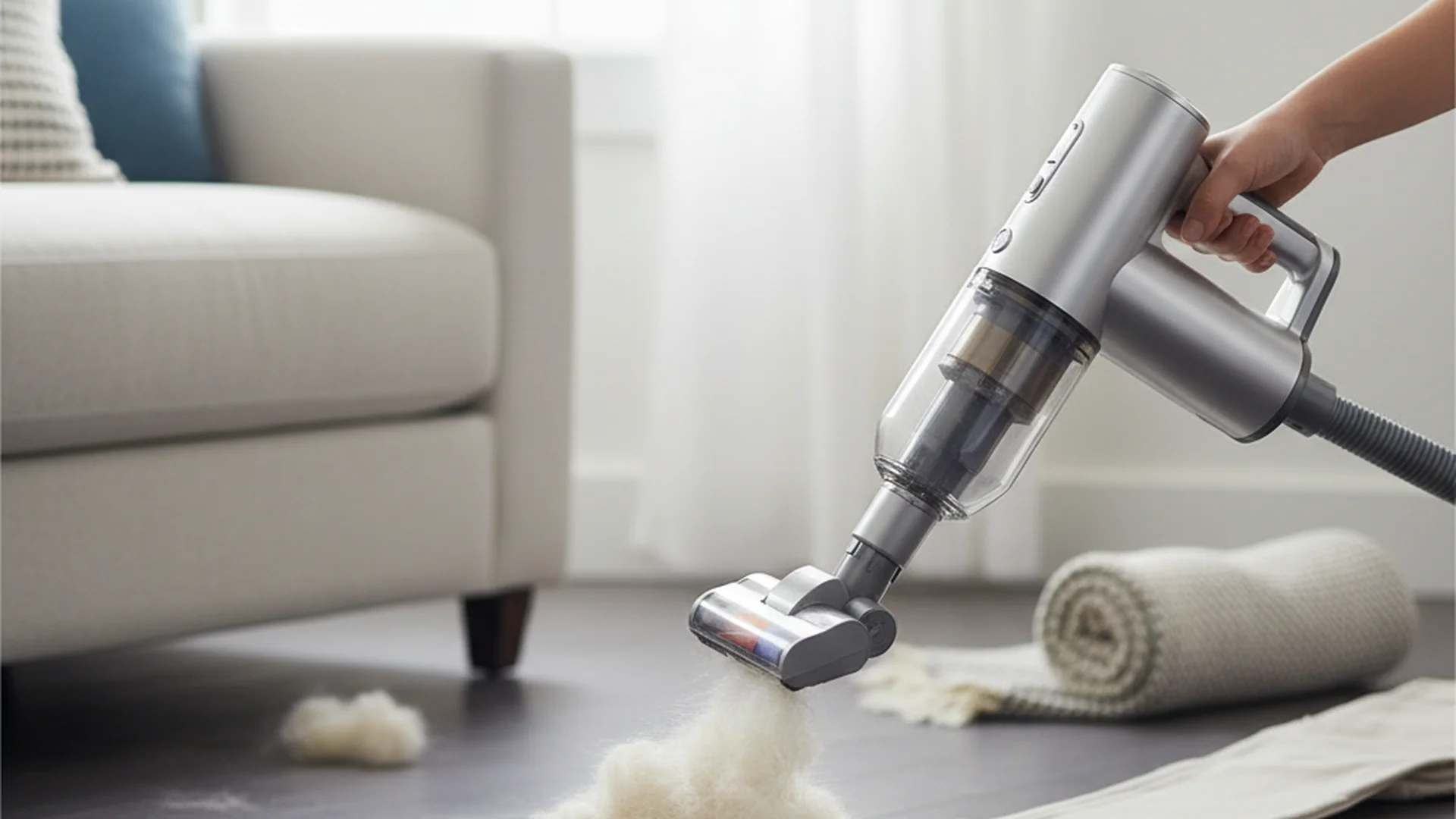
The standard "push and pull" vacuuming method is often the best way to clean dog hair superficially, but it leaves deep-set fur behind. For a truly deep clean, you need to change your geometry.
- Multi-Directional Vacuuming: Instead of just going back and forth, vacuum in a "star" pattern. Go north-to-south, then east-to-west, then diagonally. This dislodges hair that is wrapped around the carpet fibers from different angles.
- The Squeegee Method: For high-traffic areas, use a long-handled window squeegee. Dragging the rubber blade across the carpet creates friction and pulls up "carpets of hair" that even the most expensive vacuums miss.
Tip: If you are dealing with a "Golden Retriever Staircase" (where hair accumulates on the carpeted steps), use a handheld rubber-bristled brush to rake the hair into clumps before vacuuming.
Hardwood, Tile, and Laminate
Standard vacuums often have a "blow" function from the exhaust that simply scatters dog hair into the corners before the suction head can reach it.
- Electrostatic Mops: Use a microfiber dry mop. These tools use a static charge to "grab" the hair rather than pushing it around.
- Avoid the Beater Bar: When vacuuming hard floors, turn off the rotating brush (beater bar) to prevent hair from flying away.
Upholstery and Couches
Your couch is likely the "ground zero" of pet hair. Because upholstery fabrics are often porous, hair becomes deeply embedded.
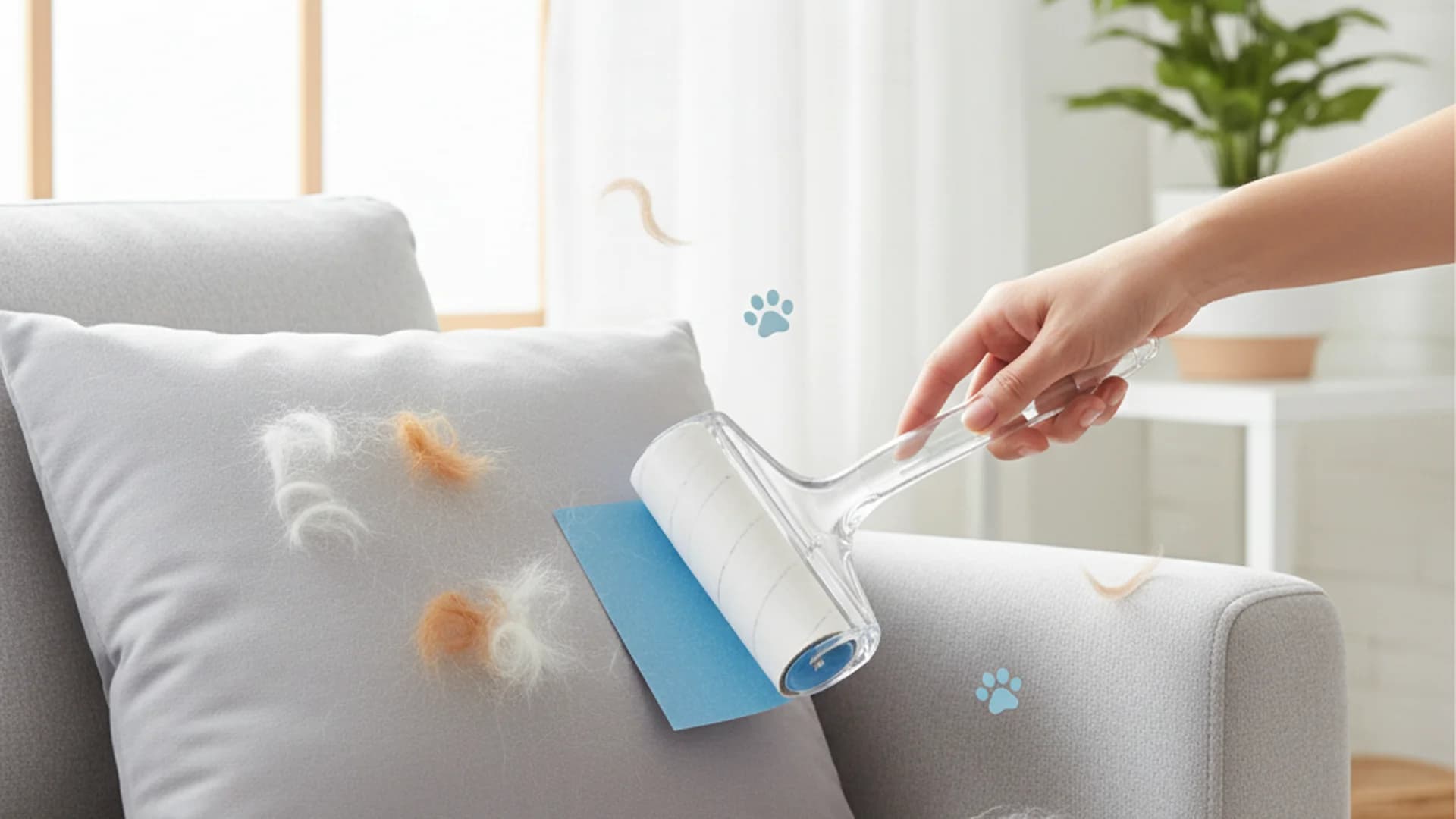
- The Damp Glove Trick: Put on a common yellow dishwashing glove and lightly dampen it with water. Run your hand over the fabric. The combination of the rubber's grip and the moisture's ability to neutralize static will cause the hair to roll up into easily removable clumps.
- Fabric Sprays: In 2025, new "pet-safe" anti-static sprays have hit the market. These create a temporary barrier on the fabric that prevents hair from "sticking," making your daily lint-rolling much faster.
Success: Using a damp rubber glove on a micro-suede sofa can remove up to 90% of surface hair in a single pass.
The Secret to Fur-Free Laundry
Nothing is more frustrating than pulling a "clean" shirt out of the dryer only to find it covered in dog hair. To stop dog hair from clogging your washing machine and ruining your wardrobe, follow this 2025-recommended workflow:
| Step | Action | Why It Works |
|---|---|---|
| 1. Pre-Dry | 10 min "No Heat" Tumble | Loosens hair into the lint trap before it gets wet. |
| 2. Wash | Add 1/2 cup White Vinegar | Softens fabric fibers to release trapped hair. |
| 3. Dry | Use Wool Dryer Balls | Breaks the static bond through physical agitation. |
Warning: Never wash dog bedding that is soaking wet with hair without shaking it out first. Heavy, wet hair can clump and burn out your washing machine's drain pump.
Cleaning Dog Hair from Your Car
Car carpets are notoriously difficult because the "automotive-grade" carpet is often a tight, looped pile designed for durability, which happens to be the perfect trap for short, stiff dog hairs.
Example: The "Black Lab Sedan" Transformation
Consider a typical SUV used to transport a shedding Black Labrador. Standard vacuuming at a car wash usually leaves 40% of the hair behind.
- The Tool: Use a "pumice stone" style scraper (like the Lilly Brush).
- The Process: Scrape the stone in short, firm strokes toward the center of the floor mat.
- The Result: This pulls the "invisible" hair out of the loops, allowing a vacuum to finally finish the job.
2025-2026 Trends in Pet Tech
The technology for managing pet hair has evolved rapidly. If you are still using a sticky-paper roller, you are living in the past!
AI-Driven Vacuums
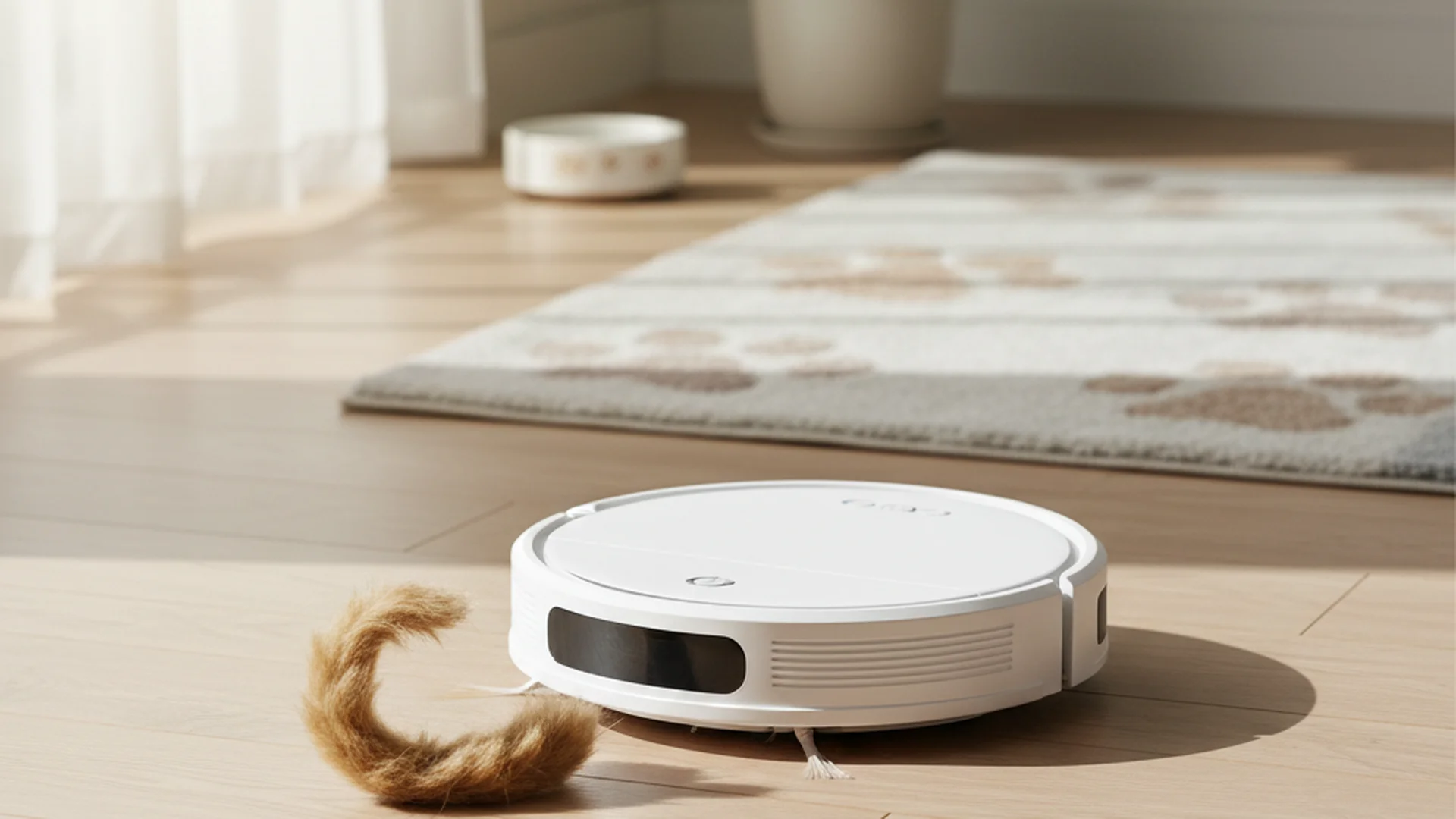
The latest 2025 robot vacuums now feature "Fur Sensors." These machines use optical sensors to identify "clumps" or high-density hair zones. When detected, the vacuum automatically slows down, increases suction to maximum, and performs a "cross-hatch" double-pass over the area.
Electric Handheld Scrapers
The "LINTLOCK" and similar sonic scrapers are the newest trend. These devices use high-frequency sonic vibrations to "shake" hair loose from carpet and upholstery fibers, requiring much less physical effort than a manual squeegee.
Sustainable Rollers
Consumers are moving away from disposable sticky sheets. Reusable electrostatic rollers (like the ChomChom) or washable silicone rollers are now the industry standard for eco-conscious pet owners.
Common Mistakes to Avoid
Even with the best intentions, some cleaning habits can actually make the shedding problem worse.
- Vacuuming Wet Hair: If your dog just came in from the rain, wait for the hair to dry before vacuuming. Damp hair clumps inside the vacuum hose and can lead to mold and "doggy smells" inside your machine.
- Using Human Shampoo: Using your own shampoo on a dog alters their skin pH. This leads to dry skin, which causes the coat to become brittle and increases shedding.
- Brushing Wet Hair: Brushing your dog immediately after a bath causes "coat breakage." This results in more short, broken hairs falling out over the next 24 hours. Always blow-dry or air-dry before a heavy brushing session.
- Ignoring Vacuum Filters: In a pet-owning home, HEPA filters clog three times faster. If you don't wash or replace them every 3 months, your vacuum loses the suction power needed to lift hair.
Frequently Asked Questions
How do I get dog hair out of my car's carpet?
Why does dog hair stick so stubbornly to some fabrics?
Is it safe to vacuum my dog directly?
How do I stop dog hair from clogging my washing machine?
Does "hypoallergenic" mean the dog won't shed?
Conclusion: A Proactive Approach
Learning how to clean dog hair is only half the battle; the other half is preventing it from settling in the first place. By incorporating a 5-minute daily grooming routine, you can reduce household shedding by up to 50%. Combine this with modern tools like AI-driven vacuums and HEPA air purifiers, and you can enjoy the companionship of your dog without the constant cloud of fur.
Remember, the best way to clean dog hair is a multi-step approach: break the static, lift the fibers, and capture the debris. With these tips, your home will look (and smell) like a pet-free sanctuary—even if your best friend is a heavy shedder.
Success: Consistency is key. A small amount of daily maintenance is far more effective than a massive "deep clean" once a month.
Cleaning that keeps score
Every task earns points, every streak multiplies them, and Premium adds a household leaderboard plus a monthly Dustagorgon to beat.
- Free forever
- 30 badges to earn
- Up to 6 in a household
No card needed. Set up your rooms in a couple of minutes.