In this article
What you’ll learn
- Use high-friction tools like rubber gloves and squeegees for upholstery.
- Adding white vinegar to laundry breaks static bonds naturally.
- Pre-treating clothes in the dryer before washing is the most effective extraction method.
Living with our four-legged companions is one of life’s greatest joys, but for many of us, it comes with a persistent, fuzzy trade-off. Most households now share their space with a pet, and while we love our furry friends, we don't necessarily love the extra hours each week spent cleaning up after them. Learning how to remove pet hair effectively has become a modern necessity, especially for the many people who deal with dander allergies. Whether you are battling "needle hairs" in your car or tumbleweeds of fur on your hardwood floors, this guide provides the ultimate strategies for 2026.
The Science of Why Pet Hair Sticks
To find the best way how to remove pet hair, we first have to understand why it’s so difficult to lift in the first place. The primary culprit is static electricity. Synthetic fibers, such as the polyester often found in modern sofas and clothing, generate significantly more static than natural fibers like cotton or wool.
According to the Textile Research Journal, these synthetic materials are 40% more likely to "lock" hair into the weave. When a pet rubs against a synthetic surface, the friction creates a charge that acts like a microscopic magnet. This is why a standard vacuum often fails; the suction isn't strong enough to break that electromagnetic bond.
Professional Extraction Techniques for Living Areas
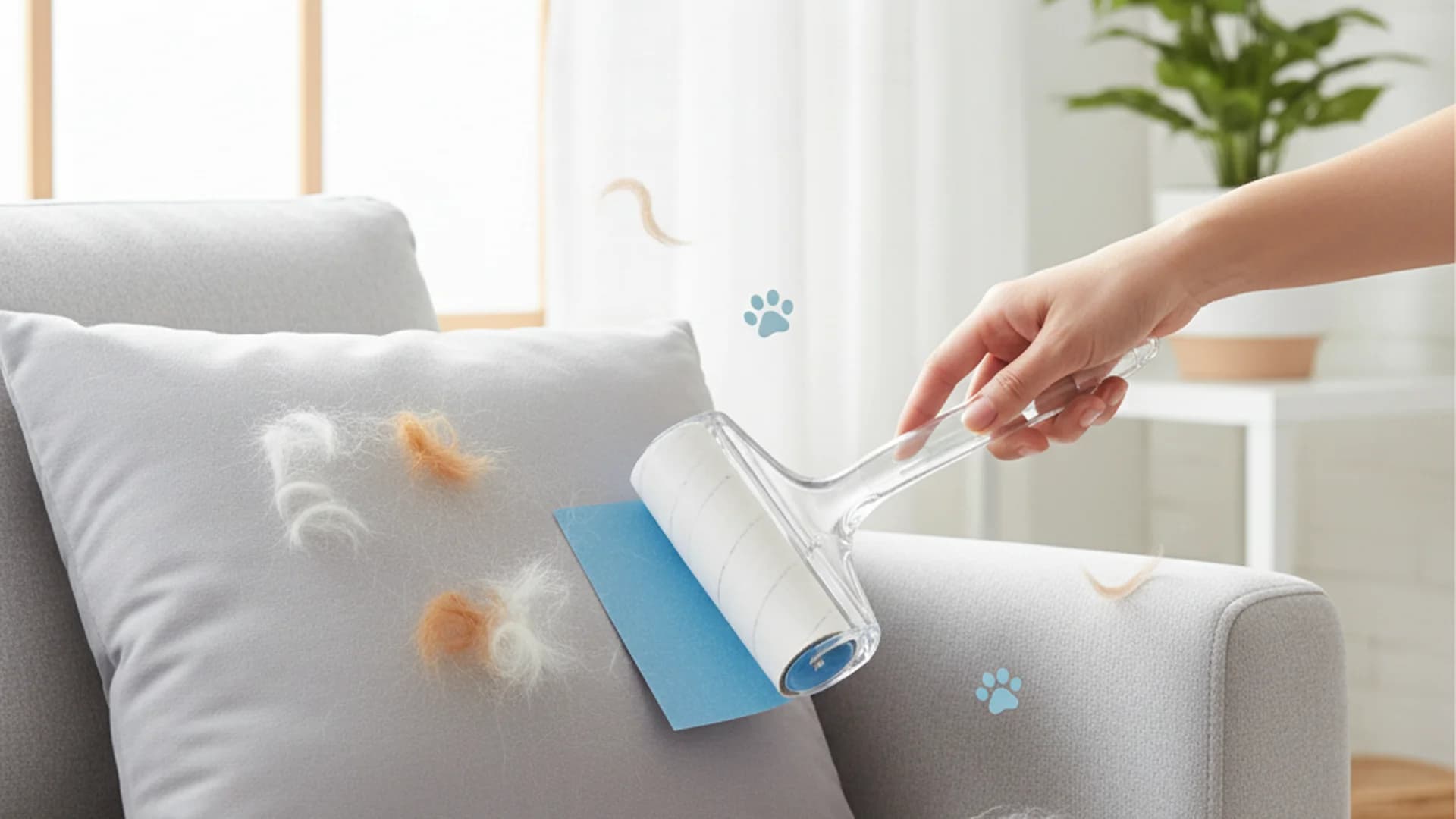
The living room is usually "Ground Zero" for pet hair accumulation. If your vacuum is struggling to keep up, it's time to switch to high-friction methods that physically break the static bond.
The Rubber Glove Hack
This is widely considered the most effective low-cost method for sofas and armchairs. Put on a standard rubber dishwashing glove and lightly dampen it with water. Run your hand over the surface of the fabric in a circular motion.
The combination of the rubber's natural grip and the moisture creates friction that rolls the hair into small "fuzz balls." These clumps are much easier to pick up by hand or vacuum than individual strands.
The Squeegee Method for Carpets
If you have a large area of low-pile carpet, your upright vacuum might be leaving behind deep-seated fur. A window squeegee with a rubber blade is a professional secret for deep extraction. By dragging the squeegee across the carpet using short, firm strokes, you pull up hair that has been driven deep into the fibers by foot traffic.
Tip: Use a squeegee with a long handle to save your back when cleaning large living room rugs.
Real-World Example: The Velvet Sofa Rescue
Sarah, a professional pet sitter in Seattle, dealt with a navy blue velvet sofa covered in Golden Retriever fur. Traditional lint rollers were too weak, and the vacuum risked bruising the velvet. By using the rubber glove hack combined with a light mist of anti-static spray, she was able to clear the entire sofa in under 15 minutes without damaging the delicate fabric.
How to Remove Pet Hair Naturally in the Laundry
One of the most common complaints among pet owners is that hair seems to survive the washing machine, often emerging from the wash stuck even tighter to the wet fabric.
The Dryer-First Secret
The most effective way to handle pet-covered clothing isn't the wash cycle—it’s the dryer. Before you put your clothes in the wash, toss them in the dryer on a "cool" or "air fluff" cycle for 10 minutes.
The tumbling action, combined with the airflow, loosens the hair and sucks it into the lint trap while the clothes are still dry. Once the hair is removed, you can proceed with a normal wash cycle without worrying about fur clogging your machine's drain pump.
Using White Vinegar as a Fabric Softener
If you want to know how to remove pet hair naturally, look no further than your pantry. Adding 1/2 cup of white distilled vinegar to the rinse cycle serves two purposes:
- It acts as a natural fabric softener.
- It neutralizes the static charge in the fibers.
When the static bond is broken, the hair simply slides off the fabric and is flushed away by the water.
Warning: Never mix white vinegar with bleach, as this creates toxic chlorine gas.
Tackling the Car: Dealing with "Needle" Hairs
Car upholstery is notoriously difficult because the fabrics are often industrial-grade synthetics designed for durability, which makes them static magnets. Furthermore, short, wiry hairs (like those from Labradors or Boxers) can "needle" themselves into the fabric.
| Tool Type | Best Use Case | Effectiveness |
|---|---|---|
| Pumice Stone | Durable car carpets | High |
| Silicone Brush | Car seats/upholstery | Medium |
| High-Velocity Vacuum | Loose debris | Low (for embedded hair) |
The Pumice Stone Strategy
For the floor mats and trunk of your vehicle, a pumice stone (often sold as a "Fur-Zoff" or similar tool) is unmatched. Lightly scrape the stone across the carpet. The abrasive surface catches the ends of the hairs and pulls them out of the weave.
Note: Always test the pumice stone on an inconspicuous area first, as it can be too abrasive for some luxury car headliners or delicate seat fabrics.
Real-World Example: The SUV Transformation
Mark, an avid hiker who travels with two Huskies, found that even professional detailing couldn't get the "dog smell" out because the hair was trapped deep in the trunk lining. By using a pumice stone followed by a 2026-model high-torque portable vacuum, he removed three cups of fur that had been missed for months, finally eliminating the lingering odor.
Recent Trends and Technology for 2026
The cleaning industry has made massive leaps in the last year, moving away from disposable products toward sustainable, high-tech solutions.
AI-Enhanced Vacuum Vision
The 2026 generation of robot vacuums now features "Hair-Clump Identification." Using onboard cameras and AI, these vacuums can detect a "tangle risk" and automatically adjust the torque and brush speed. Some even feature internal "mini-blades" that automatically cut hair off the brush roll, preventing the dreaded "tangle-jam."
Sustainable Silicone Rollers
The era of the paper lint roller is fading. Eco-conscious Gen Z and Millennial pet owners are pivoting toward Multi-use Silicone Rollers. These rollers are tacky to the touch and pick up hair instantly, but instead of peeling off a sheet, you simply rinse them with warm water to restore their stickiness.
Anti-Static Fabric Sprays
New bio-engineered sprays are now available that use enzymes to neutralize the static bond on furniture for up to 48 hours. These are particularly useful for "Pet-Pro" fabrics, which are tightly woven textiles (like performance velvet) designed to prevent hair from weaving into the base.
Common Mistakes to Avoid
Even with the best tools, certain habits can actually make your pet hair problem worse.
- Using a Standard Vacuum Brush: Bristle brushes are the enemy of long hair. They wrap the hair around the spindle, which eventually burns out the motor. Look for "tangle-free" rubber rollers.
- Adding More Water: When cleaning hair off a surface, many people use a soaking wet sponge. This makes the hair heavy and "matted," causing it to stick more firmly. A damp cloth is the key—not a wet one.
- Shaving Double-Coated Dogs: Many owners think shaving a Husky or Golden Retriever will stop shedding. This is a myth. Shaving ruins the coat’s insulation and the undercoat continues to shed, just in shorter, pricklier pieces that are harder to remove.
- Neglecting the HVAC Filter: Pet hair becomes airborne easily. If you don't change your HEPA filters every 30–60 days, you are simply recirculating fur and dander throughout your home.
Frequently Asked Questions
Does vinegar actually help remove pet hair?
What is the best way to remove hair from car upholstery?
How do I get pet hair out of my laundry?
Are robot vacuums actually effective for long pet hair?
How can I stop my dog or cat from shedding so much?
Conclusion
Maintaining a clean home as a pet owner doesn't have to be a full-time job. By understanding the science of static electricity and utilizing high-friction tools like rubber gloves and squeegees, you can drastically reduce the time you spend cleaning. Remember to embrace the "Dryer-First" method for laundry and keep your HVAC filters fresh to manage airborne dander.
Success: By implementing these 2026 extraction techniques, you can reduce your weekly cleaning time by up to 50%, leaving more time for what matters—playing with your pets!
Cleaning that keeps score
Every task earns points, every streak multiplies them, and Premium adds a household leaderboard plus a monthly Dustagorgon to beat.
- Free forever
- 30 badges to earn
- Up to 6 in a household
No card needed. Set up your rooms in a couple of minutes.