In this article
What you’ll learn
- Focus on function over aesthetic to reduce burnout.
- Utilize sensory-neutral tools like unscented cleaners and noise-canceling gear.
- Leverage AI and visual schedules to overcome executive dysfunction.
For many neurodivergent individuals, the simple act of maintaining a home can feel like an insurmountable mountain. If you have ever stared at a pile of laundry and felt a physical sense of dread, you are not lazy—you are likely experiencing executive dysfunction or sensory overwhelm. Traditional home maintenance advice often fails the neurodivergent community because it assumes a "standard" way of processing information and environments. Creating an autism cleaning routine isn't about following a rigid 1950s-style chore chart; it is about building a system that accommodates your sensory needs and supports your brain’s unique way of functioning.
As a home organization expert, I have seen how the "Wall of Awful"—the emotional barrier built by past failures—can make even small tasks feel impossible. By shifting our perspective from "perfection" to "functionality," we can create a home that supports us rather than drains us.
Understanding the Neurodivergent Cleaning Struggle
To build an effective autism cleaning routine help guide, we first must understand why traditional cleaning is so difficult. It isn’t just about "not wanting" to do the work. It is often a biological mismatch between the task and the brain.
Executive function difficulties are extremely common among autistic individuals. This affects your ability to plan, initiate, and sequence tasks. When a neurotypical person sees a "dirty kitchen," they see a single goal. When an autistic person sees a "dirty kitchen," they might see 500 individual steps (dishes, counters, floor, trash, sponges, soap) and have no idea which one comes first. This leads to "task paralysis," where you end up doing nothing because the path forward is unclear.
Furthermore, the vast majority of autistic people experience sensory processing differences. The sharp scent of ammonia, the high-pitched whine of a vacuum, or the "slimy" feel of a wet dishcloth aren't just annoying—they can be physically painful or cause a sensory meltdown.
Building Your Sensory-Safe Cleaning Kit
The first step in any successful autism cleaning routine tips list is to audit your supplies. If your tools cause sensory distress, you will naturally avoid using them.
Auditory Protection
The vacuum cleaner is often the "final boss" of cleaning for those with auditory sensitivities.
- Noise-Canceling Headphones: High-quality ANC headphones can turn a terrifying roar into a dull hum.
- Ear Loops: For those who need to hear some ambient noise (like a child or a timer), loop earplugs can reduce the "edge" of sharp sounds.
- Silent Mode Technology: By 2026, many robot vacuums have evolved to include specific "Silent Modes" that reduce decibel levels significantly while maintaining suction.
Olfactory (Smell) Solutions
Many cleaning products are marketed as "fresh," but to a sensitive nose, they are chemical assaults.
- Unscented/Free and Clear: Look for products labeled "fragrance-free." Note that "unscented" sometimes contains masking scents, so "fragrance-free" is usually safer.
- Natural Alternatives: Plain white vinegar and baking soda are excellent cleaners that don't leave lingering synthetic perfumes.
- Vodka Sprays: A common professional cleaner secret for fabrics is a high-proof, cheap vodka spray; it kills odors and bacteria but leaves no scent once dry.
Tactile (Touch) Accommodations
If you hate the feeling of "cleaning slime" or wet hands, don't force yourself to touch it.
- Disposable or Silicone Gloves: Keep a box of gloves in every room where cleaning happens.
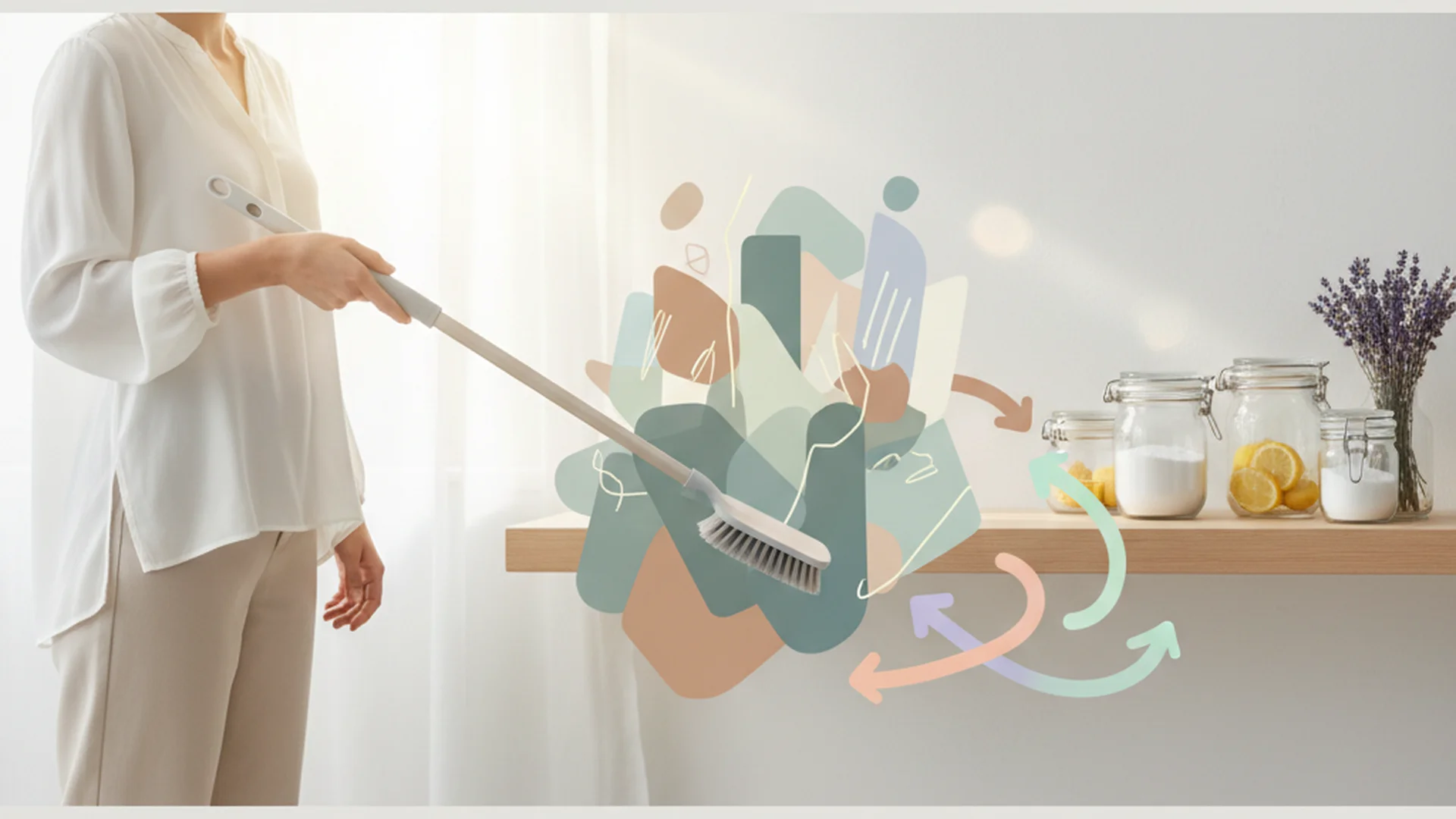
- Long-Handled Brushes: Use tools that keep your hands away from the water and grime.
- Microfiber vs. Cotton: Some people find the "grabby" texture of microfiber cloths physically repulsive. If that’s you, stick to smooth cotton cloths or paper towels.
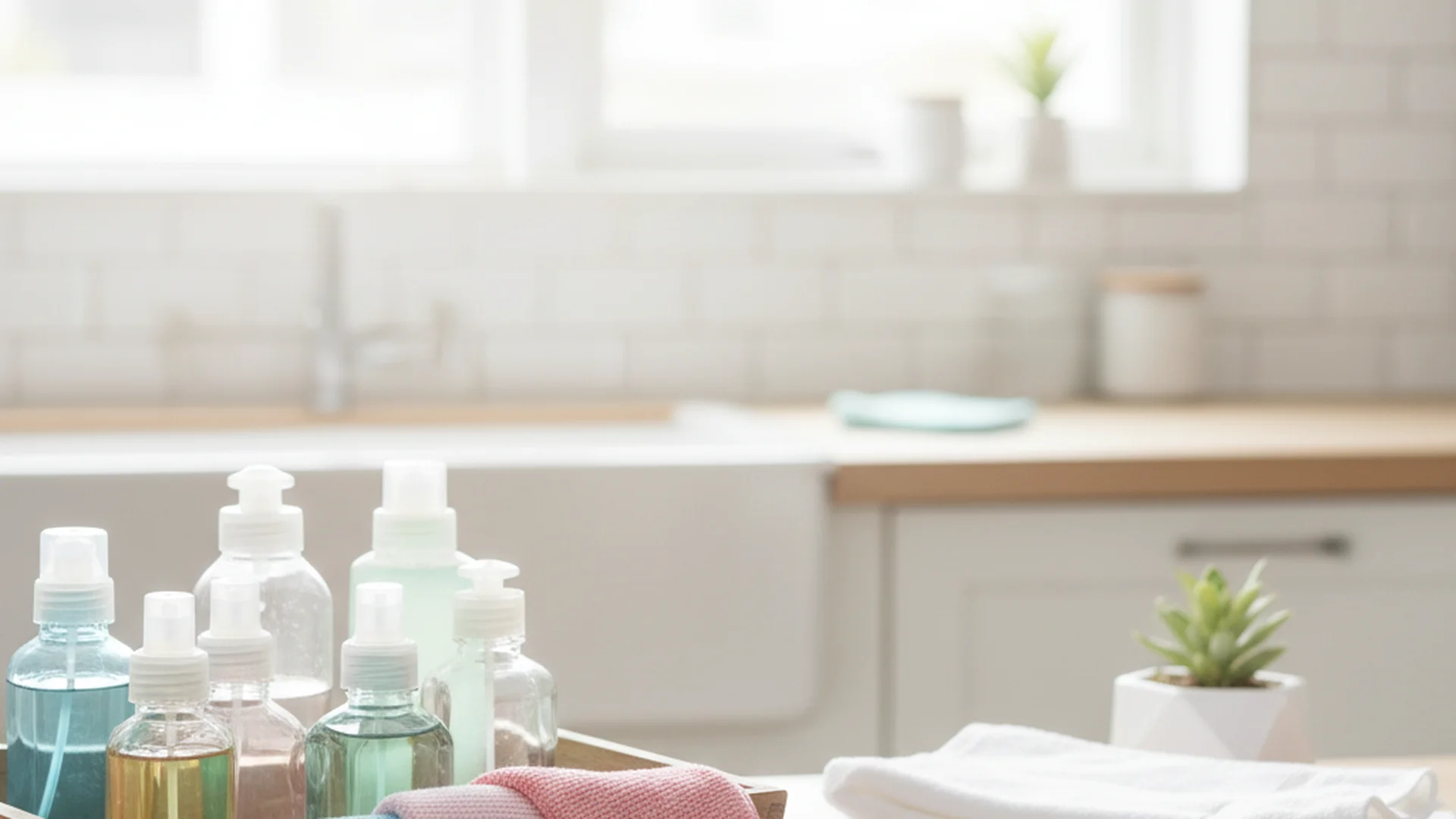
Tip: Keep your sensory kit in a dedicated, easy-to-reach "caddy." Having all your sensory-safe tools in one place reduces the executive function required to gather supplies.
Overcoming the "Wall of Awful" with Executive Function Aids
Once your sensory environment is safe, we have to tackle the "Wall of Awful." This is the psychological barrier that makes starting a task feel like climbing Everest.
The Power of Micro-Tasking
Instead of putting "Clean the Kitchen" on your to-do list, break it down into the smallest possible units.
- The 10-Minute Rule: Set a timer for 10 minutes. Tell yourself you can stop when it beeps. Usually, the hardest part is the transition from "not cleaning" to "cleaning."
- Square Foot Cleaning: Focus on cleaning just one square foot of a counter. Once that is done, you have succeeded. Anything more is a bonus.
Visual Schedules and "Done" Lists
The TEACCH method (Treatment and Education of Autistic and Communication-Related Handicapped Children) has long shown that visual structure meaningfully increases independence. This isn't just for kids.
- Trello or Kanban Boards: Use digital columns for "To Do," "Doing," and "Done." Moving a digital card provides a dopamine hit.
- Photo Checklists: Take a photo of what a "functional" room looks like. When you are overwhelmed, use the photo as a map to see what is out of place.
Real-World Example: The "Magicify" Method
Imagine you need to clean your bedroom. Instead of staring at the mess, you use an AI tool like Goblin.tools. You type "Clean my bedroom," and the AI generates these steps:
- Pick up all clothes from the floor.
- Put clothes in the hamper.
- Remove any trash (soda cans, wrappers).
- Put the trash in the bin.
- Make the bed. This removes the "sequencing" burden from your brain, allowing you to simply follow the list.
Warning: Avoid "All-Day" cleaning marathons. Autistic brains often have a limited number of "spoons" (energy units). Spending them all on cleaning can lead to days of burnout afterward.
Modern Solutions: AI and Smart Home Tech in 2025-2026
We are living in an era where technology can act as an external "frontal lobe" for neurodivergent people. Leveraging these tools is a game-changer for an autism cleaning routine.
Smart Home Integration
Voice-activated assistants (Alexa, Google Home) can be programmed to provide "gentle nudges."
- Automated Prompts: "It's Tuesday at 6:00 PM. Would you like to set a 5-minute timer to empty the trash?"
- Reducing Mental Load: Use smart plugs to turn on a specific light when it's time to do a chore. The visual cue of a blue light in the hallway can be less jarring than a loud alarm.
Gamification Apps
Apps like Finch or Habitica turn mundane chores into RPG (Role-Playing Game) quests.
- Immediate Gratification: For a brain that struggles with delayed rewards, getting "gold coins" or leveling up a digital pet for washing the dishes provides the immediate feedback needed to stay motivated.
| Tool Type | Example | Best For |
|---|---|---|
| AI Task Breaker | Goblin.tools | Task Sequencing |
| Gamification | Finch / Habitica | Motivation & Consistency |
| Smart Hardware | Silent Robot Vacuums | Sound-Sensitive Maintenance |
| Visual Aid | Clear Storage Bins | "Out of Sight, Out of Mind" Issues |
Note: "Out of sight, out of mind" is a common neurodivergent trait. Using clear bins instead of opaque drawers helps you remember where things belong and reduces the "clutter" of searching for items.
Common Mistakes to Avoid
In the quest for a clean home, many autistic individuals fall into traps that actually make the situation worse.
1. Equating Struggles with Laziness
The biggest mistake is a moral one. Executive dysfunction is a neurological barrier, not a character flaw. When you tell yourself you're "lazy," you add a layer of shame to the "Wall of Awful," making it even harder to start next time.
2. The "Scent of Clean" Myth
Many people believe a house isn't clean unless it smells like lemon or pine. For autistic individuals, these scents can be physically overwhelming. A home is clean when the bacteria are gone and the space is functional—it doesn't need to smell like a chemical factory.
3. Moving Items Without Consent
If you live with an autistic partner or child, never "tidy up" by moving their things into hidden drawers. For many, clutter is "visual mapping." When you move an object, you are effectively deleting it from their mental map, which causes genuine distress.
4. Over-reliance on Perfection
KC Davis, author of How to Keep House While Drowning, popularized the idea of "Care Tasks." Cleaning isn't a moral obligation; it's a way to care for your future self. If the floor is safe to walk on but has some dust, it is functional. That is enough.
A "Low-Demand" Sample Routine
A "low-demand" lifestyle prioritizes mental health over traditional standards. Here is how an autism cleaning routine help schedule might look when spread across a week to prevent burnout.
- Monday: "The Floor Path" – Clear the walking paths in the main living areas (5-10 mins).
- Tuesday: "The Trash Sweep" – Walk through the house with one bag and collect all visible trash (5 mins).
- Wednesday: "Rest Day" – No cleaning tasks. Recover spoons.
- Thursday: "One Surface" – Wipe down just the bathroom sink or the kitchen counter (5 mins).
- Friday: "The Laundry Cycle" – Wash one load. Don't worry about folding; just get it clean.
- Saturday: "Body Doubling" – Call a friend or join a "Clean with Me" stream to do 20 minutes of tidying.
- Sunday: "Prep for Success" – Ensure your sensory-safe kit is stocked and ready for next week.
Success: By breaking tasks into tiny chunks and allowing for "Rest Days," you maintain a functional home without hitting the wall of autistic burnout.
Frequently Asked Questions
How do I start cleaning when I’m completely overwhelmed?
What are the best unscented cleaning products that actually work?
Why does my autistic child have a meltdown when I clean their room?
How can I make a visual cleaning schedule that isn't childish?
Is it okay to just not clean some things?
Conclusion
Creating an autism cleaning routine is a journey of self-discovery and radical self-acceptance. It requires moving away from "shoulds" and moving toward what actually works for your brain. By building a sensory-neutral kit, utilizing micro-tasking, and embracing modern tools like AI and smart home tech, you can manage your home in a way that respects your energy levels and sensory needs.
Remember: You are not a failure for struggling with tasks that others find easy. Your brain is simply wired differently, and when you provide it with the right accommodations, you can create a space that feels like a true sanctuary.
Cleaning that keeps score
Every task earns points, every streak multiplies them, and Premium adds a household leaderboard plus a monthly Dustagorgon to beat.
- Free forever
- 30 badges to earn
- Up to 6 in a household
No card needed. Set up your rooms in a couple of minutes.