In this article
What you’ll learn
- Shift your mindset from aesthetic perfection to functional maintenance.
- Use "Pacing" and the "Sit-Down Rule" to conserve physical energy.
- Invest in 2025-2026 ergonomic tools to reduce repetitive strain.
Living with a long-term health condition changes the way you interact with your environment. For many, chronic illness cleaning isn't just about tidying up; it is a complex negotiation between the desire for a clean home and the finite amount of physical energy available each day. When you are managing pain, fatigue, or mobility issues, the traditional "spring cleaning" marathon isn't just difficult—it is physically dangerous.
The goal of this guide is to move away from the "all or nothing" approach. We are shifting the focus from "cleaning for appearance" to "cleaning for energy conservation." By utilizing professional techniques and the latest 2025 home technology, you can maintain a hygienic, peaceful space without triggering a multi-day "crash" or pain flare-up.
The Reality of Cleaning with a Chronic Condition
To understand why specialized strategies are necessary, it helps to appreciate how common this situation is. A very large share of adults are managing at least one long-term condition, and for many of them that condition limits "activities of daily living" (ADLs)—a category that quietly includes home maintenance.
For those in this demographic, the "invisible work" of scrubbing a tub or vacuuming a rug can be a major barrier to mental well-being. Almost everyone feels better in a clean home, but the cost of getting there is far higher when overexertion carries a real risk of injury or a days-long crash.
The Energy Conservation Mindset
Occupational Therapists (OTs) often talk about "pacing." In the context of chronic illness cleaning tips, this means breaking the "boom-bust" cycle—the habit of cleaning the entire house when you feel good, only to be bedridden for the following three days.
The Pacing Method
Instead of looking at a room as a single task, look at the clock. Set a timer for 10 or 15 minutes. When the timer goes off, you stop. It does not matter if the counter is half-wiped or the floor is half-mopped. Stopping before you are exhausted is the only way to ensure you have energy for the next day.
The "Good Enough" Standard
We often clean to meet a moral standard—we feel "lazy" if the baseboards are dusty. But cleaning is actually a functional task. If your kitchen counters are sanitized and your floors are safe to walk on, your home is "clean enough." Reframe cleaning as "functional maintenance" rather than a moral obligation.
Tip: If using a disposable wipe allows you to clean a surface while a heavy spray bottle and cloth cause a flare-up, the wipe is the better health choice. Sustainability is important, but your physical health is the priority.
Expert Strategies for Low-Energy Maintenance
The "Sit-Down" Rule
Standing consumes a surprising amount of "fuel." One of the most effective chronic illness cleaning help strategies is to perform as many tasks as possible while seated.
- Folding Laundry: Do this on the bed or at a table while sitting in a comfortable chair.
- Washing Dishes: Use a perching stool or a tall stool at the sink.
- Prepping Food: Sit at the kitchen table rather than standing at the counter.
The "Soak, Don't Scrub" Method
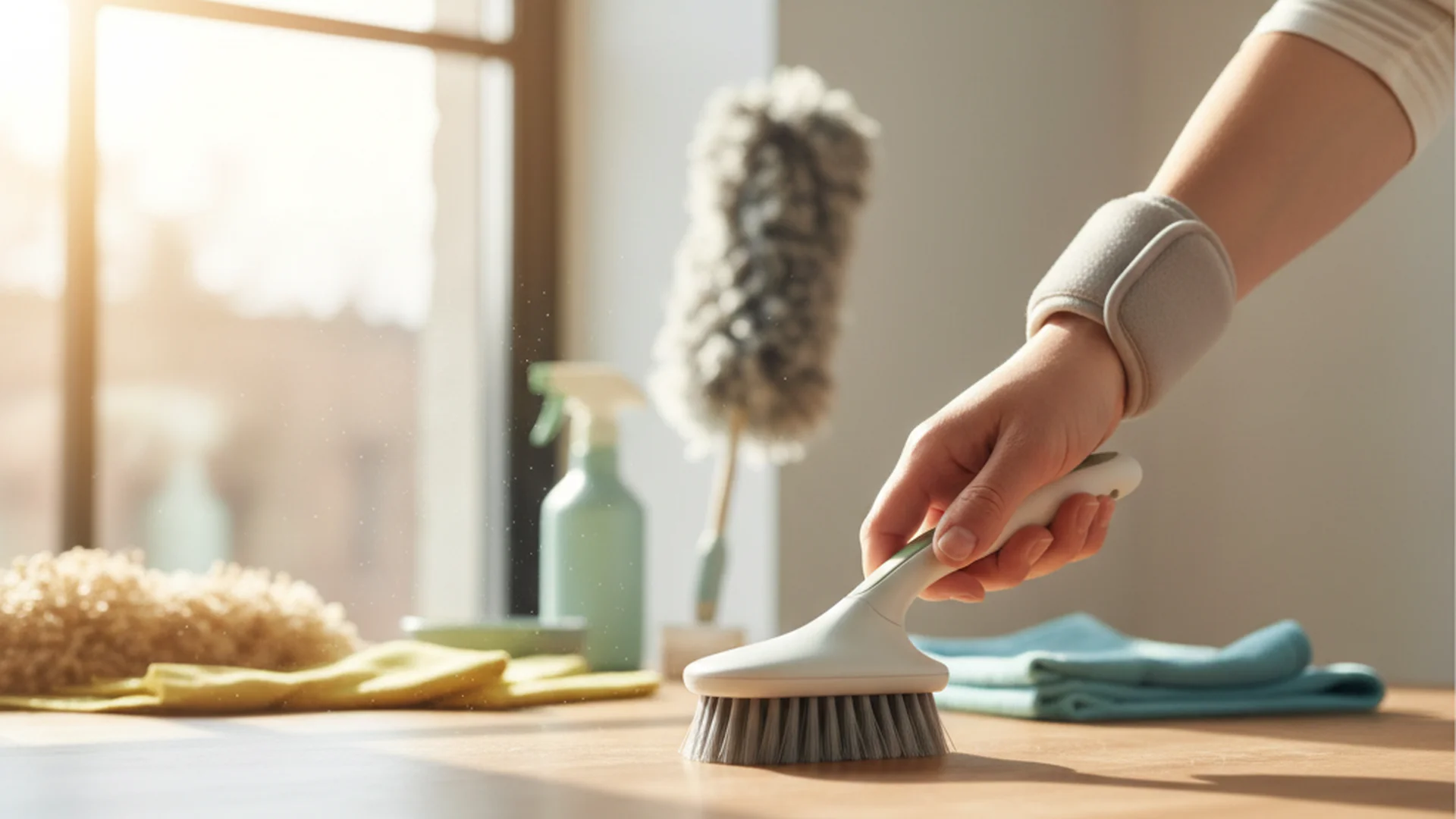
High-energy "elbow grease" is the enemy of the chronic illness warrior. Use chemical action to do the work for you. Apply your cleaning agents to the bathtub, sink, or stovetop and let them sit for at least 15 minutes.
Success: Letting a cleaning solution sit for 20 minutes can reduce the physical force required to remove grime by up to 80%.
Eliminating the "Travel Tax"
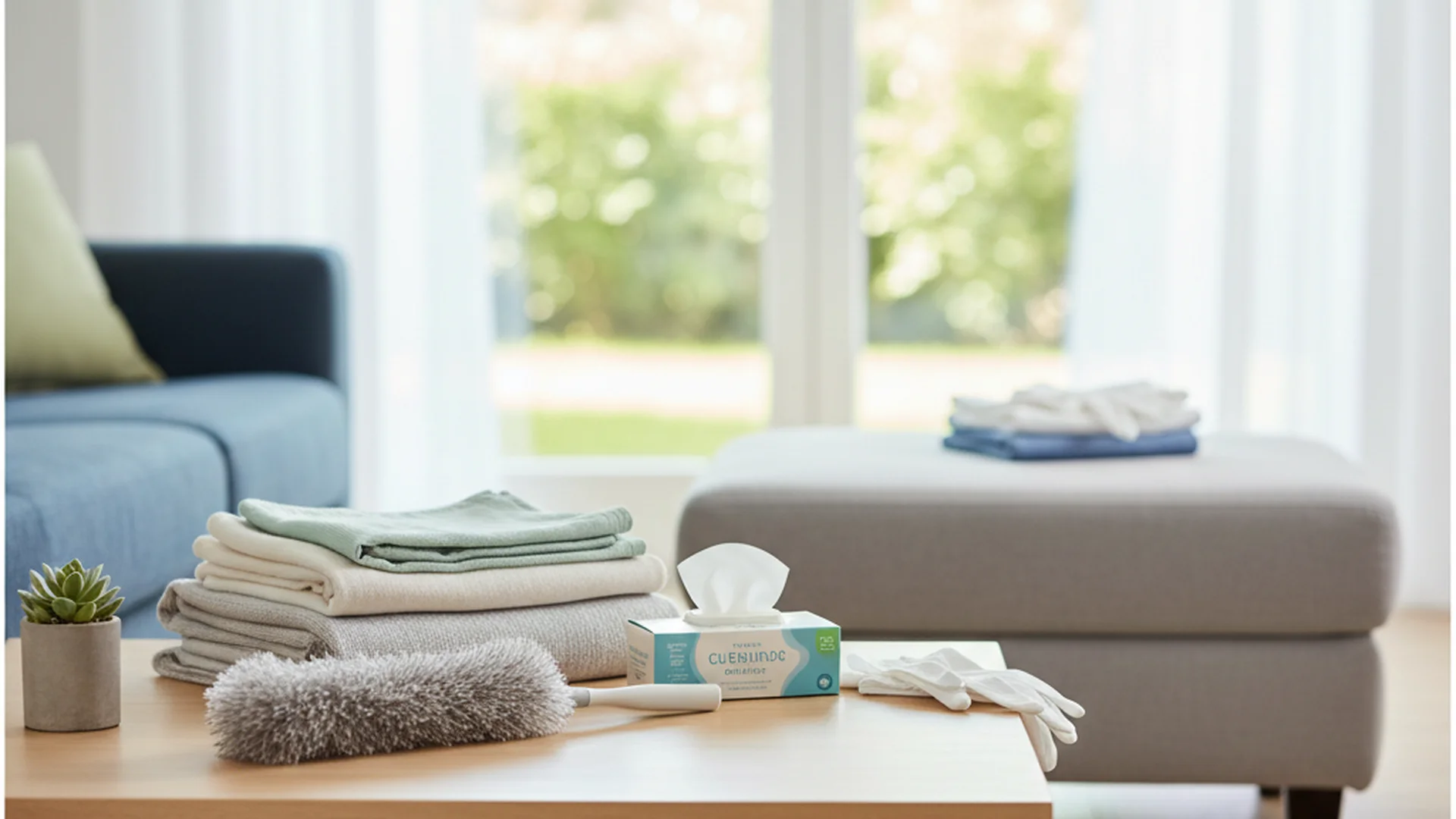
Walking back and forth to a central cleaning closet is a waste of precious energy. Keep a small kit of essential supplies (all-purpose cleaner and a few microfiber cloths) in every room or on every floor of your house. This eliminates the need to carry heavy buckets across the home.
2025–2026 Trends in Accessible Cleaning
The landscape of home maintenance is changing rapidly. New technologies are making it easier for those with limited mobility or chronic pain to keep their homes in order.
AI-Driven Autonomy
The 2025 market has seen a revolution in "Self-Emptying, Self-Washing" robot ecosystems. Newer models now feature advanced AI obstacle avoidance. These are specifically designed to navigate around medical equipment—such as walkers, wheelchairs, or oxygen tanks—without getting stuck or creating a tripping hazard.
Antimicrobial Surface Coatings
A major trend for 2026 is the use of "self-disinfecting" coatings. These silver or copper-infused technologies are applied to high-touch surfaces like doorknobs and counters. They keep surfaces hygienically clean for much longer, significantly reducing the frequency of deep cleaning required.
Green-Filtering Tech
New 2025 HEPA/UV-C air purification systems are now being integrated directly into home decor. By "pre-cleaning" the air and removing dust and allergens at the source, these systems reduce the rate at which dust accumulates on furniture, saving you the energy of frequent dusting.
| Feature | 2024 Technology | 2025/2026 Innovation |
|---|---|---|
| Robot Vacuums | Required manual emptying | Self-emptying & self-washing mop pads |
| Dusting | Manual microfiber cloths | Integrated HEPA decor air-purifiers |
| Disinfecting | Regular chemical spraying | Permanent antimicrobial coatings |
| Ergonomics | Standard short handles | Telescopic AI-assisted scrubbers |
Real-World Examples of Adaptive Cleaning
Example 1: Sarah’s Laundry System
Sarah lives with Fibromyalgia. Carrying heavy baskets of wet laundry was her biggest trigger for pain. She switched to a "rolling cart" system. Instead of one large basket, she uses three small, rolling bins. She folds clothes while sitting on her bed and uses a long-handled "grabber" tool to move items from the washer to the dryer without bending down.
Example 2: Mark’s Kitchen Hack
Mark, who manages Rheumatoid Arthritis, found that trigger-spray bottles caused intense hand pain. He replaced all his spray bottles with electric continuous-spray bottles and pump-dispensers. He also uses a long-handled electric scrubber for the floor, which allows him to clean spills without ever having to get on his knees.
Example 3: The "Help List" Strategy
Many people with chronic illness struggle to ask for help. One family implemented a "Help List" on their refrigerator. When friends or family ask, "How can I help?", they point to the list. Tasks like "Take the heavy trash to the curb" or "Vacuum under the sofa" are high-energy tasks that take a healthy person 5 minutes but might cause a flare-up for someone with a chronic condition.
Common Mistakes to Avoid
- The "Power Through" Mentality: Believing you must finish a room once you start is a recipe for a "boom-bust" cycle. It is okay to leave the vacuuming half-done if your body says "stop."
- Using Harsh Chemicals: For those with respiratory issues or autoimmune conditions, fumes from bleach or ammonia can trigger immediate flares. In 2025, the recommendation is to use pH-neutral, non-toxic cleaners.
- Neglecting Ergonomics: Using a standard-length broom when you have back pain is unnecessary. Invest in telescopic tools that adjust to your height.
- The Guilt Cycle: Letting a messy house affect your self-worth is a common mistake. A "good enough" home that allows you to remain functional is a massive success.
Warning: Never mix different cleaning chemicals, especially in an effort to make them "stronger." The fumes can be particularly dangerous for those with pre-existing health conditions.
Frequently Asked Questions
How do I clean without "crashing" the next day?
Is it okay to use disposable products (paper plates/wipes)?
How do I manage the guilt of a messy house?
What are the best tools for someone with limited hand strength?
Conclusion
Managing a home while living with a chronic illness requires a strategy rooted in self-compassion and efficiency. By embracing 2025 technology, using the "Sit-Down Rule," and prioritizing energy conservation over aesthetic perfection, you can keep your home a sanctuary rather than a source of stress. Remember, the goal of cleaning is to support your health—not to sacrifice it.
Success: Implementing even one of these "low-spoons" strategies this week can significantly reduce your physical load and help prevent future flare-ups.
Cleaning that keeps score
Every task earns points, every streak multiplies them, and Premium adds a household leaderboard plus a monthly Dustagorgon to beat.
- Free forever
- 30 badges to earn
- Up to 6 in a household
No card needed. Set up your rooms in a couple of minutes.