In this article
What you’ll learn
- Shift focus from moral perfection to functional "Struggle Care."
- Utilize 2026 "StealthSonic" technology to reduce auditory triggers.
- Implement the "Five Things" method to lower executive function load.
For many neurodivergent individuals, the simple act of tidying up isn't just a chore—it is a sensory minefield. When we talk about autism cleaning sensory challenges, we aren't talking about "disliking" chores. We are talking about a neurological response where the smell of bleach triggers a migraine, the roar of a vacuum feels like physical pain, and the texture of wet food on a plate causes an immediate gag reflex.
Traditional cleaning advice often fails because it assumes the barrier to a clean home is a lack of discipline. In reality, for the many autistic individuals who experience significant sensory processing differences, the barrier is often physiological. By redefining cleaning through the lens of "Struggle Care"—a term popularized by KC Davis—we can move away from the guilt of a messy house and toward a functional, sensory-safe environment.
The Sensory Science: Why Your Brain Rejects the Chore
To understand why autism cleaning sensory help is so vital, start with the sensory reality. Nearly all children with ASD process sensory input atypically, and this doesn't disappear in adulthood. For an autistic adult, a "simple" task like vacuuming involves a 90dB noise assault. To put that in perspective, 90dB is the level at which sustained exposure can begin to cause hearing loss; for someone with auditory hypersensitivity, it is the equivalent of a siren going off inside their skull.
The Flight-or-Fight Response
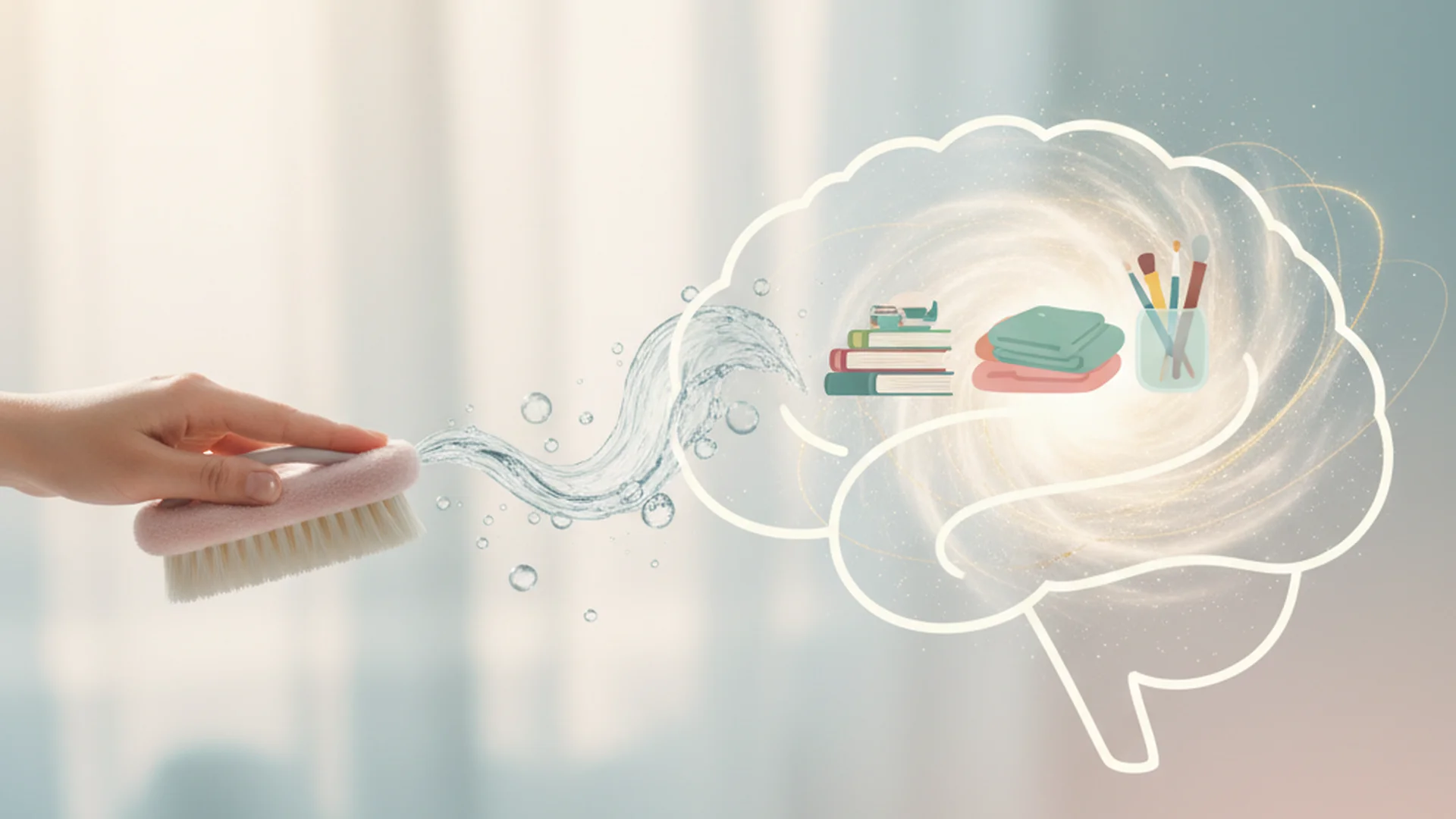
When a neurotypical person hears a vacuum, their brain filters it as "background noise." When an autistic person hears it, the amygdala may perceive a physical threat. This triggers a "flight-or-fight" response. This is why a child might have a meltdown or an adult might experience "autistic burnout" after just ten minutes of housework. It isn't a lack of will; it's a neurological overload.
Executive Function and "The Wall of Awful"
Beyond the sensory input, there is the executive function hurdle. Cleaning requires sequencing: Where do I start? What supplies do I need? How do I know when I'm done? When you combine sensory pain with the mental exhaustion of sequencing, you get the "Wall of Awful." Breaking this wall requires adaptive tools and a radical shift in perspective.
Note: Sensory processing issues are neurological. Exposure without support (like noise-canceling headphones) often leads to sensory trauma rather than desensitization.
The Adaptive Tool Kit: Tactile and Auditory Shields
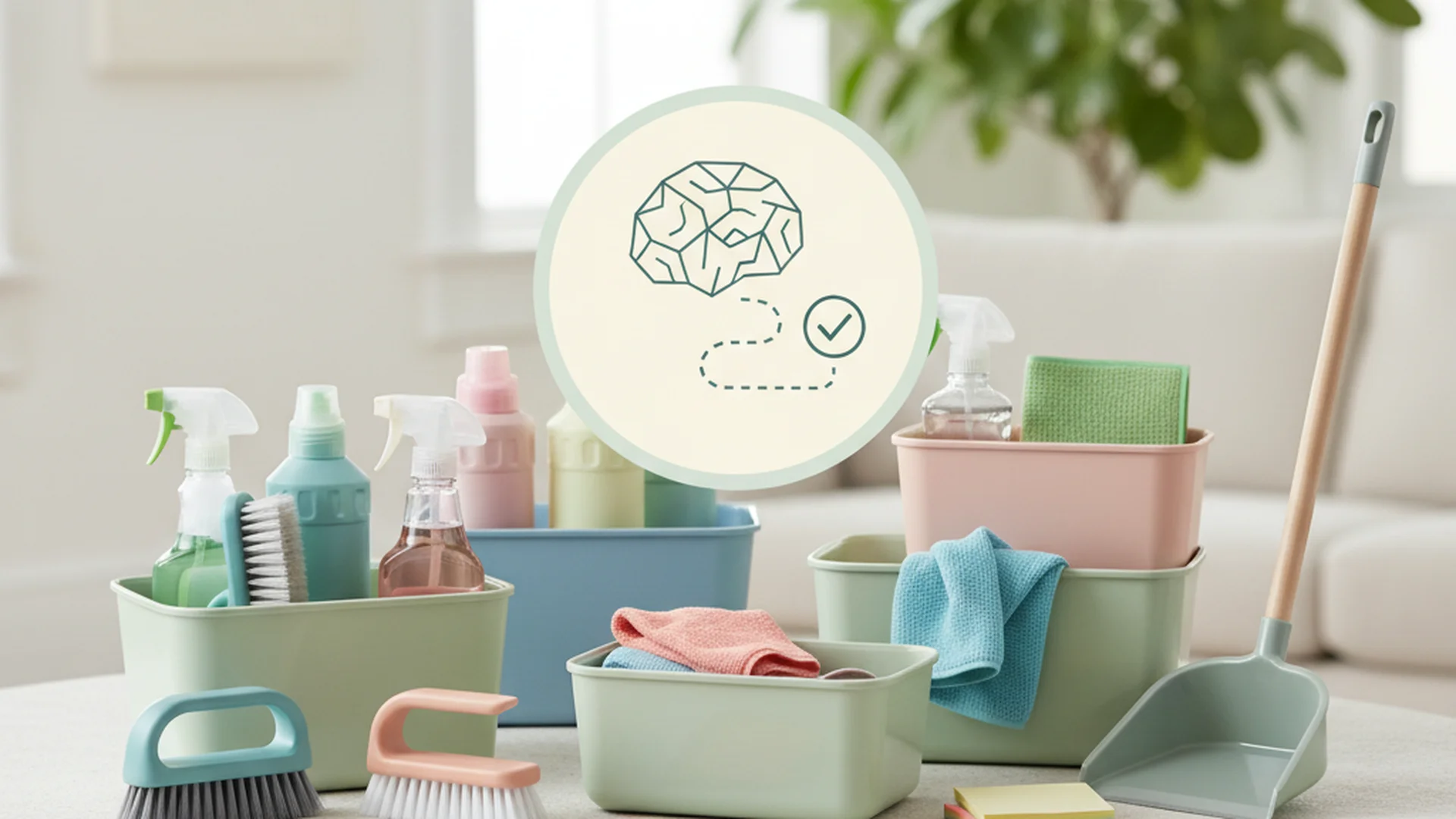
If the environment is the problem, the tools are the solution. You wouldn't ask a construction worker to work without a hard hat; you shouldn't ask a neurodivergent person to clean without sensory PPE (Personal Protective Equipment).
Auditory Shielding
Even "quiet" tasks, like the friction of a sponge against a countertop, can be a "nails-on-a-chalkboard" trigger.
- Active Noise-Canceling (ANC) Headphones: Brands like Bose or Sony are industry leaders, but even budget ANC headphones can mute the high-frequency whir of appliances.
- Loop Earplugs: For those who need to remain aware of their surroundings (like parents), Loop earplugs can take the "edge" off sharp sounds without blocking everything out.
Tactile Protection
The "sliminess" of dishwater or the "wet-dog" smell of damp cloths is a common barrier.
- Nitrile vs. Latex: Many prefer high-quality nitrile gloves because they lack the distinct rubbery smell of latex and provide a sturdier barrier against textures.
- Silicone Scrubbers: Unlike traditional sponges, silicone scrubbers don't hold onto old food smells and dry almost instantly, preventing that "musty" odor.
Tip: Wear your noise-canceling headphones even for silent tasks like folding laundry. It helps maintain a "sensory bubble" that preserves your energy.
Scent-Free and Biophilic Cleaning: 2025–2026 Trends
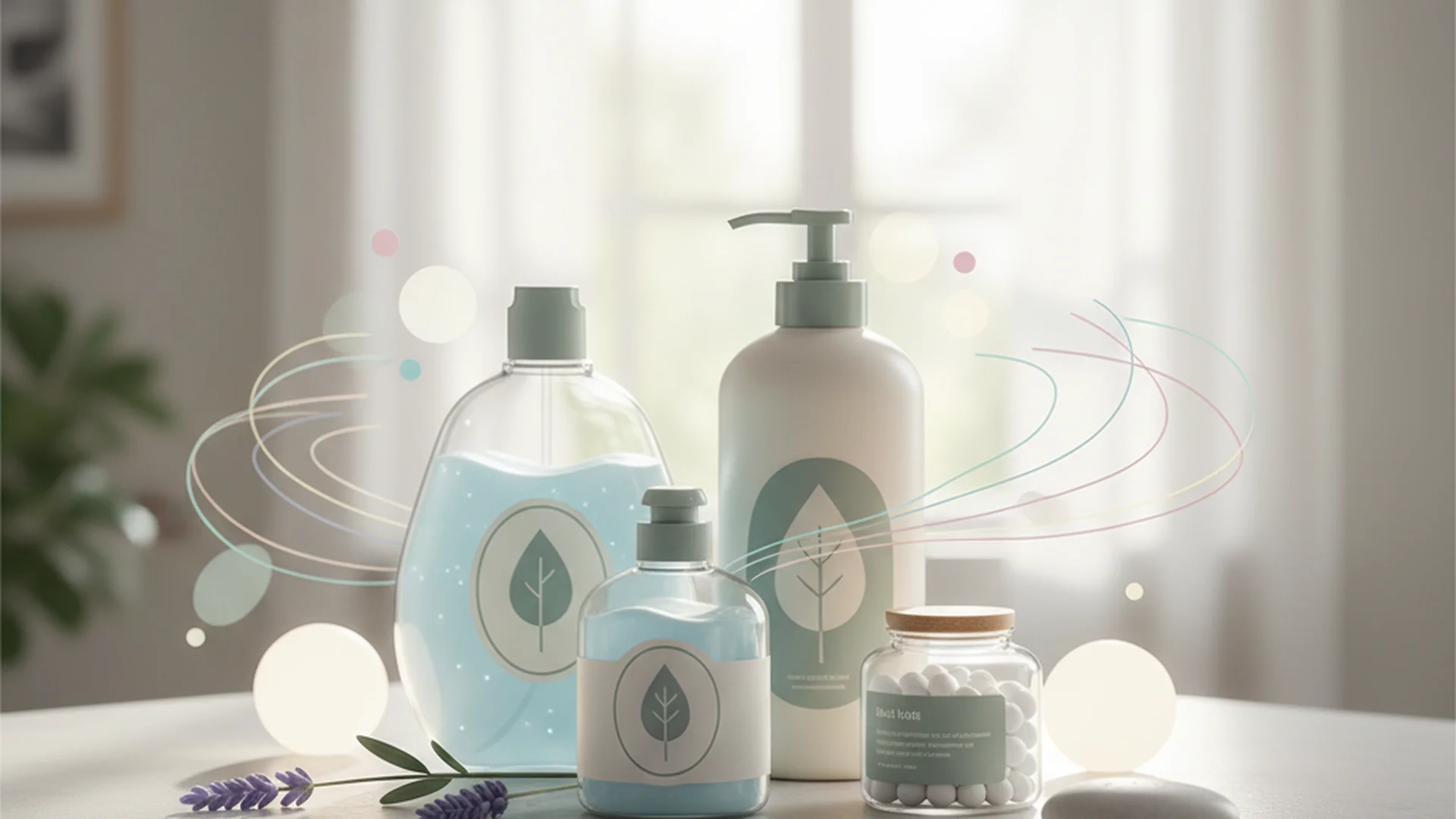
The cleaning industry has finally caught up to the needs of the neurodivergent community. In 2025 and 2026, we have seen a massive surge in "biophilic" and enzyme-based cleaning. These products move away from harsh synthetic fragrances (like "Lemon Fresh" or "Mountain Spring") which are often the primary triggers for sensory-based migraines.
| Brand | Best For | Sensory Profile |
|---|---|---|
| Seventh Generation (Free & Clear) | All-purpose | Zero fragrance, no dyes |
| Dr. Bronner’s (Baby Mild) | Multi-surface | Liquid soap, no synthetic scent |
| Branch Basics | Deep cleaning | Live enzymes, zero VOCs |
| The Unscented Company | Laundry & Dishes | Completely scent-neutral |
The Rise of Enzyme Cleaners
Enzyme-based cleaners (like those from Branch Basics) are becoming the gold standard for autism cleaning sensory tips. Instead of masking odors with heavy perfumes, these cleaners use live enzymes to break down organic matter at the molecular level. For a sensory-sensitive nose, this is a game-changer: the "smell of clean" becomes the "smell of nothing."
Warning: Never force someone to "get used to" the smell of bleach. Chemical sensitivities are often tied to mast cell activation or other co-occurring conditions in the autistic community.
High-Tech Solutions: Quiet Vacuums and AI Robots
The biggest breakthrough for 2025 has been "StealthSonic" technology. Historically, vacuums were loud because manufacturers thought loud meant "powerful." We now know that's not true.
StealthSonic Technology
The DeWalt StealthSonic and the Miele Blizzard CX1 are leading the way, operating at roughly 60dB. This is equivalent to the volume of a normal conversation. For someone who previously found vacuuming physically painful, these machines allow them to clean without the immediate threat of a meltdown.
AI Object Recognition
The 2026 robot vacuum models, such as the ECOVACS DEEBOT T30S or the Roborock S-series, have solved the "cleaning before the cleaner" problem. For many autistic individuals, the stress of having to pick up "stims" (fidget toys) or comfort items before a robot vacuum runs is enough to prevent them from using one.
- ZeroTangle Tech: Prevents the vacuum from getting stuck on stray threads or hair.
- AI Object Recognition: The vacuum "sees" a stray Lego or a weighted blanket and simply moves around it, rather than eating it or getting stuck.
Success: Using a robot vacuum that runs while you are out of the house can completely remove the auditory trigger from your daily life.
Actionable Strategies: The "Five Things" Method
When the house is a disaster, executive dysfunction often leads to "task paralysis." You stand in the middle of the room, overwhelmed by the 500 things that need to be done, and end up doing none of them.
The Five Things Method (by KC Davis)
To combat this, categorize everything in the room into only five categories:
- Trash: Grab a bag and only look for trash. Ignore the dishes. Ignore the laundry.
- Dishes: Collect them all and put them by the sink. Do not wash them yet.
- Laundry: Put all clothes in a hamper. Do not start the machine yet.
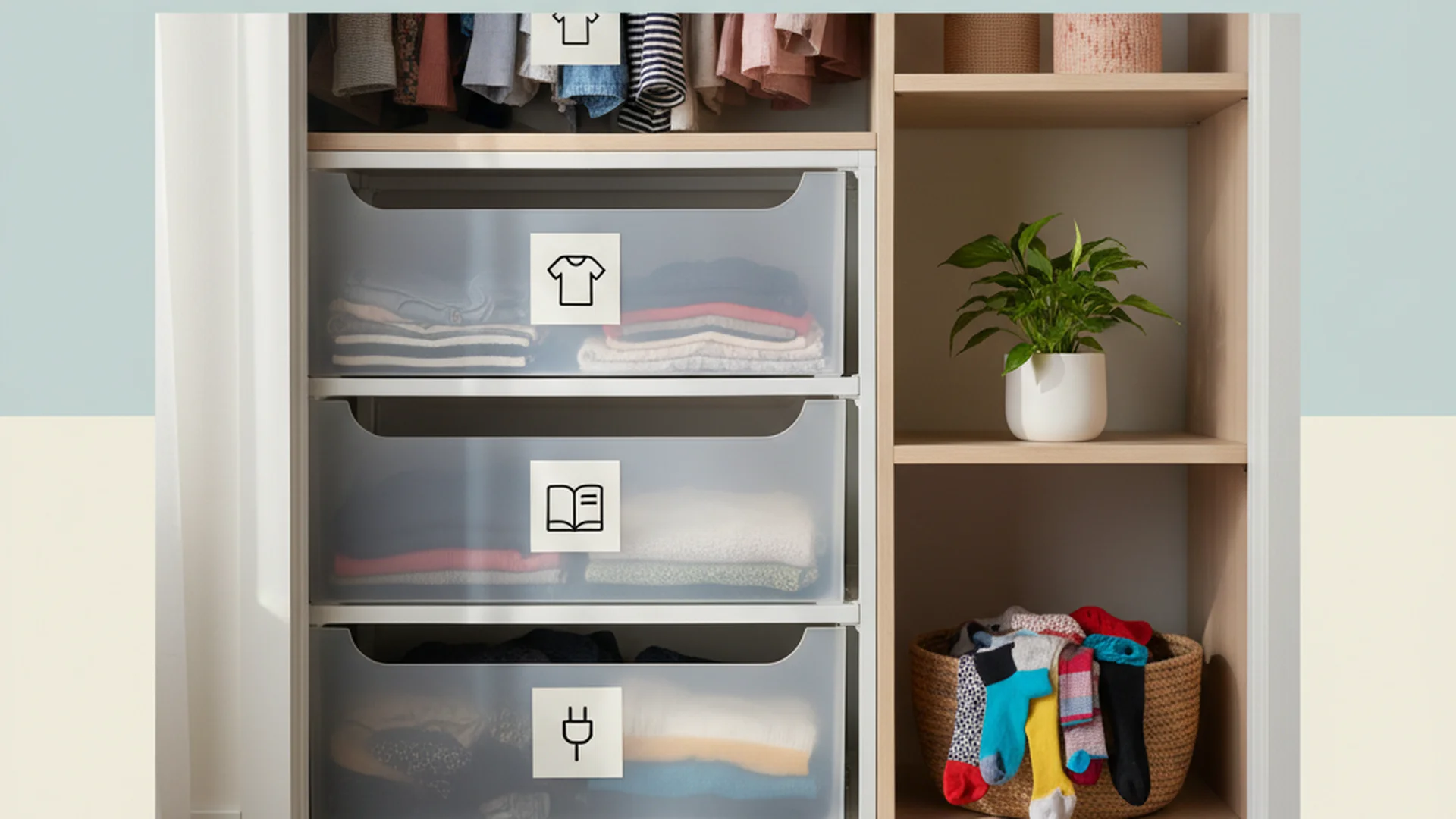
- Things that have a place: Move items that have a "home" back to that home.
- Things that don’t have a place: Put these in a single bin to be dealt with later.
Visual Supports and Room Resets
Visual timers (like the Time Timer) or "Room Reset" boards are essential autism cleaning sensory help tools. A whiteboard that shows a picture of what a "functional" room looks like provides a clear finish line.
- Real-World Example 1: A parent uses a 5-minute visual sand timer for a "Lego Sort." When the sand runs out, the task is over, regardless of how many Legos are left. This creates a predictable boundary.
- Real-World Example 2: An adult uses "Body Doubling"—FaceTiming a friend while they both do chores. The presence of another person (even virtually) helps stay on task without the pressure of direct supervision.
- Real-World Example 3: Using a "Cleaning Nook." A 2025 trend in neurodivergent design involves keeping a stick vacuum and a spray bottle on a visible, dedicated wall mount. Removing the "barrier to entry" (opening a dark, crowded closet) makes the task far easier to start.
Common Mistakes to Avoid
1. Moralizing Cleanliness
The biggest mistake is believing that "clean" equals "good" and "messy" equals "lazy." Cleaning is a functional task. If your clean clothes are in a laundry basket because folding them is a sensory nightmare, that is a success. They are clean and accessible.
2. The "Power Through" Myth
Telling an autistic person to "just power through" the noise or the smell is like telling someone with a broken leg to "just power through" a marathon. It results in sensory trauma. If the task hurts, stop and find an adaptive tool.
3. Rigid Scheduling
The "Saturday Morning Deep Clean" is a recipe for burnout. If Saturday is a low-energy day following a long work week, the deep clean will fail. Instead, adopt "Energy-Based Cleaning." Do the dishes when you have the "spoons" (energy), and let them sit when you don't.
4. Confusing Meltdowns with Tantrums
If a child screams when the vacuum turns on, it is an involuntary neurological overload. Treating it as a "behavioral choice" to avoid work will only increase anxiety and make future cleaning tasks even harder.
Frequently Asked Questions
Why is cleaning physically painful for some autistic people?
How can I get my autistic child to help without a meltdown?
What are the best scent-free cleaning brands?
Is there a way to vacuum without the noise?
Conclusion: Function Over Fashion
At the end of the day, your home should serve you—you should not serve your home. If you are struggling with autism cleaning sensory issues, give yourself permission to do things differently. Buy the expensive gloves. Use the "quiet" vacuum. Leave the laundry in the basket.
By focusing on "Function over Fashion," you create a space that supports your mental health rather than draining it. Cleaning doesn't have to be a source of trauma; with the right tools and a low-demand mindset, it can simply be a way to reset your environment for the next day.
Success: Transitioning to an "energy-based" cleaning schedule reduces burnout and makes your home a sanctuary rather than a source of stress.
Cleaning that keeps score
Every task earns points, every streak multiplies them, and Premium adds a household leaderboard plus a monthly Dustagorgon to beat.
- Free forever
- 30 badges to earn
- Up to 6 in a household
No card needed. Set up your rooms in a couple of minutes.