In this article
What you’ll learn
- A tiered cleaning approach prevents "weekend burnout."
- Communication about standards is more important than a 50/50 split.
- Leveraging AI and smart home technology can save you hours every week.
For many dual-income households, Friday evening doesn't signal the start of a relaxing weekend; instead, it marks the beginning of a "second shift." Maintaining a home while both partners work full-time is one of the most common stressors in modern relationships. If you’ve ever found yourself arguing over a stack of dishes or spending your entire Saturday scrubbing baseboards, you are likely asking: how often is working couples cleaning actually required to keep a home functional and happy?
The short working couples cleaning answer is that there is no universal rule, but there is a strategic framework. By moving away from "marathon cleaning" and toward a tiered, consistent schedule, you can maintain a sanctuary without sacrificing your precious downtime.
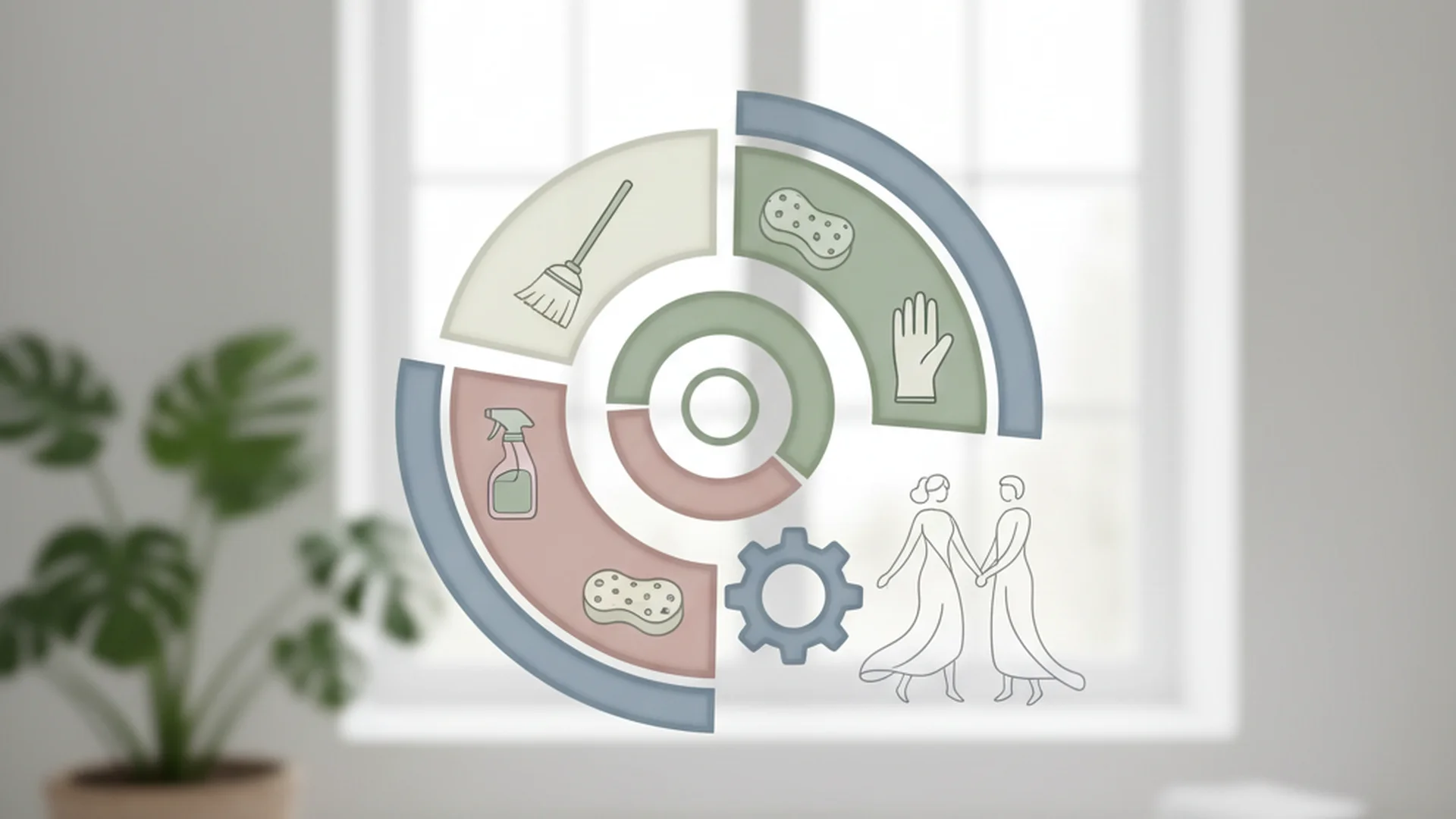
The Tiered Approach: Frequency Breakdown
To keep your home from falling into chaos without losing your mind, use a tiered system. This prevents chores from piling up into an insurmountable mountain of labor.
Daily: The 15-Minute Reset
Daily tasks are about maintenance, not deep cleaning. The goal is to "reset" the house to a baseline level of tidiness so you can start the next workday without visual clutter.
- The Kitchen Sink: Aim for zero dishes before bed.
- Surface Wiping: A quick wipe of the primary kitchen counters.
- The 5-Minute Pick-up: Walking through the main living area and putting away shoes, mail, or blankets.
Weekly: The High-Traffic Refresh
Weekly cleaning should take between 1 and 2 hours per couple. This is where you address hygiene and high-visibility areas.
- Floors: Vacuuming high-traffic zones and a quick mop of the kitchen.
- Bathrooms: Sanitizing the toilet, sink, and mirror.
- Linens: Changing bed sheets and laundering towels.
Monthly: The Deep Dive
Monthly tasks are those that don’t impact daily health but prevent long-term grime buildup.
- Appliances: Cleaning the microwave interior and wiping down fridge shelves.
- Dusting: Moving beyond eye-level surfaces to include baseboards and ceiling fans.
- Windows: Cleaning tracks and interior glass in primary rooms.
| Frequency | Tasks | Estimated Time |
|---|---|---|
| Daily | Dishes, Counters, Tidy | 20 Minutes |
| Weekly | Floors, Bathrooms, Laundry | 1-2 Hours |
| Monthly | Baseboards, Appliances, Deep Dusting | 2-4 Hours |
Why Cleaning Frequency Impacts Your Relationship
It’s rarely about the dust; it’s about the "invisible labor." Close to half of all couples argue about cleaning, which makes it one of the biggest sources of domestic tension there is.
The Gender Gap and Invisible Labor
Despite more equal participation in the workforce, there is still a stubborn gender gap in housework. In dual-income households, women typically carry a great deal more of the "invisible labor" than their male partners. This includes the mental load of remembering when the air filters need changing or noticing that the hand soap is running low.
Note: Sharing responsibility for the kitchen sink is one of the strongest predictors of whether a couple feels the chore split is fair.
Case Study: Sarah and Mark
Sarah and Mark both work 50-hour weeks in tech. Initially, they waited until Saturday to do everything. By noon, they were both exhausted and resentful. They switched to a "Body Doubling" method—cleaning for 30 minutes together every Tuesday and Thursday evening. By the time Saturday arrived, the heavy lifting was done, and they reclaimed 6 hours of their weekend.
Best Practices for Busy Couples
1. The "One-In, One-Out" Rule
To reduce the time spent on "working couples cleaning," commit to immediate tidying. If you bring a coffee mug to the kitchen, put it in the dishwasher immediately. If you take off your coat, hang it up. This prevents "micro-clutter" from becoming a "macro-problem."
2. Zone Cleaning
Instead of trying to clean the whole house at once, divide your home into four zones. Each week, focus your "deep clean" effort on just one zone (e.g., Week 1: Kitchen, Week 2: Bathrooms). The rest of the house only gets a surface clean.
Tip: Use a shared digital app like Tody or Sweepy to track which zone is due for a deep clean. This removes the "mental load" of remembering what was last scrubbed.
3. Communication over Fairness
Don’t aim for a perfectly 50/50 split of every single task. Instead, divide chores based on preference and energy levels. If one partner finds vacuuming therapeutic but hates the bathroom, make a trade.
Success: Aligning tasks with personal preference increases the likelihood that the chores will actually get done without resentment.
Cleaning Trends for 2025–2026
The landscape of home maintenance is changing rapidly. Working couples are increasingly looking toward technology and sustainability to solve their time-poverty issues.
AI-Enhanced Robotics
The 2026 generation of robotic vacuums is a game-changer for working couples. New models feature advanced AI that can distinguish between "dry messes" (like spilled flour) and "pet accidents," meaning you can safely run your vacuum while you are at the office without fear of a disaster.
Sustainable Refill Culture
Most shoppers now prefer green cleaning solutions. The "refill" trend has evolved into "concentrate-only" models. Couples are moving away from bulky plastic bottles and toward small, mail-order pods that drop into glass spray bottles, reducing both waste and storage clutter.
Indoor Air Quality (IAQ)
Cleaning is no longer just about how the room looks. More couples are investing in HEPA-filter vacuums and air purifiers that sync with smart home apps. These apps track dust and allergen levels in real-time, notifying you exactly when it's time to vacuum rather than relying on a arbitrary schedule.
Common Mistakes to Avoid
Even with the best intentions, many couples fall into habits that make cleaning harder than it needs to be.
Cleaning "Bottom-Up"
Many people start by vacuuming the floor and then move to dusting the shelves. This is a mistake. Gravity ensures that dust falls downward. Always clean from top to bottom so you don't have to clean your floors twice.
Ignoring "Dwell Time"
Spraying a disinfectant and wiping it away immediately is largely ineffective. Most cleaning products require 3–10 minutes of "dwell time" to actually kill bacteria and break down grime.
Warning: Using too much cleaning product can leave a sticky residue that attracts more dirt, making your surfaces get dirty faster than if you had used less.
Relegating Everything to the Weekend
This is the "Weekend Burnout" trap. When you associate your time off with labor, you never truly recharge. Aim for "micro-cleaning" sessions during the week to protect your Saturday and Sunday.
Frequently Asked Questions
Is it worth hiring a professional cleaner if we both work?
How do we stop arguing about the "standard" of clean?
Should we clean together or separately?
How do we handle cleaning with a busy travel schedule?
Conclusion: Finding Your Rhythm
The key to working couples cleaning isn't about achieving a Pinterest-perfect home every day; it's about creating a sustainable rhythm that supports your lifestyle. By implementing a 15-minute daily reset and utilizing modern tools like AI vacuums, you can stop "living to clean" and start "cleaning to live."
Remember, the goal of a clean home is to provide a space where you can both relax and reconnect after a long day of work. If your current routine is causing more stress than the mess itself, it's time to adjust your frequency or consider outsourcing.
Success: A clean home is a byproduct of a functional partnership. Focus on the system, and the cleanliness will follow.
Cleaning that keeps score
Every task earns points, every streak multiplies them, and Premium adds a household leaderboard plus a monthly Dustagorgon to beat.
- Free forever
- 30 badges to earn
- Up to 6 in a household
No card needed. Set up your rooms in a couple of minutes.