In this article
What you’ll learn
- Focus on "free time equity" rather than a strict 50/50 chore split.
- Adopt the "Total Task Responsibility" model to reduce the mental load.
- Transition to "micro-cleaning" to preserve your weekends for relaxation.
For many partners, the dream of cohabitation often hits a messy reality check within the first few months. Whether it is a sink full of dishes or a vacuum that hasn’t seen the light of day in weeks, housework is a frequent flashpoint for domestic friction. However, establishing a sustainable cleaning schedule for couples isn’t just about maintaining a tidy home; it is about protecting the health of your relationship. In 2025, we are seeing a significant shift in how households operate, moving away from "helping out" toward a model of true domestic partnership.
The State of the Household in 2025
Understanding the current landscape of household labor is the first step in creating a fair schedule. Despite shifting societal norms, we are still grappling with a persistent "chore gap." Women still shoulder considerably more unpaid domestic labor than men. The gap in core housework like cleaning and laundry has narrowed over the past two decades, but the disparity remains a primary source of tension.
The overwhelming majority of couples living together argue about chores on a regular basis. These arguments usually center on "how" things are cleaned, "when" they get done, and, most importantly, "who" is responsible for noticing they need doing in the first place.
Note: Relationship satisfaction is more closely linked to the perception of fairness than an exact 50/50 time split. Couples who perceive their division of labor as equitable report higher levels of intimacy and lower stress.
Moving Beyond 50/50: The Philosophy of Fairness
One of the most common mistakes couples make is aiming for a perfectly symmetrical split of every task. Life is rarely that clean-cut. Instead of "chore equality," focus on "free time equity."
This means ensuring that at the end of the day, both partners have roughly the same amount of leisure time. If one partner works a 60-hour week and the other works 30, a 50/50 split of the cleaning will inevitably lead to resentment. By focusing on shared leisure time, the cleaning routine becomes a tool for mutual support rather than a scorecard for conflict.
The "Fair Play" Method
Inspired by Eve Rodsky’s "Fair Play" system, modern couples are moving toward "Complete Task Responsibility." In this model, if you are in charge of a task, you own it from start to finish.
For example, if "Laundry" is your domain, you don't just wait for your partner to tell you the basket is full. You are responsible for:
- Conception: Noticing the laundry is dirty.
- Planning: Ensuring there is detergent and a window of time to wash.
- Execution: Washing, drying, folding, and putting away.
Tip: When a partner "owns" a task, it removes the need for "nagging" and significantly reduces the mental load on the other person.
The Tiered Cleaning Schedule for Couples
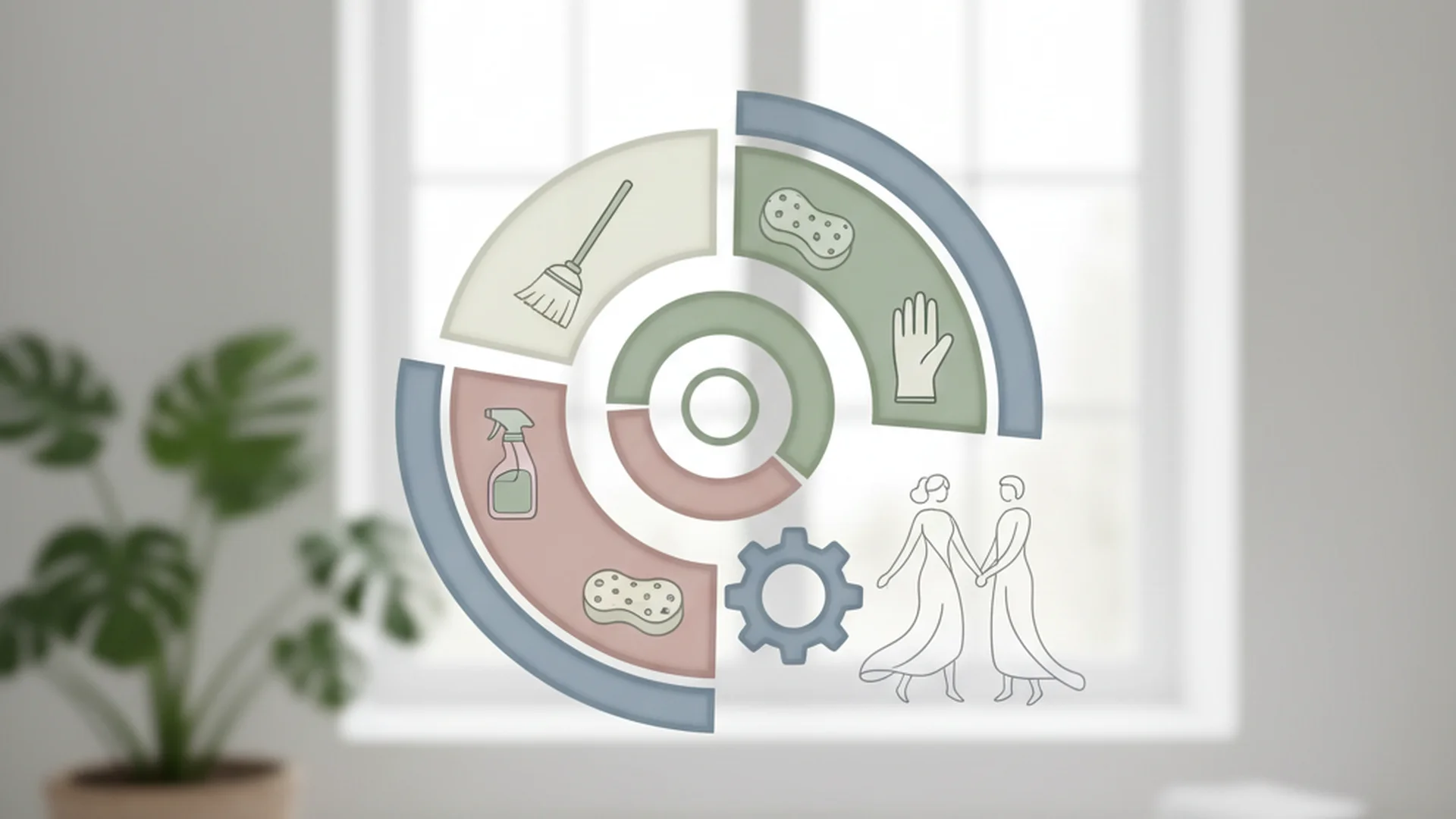
To keep a home running smoothly without spending every Saturday scrubbing baseboards, we recommend a tiered approach. This "Micro-Cleaning" trend of 2026 favors 5-minute bursts throughout the week to protect your weekend.
Daily: The "Closing Shift"
Borrowing a term from the restaurant industry, the "Closing Shift" is a 15-minute reset performed every evening before bed. This ensures you wake up to a neutral environment, which takes a great deal of the tension out of the morning.
- Kitchen: Load/run the dishwasher, wipe down counters, and clear the sink.
- Living Area: A quick "surface sweep"—put away stray shoes, remote controls, and blankets.
- Trash: Empty the main bin if it’s full.
Success: Performing a "Closing Shift" together can act as a "body doubling" exercise, making the work feel faster and providing a shared sense of accomplishment before bed.
Weekly: The "Power Hour"
Instead of cleaning all day Saturday, schedule one "Power Hour" during the week. Both partners put on music or a podcast and tackle high-impact areas simultaneously.
| Task | Partner A | Partner B |
|---|---|---|
| Bathrooms | Scrub toilet and shower | Wipe mirrors and sink |
| Floors | Vacuum carpets | Mop hard surfaces |
| Linens | Strip beds | Start first load of sheets |
| Dusting | High surfaces/fans | Low surfaces/electronics |
Warning: Never mix cleaning chemicals. In the rush of a Power Hour, ensure you aren't combining bleach-based products with ammonia or vinegar.
Monthly & Quarterly: The Deep Clean
These are the heavy-duty tasks that don't need frequent attention but are essential for home maintenance.
- Monthly: Clean the inside of the microwave, wipe baseboards, and clean window sills.
- Quarterly: Deep clean the oven, wash curtains, and flip the mattress.
Real-World Examples of Couple Cleaning Strategies
Example 1: The "Preference Swap"
Sarah and Mark both work full-time. Sarah hates cleaning the bathroom but doesn't mind laundry. Mark finds laundry tedious but gets a strange satisfaction from a sparkling shower. By listing every chore and "claiming" their preferred tasks, they eliminated the bulk of their weekly arguments. They rotate the "neutral" tasks—like vacuuming—every other week.
Example 2: The "High-Low" Work Schedule
Elena works as a nurse with long 12-hour shifts, while James works from home with a standard 9-5. Because Elena has more "recovery days" but fewer "free hours" on workdays, James handles the daily "Closing Shift" Monday through Friday. Elena takes on the larger "Weekly Power Hour" tasks on her days off. This maintains free time equity despite their vastly different schedules.
Example 3: The AI-Assisted Plan
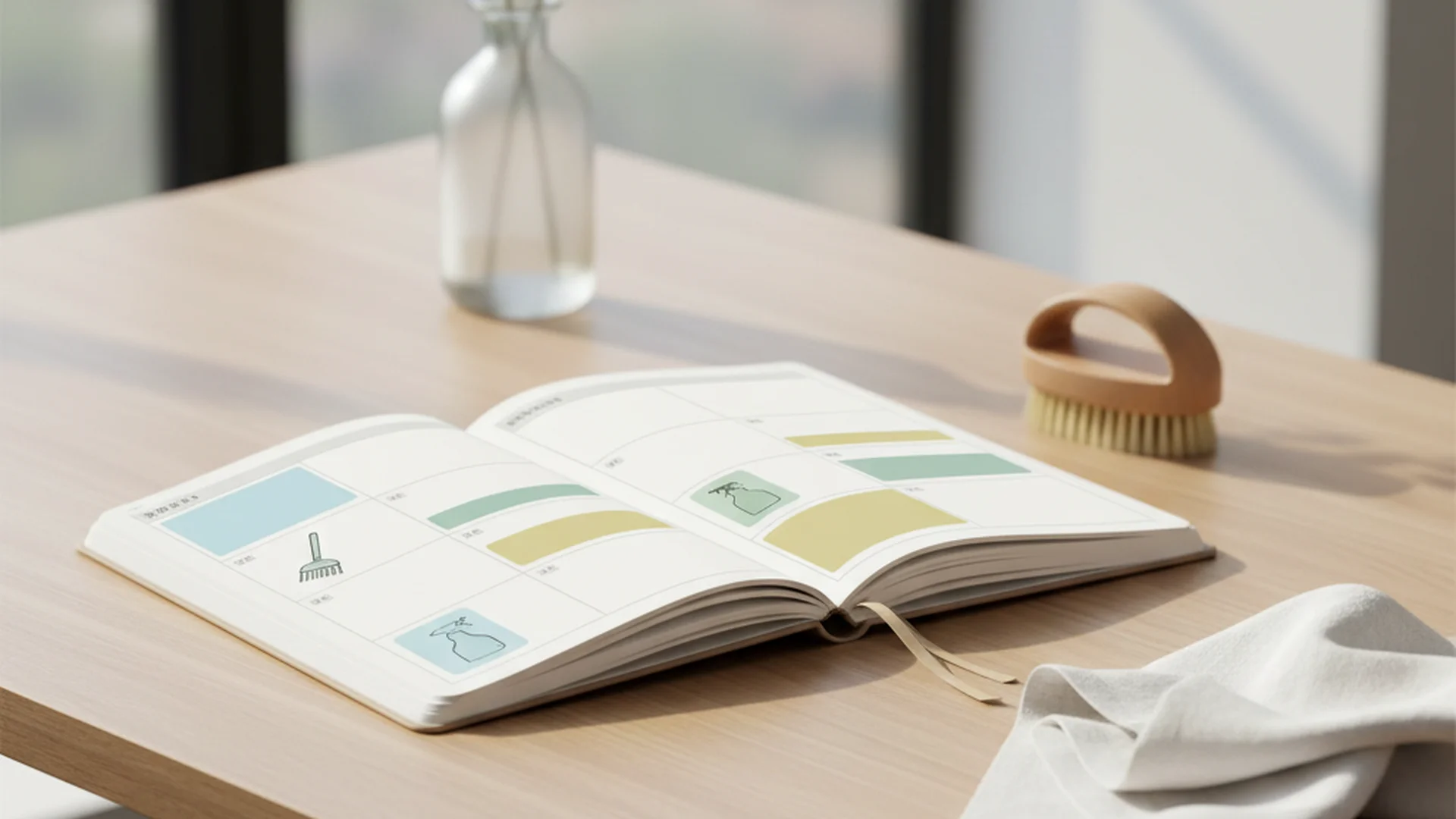
In 2025, many tech-savvy couples are using AI to generate custom schedules. By inputting their home's square footage, the number of pets (2 shedding dogs), and their work hours into a tool like ChatGPT, they created a bespoke calendar that assigns tasks based on the "difficulty" of the chore and the time available. This removes the "personal" element of chore assignment, making it feel like a neutral, data-driven plan.
Common Mistakes to Avoid
1. The 50/50 Trap
As mentioned, expecting a perfectly equal split is a recipe for frustration. Life is fluid. One partner may need to carry more weight during a busy work season or a health crisis. Aim for fairness over the long term rather than day-to-day equality.
2. Weaponized Incompetence
This involves one partner pretending to be "bad" at a task (e.g., "I don't know how the dishwasher works") to avoid doing it. This is cited as a major "relationship killer" in 2025 social trends. If you don't know how to do something, the solution is to learn, not to opt out.
3. Ignoring the "Mental Load"
Thinking that "doing what I'm told" is the same as contributing is a mistake. The person who has to remember that it’s "trash day" or that the "dog needs a bath" is often more exhausted than the person performing the physical task. True partnership involves sharing the thinking as well as the doing.
4. Cleaning Only for Guests
Only cleaning when people are coming over creates a high-stress environment and implies that your own comfort doesn't matter. Clean for yourselves. A tidy home reduces stress hormones and makes your living space a sanctuary rather than a source of "to-do" lists.
2026 Trends: The Shift to Mindful Cleaning
The latest trend in home maintenance is "Cleaning as Self-Care." This moves away from the idea of chores as a burden and toward a sensory ritual.
- Probiotic Cleaners: Using cleaners that stay active for 72 hours, reducing the need for daily scrubbing.
- Scent-Focused Rituals: Using high-end, essential oil-based products to make the process more enjoyable.
- Sustainable "Solid" Formats: Moving to waterless, concentrated cleaning tablets to reduce plastic waste, reflecting a broader focus on home health safety.
Note: "Micro-cleaning"—taking 5 minutes to clean one specific thing (like the inside of the fridge door) while waiting for the coffee to brew—is replacing the "all-day Saturday" marathon for 2026 households.
Frequently Asked Questions
How do we divide chores if one person works more hours?
How can I stop nagging my partner to clean?
What if our standards of 'clean' are completely different?
How do we handle the "Mental Load"?
Conclusion
Creating a cleaning schedule for couples is an evolving process. It requires open communication, a lack of judgment, and a willingness to adapt as life changes. By moving away from "helping" and toward "total task ownership," you can eliminate the resentment that often builds up around housework. Remember, the goal isn't just a clean house—it's a supportive, equitable partnership where both people feel their time and effort are valued.
Success: Couples who master the art of shared domestic labor report not only cleaner homes but significantly higher levels of relationship satisfaction and long-term stability.
Cleaning that keeps score
Every task earns points, every streak multiplies them, and Premium adds a household leaderboard plus a monthly Dustagorgon to beat.
- Free forever
- 30 badges to earn
- Up to 6 in a household
No card needed. Set up your rooms in a couple of minutes.