In this article
What you’ll learn
- Transition to a task-based cleaning system to increase speed by 30%.
- Implement a 5-Zone rotation to manage square footage without burnout.
- Leverage 2025 AI-driven cleaning technology for automated floor and air maintenance.
Managing a sprawling estate or a multi-story family home can often feel like a full-time job. Without a structured cleaning schedule for a big house, it is remarkably easy for clutter to accumulate in unused guest rooms while high-traffic areas like the kitchen become overwhelming. In 2025, the standard for "clean" has evolved; it is no longer just about aesthetics but about indoor air quality, microbial health, and the integration of smart home technology. As a domestic efficiency specialist, I have found that the secret to maintaining a 4,000+ square foot home isn't working harder—it’s working smarter through strategic scheduling.
The Reality of Large Home Maintenance in 2025
Cleaning a 5,000-square-foot home is a monumental task that can take a professional team up to 12 hours to deep clean. For a solo homeowner, attempting to tackle the entire property in a single day is a recipe for exhaustion. This is why we are seeing a significant generational shift in how we approach our living spaces. Younger households tend to clean in shorter, more frequent bursts than their parents did, driven by a view of "cleaning as self-care," where a structured environment contributes to mental clarity.
Furthermore, the economic landscape of home care is changing. If you find yourself unable to keep up with a cleaning routine house requirements, you are not alone—a bi-weekly professional visit is now a common way to keep a large floor plan manageable.
Note: Households that invest more in floor care usually lean on automated tech to bridge the gap between professional visits.
The 5-Zone Cleaning System
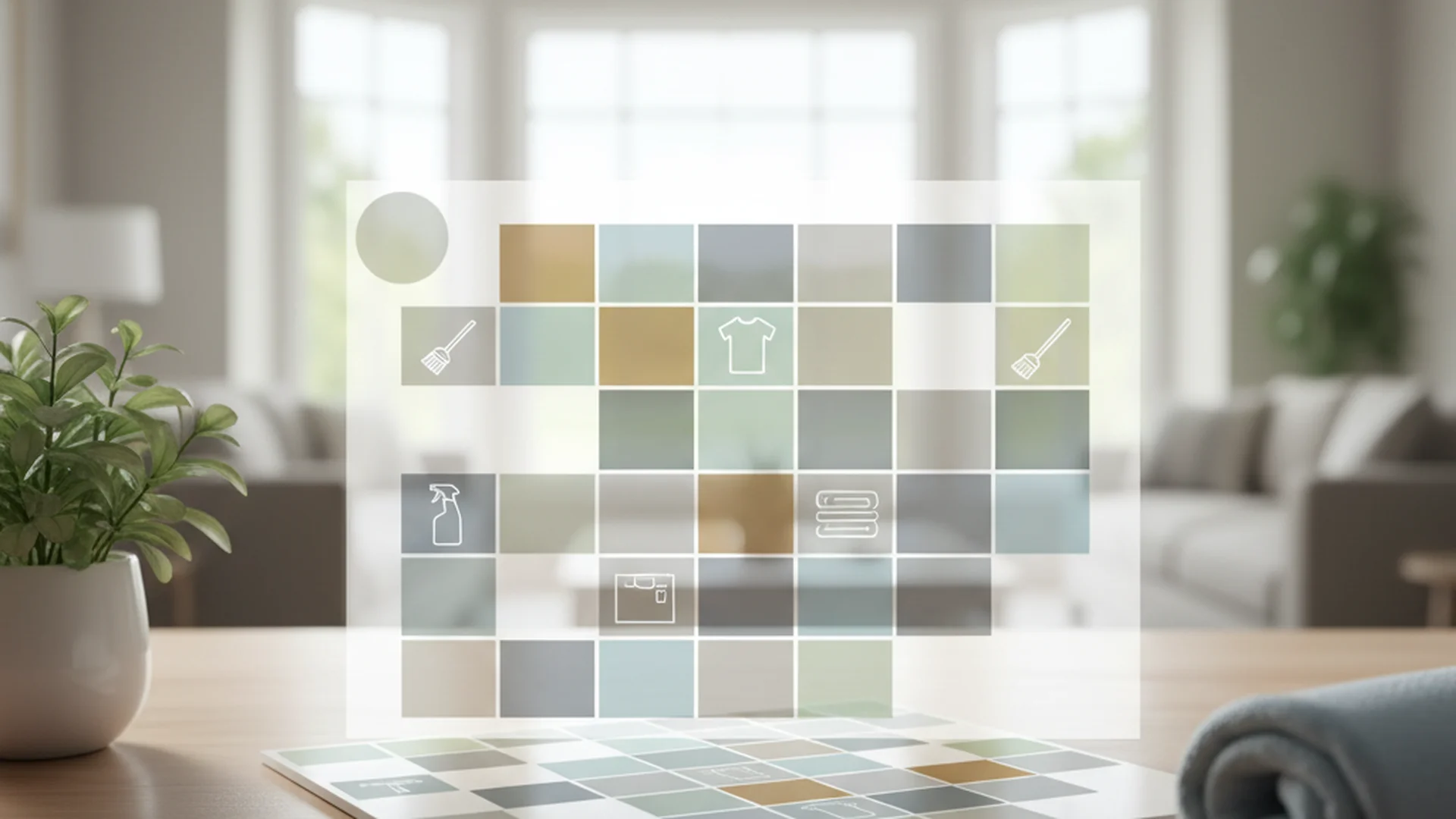
The most effective way to manage a large property is to move away from the "whole house" mindset and adopt the Zone Cleaning System. By dividing your home into five distinct zones, you can focus your energy on one area at a time, ensuring that no corner of your estate is neglected.
Zone 1: The Public Face (Entryway, Dining Room, and Front Porch)
This zone is about first impressions. Because these areas are often used less frequently than the family room but are visible to guests, they require a specific type of maintenance focused on dust prevention and curb appeal.
Zone 2: The High-Traffic Core (Kitchen, Pantry, and Laundry Room)
We refer to this as the "Kitchen King" rule. The kitchen gets cleaned more often than any other room in the house, several times a week in most homes. In a large house, the pantry and laundry room often become "catch-all" spaces for clutter. Dedicating a specific zone to these utility-heavy areas ensures food hygiene remains a top priority.
Zone 3: Guest Quarters (Guest Bedrooms and Secondary Bathrooms)
The challenge with large houses is the "stale room" syndrome. Rooms that aren't used daily still accumulate dust and can develop a musty odor. Zone 3 maintenance involves rotating linens and checking fixtures to ensure everything is functional for unexpected visitors.
Zone 4: The Private Sanctuary (Master Suite)
Your bedroom, bathroom, and closet should be your retreat. This zone requires the most detail-oriented cleaning, from descaling shower heads to organizing walk-in closets.
Zone 5: Entertainment Hubs (Living Room and Family Areas)
These are the spaces where life happens. Cleaning here focuses on upholstery care, electronics dusting, and floor maintenance.
Tip: Use color-coded microfiber cloths to prevent cross-contamination: Red for kitchens, Blue for bathrooms, and Yellow for general dusting in living areas.
Task-Based vs. Room-by-Room Cleaning
One of the biggest breakthroughs in domestic efficiency is the realization that task-based cleaning is 30% faster than room-by-room cleaning. When you clean room-by-room, you are constantly switching tools—vacuuming, then mopping, then dusting, then spraying glass cleaner. This breaks your "flow."
In a cleaning schedule for a big house, you should try to group tasks together. For example, spend 45 minutes dusting every surface in the entire house before you ever touch a vacuum. This ensures that the dust you kick up from the ceiling fans in Zone 4 has time to settle before you clean the floors in Zone 5.
Real-World Example: The "Power Hour"
Consider Sarah, a homeowner with a 5,500-square-foot home in Austin. Instead of cleaning one room a day, she spends Monday mornings doing "The Great Dusting." She moves through all five zones with a high-reach duster and a microfiber cloth. By sticking to one task, she finishes the entire house in 50 minutes. If she had cleaned room-by-room, the setup and transition time for each room would have pushed her total time to over two hours.
Core Rules for Maximum Efficiency
To keep a large house in top shape, you must follow a set of non-negotiable rules. These "pro" secrets are what allow cleaning crews to move through massive properties with surgical precision.
Top-to-Bottom Logic
Always start at the highest point in the room. Dust the crown molding, then the tops of picture frames, then the furniture, and finally the baseboards. The floor should always be the last thing you touch.
The 15-Minute "Closing Shift"
Incorporate a 15-minute "reset" at the end of every evening. This isn't a deep clean; it’s a preparation for the next day. Load the dishwasher, clear the kitchen counters, and do a quick sweep of the main entryway. This prevents the "compounding clutter" effect that often plagues large households.
The Power of Dwell Time
One of the most common mistakes is spraying a surface and immediately wiping it off. To truly disinfect and break down grime, you must let the product "dwell" for 3–5 minutes. This is especially important in Zone 2 and Zone 4.
Warning: Never mix cleaning products, specifically bleach and ammonia, as this creates toxic fumes. Always read the labels on your probiotic or eco-friendly cleaners for specific dwell time requirements.
Modern Trends: AI and Probiotics in 2025–2026
The way we maintain large houses is being revolutionized by technology. We are moving away from manual labor and toward autonomous systems and biological cleaning solutions.
AI-Driven Autonomy
The 2026 models of robotic cleaners, such as the Narwal Freo Z Ultra and the eufy X10 Pro Omni, have changed the game for large floor plans. These devices now feature "Intelligent Mess Detection," using AI cameras to distinguish between a dry coffee spill and wet mud. They automatically adjust their water temperature and suction power, allowing homeowners to "set and forget" their floor care.
Humanoid Assistants
In high-end estates, we are seeing the debut of humanoid-style robots like the Neo Gamma. While still an emerging technology, these assistants are beginning to handle repetitive, low-skill tasks such as folding laundry or unloading dishwashers. For a large house, this removes the "drudge work" that often leads to cleaning burnout.
Probiotic Cleaning and IAQ
The trend in 2025 is moving toward "Probiotic" cleaning. Unlike harsh disinfectants that kill 99.9% of all bacteria (including the good ones), probiotic cleaners leave behind beneficial microbes. these "good bacteria" stay on the surface, continuing to eat away at microscopic organic matter long after you’ve finished wiping. Furthermore, high-end cleaning routines now integrate Indoor Air Quality (IAQ) resets, using medical-grade HEPA and UV-C filtration systems to monitor dust levels in real-time.
Success: Integrating an AI vacuum with a probiotic floor solution can reduce manual mopping time by up to 80% in large homes.
Common Mistakes to Avoid
Even the most dedicated homeowners can fall into traps that make cleaning more difficult than it needs to be.
- Cleaning Windows on a Sunny Day: This is a classic error. The heat from the sun dries the cleaning solution before you can squeegee it off, resulting in permanent streaks. Always wait for an overcast day or clean in the early morning.
- Spraying Directly on Surfaces: When you spray furniture or electronics directly, the liquid seeps into crevices and can cause electronic failure or wood warping. Always spray your cloth first.
- Ignoring the "Biofilm" on Sponges: Your kitchen sponge can be a breeding ground for bacteria. In a large house where the kitchen is in constant use, a dirty sponge simply spreads pathogens.
- Overusing Product: There is a common misconception that "more product equals more clean." In reality, excess chemicals leave a sticky residue that actually attracts more dust.
Real-World Example: The Silicone Switch
A family in Seattle recently switched all their traditional kitchen sponges for silicone scrubbers and microfiber cloths that are laundered daily. Within three weeks, they noticed a real drop in lingering "kitchen smells" and a smaller monthly cleaning supply bill.
| Tool | Recommended Frequency | Maintenance Tip |
|---|---|---|
| Vacuum Filter | Monthly | Wash with cool water; air dry 24h |
| Microfiber Cloths | Daily | Launder without fabric softener |
| Robot Mop Pads | Every Use | Use 140°F water to sanitize |
| Sponges/Scrubbers | Bi-Weekly | Replace or sanitize in dishwasher |
Frequently Asked Questions
How long should it take to clean a 5-bedroom house?
What should a professional cleaner do in 2 hours?
Is it better to clean room-by-room or by task?
How much does professional cleaning cost in 2025?
Conclusion
Maintaining a large home doesn't have to be a source of constant stress. By shifting to a cleaning schedule for a big house that utilizes zone rotation, task-based efficiency, and modern AI tools, you can keep your estate in pristine condition with half the effort. Remember that consistency is more important than intensity. A 15-minute "closing shift" every night will save you from a 10-hour "cleaning marathon" on the weekend.
Success: By implementing these strategies, you are not just cleaning a house; you are managing an environment that supports your health, productivity, and peace of mind.
Cleaning that keeps score
Every task earns points, every streak multiplies them, and Premium adds a household leaderboard plus a monthly Dustagorgon to beat.
- Free forever
- 30 badges to earn
- Up to 6 in a household
No card needed. Set up your rooms in a couple of minutes.