In this article
What you’ll learn
- Never mix bleach with ammonia, vinegar, or rubbing alcohol.
- Combining hydrogen peroxide and vinegar creates corrosive peracetic acid.
- Always use the "One-Product Rule" and ensure proper ventilation.
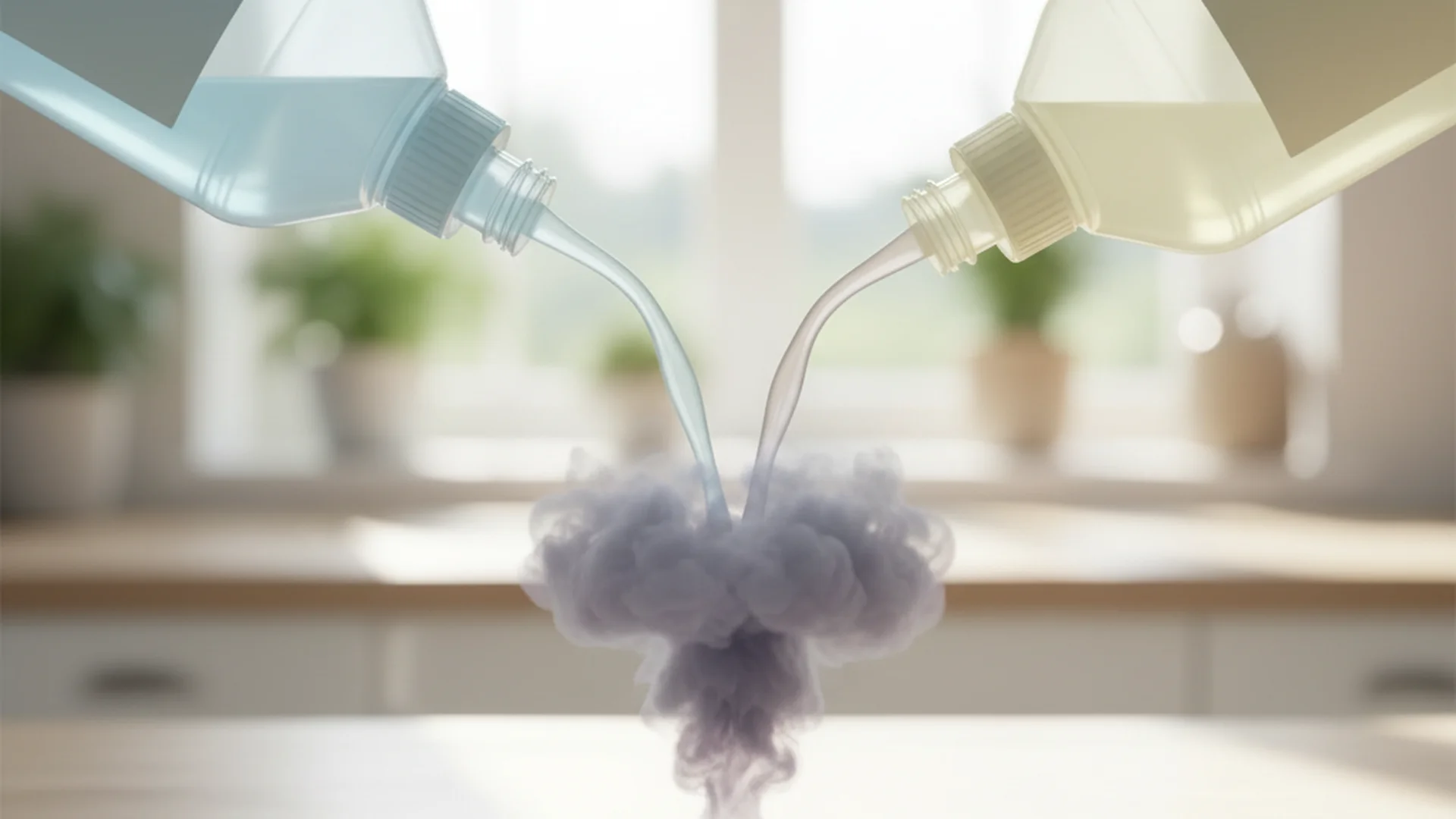
We all want a home that is sparkling clean and germ-free. However, in the quest for a deeper clean, many well-intentioned homeowners make a mistake that can lead to emergency room visits: mixing chemicals. Understanding which cleaning products never mix is not just a matter of home maintenance; it is a critical safety requirement. Whether you are trying to scrub a stubborn bathroom stain or disinfecting your kitchen during flu season, the wrong combination of household staples can create toxic gases, cause chemical burns, or even lead to explosions.
Household cleaning substances are among the most common causes of accidental poisoning in the home. While many of these products are perfectly safe when used individually, their chemical properties can change drastically when combined.
The Dangerous Science of Cleaning Combinations
Many people believe that if one cleaner works well, two cleaners will work even better. This logic is dangerous when applied to chemistry. Most household cleaners fall into two categories: acids or bases. When you mix them, you aren't just getting "double the cleaning power"—you are triggering a chemical reaction that can release volatile organic compounds (VOCs) into your air.
The most common culprit in these incidents is bleach. Because bleach is a powerful and affordable disinfectant, it is found in almost every home. However, it is also highly reactive. If you are looking for the cleaning products never mix answer, the list almost always starts with a warning about sodium hypochlorite (the active ingredient in bleach).
Warning: Never mix bleach with any other cleaning product unless the label specifically states it is safe to do so. Bleach is behind most cleaning-related gas inhalation incidents in the home.
The Lethal Trio: Bleach Combinations
There are three primary combinations involving bleach that you must avoid at all costs. These are the most common causes of accidental poisoning in the home.
1. Bleach and Ammonia
Mixing bleach and ammonia produces Chloramine gas. You might think you don't own "ammonia," but it is a common ingredient in glass cleaners, floor waxes, and some interior paints. Even in small amounts, inhaling chloramine gas can cause chest pain, shortness of breath, coughing, and even pneumonia.
2. Bleach and Vinegar
Vinegar is a popular "natural" cleaner, but it is an acid. When mixed with bleach, it releases Chlorine gas. Even at low levels, chlorine gas causes irritation to the eyes, nose, and throat. At higher concentrations, it can be fatal.
3. Bleach and Rubbing Alcohol
This combination creates Chloroform. While we often associate chloroform with old movies, it is a very real and potent sedative and potential carcinogen. Inhaling it can cause dizziness, unconsciousness, or long-term organ damage to the liver and kidneys.
| Product A | Product B | Resulting Danger |
|---|---|---|
| Bleach | Vinegar | Toxic Chlorine Gas |
| Bleach | Ammonia | Toxic Chloramine Gas |
| Bleach | Rubbing Alcohol | Chloroform |
| Hydrogen Peroxide | Vinegar | Peracetic Acid (Corrosive) |
| Drain Cleaner A | Drain Cleaner B | Explosion / Toxic Fumes |
| Bleach | Toilet Bowl Cleaner | Chlorine Gas |
Real-World Scenarios: Where Mistakes Happen
Toxic reactions don't just happen in a science lab; they happen in kitchens and bathrooms every day. Here are three real-world examples of how these dangerous mixtures occur.
Scenario 1: The Toilet Bowl Trap
A homeowner uses an acidic toilet bowl cleaner to remove hard water stains. Dissatisfied with the result, they pour a capful of bleach into the bowl to "whiten" it up. Within seconds, the small space of the bathroom fills with chlorine gas. Because toilets often contain traces of urine (which contains ammonia) or leftover acidic cleaners, adding bleach is a recipe for disaster.
Scenario 2: The "CleanTok" Influence
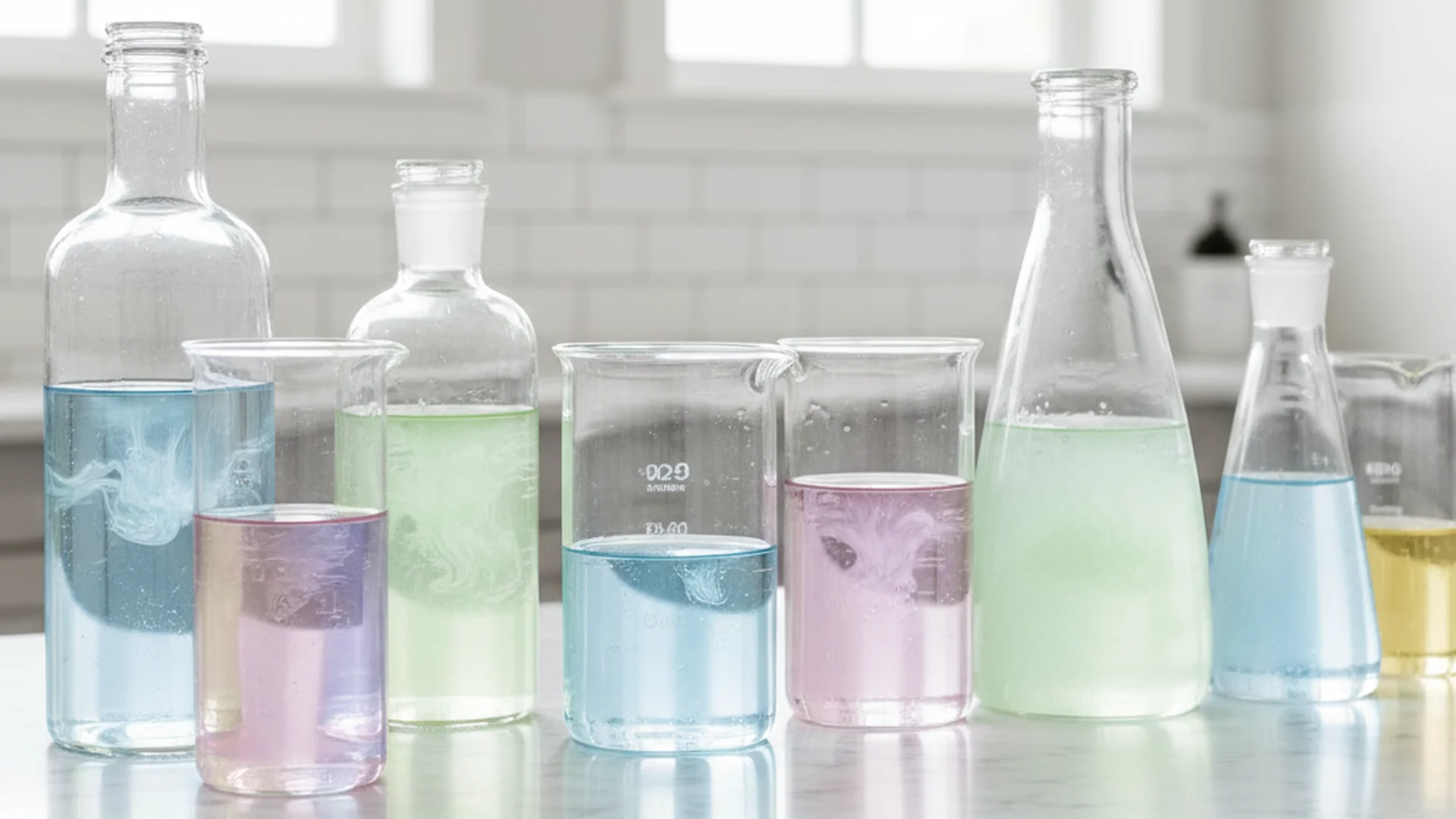
In recent years, a trend called "Cleaning Overloads" has emerged on platforms like TikTok. Creators pour dozens of different colorful products—laundry pods, floor cleaners, dish soap, and scents—into a sink or tub for aesthetic "ASMR" videos. Never copy this. These "chemical cocktails" often mix bleach-based cleaners with ammonia-derived surfactants found in dish soaps, creating invisible but toxic chloramine gas.
Note: Just because a cleaning video is visually appealing doesn't mean it is safe. Always prioritize chemical safety over social media trends.
Scenario 3: The Double Drain Dilemma
If a drain is clogged, you might try one brand of liquid drain opener. If it doesn't work, your instinct might be to try a different, "stronger" brand. Never do this. Drain cleaners use incredibly powerful acids or bases. If you mix two different brands, the chemicals can react violently, causing an explosion or sending caustic liquid shooting back up the pipe and onto your skin or eyes.
Common Mistakes and Misconceptions
Understanding what cleaning products never mix also requires debunking some common myths that lead to risky behavior.
- "If it doesn't smell bad, it's safe." This is a dangerous misconception. Some toxic reactions do not produce an immediate, pungent odor, but the particles can still cause long-term respiratory inflammation or dizziness.
- "Baking soda and vinegar is the ultimate cleaner." While this mixture isn't toxic, it is largely ineffective. Vinegar is an acid and baking soda is a base. When you mix them, they neutralize each other, resulting mostly in water and a little sodium acetate. You are better off using them sequentially or separately for their intended purposes.
- Mixing Bleach with Dish Soap. Many people add a splash of bleach to their dishwater. However, many dish soaps contain ammonia-derived surfactants. Mixing them can release low levels of chloramine gas that you breathe in while standing over the sink.
Tip: If you need to switch between two different cleaning products on the same surface, rinse the area thoroughly with water first to ensure no chemical residue remains.
Best Practices for a Safe Home
As a Domestic Efficiency Specialist, I recommend a "Safety First" approach to every cleaning routine. By following these professional guidelines, you can ensure your home remains a healthy environment.
1. The "One-Product Rule"
The simplest way to stay safe is to use only one product for a specific job. If you are cleaning the counters, pick one multipurpose spray and stick with it. Do not layer products.
2. Read the Label Every Time
Manufacturers are legally required to list "Incompatibility" warnings. Look for the "Danger" or "Caution" sections on the back of the bottle. If a label says "Do not mix with other household chemicals," take it literally.
3. Maintain Original Packaging
Never decant cleaning products into unmarked spray bottles or food containers. Not only does this lead to accidental ingestion, but it also means you lose access to the safety and first-aid instructions provided by the manufacturer.
4. Ensure Proper Ventilation
Always open windows or turn on exhaust fans when using strong chemicals like bleach or high-acid cleaners. This helps dissipate any fumes and reduces the risk of respiratory irritation.
Success: By following the "One-Product Rule" and keeping your home well-ventilated, you significantly reduce the risk of accidental chemical exposure.
Frequently Asked Questions
Can I mix vinegar and bleach if I use a lot of water?
Is it safe to use two different drain cleaners at once?
What happens if I mix hydrogen peroxide and vinegar?
Is it safe to mix "natural" or "green" cleaners?
What should I do if I accidentally mix chemicals?
Conclusion
Keeping a clean home shouldn't come at the cost of your health. The most important takeaway is that more is not always better. By understanding that cleaning products never mix—especially bleach with ammonia, vinegar, or alcohol—you can protect yourself and your family from preventable injuries. Stick to the "One-Product Rule," read your labels, and don't be swayed by dangerous social media trends.
Success: A safe home is a clean home. Armed with this knowledge, you can tackle your chores with confidence and peace of mind.
Cleaning that keeps score
Every task earns points, every streak multiplies them, and Premium adds a household leaderboard plus a monthly Dustagorgon to beat.
- Free forever
- 30 badges to earn
- Up to 6 in a household
No card needed. Set up your rooms in a couple of minutes.