In this article
What you’ll learn
- Visual checklists externalize working memory and reduce decision fatigue.
- Adding time stamps to tasks helps overcome ADHD-related "time blindness."
- Using functional zones instead of rooms prevents task-hopping and overwhelm.
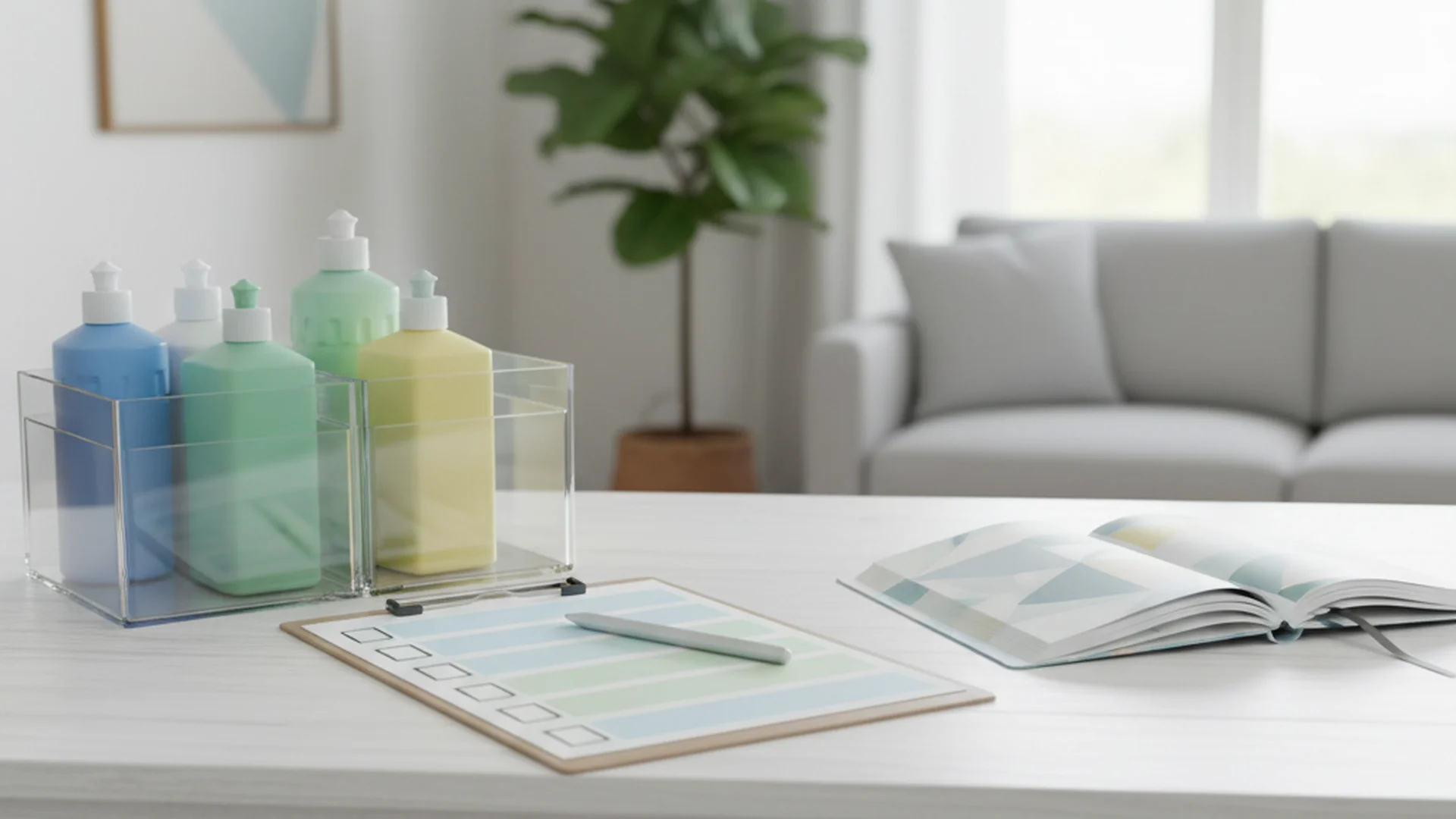
Have you ever walked into a messy kitchen, felt your brain physically "short-circuit," and walked right back out? For individuals with ADHD, this isn't laziness; it is a neurological hurdle known as the "Wall of Awful." When the brain is presented with a mountain of unsorted sensory data—dishes, crumbs, mail, and clutter—the executive functions responsible for task initiation simply shut down. This is where a visual checklist for ADHD becomes more than just a piece of paper; it becomes an external hard drive for your brain. By breaking down the invisible barriers of executive dysfunction, these visual systems provide the roadmap necessary to navigate from chaos to calm without the mental burnout.
The Science of the ADHD Brain and the "Completion Gap"
To understand why a visual checklist for ADHD help is so effective, we have to look at how the ADHD brain processes rewards and instructions. Unlike neurotypical brains that can maintain a mental "to-do" list through working memory, the ADHD brain often experiences a "completion gap." This gap exists between the intention to clean and the physical act of starting.
Research in 2025 indicates that breaking household chores into smaller, timed steps can increase task completion rates by up to 42% for those with ADHD. This works because checklists externalize the brain's executive functions. Instead of using precious mental energy to remember what to do next, the checklist stores that information for you.
The Dopamine Reward Loop
ADHD brains typically have lower baseline levels of dopamine. Checking off a physical or visual item triggers a micro-release of this "feel-good" neurotransmitter. This isn't just a satisfying "click" or pen stroke; it is a vital neurochemical reward that sustains momentum. Without these frequent cues, the brain loses interest, and the task is abandoned halfway through.
Combating Time Blindness
One of the most significant hurdles in ADHD cleaning is "time blindness"—the inability to accurately sense how much time has passed or how long a task will take. Effective visual checklists now include estimated time stamps. When you see "Wipe counters - 3 mins" on your visual checklist adhd, it reframes the task from an eternal burden into a manageable sprint.
The Modern Approach: Zone-Based Cleaning vs. Room-Based
In the past, we were told to "Clean the Kitchen." For an ADHD brain, that instruction is too vague. Where do you start? The floor? The fridge? The junk drawer?
By 2026, the standard has shifted toward Functional Zones. Instead of cleaning a whole room, you focus on a specific type of activity or surface. This prevents "task-hopping," where you find a toy in the kitchen, walk it to the bedroom, and then start folding laundry, leaving the kitchen half-finished.
| Zone Type | Focus Area | Goal |
|---|---|---|
| The Surface Zone | Counters, Tables, Desks | Clear all flat areas for immediate use. |
| The Floor Zone | Carpets, Tiles, Rugs | Remove tripping hazards and visible dirt. |
| The Disposal Zone | Trash, Recycling, Compost | Remove smells and overflowing bins. |
| The Reset Zone | Pillows, Blankets, Remotes | Return items to their "home" positions. |
Tip: If you find an item that belongs in another room while cleaning a zone, place it in a "Transit Basket" at the door. Do not leave the room until your current zone timer goes off.
2025–2026 Trends: AI and Interactive Visual Aids
The world of visual checklist adhd tips is evolving rapidly. We are moving away from static, dusty pieces of paper toward dynamic systems that keep the brain engaged through novelty.
AI-Personalized Routines
One of the most exciting trends is the use of AI to generate "Energy-Level" checklists. You can prompt an AI to "simplify my kitchen list for a day when I have no motivation." The AI might reduce a 15-step deep clean into a 3-step "survival" list:
- Load the dishwasher.
- Clear one square foot of counter space.
- Take out the trash.
E-Ink and Digital Hybrids
Visual habituation is a major problem—if a checklist stays on the wall too long, the ADHD brain begins to "filter it out" as background noise. To combat this, 2026 has seen a rise in electronic paper (e-ink) displays. These act like whiteboards but sync with your phone. They allow you to change the layout, color, or font every week, providing the "novelty" the ADHD brain craves to stay focused.
Body Doubling 2.0
Visual cues aren't just lists; they can be people. Many are now using "Cleaning Streams" or "Silent Vlogs" as a background visual cue. By placing your checklist next to a screen showing someone else cleaning in real-time, you create a "social" environment that aids focus and reduces the feeling of isolation.
Step-by-Step: Building Your "Two-Step" Visual Command Center
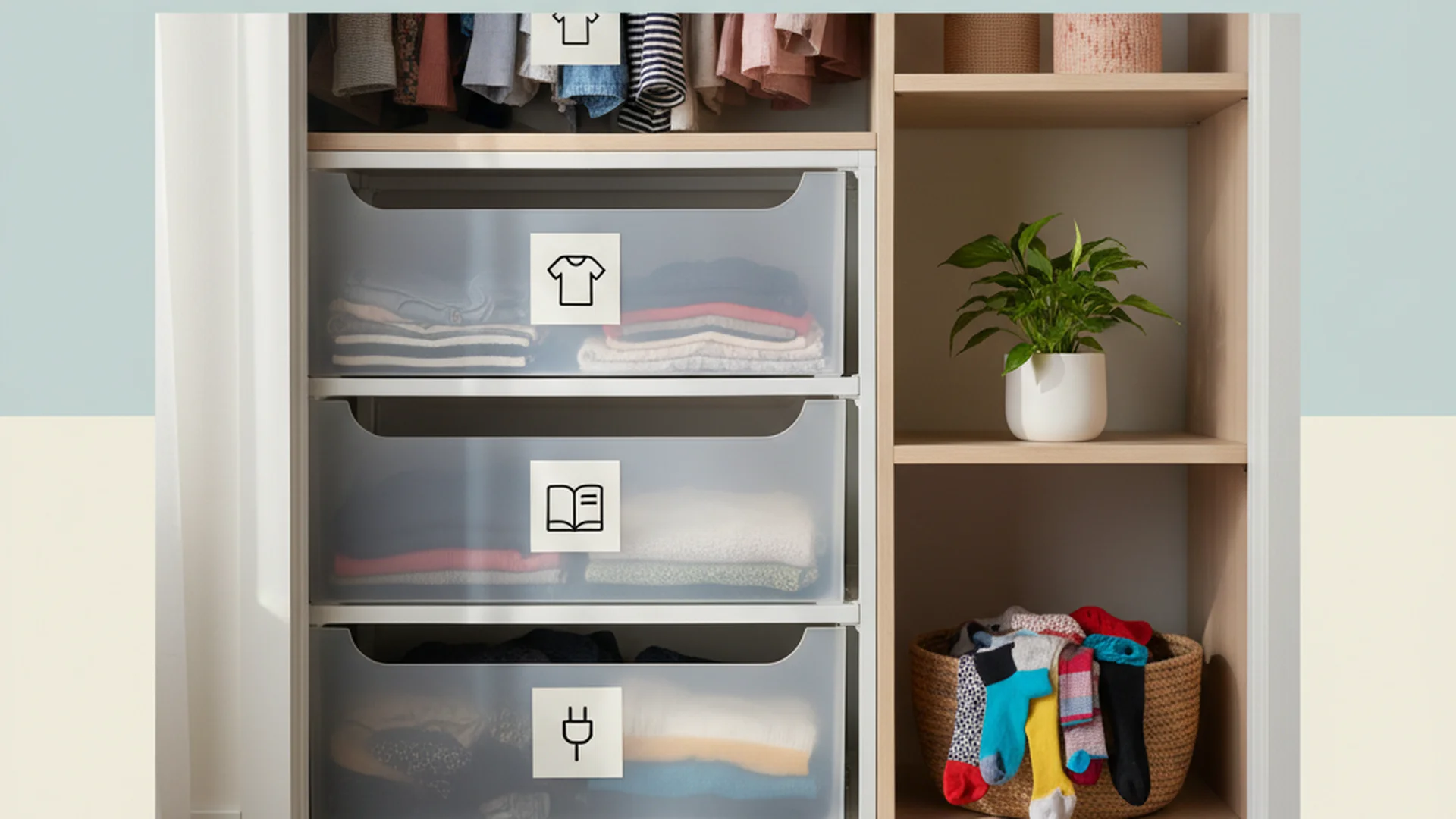
To make a visual checklist for ADHD work, it must be accessible. This is where the "Two-Step Rule" comes in: no tool or list should be more than two steps away from the mess.
Step 1: Identify High-Traffic "Friction Points"
Choose the area that causes the most stress. Usually, this is the kitchen or the entryway. This is where your command center will live.
Step 2: Create "Line of Sight" Lists
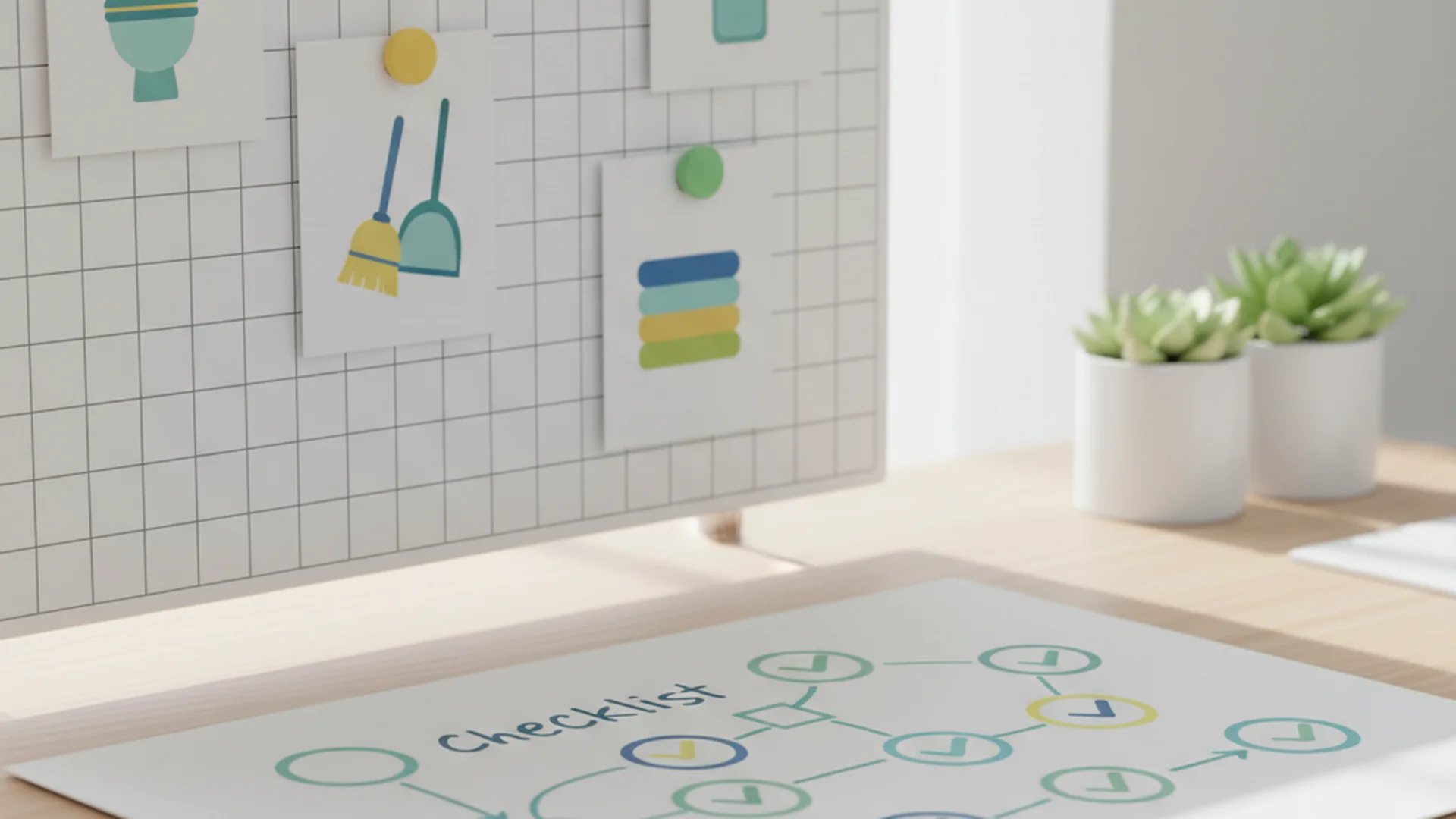
A checklist tucked inside a planner is a checklist that doesn't exist. Use magnetic frames on the fridge or acrylic dry-erase boards mounted inside cabinet doors. The list must be in your direct line of sight while you are performing the task.
Step 3: Implement the "Restaurant Model" (Closing Rituals)
Professional kitchens use "Closing Checklists" to ensure the next shift starts successfully. Create a 10-minute "Closing the Home" visual guide.
- Trash: Empty the main bin.
- Surfaces: Wipe the primary prep area.
- Dishes: Run the dishwasher.
- Floors: A quick 2-minute "clutter sweep."
Warning: Avoid the "Pinterest-Perfect" trap. If your checklist is too beautiful or complex to maintain, you will stop using it. Prioritize function over aesthetics.
Common Mistakes to Avoid
Even with the best intentions, ADHD cleaning systems can fail. Recognizing these common pitfalls will help you build a more resilient routine.
1. The "All-or-Nothing" Mindset
Many people believe they have "failed" if they didn't check off every item. In the world of ADHD, progress is binary: checking off two items is a 100% success compared to checking off zero. Focus on "Progress over Perfection."
2. Static Habituation
As mentioned earlier, the brain stops seeing things that don't change. If your checklist has been on the fridge for six months and you haven't looked at it in five, it’s time to change the paper color, use a different colored marker, or move it to a different wall.
3. Making the List Too Granular
While breaking things down is good, a 50-step list for a bathroom can be just as overwhelming as a 1-step list. Aim for the "Goldilocks Zone"—usually 5 to 8 items per checklist.
Note: Use tactile cues! Professional ADHD organizers suggest the "Touch, Don’t Just Look" method. Run your hand over a counter to verify it's clean, as the ADHD brain can often "glaze over" visual clutter it has seen too many times.
Frequently Asked Questions
Where do I even start?
How long will this take?
When am I actually done?
Why do I stop using my checklist after a week?
Can I use a digital checklist instead of a physical one?
Conclusion: Emphasizing "Functional over Aesthetic"
The ultimate goal of a visual checklist for ADHD isn't to have a home that looks like a magazine spread. The goal is to create a "Functional Home"—a space that supports your needs and doesn't add to your mental load. By externalizing your memory, breaking tasks into timed zones, and using 2026 tools like AI personalization and body doubling, you can finally tear down the "Wall of Awful."
Remember, the best system is the one you actually use. Whether it's a high-tech e-ink display or a simple neon sticky note on the bathroom mirror, if it helps you initiate that first task, it is a success.
Success: By implementing a visual system, you are reducing the "cognitive load" on your brain, leaving you with more energy for the things you actually enjoy doing.
Cleaning that keeps score
Every task earns points, every streak multiplies them, and Premium adds a household leaderboard plus a monthly Dustagorgon to beat.
- Free forever
- 30 badges to earn
- Up to 6 in a household
No card needed. Set up your rooms in a couple of minutes.