In this article
What you’ll learn
- Fewer toys out at once lead to longer, more creative play sessions.
- Implement a toy rotation system to keep 75% of items in "deep storage."
- Prioritize sustainable materials like bamboo and recycled marine plastics.
We have all been there: walking into a room only to find a "toy tsunami" has swept through, leaving a trail of plastic bricks, stray doll shoes, and stuffed animals in its wake. Finding effective toy organization ideas isn't just about aesthetics; it is about reclaiming your living space and fostering a calmer environment for your children to grow.
In this comprehensive guide, we will explore the latest 2025–2026 trends, the psychology behind play, and actionable strategies to turn chaos into a curated play space.
The Psychology of Play: Why Less is More
Before you buy your first bin, it is essential to understand the "why" behind organization. Clutter doesn't just stress out adults—it gets in the way of how children think and play.
Watch a toddler in a room with a handful of toys, then watch one in a room piled high with them. The difference is stark. With only a few toys available, children play more creatively, stay with each toy far longer, and build richer, more elaborate games. Surrounded by too many, they tend to flit from one item to the next without ever settling into anything.
Success: Reducing the number of toys available at one time can actually increase your child's focus and happiness.
By implementing smart toy organization ideas, you aren't just tidying up; you are curating an environment that promotes "flow state" in your child’s play.
Step-by-Step Decluttering: The Box Detox
The most common mistake parents make is trying to organize a mess that is simply too large. You cannot organize your way out of an overabundance of stuff. This is where the "Box Detox" method comes in.
Step 1: Category Isolation
Instead of tackling the entire playroom, choose one category—for example, building blocks or action figures. Bring every item in that category to a central "sorting station" (like the dining table or a clear patch of floor).
Step 2: The Three-Pile Sort
Sort every item into three distinct piles:
- Keep: Items that are played with frequently and are in good condition.
- Donate: High-quality toys that your child has outgrown.
- Toss: Broken toys, items with missing essential pieces, or "junk" toys from fast-food meals.
Step 3: The "Wait and See" Box
If you are unsure about a toy, put it in a box and hide it in the garage or a high closet. If your child doesn't ask for it within 30 days, it’s safe to donate.
Warning: Never declutter "sentimental" toys while your child is watching if they are in a sensitive stage. However, involving older children in the donation process helps develop empathy and executive function.
2026 Design Trends: Sustainability and Tech
As we look toward 2026, the world of home organization is shifting away from primary-colored plastics and toward a more integrated, eco-conscious aesthetic.
Sustainable & Biophilic Materials
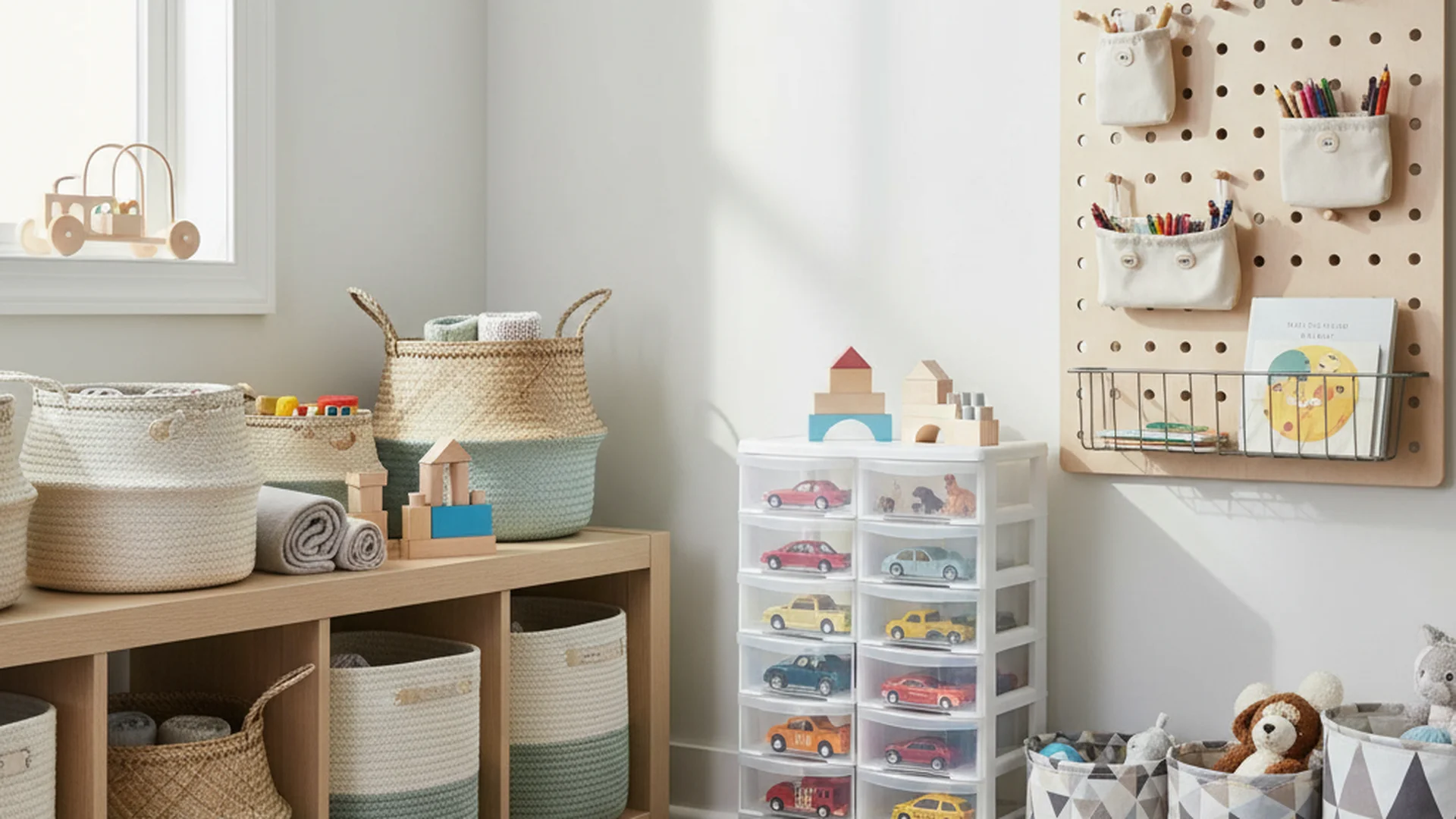
Consumer behavior is shifting rapidly toward plastic alternatives. Storage solutions made from wheat straw bioplastics, sustainable bamboo, and recycled marine plastics are steadily gaining ground. These materials aren't just better for the planet; their earthy, neutral tones help toys blend into adult living spaces rather than clashing with them.
Smart Storage & Tech Integration
A burgeoning trend for 2026 is the use of RFID-tagged bins. Tech-savvy parents are now using apps to inventory their "deep storage" bins. By scanning a small tag on the outside of a bin, you can see a photo list of every toy inside without having to open it. This is particularly useful for holiday-specific toys or items kept in a garage rotation.
Anti-Kiddie Aesthetics
The "daycare look" is out. The trend is now "high-end furniture that happens to hold toys." This includes:
- Velvet-textured bins for a touch of luxury.
- Linen-wrapped boxes for bookshelves.
- Matte-finish modular crates that interlock like high-end sculptures.
| Material | Durability | Best For | Eco-Friendliness |
|---|---|---|---|
| Bamboo | High | Shelving | Excellent |
| Recycled Plastic | Medium | Small Parts | Good |
| Linen/Fabric | Low | Stuffed Animals | Medium |
| Metal Crates | Very High | Heavy Blocks | Good |
Top 5 DIY & Budget Toy Organization Ideas
You don't need a custom-built playroom to achieve professional results. Some of the best budget toy organization ideas involve repurposing items you already own.
1. The Over-the-Door Shoe Organizer
This is the ultimate hack for small toys. Use clear pockets to store Barbies, action figures, art supplies, or even a collection of toy cars. It utilizes vertical space that is often wasted and keeps the floor clear.
2. The Photo Label System
For children who haven't learned to read yet, traditional labels are useless. Take a photo of the toys that belong in a specific bin (e.g., a photo of a LEGO brick), print it, and laminate it to the front of the bin. This empowers the child to put things away independently.
3. Zippered Mesh Pouches
Ditch the bulky cardboard boxes that games and puzzles come in. They tear and take up too much space. Instead, transfer puzzle pieces and board game components into transparent, zippered mesh pouches. You can fit ten games in the space usually occupied by two.
4. DIY Art Caddy
Repurpose a muffin tin or a spinning "Lazy Susan" from the kitchen. Place small jars in the slots to hold crayons, markers, and glue sticks. It makes the "Art Corner" mobile and easy to clean up.
5. Repurposed Crates
Traditional wooden milk crates can be sanded and painted in trendy 2026 muted tones (like terracotta or sage). Bolt them together to create a custom modular shelving unit that grows with your child.
Tip: Use "S" hooks on the side of wire shelving to hang dress-up clothes or bags of soft toys, maximizing every inch of storage.
The Golden Rules of Maintenance
The best system in the world will fail if it isn't maintained. Professional organizers live by these three "Golden Rules."
The Toy Rotation System
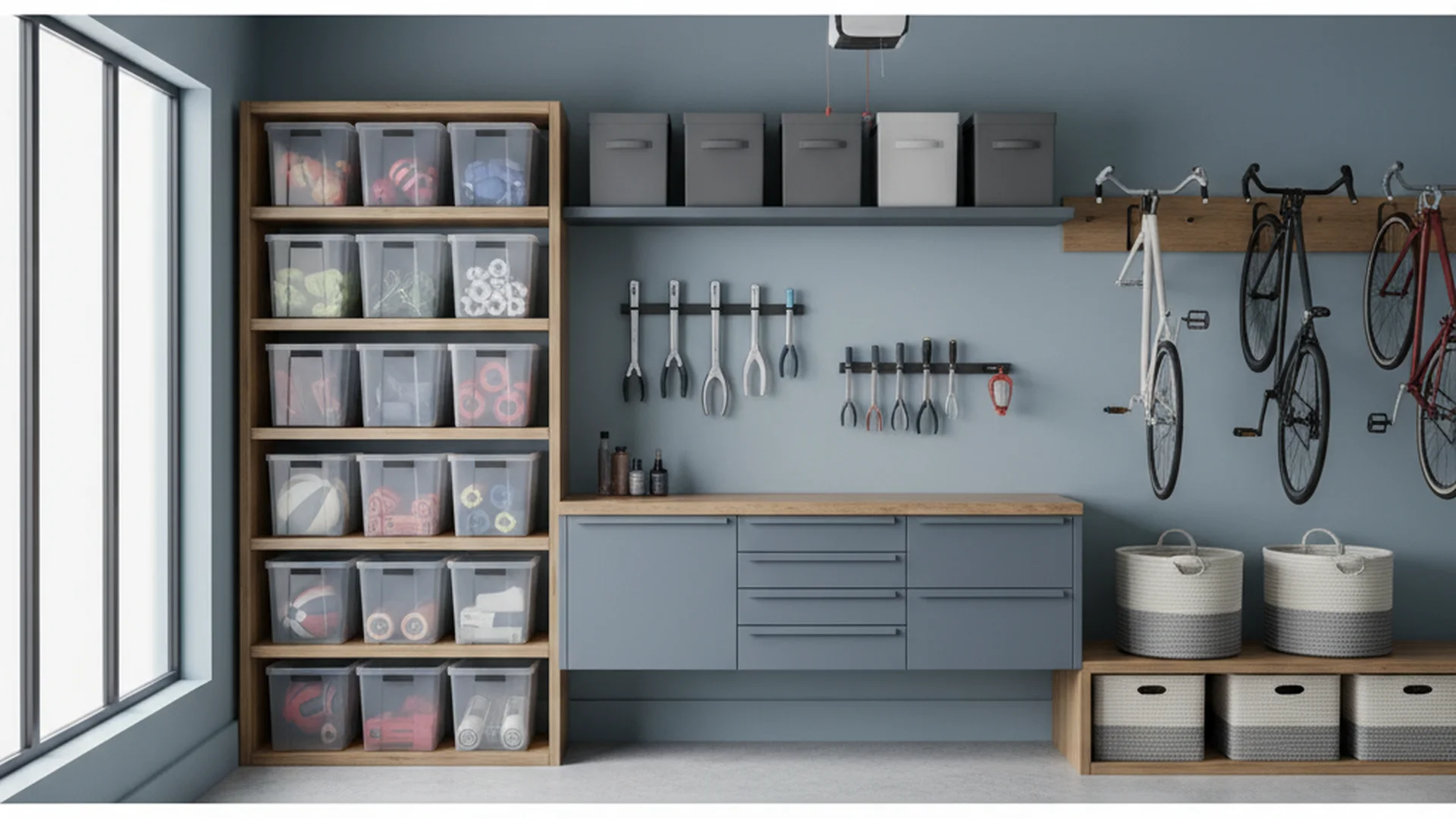
You should only have about 25-33% of your child's toys accessible at any given time. The rest should be kept in "toy library" bins in a closet or garage. Every 2 to 4 weeks, swap out the active toys for "new" ones from storage. This keeps the novelty high and the clutter low.
The "One-In, One-Out" Rule
To prevent "toy creep," establish a house rule: for every new toy that comes into the home (especially after birthdays or holidays), one must be donated or retired. This teaches children about the lifecycle of belongings and prevents the storage system from overflowing.
The 5-Minute Cleanup Zone
Create specific "zones" (e.g., Reading Nook, Building Zone). Ensure every toy has a "home" within its zone. A nightly "5-minute tidy" is much more manageable when every item has a clearly defined place to go.
Note: Visibility is key for younger children. If they can’t see the toy, they often won't play with it—or they will dump every opaque bin onto the floor to find what they want. Use clear bins for their "independent play" items.
Common Mistakes to Avoid
Even the most well-intentioned parents fall into these traps:
- The "Giant Dump Bin" Mistake: Buying one massive toy chest. These become "black holes" where the toys at the bottom are never seen again. Children will inevitably dump the entire contents onto the floor to find one small item at the bottom.
- Buying Furniture First: Never buy a bookshelf or a storage unit until you have decluttered and measured your remaining inventory. You may end up with a shelf that doesn't fit the toys you actually have.
- Over-Complicating the System: If a 4-year-old has to open three latches or sort LEGOs by exact color, they won't do it. Simple, open-top bins are almost always better for daily use.
- Hiding "High-Supervision" Toys: Storing messy items like slime, glitter, or permanent markers at a child's height is a recipe for disaster. Keep "parent-led" activities on high shelves and "independent-play" items at eye level.
Frequently Asked Questions
How do I start when the mess is overwhelming?
Should I involve my children in the process?
How do I organize toys in a shared living space without it looking like a daycare?
What is the best way to handle small pieces like LEGOs or doll accessories?
Conclusion
Toy organization is not a one-time event; it is a habit and a system. By understanding how children actually play and choosing sustainable, smart storage solutions, you can create a home that fosters creativity rather than stress. Remember that your goal isn't a museum-perfect room, but a functional space where your child can thrive. Start small, implement a rotation, and watch as your home—and your peace of mind—is transformed.
Success: A tidy space leads to a tidy mind. Following these steps will reduce your daily stress and improve your child's quality of play.
Cleaning that keeps score
Every task earns points, every streak multiplies them, and Premium adds a household leaderboard plus a monthly Dustagorgon to beat.
- Free forever
- 30 badges to earn
- Up to 6 in a household
No card needed. Set up your rooms in a couple of minutes.