In this article
What you’ll learn
- Always declutter and purge expired products before buying storage bins.
- Use a "zoning" strategy to store supplies near their point of use.
- Prioritize safety and original labeling over social media "decanting" trends.
We have all been there: you open the cabinet under the sink to grab a simple window cleaner, only to be met with an avalanche of half-empty bottles, old sponges, and tangled rags. Learning how to organize cleaning supplies isn't just about making your cabinets look "Pinterest-worthy"—it is a fundamental step toward a more efficient, stress-free home. When your tools are accessible and logical, the act of cleaning becomes a streamlined habit rather than a daunting chore.
In this guide, we will explore the most effective strategies for reclaiming your storage spaces, utilizing modern 2025-2026 trends, and ensuring your home remains safe and functional.
The High Cost of a Disorganized Home
Before we dive into the "how-to," it is important to understand why organization matters. Over a lifetime, the hours you lose hunting for misplaced items add up to months. There is a financial cost too: households quietly spend a small fortune every year replacing things that were only ever "lost" somewhere in the clutter.
The impact isn't just financial. Most people feel overwhelmed by the clutter in their homes, and almost everyone reports a real lift in mood after a successful organization project. By organizing your cleaning supplies, you aren't just tidying a closet; you are reclaiming your time and mental clarity.
Step 1: The "Purge First" Rule
The most common mistake homeowners make is rushing to the store to buy beautiful acrylic bins before they know what they are storing. Follow the "Purge First" rule instead.
How to Conduct a Cleaning Supply Audit
- Empty Everything: Remove every single bottle, rag, and brush from your cabinets.
- Check Expiration Dates: Many people don't realize that disinfectants and eco-friendly cleaners have shelf lives. If a product is three years old, it has likely lost its efficacy.
- Consolidate: If you have three half-empty bottles of the same glass cleaner, combine them (provided they are the exact same product).
- Dispose of Safely: Never pour harsh chemicals down the drain. Check your local municipality for hazardous waste disposal days.
Tip: Use the "One Year Rule." If you haven't used that specialty marble polish or heavy-duty degreaser in over 12 months, you likely don't need it taking up prime real estate.
Step 2: Establish Your Zoning Strategy
The best way organize cleaning supplies is to store them where you actually use them. This is known as "zoning." Instead of one massive, overflowing "cleaning closet," go for a decentralized approach.
The Kitchen Zone
The kitchen is the high-traffic heart of the home. Store your daily-use items here:
- Dish soap and dishwasher pods.
- Multi-surface spray.
- Degreaser.
- Stainless steel cleaner.
The Bathroom Zone
Moisture is a factor here, so ensure containers are plastic rather than wood or wicker.
- Toilet bowl cleaner.
- Glass and mirror spray.
- Tub and tile scrub.
- Fresh sponges.
The Laundry/Utility Zone
This is the place for "backstock" and heavy-duty items:
- Bulk detergents and fabric softeners.
- Stain removers.
- Vacuum attachments.
- Floor cleaners and waxes.
Warning: Storing everything under the kitchen sink is a common trap. Moisture from plumbing can lead to mold growth on sponges, and the high accessibility makes it a high-risk area for curious pets and children.
Step 3: Innovative Storage Ideas for 2026
If you are looking for organize cleaning supplies ideas that go beyond basic shelves, consider these modern trends that prioritize both aesthetics and functionality.
Vertical Storage: The Gold Standard
Don't let your floor space go to waste. Utilizing wall-mounted grip holders for mops and brooms prevents the "closet avalanche" and keeps the heads of your tools dry and hygienic. Pegboards are also making a comeback in 2026 utility rooms, allowing for a customizable layout that can evolve as you buy new tools.
The Portable "Go-Caddy"
Create a "Go-Caddy" for multi-surface cleaning. This should be a lightweight, handled bin containing your most-used items (all-purpose cleaner, glass cleaner, two microfiber cloths, and a scrub brush). Instead of walking back and forth to the kitchen, you simply carry the caddy from room to room.
Hidden-in-Plain-Sight Solutions
A 2026 trend in home design is the "hidden" storage rack. These are slim, pull-out vertical racks designed to fit into the 6-inch "dead space" between your refrigerator and the wall or between your washer and dryer. These are perfect for storing tall spray bottles and folded ironing boards.
| Storage Method | Best For | Benefit |
|---|---|---|
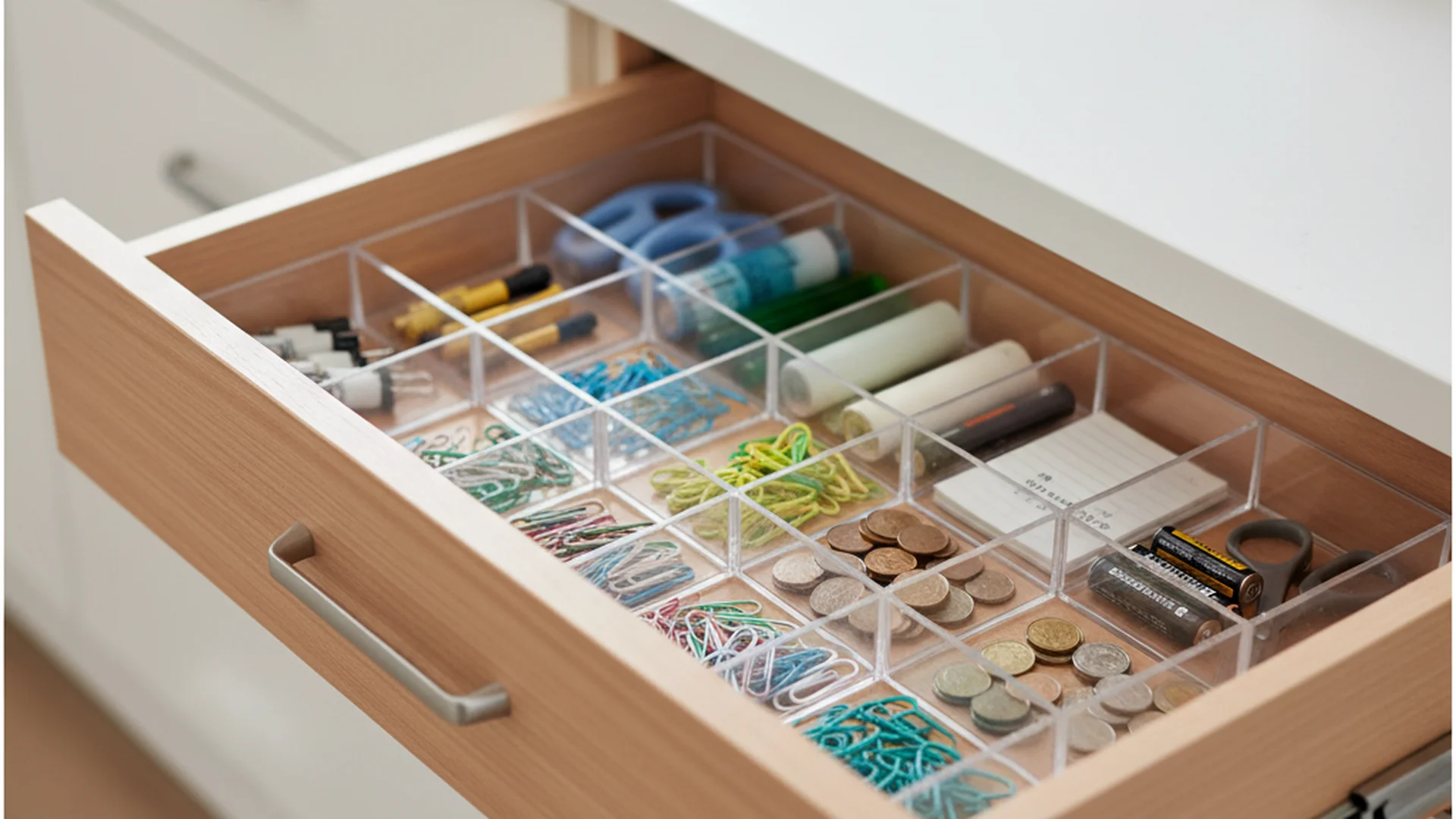
| Clear Acrylic Bins | Small bottles & sponges | High visibility, prevents overbuying |
| Over-the-door Organizers | Spray bottles | Saves shelf space in small apartments |
| Tension Rods | Hanging spray bottles | Utilizes vertical space under sinks |
| Toe-Kick Drawers | Flat items (mops/pads) | Uses otherwise wasted floor-level space |
Step 4: Safety, Labels, and the Decanting Debate
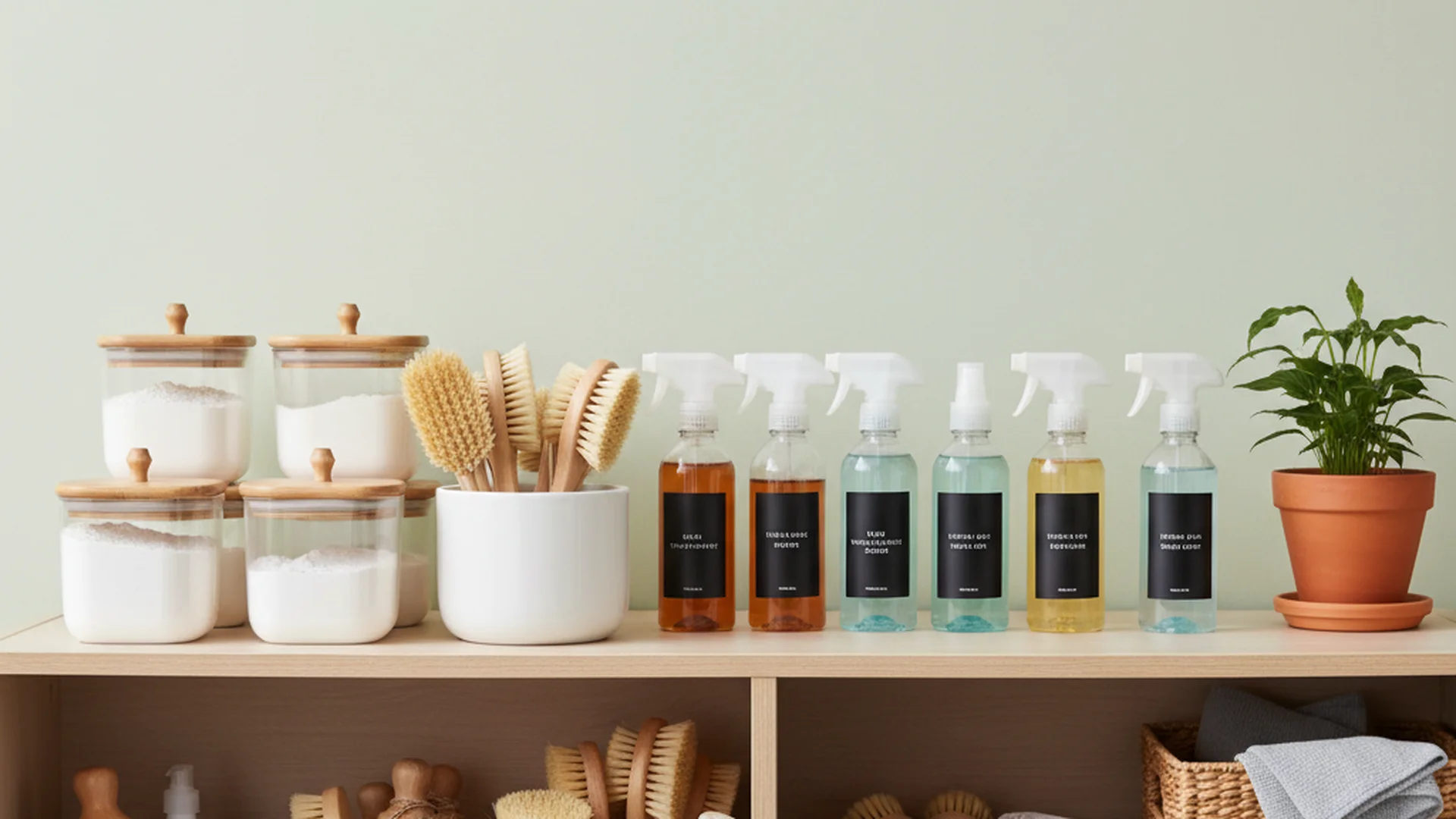
The "Pinterest-perfect" trend of decanting all cleaners into matching glass bottles has hit a fever pitch. However, safety must always come before style.
The Labeling Requirement
If you choose to decant your cleaners into uniform glass spray bottles, you must use permanent labels that clearly state the product name and any safety warnings.
Warning: Never mix bleach and ammonia-based products. Storing them side-by-side without a barrier is risky; a simple leak can create toxic chloramine gas.
Temperature and Environment
Store your chemicals in a cool, dry, and well-ventilated area. Extreme heat can cause plastic bottles to degrade or chemicals to leak, while extreme cold can affect the consistency and power of liquid detergents.
Note: Many eco-friendly cleaners use plant-based enzymes that are particularly sensitive to temperature fluctuations. Keep these in a climate-controlled part of the house.
Real-World Organization Examples
To help you visualize these concepts, let's look at how three different households successfully organized their supplies:
- The Small Apartment (Example): Sarah, living in a 600-sq-ft apartment, used an over-the-door shoe organizer on her pantry door. Each pocket held a different spray bottle or roll of trash bags, freeing up her entire under-sink area for larger items like a bucket and vacuum.
- The Busy Family (Example): The Miller family created "Kid-Safe Zones." All toxic chemicals were moved to a locked high shelf in the laundry room, while "safe" cleaning supplies (vinegar-based sprays and microfiber cloths) were kept in a low-level caddy so the children could help with chores.
- The Eco-Conscious Minimalist (Example): James installed a "Refill Station" in his utility room. He keeps 5-gallon bulk concentrates of soap and cleaner on a sturdy shelf with spigots, allowing him to refill his glass bottles indefinitely and reduce plastic waste.
Common Mistakes to Avoid
- Buying Bins Too Early: Measuring is non-negotiable. Measure the height, width, and depth of your cabinets before heading to the container store.
- Ignoring the Original Label: Many people discard the original packaging, losing the instructions for poison control or specific fabric care. If you decant, take a photo of the original label and keep it in a digital "Home Manual" folder.
- Over-Organizing: Creating too many hyper-specific categories (e.g., "stainless steel cleaner" vs. "window cleaner" vs. "mirror cleaner") can make the system impossible to maintain. Stick to broad categories like "Glass," "Floors," and "Surfaces."
- Storing Heavy Items High: Always keep heavy gallon-sized jugs on the floor or bottom shelves to avoid injury or shelf collapse.
The Future: Smart Inventory and Wellness
Looking toward 2026, organization is increasingly being viewed as a form of "Self-Care." Wellness-first organization involves using aromatherapy-based cleaners and storing them in sustainable materials like bamboo and recycled glass to create a "sensory experience" rather than a chore.
Furthermore, Smart Home technology is entering the cleaning closet. IoT-enabled shelf liners can now track the weight of your bottles and automatically add dish soap to your digital grocery list when the bottle is 10% full.
Success: A well-organized cleaning system saves you real time on every cleaning session by eliminating the "search time."
Frequently Asked Questions
Where is the best place to store cleaning supplies?
Should I decant my cleaners into matching glass bottles?
How often should I declutter my cleaning products?
What is the best way to store bulky items like mops and brooms?
Conclusion
Organizing your cleaning supplies is more than a weekend project; it is an investment in your home’s efficiency and your own peace of mind. By purging old products, zoning your supplies by room, and utilizing vertical space, you transform a chaotic chore into a streamlined process. Whether you are adopting the "Refill Revolution" or simply installing a few tension rods under your sink, every step toward organization is a step toward a calmer, cleaner home.
Cleaning that keeps score
Every task earns points, every streak multiplies them, and Premium adds a household leaderboard plus a monthly Dustagorgon to beat.
- Free forever
- 30 badges to earn
- Up to 6 in a household
No card needed. Set up your rooms in a couple of minutes.