In this article
What you’ll learn
- Robot vacuums are for maintenance; regular vacuums are for deep cleaning.
- Flagship 2026 robots offer up to 22,000 Pa suction, narrowing the performance gap.
- A hybrid routine using both devices is the most efficient way to maintain a home.
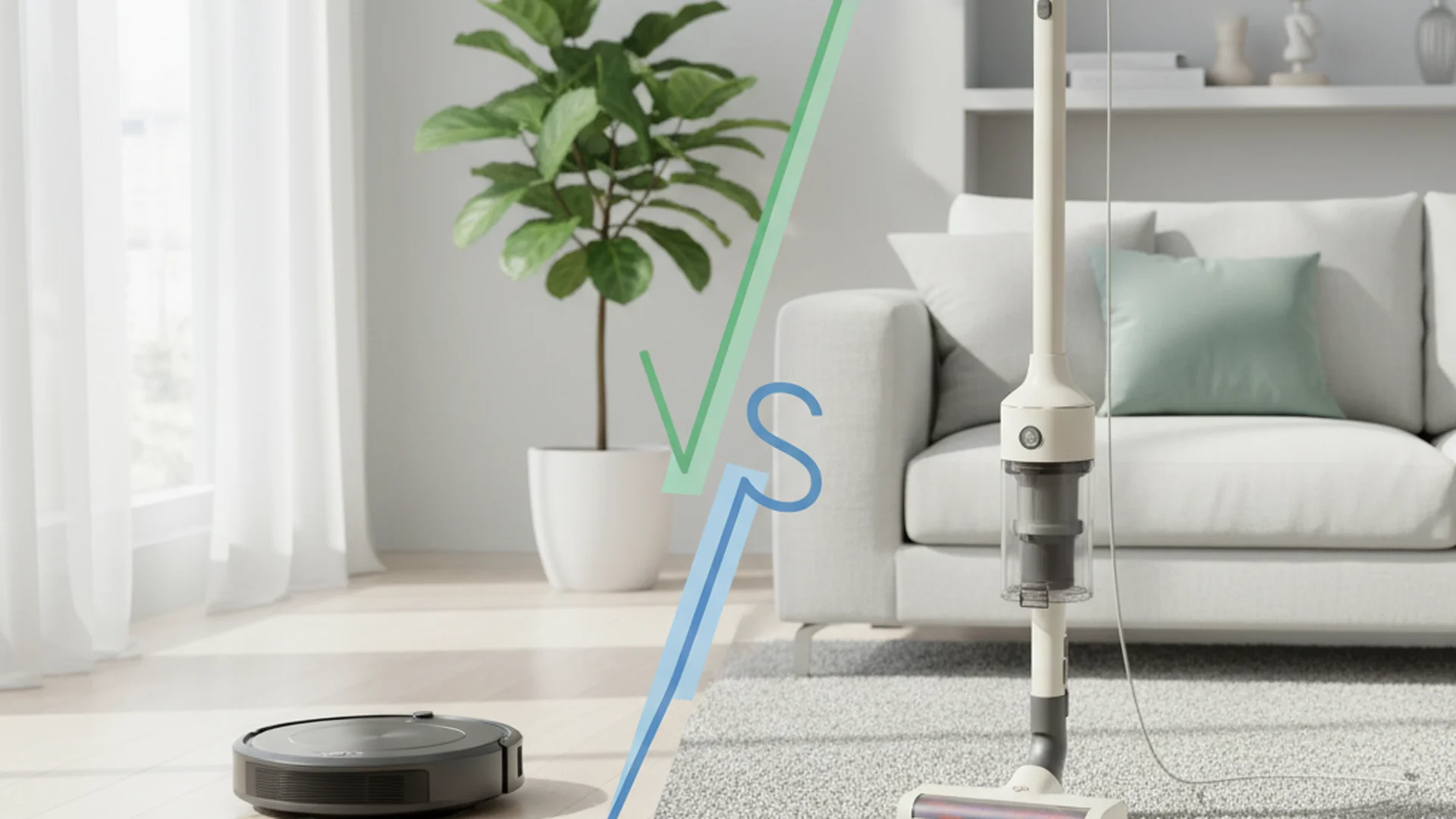
For decades, the humble upright vacuum was the undisputed king of home hygiene. However, as we move through 2026, the landscape of floor care has been completely terraformed by artificial intelligence and high-efficiency robotics. The question is no longer just "which is better," but rather, how does the robot vs regular vacuum debate fit into your specific lifestyle?
As a professional cleaning consultant, I’ve seen homeowners struggle to choose between the hands-free convenience of a robot and the raw power of a corded upright. But before you retire your old canister vacuum, it is essential to understand that these two machines serve fundamentally different purposes in a modern cleaning arsenal.
Understanding the Performance Gap: Suction vs. Airflow
When evaluating which is better robot vs regular vacuum, we must look at the physics of cleaning. One of the most common points of confusion for consumers is the metric used to measure power.
Pascals vs. Air Watts
Robot vacuums almost exclusively use Pascals (Pa) to measure suction pressure. In the 2025-2026 flagship models, such as the Roborock Saros series, we have seen these numbers skyrocket to 22,000 Pa. While this sounds impressive, it only tells half the story.
Regular vacuums, particularly corded uprights or canisters, are measured in Air Watts (AW). A standard high-end upright typically offers 180–300 AW. The difference is that regular vacuums provide significantly higher airflow. This airflow is what pulls deeply embedded dust and allergens out of the base of thick carpets.
Cleaning Efficiency in Practice
Side by side on carpet, the performance gap is still noticeable:
- Regular Upright Vacuums: Lift nearly all of the embedded debris out of the pile.
- Top-Tier Robot Vacuums: Get most of it, but leave a meaningful amount behind.
Note: Robot vacuums excel at "surface tension" cleaning—picking up hair, crumbs, and dust before they have a chance to be trodden into the carpet fibers.
The Rise of the 2026 Smart Robot
If regular vacuums are more powerful, why are robots winning the market share? The answer lies in the massive technological leaps seen in late 2025 and early 2026.
All-in-One Maintenance Stations
Maintenance used to be the "Achilles' heel" of robotic cleaners. You had to empty the bin daily and untangle hair from the brush rolls. Today, most new models ship with an all-in-one station. These docks:
- Self-empty the dustbin into a sealed bag.
- Wash mop pads with hot water (up to 140°F).
- Dry the pads with heated air to prevent mold and odors.
- Refill the robot’s water tank automatically.
Breakthrough Features: Robotic Arms and Stair Climbing
The most significant trend of 2026 is the introduction of extendable mechanical arms. Flagship models like the Roborock Saros Z70 can now reach deep into corners and even move small objects like socks out of the way to clean the floor beneath them.
Furthermore, CES 2025 debuted the first viable stair-climbing prototypes. The Dreame CyberX, for instance, uses bionic track systems to navigate between floors, solving the final major limitation of the robot vacuum category.
Warning: While "stair-climbing" is entering the market, these models are currently high-priced early-adopter tech. For most homes, a regular vacuum is still a necessity for stairs.
Which is Better for Your Specific Needs?
To help you decide, let's look at three real-world examples of how these tools perform in different environments.
Example 1: The Multi-Pet Household
If you have two golden retrievers, you know the "tumbleweeds" of fur that accumulate daily.
- Robot Role: Running a robot daily prevents hair accumulation on the surface.
- Regular Role: Once a week, you need a regular vacuum with a motorized upholstery tool to remove dander and hair from the sofa and deep rugs.
- Verdict: In a pet home, you need both.
Example 2: The Minimalist Apartment
If you live in a 1,000-square-foot space with hardwood floors and minimal furniture.
- Verdict: A high-end hybrid (vacuum + mop) robot can likely handle 95% of your cleaning needs. You might only need a small handheld vacuum for window sills and vents.
Example 3: The Large Family Home with High-Pile Carpet
- Verdict: A regular upright vacuum is non-negotiable here. A robot will struggle with the battery life required to traverse a large home and won't have the "agitation" necessary to clean thick carpet fibers effectively.
| Feature | Robot Vacuum (2026) | Regular Vacuum (Upright/Stick) |
|---|---|---|
| Automation | Fully Autonomous | Manual Operation |
| Deep Carpet Cleaning | Moderate (75-80%) | Excellent (98%) |
| Hard Floor Cleaning | Excellent (Includes Mopping) | Good (Suction Only) |
| Stairs/Upholstery | Very Limited | Excellent |
| Noise Level | 60-70 dB (Quiet) | 85+ dB (Loud) |
| Price Range | $300 - $1,800 | $150 - $900 |
The "Hybrid Routine": An Expert Recommendation
As a consultant, I always recommend the Hybrid Routine. Instead of choosing one over the other, you should integrate them into a coordinated system.
- Daily (Robot): Schedule your robot to run while you are at work or out of the house. This manages the "daily load" of dust and allergens.
- Weekly (Regular): Use a corded upright or a powerful cordless stick vacuum for "zonal" cleaning. Focus on the edges of the room, the stairs, and the furniture.
- Monthly (Deep Clean): Move the furniture and use the regular vacuum's crevice tool to get into the spots even a 2026 robot can't reach.
Success: Using a robot daily reduces the time spent on your weekly deep clean by up to 70%. It prevents dirt from becoming "impacted" into the floor.
Common Mistakes to Avoid
Even with the best technology, many users fail to get the most out of their investment due to these common errors:
- Buying for "Pa" alone: Do not fall for the marketing trap that higher Pascals always mean better cleaning. Airflow and brush roll design are more important for carpet. A 20,000 Pa robot with a poor brush will perform worse than an 8,000 Pa robot with a high-quality rubber agitator.
- Neglecting the Water Tanks: With the rise of self-washing mops, users often forget to clean the dirty water tank in the dock. "Stinky dock syndrome" is the leading cause of consumer dissatisfaction in 2025-2026.
- Ignoring Sensor Health: For robot vacuums, dirty sensors are the #1 reason for "confused" behavior. Wipe your cliff sensors once a month.
- Using the Wrong Detergent: Many hybrid robots require specific low-sudsing solutions. Using standard floor cleaner can clog the internal sprayers and void your warranty.
Tip: Spend 60 seconds "robot-proofing" your floor before a run. Picking up loose charging cables or small toys prevents the robot from wasting battery on navigation loops.
Frequently Asked Questions
Can a robot vacuum replace my regular vacuum?
Are robot vacuums good for pet hair?
Do robot vacuums still get stuck on everything?
Is it worth getting a hybrid (vacuum + mop) robot?
How long do robot vacuum batteries last?
Conclusion: The Verdict for 2026
The robot vs regular vacuum debate has reached a peaceful resolution: they are better together. If you value a home that feels clean every single day without the manual labor, a robot vacuum is an essential investment. However, for the health of your carpets and the cleanliness of your furniture, the raw power of a regular vacuum remains a household staple.
In 2026, the smart choice is to invest in a high-quality robot with an all-in-one station for your daily needs and keep a reliable cordless stick vacuum in the closet for everything else.
Success: By automating the mundane daily floor sweep, you reclaim an average of 4 hours of your life every month.
Cleaning that keeps score
Every task earns points, every streak multiplies them, and Premium adds a household leaderboard plus a monthly Dustagorgon to beat.
- Free forever
- 30 badges to earn
- Up to 6 in a household
No card needed. Set up your rooms in a couple of minutes.