In this article
What you’ll learn
- Freeze fresh gum for the easiest removal without fiber damage.
- Avoid high heat on synthetic fibers to prevent permanent melting.
- Always rinse oil-based solvents to prevent 'ghost stains.'
Discovering a sticky, flattened glob of chewing gum pressed deep into your beautiful rug can feel like a household disaster. Whether it was a stray piece from a toddler's playroom or an accidental transfer from a shoe after a walk outside, knowing how to remove gum carpet stains effectively is a vital skill for maintaining your home's value. In the past, people often reached for scissors, creating permanent bald spots, but today's advanced cleaning methods allow you to restore your flooring to its original glory without the drama.
In 2025, the carpet cleaning industry has evolved. From eco-friendly bio-enzymes to precision temperature control, we no longer have to rely on guesswork.
The Science of the Sticky: Why Gum Bonds to Carpet
To understand how to effectively remove gum carpet from carpet fibers, we first have to look at what gum actually is. Modern chewing gum is made of synthetic rubbers and resins designed to be durable and flexible. When gum is pressed into a carpet, it weaves itself around the individual "loops" or "piles" of the fabric.
About 70% of modern residential carpets are made of synthetic fibers like nylon, polyester, or triexta. These materials are essentially plastics. This creates a "plastic-on-plastic" bond that can be incredibly difficult to break. If you use the wrong method—like excessive heat or harsh chemicals—you risk melting the carpet fibers right along with the gum.
Real-World Example: The "Playroom Disaster"
Imagine a high-traffic playroom with a low-pile polyester carpet. A child drops a piece of bubblegum and walks over it for three days. By the time you find it, the gum is a black, flattened disc. In this scenario, the gum has become "integrated" into the pile. Using a simple pull method would rip the fibers out. This is where a strategic, multi-tiered approach is required.
Method A: The "Freeze and Shatter" (Best for Fresh Gum)
This is the gold standard for fresh or "squishy" gum. The goal is to lower the temperature of the gum until it reaches its "glass transition point," making it brittle enough to break.
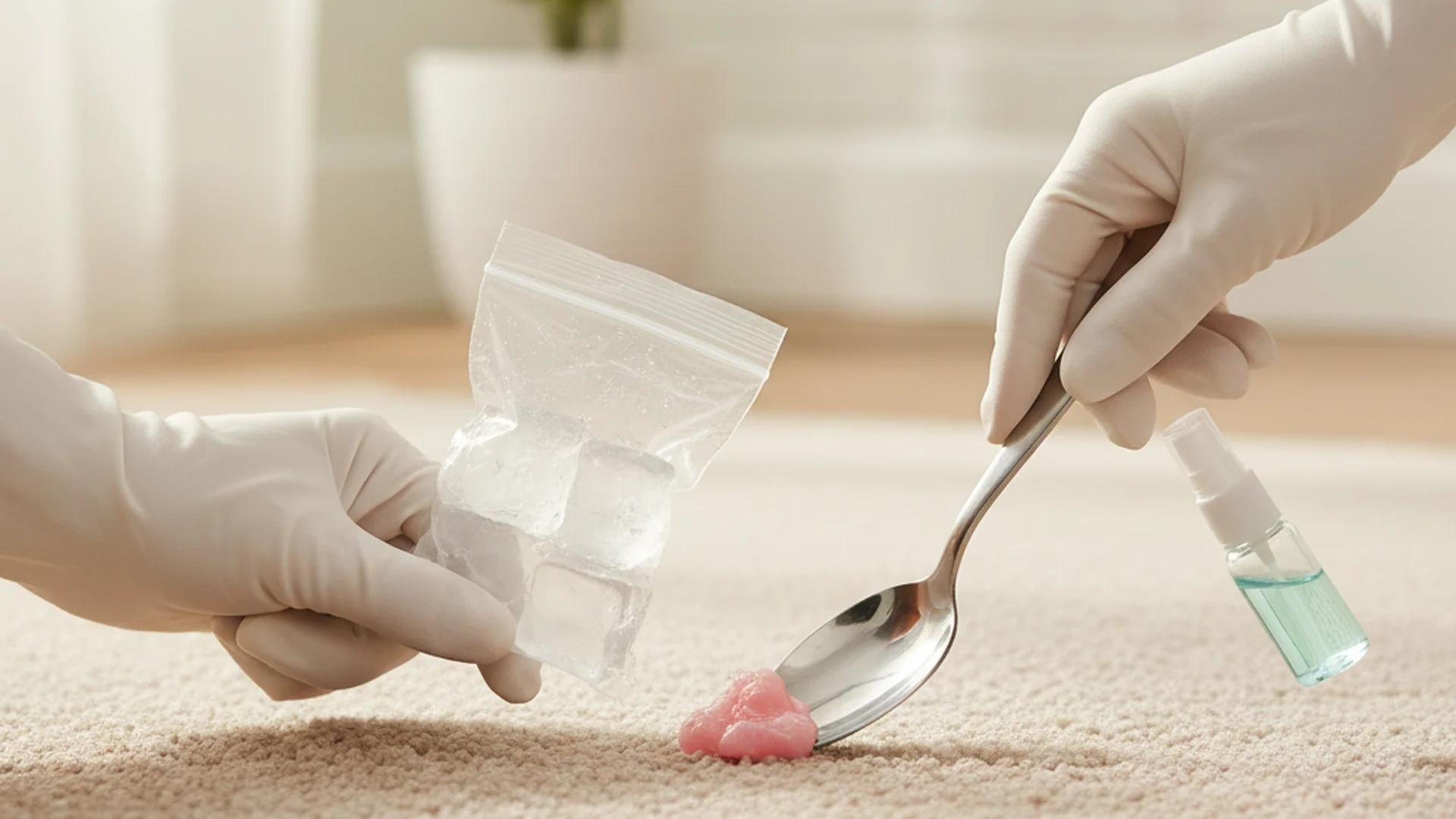
- Preparation: Do not put ice directly on the carpet. The melting water can carry the gum’s sugars deeper into the backing. Instead, place several ice cubes in a sealed Ziploc bag.
- The Chill: Place the bag directly on the gum and leave it for 10–15 minutes. You want the gum to be hard to the touch, not just cold.
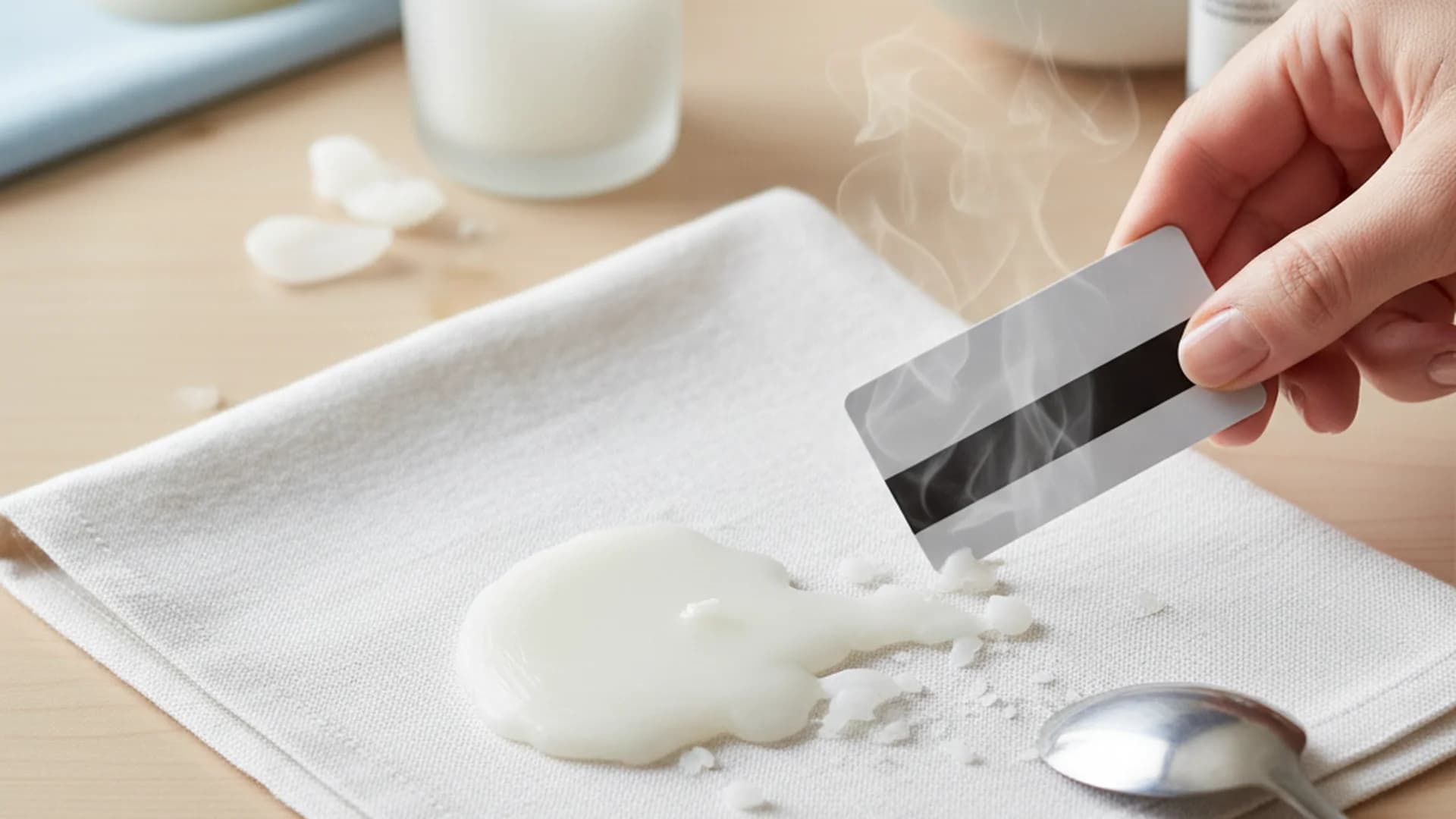
- The Shatter: Once frozen, use a dull tool like a butter knife or an old credit card to gently crack the gum.
- The Extraction: Carefully lift the frozen fragments away.
Tip: Keep a vacuum hose running right next to the site. As you shatter the gum, vacuum up the tiny frozen pieces immediately before they have a chance to warm up and re-adhere to the fibers.
Method B: The "Heat Transfer" (Best for Dried, Flat Gum)
If the gum is old and has been flattened into the carpet for weeks, freezing might not be enough. In these cases, a controlled heat transfer can lift the gum away.
- The Barrier: Place a piece of parchment paper or a plain brown paper bag over the gum. Do not use newspaper, as the ink can transfer to your carpet.
- Controlled Heat: Set your clothes iron to a low-medium setting with NO steam.
- The Press: Press the iron onto the paper over the gum for 10-20 seconds.
- The Lift: The gum should begin to melt and stick to the paper. Slowly peel the paper back. The gum should lift away from the carpet and stay on the paper.
Warning: Most modern carpets are synthetic. High heat can permanently warp or melt the fibers. Always test a small, inconspicuous area first and never use the highest heat setting.
Method C: Solvent Dissolution (Cleaning the Residue)
Even after the main glob is gone, a sticky residue often remains. This is where you need to remove gum carpet from fabric by breaking down the chemical bonds.
| Solvent Type | Best Use Case | Safety Level |
|---|---|---|
| Isopropyl Alcohol (90%) | Synthetic fibers | High (evaporates quickly) |
| Citrus-based (Goo Gone) | Heavy residue | Medium (requires rinsing) |
| White Vinegar | Natural fibers (Wool) | High (eco-friendly) |
| WD-40 | Stubborn bonds | Low (leaves oily residue) |
When using a solvent, apply it to a white microfiber cloth first—never pour it directly onto the carpet. Blot from the outside of the stain toward the center to prevent spreading.
Note: If you use an oily solvent like WD-40 or a citrus-based cleaner, you MUST follow up with a degreasing dish soap and water rinse. If you skip this, the leftover oil will act as a magnet for dirt, leading to a dark "ghost stain" within a few weeks.
Modern 2025 Solutions: The Future of Carpet Care
As we move through 2025 and into 2026, the shift toward "green" cleaning has introduced more sophisticated tools for the average homeowner.
Bio-Enzymatic Digesters
New product lines now feature enzymatic cleaners. These aren't just soaps; they contain living bacteria cultures that produce enzymes to "eat" the sugars and proteins in the gum. These are particularly effective for households with pets because they are non-toxic and biodegradable.
Precision Steam Lances
High-end home steam cleaners now come with "precision nozzles." Unlike traditional steaming which soaks the whole floor, these lances target a 1/4 inch area with high-pressure, dry steam. This melts the gum's bond instantly without soaking the carpet padding, which can lead to mold.
UV-C Sanitization
A growing trend in 2026 is the use of portable UV-C wands after stain removal. Gum is a breeding ground for bacteria. Once the physical mass is removed, a quick pass with a UV-C light ensures that any microscopic organic material left behind is neutralized.
Common Mistakes to Avoid
Even the best intentions can lead to permanent carpet damage if you fall into these common traps:
- Scrubbing Vigorously: This is the most common error. Scrubbing frays the carpet fibers, a condition known as "fuzzing." Once fibers are frayed, they reflect light differently, making the area look like a permanent stain even if the gum is gone.
- Using Acetone: While nail polish remover (acetone) dissolves gum quickly, it can also dissolve the latex backing that holds your carpet together. This leads to "delamination," where the carpet separates from the floor.
- The Peanut Butter Myth: While the oils in peanut butter do break down gum, you are essentially replacing one problem with a much worse one. Cleaning oily, nutty residue out of carpet pile is significantly harder than removing the gum itself.
- Forgetting the Rinse: Every chemical you put into a carpet must come out. Leftover soap or oil will attract dust and grime.
Success: By following the "Freeze, Shatter, and Solvent" method, you can achieve professional-grade results at home for less than $5 in materials.
Frequently Asked Questions
Will WD-40 ruin my carpet?
Can I use a hair dryer to melt the gum?
How do I get gum out without ice?
Is it safe to use a steam cleaner on gum?
Conclusion
Removing gum from your carpet doesn't have to be a permanent scar on your home's interior. By understanding the type of carpet you have and choosing the right method—whether it's the 2026-style bio-enzymes or the classic ice-pack technique—you can handle the situation like a professional. Remember: stay patient, avoid the urge to scrub, and always rinse away your cleaning agents.
Cleaning that keeps score
Every task earns points, every streak multiplies them, and Premium adds a household leaderboard plus a monthly Dustagorgon to beat.
- Free forever
- 30 badges to earn
- Up to 6 in a household
No card needed. Set up your rooms in a couple of minutes.