In this article
What you’ll learn
- Cluttered environments significantly increase cortisol levels and stress.
- Ritualized cleaning serves as a powerful coping mechanism for anxiety.
- Modern trends shift from "perfect" minimalism to "lived-in wellness."
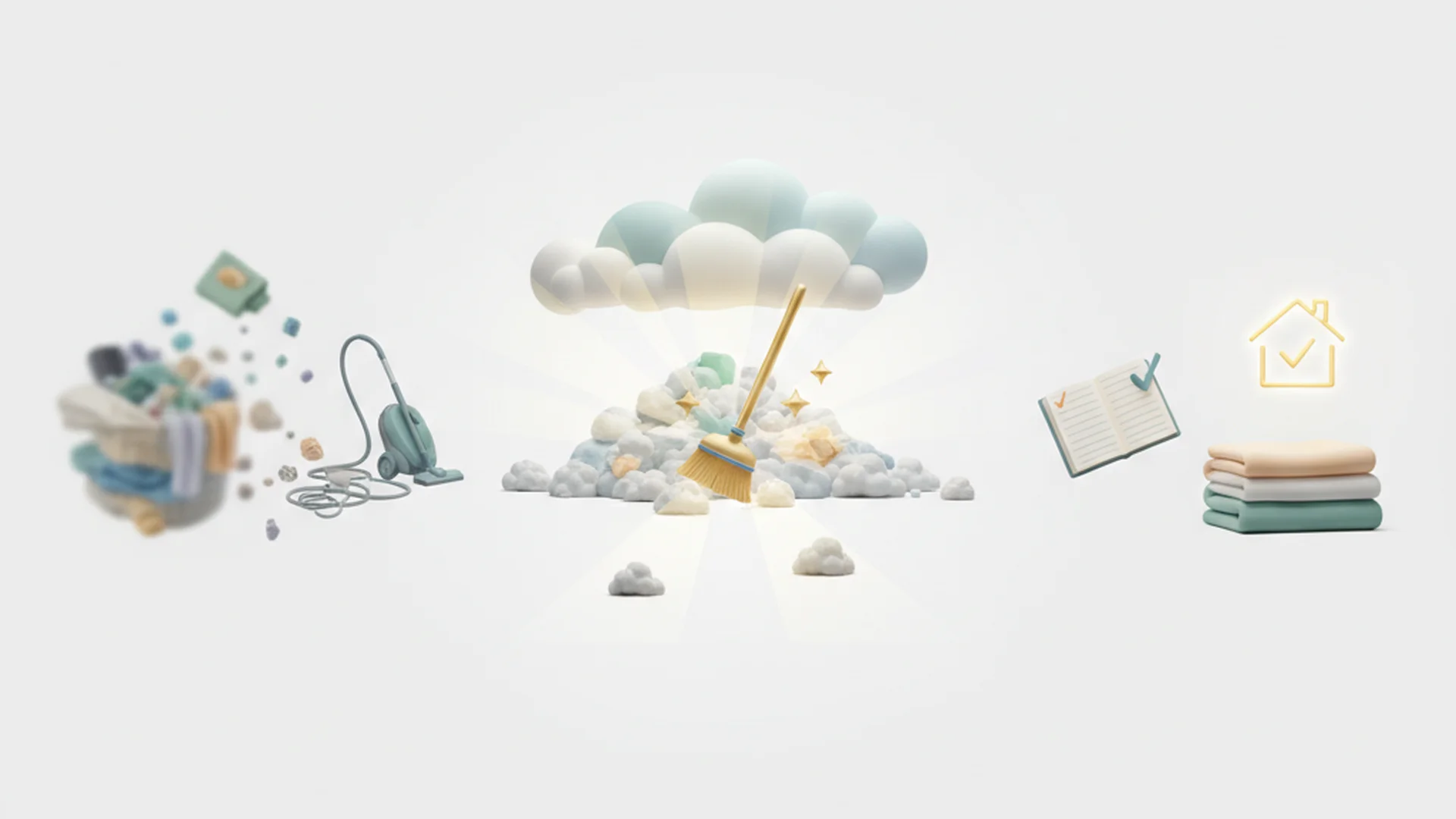
Have you ever noticed how a sink full of dirty dishes can make you feel inexplicably irritable, or how walking into a freshly vacuumed room feels like a physical weight has been lifted? This isn't just a coincidence; it is the psychology clean home connection at work. Our physical surroundings serve as an external mirror of our internal mental state. When our environment is chaotic, our brains often follow suit. Conversely, maintaining an organized space can be one of the most effective, low-cost tools for improving mental health and cognitive performance.
In this guide, we will dive deep into why your brain craves order, how modern trends like "Underconsumption Core" are reshaping our homes in 2025 and 2026, and how you can use environmental psychology to reclaim your peace of mind.
How Your Space Shapes Your Stress
The link between your environment and your biology is profound. "Visual noise" has a real effect on the human brain. We aren't just imagining the stress; our bodies react to the mess on a hormonal level.
Cortisol and the "Unfinished Project"
People who describe their homes as "cluttered" or full of "unfinished projects" tend to stay keyed up all day, with cortisol—the body's primary stress hormone—never quite settling. Those who experience their homes as restful and restorative find that tension eases naturally as the evening progresses.
When you see a pile of laundry or a stack of mail, your brain doesn't just see objects; it sees a "to-do" list that it cannot check off. This chronic state of low-level stress can lead to burnout, fatigue, and even weakened immune systems over time.
Cognitive Load and Visual Clutter
It’s not just about stress; it’s about your ability to think. Visual clutter competes for your attention. Much like having twenty tabs open in a web browser, a messy room creates a "cognitive load" that slows down your processing speed. When the environment is organized, the brain is freed from the distraction of extraneous stimuli, allowing it to focus and process information more efficiently.
Note: If you find yourself unable to concentrate on work, the problem might not be your motivation, but the visual "noise" on your desk.
Breaking the Cycle: Anxiety, Depression, and Cleaning
The relationship between mental health and cleanliness is often a "chicken or the egg" scenario. Does a messy house cause depression, or does depression make it impossible to clean? The reality is that it is often a cyclical relationship.
Managing Anxiety Through Ritual
For many, the act of cleaning is a search for "secondary control." When the world feels unpredictable or overwhelming, the repetitive motions of wiping a counter or sweeping a floor provide an immediate, tangible result. "Ritualized cleaning" can be a genuinely effective coping mechanism for anxiety. By focusing on a small, controllable task, you signal to your nervous system that you are safe and in command of your immediate surroundings.
The "Cleaning Paralysis" Phenomenon
If you’ve ever looked at a messy room and felt completely unable to move, you’ve experienced "cleaning paralysis." This is frequently linked to executive dysfunction, common in individuals with ADHD or high levels of anxiety. The brain becomes overwhelmed by the number of steps required to finish a task, leading to total shutdown.
Success: Overcoming cleaning paralysis starts with lowering the bar. Instead of "cleaning the kitchen," commit to "washing three forks." This small win often breaks the paralysis and creates momentum.
2025–2026 Trends: From Minimalism to Lived-In Wellness
As we move into 2025 and 2026, the psychology clean home landscape is shifting. We are moving away from the sterile, museum-like aesthetics of the 2010s and toward a more human-centric approach to domestic order.
Underconsumption Core and Decision Fatigue
The hottest trend for the mid-2020s is "Underconsumption Core." Unlike traditional minimalism, which often felt cold, underconsumption core focuses on the psychological relief of owning fewer items. By intentionally reducing the number of belongings you manage, you reduce "decision fatigue." Every object you own requires a piece of your mental energy to clean, move, or maintain. Owning less literally gives you more "brain space."
AI-Assisted Mental Unloading
We are also seeing the rise of AI-integrated homes designed to manage "invisible labor." Families are now using AI to track chores, grocery lists, and maintenance schedules. This trend aims to reduce the "mental load"—the psychological burden of remembering everything that needs to be done—which is a leading cause of household tension and individual burnout.
Biophilic Cleaning
The 2026 trend of "Biophilic Cleaning" involves using plant-based agents and "living scents" (like moss, rain, or cedar) that mimic the outdoors. "Bringing the outside in" through scent has a calming effect for many people, making the act of cleaning feel more like a spa treatment and less like a chore.
Tip: Look for cleaning products with eucalyptus or pine to trigger a "forest bathing" psychological response while you tidy.
Actionable Psychology Clean Home Tips
If you’re looking for psychology clean home help, these strategies focus on working with your brain rather than against it.
The "Micro-Cleaning" Method
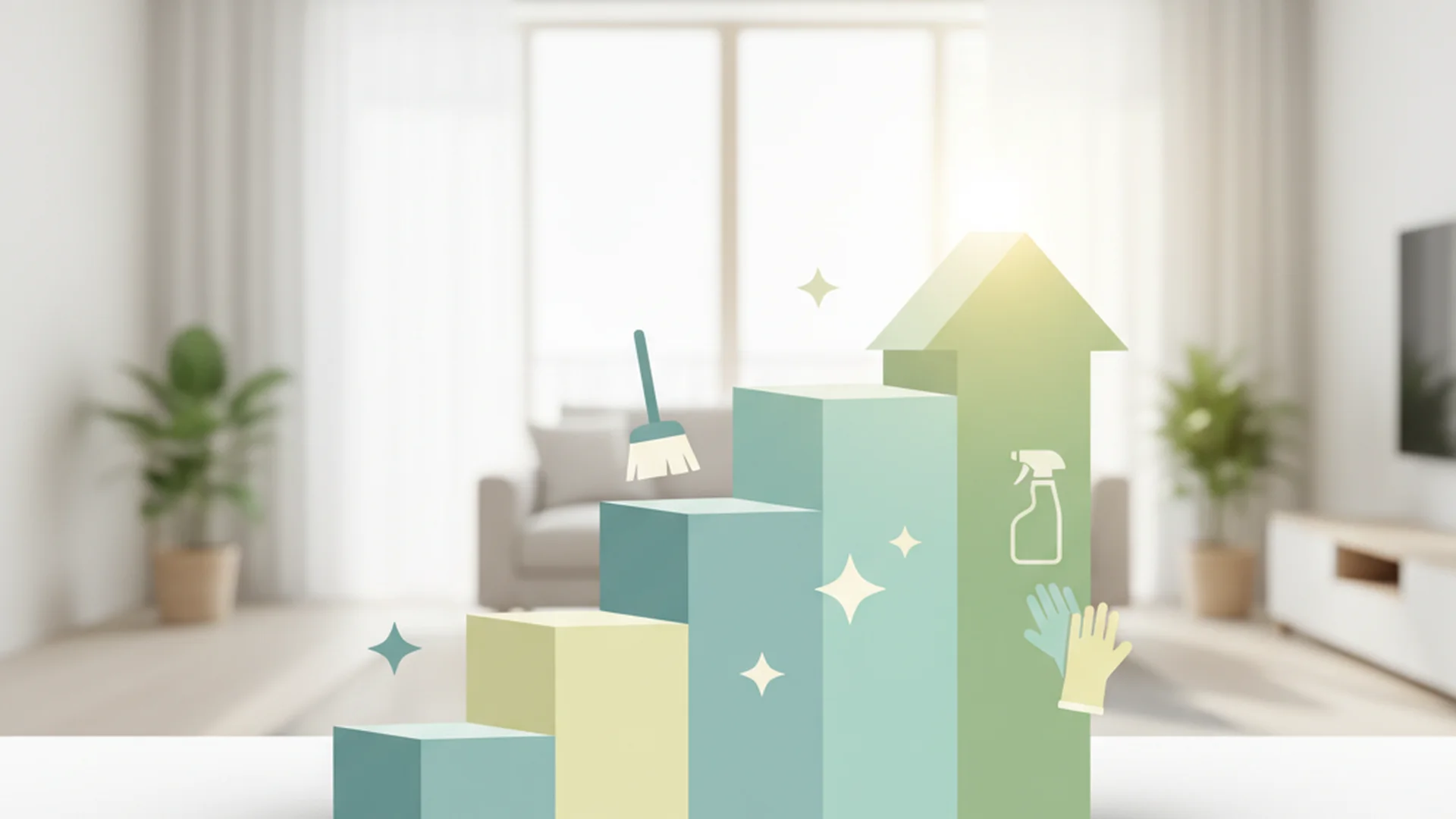
Instead of waiting for a "deep clean" weekend that leaves you exhausted, use the micro-cleaning method. Spend 10–15 minutes in a "cleaning burst." This releases frequent hits of dopamine without triggering the stress of a massive, overwhelming project.
The "One-Touch" Rule
This is a favorite among domestic efficiency specialists. If a task takes less than sixty seconds—hanging up a coat, putting a dish in the dishwasher, filing a piece of mail—do it immediately. This prevents the "mental load" of a mounting to-do list from accumulating.
Body Doubling for Focus
For those who struggle with task initiation, "body doubling" is a game-changer. This involves having someone else present (either in person or via video call) while you clean. They don't even have to help; their mere presence helps keep your brain "on task" and reduces the feelings of isolation or boredom that often lead to distraction.
| Strategy | Best For | Psychological Benefit |
|---|---|---|
| Micro-Cleaning | Busy Professionals | Frequent Dopamine Hits |
| One-Touch Rule | Chronic Procrastinators | Reduced Mental Load |
| Body Doubling | Neurodivergent Individuals | Sustained Focus |
| Sensory Anchoring | High-Stress Households | Nervous System Regulation |
Common Mistakes to Avoid
In our quest for a clean home, we often fall into psychological traps that do more harm than good.
The "All-or-Nothing" Mentality
Many people wait until Saturday to do a marathon 6-hour clean. Psychologically, this is a mistake. It associates cleaning with exhaustion and the loss of your free time. This creates a subconscious resentment toward your home. It is much better to do 15 minutes a day than 6 hours once a week.
Toxic Productivity and "Procrasticleaning"
Are you cleaning the baseboards because they are dirty, or because you are avoiding a difficult work email? "Procrasticleaning" creates a cycle where your clean home becomes a monument to avoided responsibilities. This can lead to underlying guilt that negates the psychological benefits of the clean space.
The Perfectionism Trap
The 2026 trend of "Lived-in Wellness" teaches us that a home that looks "unlived in" can actually cause anxiety. If you are afraid to sit on your couch or use your kitchen for fear of making a mess, your home is no longer a sanctuary; it's a source of stress. The goal is "functional flow," not "perfect sterility."
Warning: Never sacrifice your sleep or your relationships for the sake of a perfect house. A clean floor is not worth a burnt-out mind.
Frequently Asked Questions
Why do I feel a sudden urge to clean when I'm stressed?
Can a messy house cause depression?
Why do I get "cleaning paralysis"?
Does the "clean house, clean mind" theory actually work?
Conclusion: Cleaning as Self-Care
The psychology clean home connection isn't about having a house that is "magazine ready." It is about treating your environment as an extension of your mental health. When we reframe cleaning from a "chore" to an act of kindness for our future selves, the entire experience changes. You aren't just "washing dishes"; you are ensuring that your future self doesn't wake up to a stressful kitchen.
By embracing trends like "Lived-in Wellness" and utilizing strategies like micro-cleaning and the one-touch rule, you can create a home that supports your mind rather than draining it. Remember, your home should be a charging station for your soul, not another item on your to-do list.
Success: Reframing cleaning as "home-care" instead of "house-work" can fundamentally shift your motivation and mental well-being.
Cleaning that keeps score
Every task earns points, every streak multiplies them, and Premium adds a household leaderboard plus a monthly Dustagorgon to beat.
- Free forever
- 30 badges to earn
- Up to 6 in a household
No card needed. Set up your rooms in a couple of minutes.