In this article
What you’ll learn
- Cluttered environments tend to leave you feeling more wound up and on edge.
- Short, 15-minute bursts of cleaning can provide a sense of mastery and calm.
- Holistic wellness in 2025 emphasizes the home as a sanctuary, not just a space.
We have all felt that subtle, mounting pressure when walking into a kitchen overflowing with dishes or a living room buried under a week’s worth of laundry. It isn’t just about the mess; it’s about how that mess makes us feel. As we move through 2025 and 2026, the global conversation around mental health has shifted toward "holistic wellness," and a major pillar of this movement is our physical environment. It confirms what many of us have long suspected: a clean home reduces stress by acting as a restorative anchor in an increasingly chaotic world.
When our physical surroundings are in disarray, our internal state often follows suit. This isn't just a matter of preference—it's biology. Our brains are wired to seek order, and when they can't find it, they pay a "cognitive tax" that leaves us feeling drained, anxious, and overwhelmed. By understanding the psychological mechanics of tidiness, we can transform our chores from exhausting obligations into therapeutic rituals.
The Science of Why a Clean Home Reduces Stress
The link between your environment and your endocrine system is more direct than you might realize. People who describe their homes as "cluttered" or "unfinished" often stay keyed up all day long, with levels of cortisol—the body’s primary stress hormone—that never really taper off the way they should. Those who describe their homes as "restful" or "restorative" tend to wind down far more naturally as the day progresses.
The Problem of "Visual Noise"
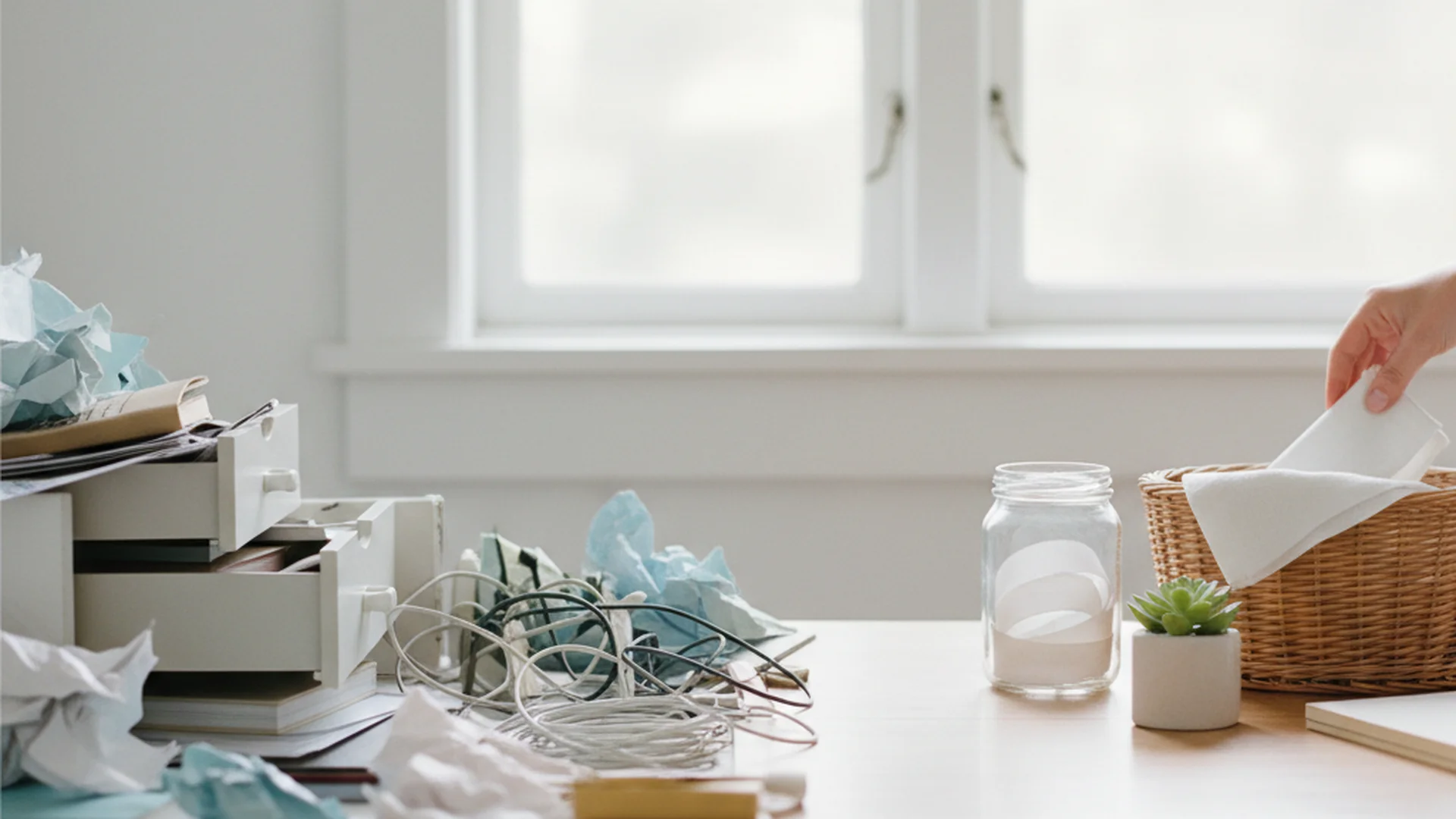
Why does looking at clutter make us so tired? Psychologists refer to this as "visual noise." Every object in your peripheral vision—the stack of mail, the stray shoe, the unwashed mug—competes for your brain's attention. Even if you aren't consciously looking at them, your brain is processing their presence and the "to-do" task associated with them.
This leads to what is usually called decision fatigue. When your brain is constantly scanning a messy room, it is working overtime, leaving you with less mental energy for work, parenting, or self-care. This is why a clean home reduces stress help so effectively; it removes the competing stimuli and allows your nervous system to enter a state of "rest and digest" rather than "fight or flight."
The Productivity and Health Connection
It isn't just about feeling calm; it's about functioning better. Most people find they simply get more done in a home that isn't quietly competing for their attention. The effect also spills over into the rest of your habits, and the state of your own kitchen matters here far more than anything happening outside your front door. When our home is clean, we are more likely to engage in other healthy behaviors, such as exercising and preparing nutritious meals.
Note: Our physical environment acts as a mirror for our internal state. A disordered home can actively elevate stress hormones, while an organized one promotes a "mastery" mindset.
Practical Clean Home Reduces Stress Tips for 2025
Knowing that a clean home is beneficial is one thing; finding the energy to maintain it is another. In 2025, the focus has shifted away from "marathon cleaning" and toward sustainable, bite-sized habits that protect mental health.
The 15-Minute Burst
Instead of waiting for the weekend to tackle a mountain of mess, try the "15-Minute Burst." Set a timer for just 15 minutes, five days a week. During this time, focus on one specific area or task. This prevents the "all-or-nothing" burnout and ensures a baseline of mental calm. Because it’s a finite amount of time, your brain is less likely to resist the task.
High-Visibility First
If you are feeling overwhelmed, start with "high-visibility" areas. These are the spaces you see the moment you wake up or walk through the front door—like the kitchen island or the entryway. Clearing these spaces provides an immediate "win" for your brain, triggering a small release of dopamine that can provide the momentum needed to keep going.
Body Doubling for Motivation
A trend gaining massive traction in 2025, especially for those with ADHD or chronic fatigue, is "body doubling." This involves performing a task while in the presence of someone else—either physically or via a video call. Having a friend "on the line" while you fold laundry or declutter a closet provides a level of accountability and social connection that makes the task feel significantly less daunting.
Tip: Treat cleaning as a grounding exercise. Focus on the scent of the soap, the warmth of the dishwater, or the rhythm of the vacuum to shift the task from a "chore" to a "ritual."
Real-World Examples of Environment-Based Stress Relief
To see how these concepts work in practice, let’s look at three common scenarios where implementing clean home reduces stress tips changed the daily experience of residents.
Example 1: The "Closing Shift" Success
Sarah, a marketing manager and mother of two, struggled with "morning cortisol spikes." She would wake up to a messy kitchen and immediately feel behind for the day. She implemented "The Closing Shift"—a viral 2025 trend. Every night, she spends 10 minutes resetting the living room (fluffing pillows, putting away toys) and clearing the kitchen counters. By waking up to a "fresh start," her morning anxiety levels dropped significantly, allowing her to start work with a clearer head.
Example 2: Scent Mapping for Transitions
Mark, who works remotely, found it difficult to "switch off" work mode because his desk was in his bedroom. He began using "Scent Mapping." He used energizing citrus scents during work hours and transitioned to lavender-based, bio-friendly cleaners for a quick desk-wipe at 5:00 PM. This sensory signal told his brain that the "work day" was over and the "relaxation phase" had begun, effectively reducing his evening stress.
Example 3: Dopamine Decluttering
Elena felt depressed by the extreme minimalism trend, finding it cold and uninviting. She shifted to "Organized Maximalism" or "Dopamine Decluttering." She kept the items that sparked joy—her colorful book collection and travel mementos—but ensured they each had a designated, tidy home. By removing the items that didn't serve her and organizing the ones that did, her home became a source of inspiration rather than a source of "visual noise."
Success: Notice what these three have in common: none of them overhauled their whole house. Each changed one small, repeatable system and got back a sense of control over their daily life.
Recent Trends in Stress-Free Cleaning (2025–2026)
As we look toward 2026, cleaning is being integrated into tech-heavy and eco-conscious lifestyles.
- AI-Driven Automation: Smart devices like robot vacuums and AI-integrated air purifiers are now handling the "maintenance cleaning." This allows homeowners to skip the grit and focus only on the "therapeutic" aspects of organization, such as arranging books or styling a shelf.
- Sensory and Probiotic Cleaning: There is a major shift toward cleaners that support the home's microbiome. Using light-scented, bio-based cleaners provides aromatherapy benefits while ensuring the home feels "alive" and healthy rather than chemically sterile.
- The "Micro-Environment" Focus: People are increasingly focusing on "well-being corners"—small, perfectly curated spaces (like a reading nook or a coffee station) that remain clean even if the rest of the house is busy. This provides a visual escape during high-stress moments.
Warning: Never mix different cleaning chemicals, such as bleach and ammonia, in an attempt to "deep clean" faster. This creates toxic fumes that are harmful to your physical and mental well-being.
Common Mistakes to Avoid
While the goal is to reduce stress, the process of cleaning can sometimes increase it if approached incorrectly. Avoid these common pitfalls:
- The "All or Nothing" Fallacy: Thinking you must clean the entire house for it to "count." Cleaning just one drawer provides a psychological "mastery" boost that is just as valid as cleaning a whole room.
- Equating Cleanliness with Perfection: Aiming for a "showroom" look can actually increase stress. Your home should be functional and calm, not a museum. A lived-in home with systems of organization is healthier than a sterile one that causes constant anxiety about "ruining" the look.
- Cleaning Shame: Many people avoid cleaning because they feel ashamed of the mess. It helps to view a mess as "evidence of a busy life" rather than a moral failing. Removing the shame makes it much easier to start.
- Underestimating the Physicality: We often forget that cleaning is "functional exercise." If you view it as a way to move your body and get your heart rate up, the psychological reward is doubled.
Frequently Asked Questions
Is cleaning actually a form of therapy?
Can a dirty house cause depression?
Why does looking at clutter make me tired?
How long should I clean to feel better?
Conclusion
It is clear that a clean home reduces stress not just by making our spaces look better, but by fundamentally changing how our brains and bodies function. By moving away from the idea of cleaning as a "chore" and toward viewing it as a vital component of mental health maintenance, we can create environments that truly support us. Whether you implement "The Closing Shift," try out "Body Doubling," or simply set a timer for 15 minutes tonight, remember that every small step toward order is a step toward a calmer, more resilient you.
Success: By prioritizing your environment, you are prioritizing your mind. A restorative home is the ultimate foundation for a healthy life in 2025 and beyond.
Cleaning that keeps score
Every task earns points, every streak multiplies them, and Premium adds a household leaderboard plus a monthly Dustagorgon to beat.
- Free forever
- 30 badges to earn
- Up to 6 in a household
No card needed. Set up your rooms in a couple of minutes.