In this article
What you’ll learn
- OurHome is the best free all-in-one organizer for couples and roommates.
- Homey (Chore App) excels at teaching kids financial literacy through 'Jobs.'
- Never confuse the Homey chore app with the Homey Pro smart home hub.
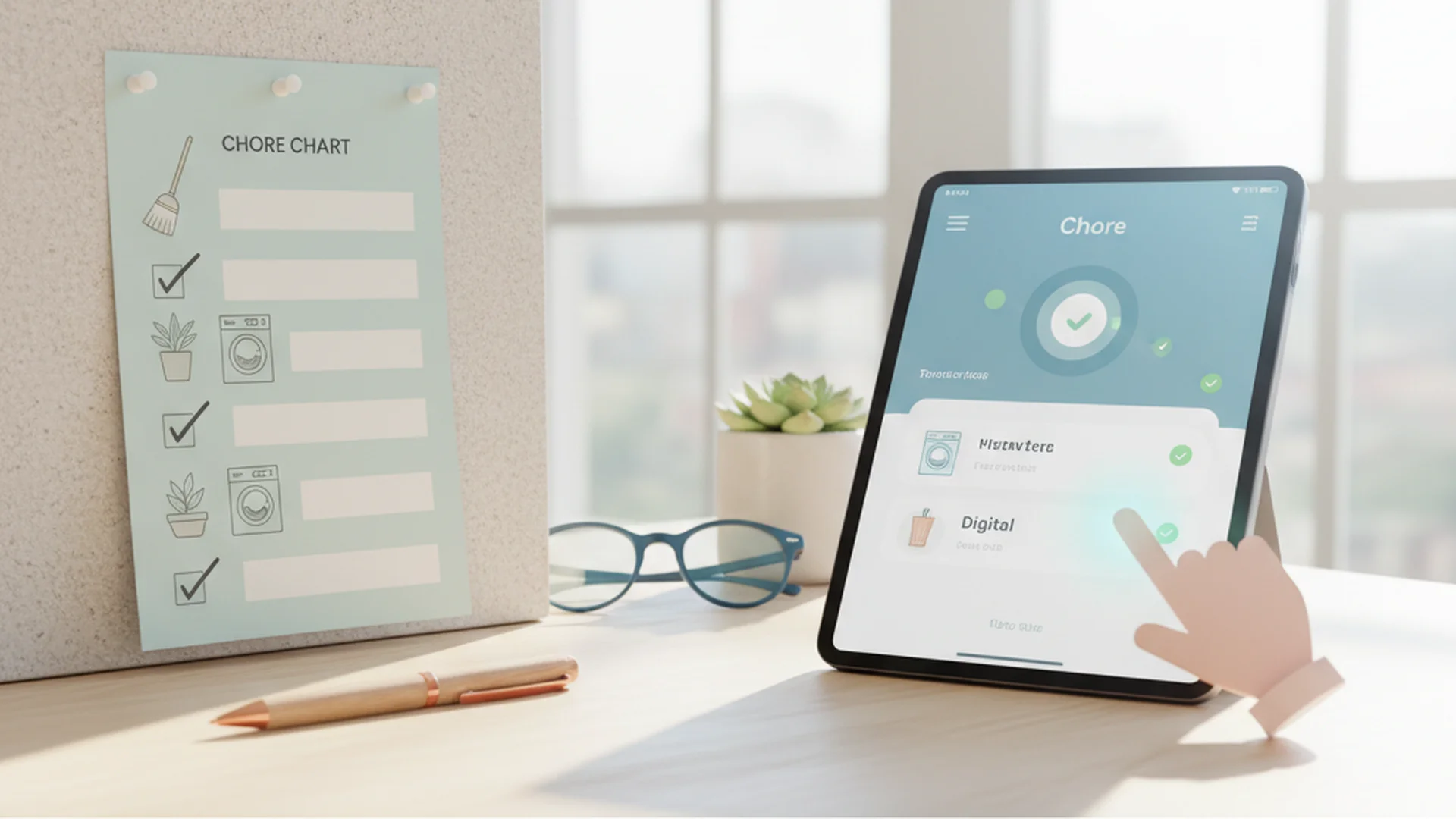
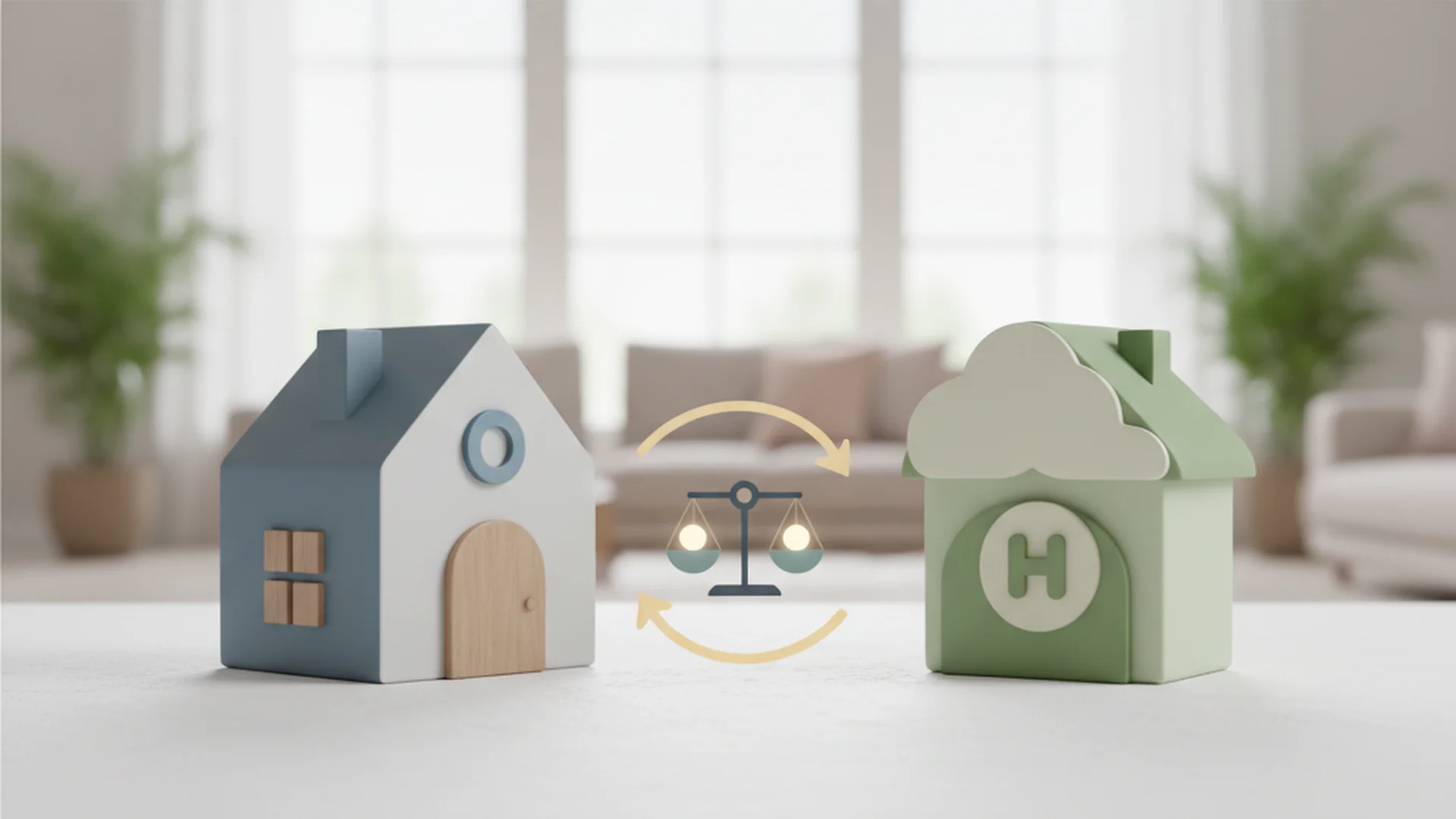
In the fast-paced world of 2025, managing a household has moved far beyond paper checklists stuck to the refrigerator. When looking for digital help, you have likely encountered the ourhome vs homey debate. At first glance, they seem like identical twins—both aim to streamline your life—but once you peel back the interface, they serve very different masters.
Choosing the right platform is about more than just checking off a box; it is about building habits, managing finances, and, in some cases, automating your entire physical environment. Whether you are a parent trying to incentivize a reluctant teenager or a professional looking to sync grocery lists with a partner, understanding which is better, ourhome vs homey, is the first step toward a more organized home.
The Great Name Confusion: Three Products, Two Names
Before we dive into the features, we must clear up a massive point of confusion that plagues search results. When you search for "Homey," you aren't just looking at one app; you are looking at a brand name shared by two entirely different tech sectors.
- OurHome: A completely free family organizer that handles chores, grocery lists, and shared calendars.
- Homey (The Chore App): A subscription-based tool focused on kids' chores, allowances, and financial literacy.
- Homey (The Smart Home Hub): A premium hardware device (like Homey Pro) created by Athom to control smart lights, locks, and sensors.
For the purpose of this comparison, we will primarily focus on the two chore-management tools, while touching on the smart home hub to ensure you don't buy a $400 piece of hardware when you just wanted a digital chore chart.
Comparison at a Glance: OurHome vs. Homey (Chore)
| Feature | OurHome | Homey (Chore App) |
|---|---|---|
| Primary Goal | Family task & grocery management | Teaching kids financial literacy |
| Cost (2025) | Free (No Subscriptions) | $4.99/mo or $49.99/yr |
| Monetary Features | Point-based rewards only | Real money transfers & ledgers |
| Grocery List | Yes (Robust & Shared) | No |
| Shared Calendar | Yes | No |
| Best For | Organizing general household life | Families linking chores to money |
OurHome: The All-In-One Free Powerhouse
OurHome has remained a fan favorite in 2025 for one simple reason: it is incredibly generous. While most apps in this category have moved to a "freemium" model—where the grocery list or the calendar sync is hidden behind a monthly fee—OurHome remains entirely free.
As a professional cleaning consultant, I often recommend OurHome to roommates or couples without children. Why? Because it doesn't just focus on the "reward" aspect; it focuses on the "logistics" aspect.
Key Features of OurHome
- The Shared Grocery List: This is arguably OurHome’s best feature. It allows any family member to add items in real-time. If you are at the store and your partner adds "milk" to the list at home, it updates instantly on your screen.
- Point-Based Incentives: Instead of cash, OurHome uses a point system. You can assign a point value to chores (e.g., "Vacuuming" = 50 points). These points can then be redeemed for custom rewards like "30 minutes of video games" or "Pizza night."
- Integrated Calendar: It serves as a central hub for soccer practices, doctor appointments, and recurring household maintenance like changing HVAC filters.
Tip: Use OurHome’s point system to let kids "buy" non-monetary rewards, such as "30 minutes of extra screen time" or "Picking the Friday night movie." This keeps the focus on contribution rather than just cash.
Homey (Chore App): The Financial Literacy Mentor
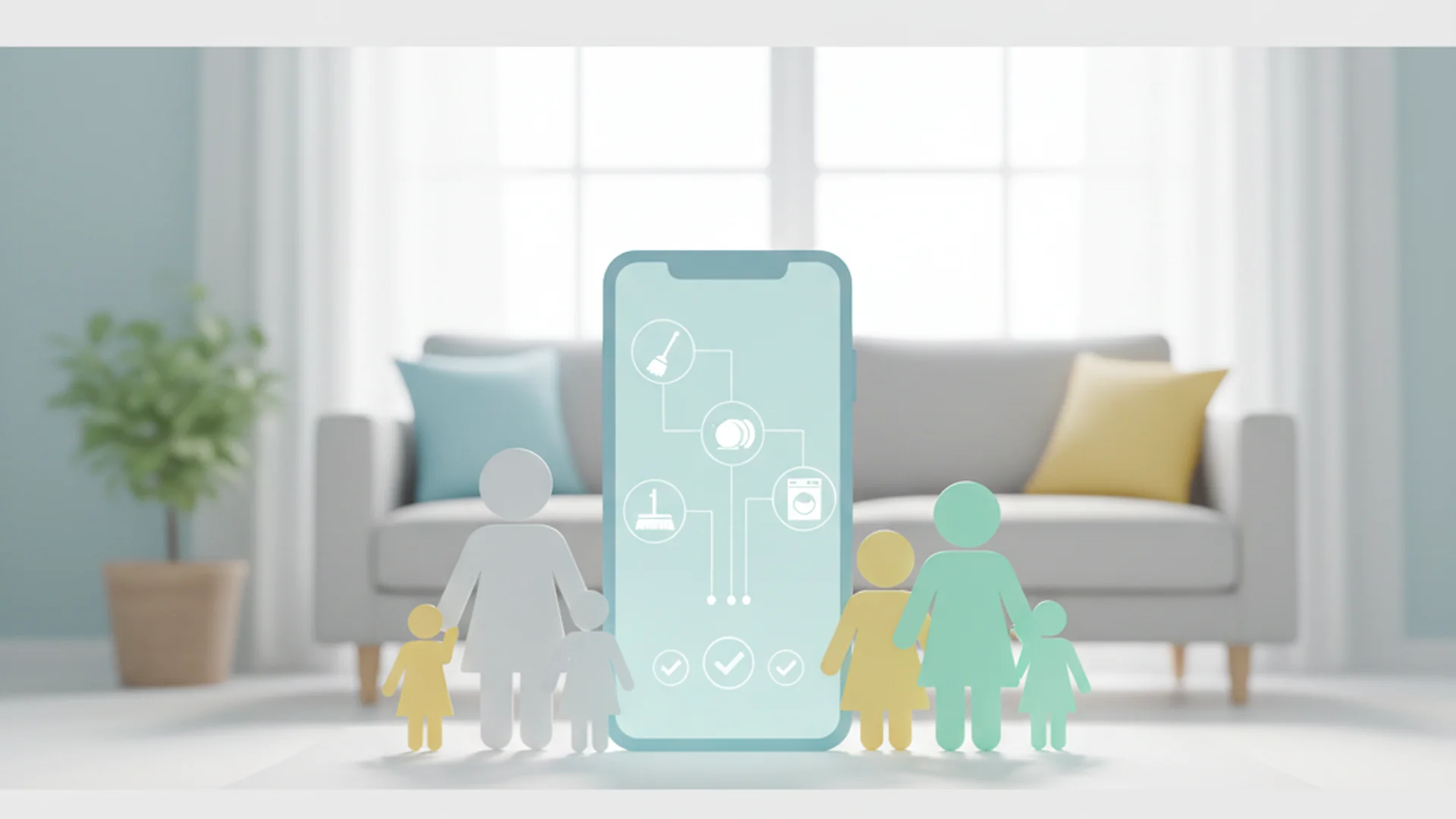
If OurHome is a logistics manager, Homey (Chore App) is a financial educator. This app is designed specifically for parents who want to use household chores as a way to teach children how the real world works regarding money.
The standout philosophy in Homey is the distinction between Responsibilities and Jobs.
The "Responsibility vs. Job" Model
The Homey method splits household tasks in two:
- Responsibilities: These are things a child is expected to do as a member of the family (e.g., making their bed, putting away their laundry). These earn no money.
- Jobs: These are extra tasks that go above and beyond (e.g., washing the car, weeding the garden). These earn a set dollar amount.
This mimics real-world employment and prevents children from expecting a "paycheck" just for basic hygiene.
Advanced Tracking and Proof
One of the biggest pain points for parents is the "Did you actually do it?" argument. Plenty of parents using chore apps point to "forgotten tasks" or "incomplete work" as their biggest frustration. Homey solves this with its Photo Proof requirement. A child cannot mark a chore as "Done" until they snap a photo of the completed work.
Success: Implementing the "Photo Proof" rule in Homey takes most of the heat out of parent-child arguments over chore quality.
Real-World Examples: Which Fits Your Life?
Example 1: The Three-Roommate Apartment
In a shared living situation with three adults, OurHome is the clear winner. You don't need to pay each other an allowance; you just need to know whose turn it is to buy toilet paper and who hasn't scrubbed the bathroom in two weeks. The shared grocery list and recurring task schedule make OurHome a perfect "invisible manager."
Example 2: The Family with a Pre-Teen
If you have a 12-year-old who is asking for a higher allowance, Homey (Chore App) is superior. By linking the app to a bank account (available in the US) or using the digital ledger, you can show the child exactly how much they have earned and how much they have spent. It transforms chores from a "nagging" conversation into a "business" conversation.
Example 3: The Tech Enthusiast / Smart Home User
If your goal is to have the lights turn red when the trash hasn't been taken out, neither of the phone apps will do this alone. You would need the Homey Pro (Smart Home Hub). By 2026, the Homey Pro 2026 hub will feature 4GB of RAM and local AI processing, allowing it to integrate your "digital chores" with your physical home devices via Matter and Thread protocols.
Note: OurHome is a manual tracker. It will not detect that your son vacuumed the floor; he must manually check it off. If you want automated tracking, you would need to integrate a smart home hub (Homey Pro) with a smart vacuum.
Common Mistakes to Avoid
In my consulting work, I see families abandon these apps within two weeks because of a few predictable errors.
- Mistake #1: Buying the Smart Hub for Chores. Many parents accidentally buy the expensive Homey Pro hardware ($399) thinking it is a physical version of the Homey Chore App. They are entirely different products made by different companies. Ensure you are downloading the app from the App Store, not ordering a hub from a tech retailer, unless you want home automation.
- Mistake #2: Over-complicating the Point System. A common pitfall is making rewards too "expensive." If a child has to do 50 chores to get one scoop of ice cream, they will lose interest. I suggest a "Small Win" every 3-5 days to keep the momentum going.
- Mistake #3: Ignoring Sync Lag. Recent user reviews for OurHome mention occasional sync delays between Android and iOS. Always ensure all family members are on the latest version to prevent "phantom chores" that appear as undone on one device but finished on another.
Warning: Never mix monetary rewards with basic hygiene tasks in Homey. If you pay a child to brush their teeth, they may decide they "don't need the money today" and skip the habit entirely.
Recent Trends and Updates (2025-2026)
The landscape of household management is shifting toward AI integration. Both apps are expected to roll out "AI Assistant" features in 2026. These assistants will suggest age-appropriate chores based on your child's age and even estimate how long a task should take based on their past performance.
Furthermore, the rise of child-specific debit cards (like GoHenry or Greenlight) has forced Homey (Chore App) to update its ledger system. You can now export your Homey earnings directly to these banking apps, making the transition from "digital points" to "spendable cash" seamless.
On the automation side, the 2025-2026 update cycle for the Homey Smart Home Hub focuses on Local AI. This means your home can recognize family members' patterns (like who is in the kitchen) without sending data to the cloud, potentially allowing for "presence-based" chore reminders in the future.
Frequently Asked Questions
Is OurHome really free?
Can Homey transfer real money to my child?
Which is better for teenagers?
Are these the same as the Homey Pro hub?
Conclusion
When deciding between ourhome vs homey, the choice boils down to your primary goal. If you want a comprehensive, free tool to manage the logistical chaos of a shared household—complete with groceries and calendars—OurHome is the gold standard. It is simple, effective, and won't cost you a dime.
However, if your focus is specifically on raising financially responsible children and you are willing to pay for a more structured, proof-based system, Homey (Chore App) is well worth the $49.99 annual investment. Its ability to distinguish between "chores" and "jobs" provides a psychological framework that free apps simply don't offer.
Regardless of which you choose, remember that the app is only as good as the consistency of the users. Start small, set achievable rewards, and use the technology to enhance your family's connection, not replace it.
Success: Following a structured chore app can noticeably reduce household management stress within the first month of consistent use.
Cleaning that keeps score
Every task earns points, every streak multiplies them, and Premium adds a household leaderboard plus a monthly Dustagorgon to beat.
- Free forever
- 30 badges to earn
- Up to 6 in a household
No card needed. Set up your rooms in a couple of minutes.