In this article
What you’ll learn
- Follow the 3-Set Rule to prevent inventory bloat and clutter.
- Use the Zone Method to place frequently used items at eye level.
- Incorporate 2026 trends like sensory lighting and sustainable materials for a "Quiet Luxury" feel.
For many homeowners, the linen closet is the "junk drawer" of the hallway—a cramped space where mismatched pillowcases and frayed towels go to be forgotten. However, learning how to organize a linen closet is about more than just aesthetics; it is a fundamental step toward home wellness. Recent studies published in the Personality and Social Psychology Bulletin suggest that individuals who describe their homes as "cluttered" exhibit higher levels of cortisol, the body’s primary stress hormone.
By transforming this small square footage into an oasis of order, you aren't just making it easier to find a washcloth; you are actively lowering your daily stress levels.
Step 1: The Great Purge (The "Edit" Phase)
Before you buy a single wicker basket or acrylic divider, you must confront the volume of what you own. Professional organizers from the National Association of Professional Organizers (NAPO) emphasize that "editing" is the most critical step. Most linen closet disarray is caused by excess inventory rather than a lack of space.
Implementing the "3-Set Rule"
One of the most effective organize linen closet ideas is the 3-Set Rule. Experts recommend keeping a maximum of three sets of sheets per bed in the house:
- Set 1: Currently on the bed.
- Set 2: In the laundry basket or wash.
- Set 3: Folded and ready in the linen closet.
Anything beyond this is likely taking up valuable real estate and contributing to the "toppling stack" phenomenon.
Tip: Don't throw away old towels with frayed edges. Animal shelters are almost always in need of gently used towels and blankets for bedding.
Assessing Condition
As you remove every item from the closet, ask yourself:
- Does this towel still absorb water, or is it "crunchy" and thin?
- Has the elastic in this fitted sheet lost its snap?
- Do I have a guest set for a bed size I no longer own?
Warning: Storing natural fibers like cotton or linen in original plastic retail packaging can cause yellowing and trap moisture, leading to a musty smell or even mildew. Discard the plastic immediately.
Step 2: Sorting for Strategy with the "Zone Method"
Once you have narrowed your inventory down to the essentials, it is time to map out your closet. The most efficient way to organize a linen closet is to categorize items by frequency of use and weight.
The Vertical Logic
- The Top Shelf (Seasonal & Rare): This is the place for heavy winter duvets, beach towels, and extra pillows for guests. Since you only reach for these a few times a year, they don't need to be easily accessible.
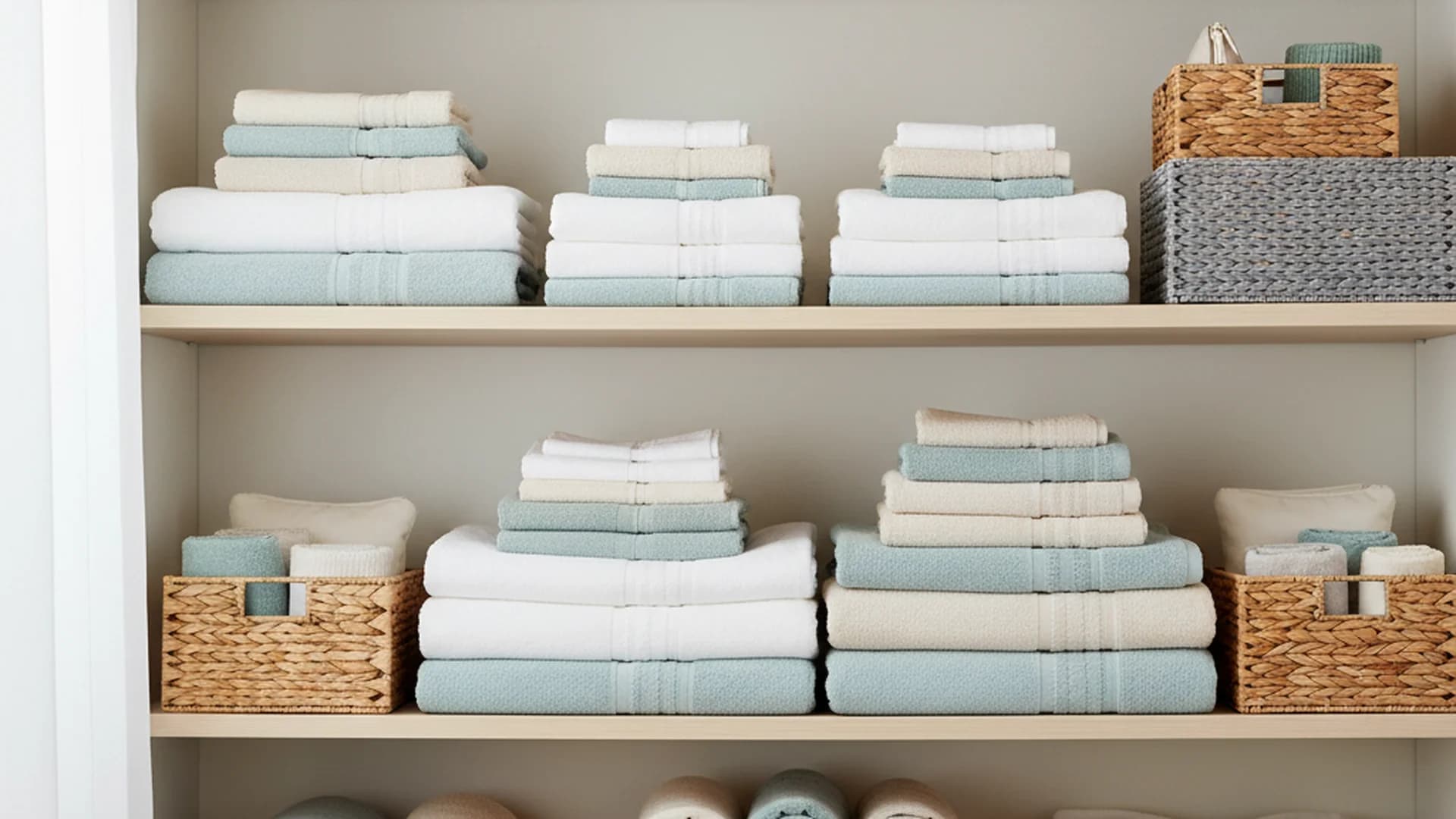
- Eye-Level Shelves (The "Prime Real Estate"): These shelves should house your daily-use items. This includes bath towels, hand towels, and current bed sheet sets.
- Lower Shelves (Bulky & Heavy): Use the bottom of the closet for heavy baskets of cleaning supplies, floor mats, or bulky items like steam mops and robe steamers.
Success: By placing the items you use daily at eye level, you reduce the "rummage factor," which is the leading cause of organized closets becoming messy within a week.
| Shelf Level | Item Category | Rotation Frequency |
|---|---|---|
| Top | Seasonal/Bulk | 2-4 times per year |
| Middle | Daily Linens | Weekly |
| Bottom | Heavy/Utility | Daily/Weekly |
| Floor | Baskets/Large | As needed |
Step 3: Master the Folding and the "Bundle Hack"
Standardizing your folding is the "pro" secret to a closet that looks like a high-end hotel. If every towel is folded to the exact same width, they will stack neatly without leaning.
The Pillowcase "Bundle Hack"
Finding a matching flat sheet, fitted sheet, and pillowcase can be a frustrating game of hide-and-seek. The "Bundle Hack" solves this:
- Fold your flat and fitted sheets into neat rectangles.
- Stack them on top of one another.
- Slide the entire stack inside one of the matching pillowcases.
This creates a self-contained "book" of bedding. When it’s time to change the bed, you simply grab one bundle and go.
Note: For those who struggle with fitted sheets, remember that the secret lies in tucking the four corners into one another to create a uniform rectangle before folding.
Step 4: Hardware and 2026 Aesthetic Trends
In 2025-2026, organization is leaning into "Quiet Luxury"—moving away from cheap, colorful plastic and toward natural, sustainable materials.
Shelf Dividers vs. Baskets
While wicker baskets are a classic organize linen closet idea, they can sometimes hide clutter.
- Clear Acrylic Dividers: These are excellent for towel stacks. They keep the stacks upright and prevent them from merging into one another, but they allow you to see exactly how many clean towels you have left.
- Sustainable Materials: Look for water hyacinth or bamboo bins for items that don't stack well, such as washcloths or "spa" accessories.
Sensory and Smart Upgrades
- Sensory Lighting: Many linen closets are dark and deep. Installing USB-rechargeable, motion-sensor LED strips is now a standard recommendation. The light turns on automatically when the door opens, making it easier to distinguish between "Off-White" and "Cream" sheets.
- Smart Labels: Use QR code labels (like Elephant Trax). A quick scan with your phone can tell you that "Bin A" contains the King-sized linen sheets for the Master Bedroom, saving you from unfolding everything to check the size tag.
Tip: To prevent that classic "musty closet" smell, avoid overfilling. Leave about 20% of each shelf empty to allow for airflow between fabrics.
Real-World Examples of Organized Success
Example 1: The Busy Family Closet
The Miller family had three children and a linen closet that was a mountain of mismatched towels. By implementing the "color-coding" system—where each child had their own towel color (Blue, Green, and Grey)—they eliminated the "Who used my towel?" arguments and made it easy for the kids to put their own laundry away in the correct designated "Zone."
Example 2: The Small Apartment Solution
James, living in a studio with no linen closet, used a "Bathroom Nook" approach. He installed high-quality floating bamboo shelves above the toilet for towels and used under-bed rolling bins for his two sets of sheets. This proved that you don't need a dedicated closet to stay organized.
Example 3: The Guest Room Pro
A professional host used the "Bundle Hack" combined with QR labels. When guests arrived, they didn't have to ask for anything; the host simply pointed them to the "Guest Bundle" in the armoire, which contained everything from the duvet cover to the face cloth, all in one neat pillowcase package.
Common Mistakes to Avoid
- Storing Damp Items: Never put a "mostly dry" towel back in the closet. The lack of airflow will lead to mildew that can spread to every other item in the closet.
- Using Opaque Bins for Everything: If you can't see it, you'll forget you own it. This leads to "duplicate buying," where you purchase a new set of sheets because you couldn't find the old ones.
- Ignoring the Door: The back of the door is prime real estate. Over-the-door organizers are perfect for storing extra toilet paper, light bulbs, or even narrow rolls of guest towels.
- Vacuum-Sealing for Too Long: While vacuum bags save space, natural fibers need to breathe. If you vacuum-seal a down comforter for more than six months, you risk damaging the loft of the feathers permanently.
Frequently Asked Questions
How many towels does one person actually need?
How do I prevent my closet from smelling musty?
Should I organize by category or by room?
Where should I put my linen closet if I don't have one?
Conclusion
Learning how to organize a linen closet is a rewarding project that pays dividends every morning when you reach for a fresh, neatly folded towel. By applying the "Edit, Sort, Store" philosophy and embracing the 3-Set Rule, you can transform a chaotic space into a streamlined system that supports your home's wellness. Remember, the goal isn't just a "pretty" closet—it's a functional one that saves you time and reduces stress.
Success: Once your closet is organized, you’ll likely find that you spend 50% less time looking for matching sets and 100% more time enjoying your home.
Cleaning that keeps score
Every task earns points, every streak multiplies them, and Premium adds a household leaderboard plus a monthly Dustagorgon to beat.
- Free forever
- 30 badges to earn
- Up to 6 in a household
No card needed. Set up your rooms in a couple of minutes.