In this article
What you’ll learn
- Use the "75% Rule" to prevent overcrowding and maintain easy access.
- Organize by supply type rather than hobby to minimize tool duplication.
- Implement a zone-based system (Primary, Secondary, and Deep Storage).
For many of us, the act of creation is a sanctuary. However, when your workspace is buried under a mountain of tangled yarn, mismatched buttons, and dried-up glue sticks, that sanctuary can quickly become a source of stress. Learning how to organize craft supplies is not just about aesthetics; it is about reclaiming your mental space.
When your environment is tidy, your brain can easily enter a "flow state," that magical psychological zone where time disappears and creativity peaks. Conversely, a cluttered desk creates "visual noise" that competes for your attention. In this guide, we will explore the best way to organize craft supplies, ensuring your materials are always ready when inspiration strikes.
The Foundation: The "Pull Everything Out" Phase
Before you buy a single acrylic bin or label maker, you must confront the volume of your collection. Inspired by the KonMari method, professional organizers insist that the first step in how to organize craft supplies is a total purge.
Empty every drawer, closet, and bin onto a central floor space. Seeing the "true volume" of your stash is often a wake-up call. Many crafters discover they have been holding onto "guilt supplies"—materials for hobbies they no longer enjoy but keep because they spent money on them.
Tip: If you haven't touched a specific craft in over two years, consider donating those supplies to a local school or community center. Freeing up physical space often frees up "creative energy" for the projects you actually love.
Establishing a Zone-Based System
The most efficient way to maintain a creative space is to organize by frequency of use. Instead of shoving everything into the nearest cabinet, categorize your items into three distinct zones.
The Primary Zone (Within Arm’s Reach)
This area is your "active" workspace. It should house the tools you use every single time you sit down.
- Daily Tools: Scissors, rulers, favorite pens, and basic adhesives.
- Current Projects: Use a dedicated tray or small bin for the specific materials you are using for your active work-in-progress (WIP).
- Aesthetic Display: Since 2025 trends favor "Cluttercore but organized," consider using a pegboard here to display your most beautiful tools as functional art.
The Secondary Zone (Shelves and Drawers)
This zone is for bulk items and supplies you use frequently but not every day.
- Supply Type: Experts recommend the best way organize craft supplies is by type (e.g., all adhesives together) rather than by hobby. This prevents you from owning five pairs of fabric shears when one pair would suffice for multiple crafts.
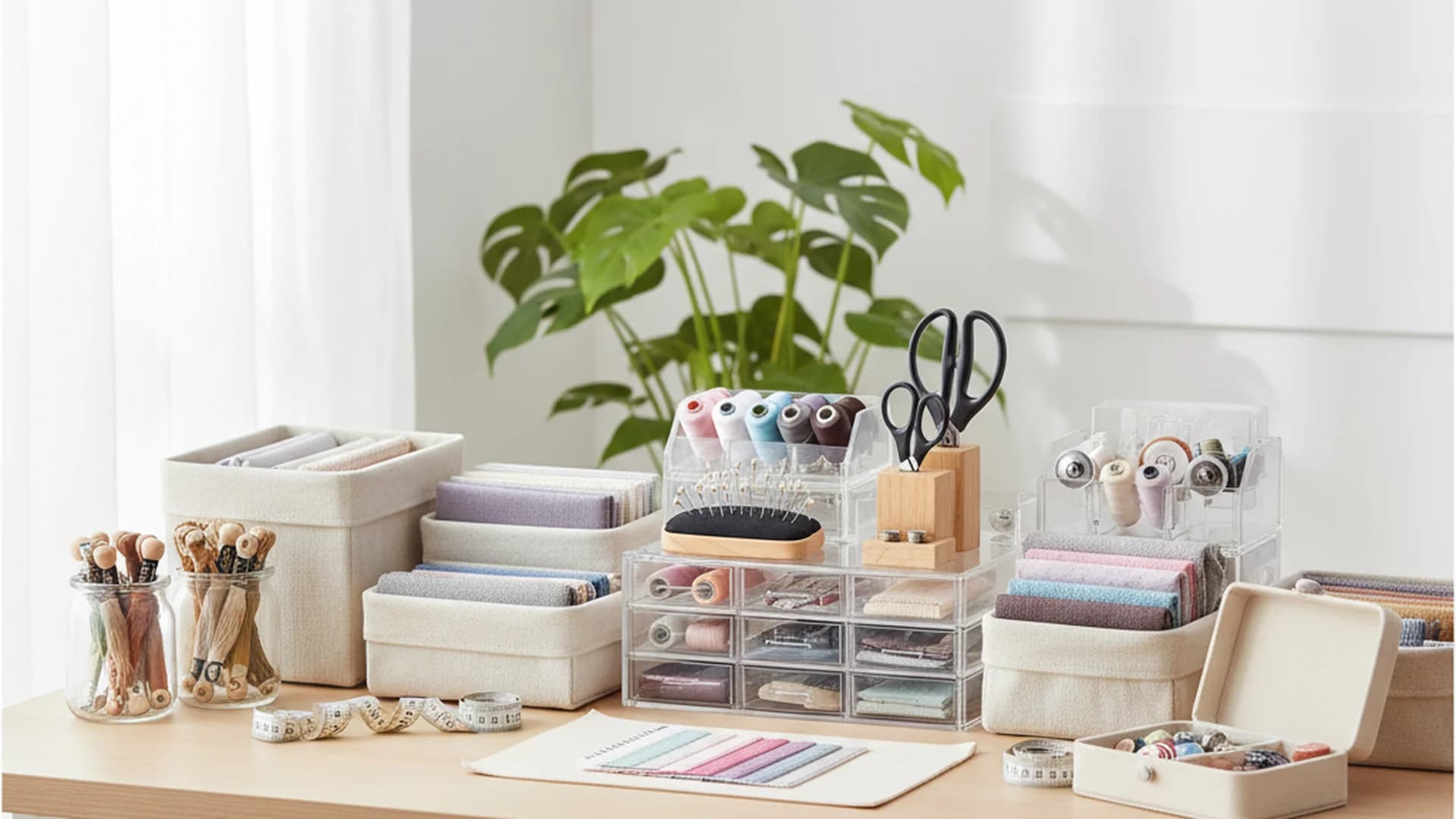
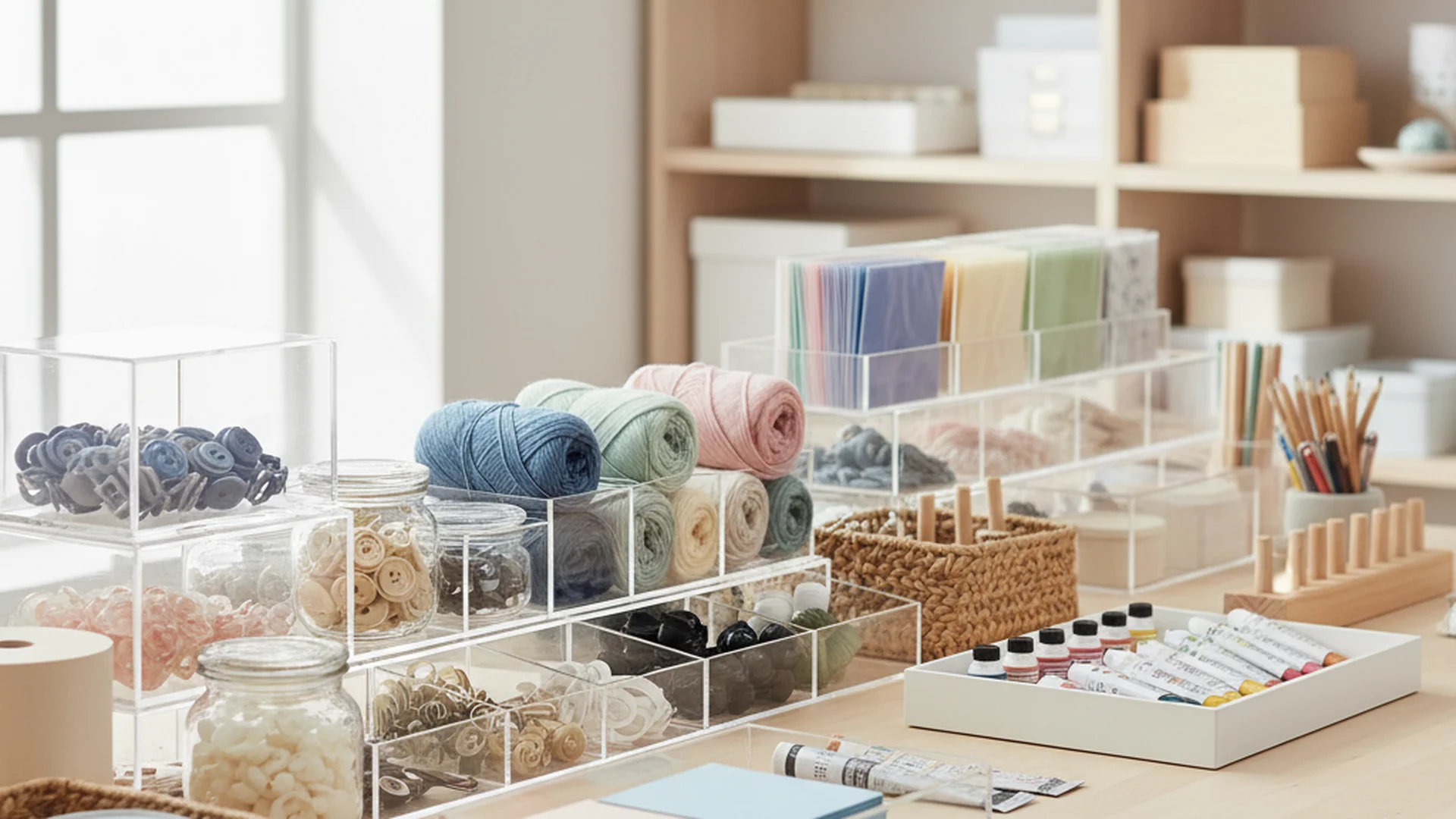
- Transparent Storage: Use clear bins so you can visually scan your inventory without opening every lid.
Deep Storage (Closets and High Shelves)
This is for seasonal items (like holiday wreath-making supplies) or materials for hobbies you only revisit once a year. These items can be kept in opaque, heavy-duty bins, provided they are clearly labeled.
Note: The "75% Rule" is vital here. Never fill a container more than 75% full. This leaves breathing room for new additions and ensures you can pull items out without causing a landslide.
Real-World Examples of Effective Organization
To help you visualize these concepts, let’s look at three common scenarios.
Example 1: The Small Apartment Transformation
Sarah, a jewelry maker in a 500-square-foot studio, struggled with "craft creep." She implemented a vertical system using an over-the-door shoe organizer for her beads and wires. By using a multi-tiered rolling cart as her primary zone, she could wheel her entire "studio" into a closet when guests arrived.
Example 2: The Multi-Hobby Hybrid Zone
James practices both woodworking and leathercraft. Instead of having two separate toolkits, he created a "Master Cutting Station." By grouping all rotary cutters, X-Acto knives, and self-healing mats in one zone, he saved 15% of his workspace and eliminated the need for duplicate cutting tools.
Example 3: The Sustainability-Focused Scrap Buster
Lila, a "Junk Journaler," uses a dedicated "scrap system." She sorts paper scraps by color into slim rainbow drawers. This ensures that even the smallest sliver of paper is used, supporting the 2026 trend of zero-waste crafting.
Modern Storage Solutions and Trends
As we move into 2026, the world of craft organization is becoming more tech-savvy and aesthetic-focused.
Digital Inventory Apps
One of the biggest leaks in a crafter's budget is duplication. Research shows crafters without an inventory system waste up to 20% of their budget on items they already own.
- Cora: Perfect for quilters to track fabric yardage.
- Thread Tracker: Ideal for embroidery and cross-stitch enthusiasts.
- PaintRack: A must-have for miniature painters to track acrylic shades via barcode scanning.
"Grandmacore" and Aesthetic Storage
There is a massive resurgence in "heirloom crafts" like needlepoint and crochet. This has led to a demand for aesthetic wood organizers. Instead of plastic, many crafters are opting for vintage-style thread cabinets and wooden spool holders that fit the "Grandmacore" aesthetic.
Micro-Storage for Miniatures
With the boom in "Book Nooks" and tiny clay food, micro-storage is essential. Stackable jewelry bead boxes are being repurposed for non-jewelry items like tiny gears, dollhouse accessories, and specialized clay tools.
| Storage Method | Best For | Pros | Cons |
|---|---|---|---|
| Pegboards | Tools & Washi Tape | High visibility, saves desk space | Can look cluttered if not curated |
| Clear Bins | Bulk supplies | Easy to find items, stackable | Requires a shelf system |
| Rolling Carts | Small spaces | Mobile, versatile | Limited weight capacity |
| Comic Boards | Fabric storage | Prevents wrinkles, looks like a library | Takes time to "bolt" the fabric |
Common Mistakes to Avoid
Even with the best intentions, it is easy to fall into organizational traps. Here is what to watch out for:
- Buying Storage Before Purging: This is the #1 mistake. You often end up with bins you don't need for items you should have discarded. Always declutter first.
- Over-Sorting: Dividing items into categories that are too small (e.g., "Blue 5mm Round Beads" vs. "Blue Beads") makes the system impossible to maintain. Start broad.
- The "One-Time" Mindset: Organization is a habit. Professionals recommend a 5-minute "reset" at the end of every session to prevent the dreaded "explosion" effect.
- Storing Everything Out of Sight: Remember: out of sight, out of mind. If you hide your supplies behind opaque cabinet doors, you are significantly more likely to overbuy.
Warning: Never store light-sensitive materials, such as certain fabrics or alcohol markers, in direct sunlight, even if you are using transparent bins. UV rays will fade your supplies over time.
Frequently Asked Questions
How do I organize a craft space in a tiny apartment?
Should I organize by color or by craft type?
How do I prevent my fabric from getting wrinkled in storage?
What is the best way to track what I have so I don't overbuy?
Conclusion
Mastering how to organize craft supplies is a journey, not a destination. By implementing a zone-based system, utilizing modern inventory tools, and adhering to the 75% rule, you can create a workspace that fuels your passion rather than draining your energy. Whether you are embracing the "Cluttercore" aesthetic of 2026 or sticking to a minimalist setup, the goal remains the same: a space where your tools are ready and your mind is clear.
Success: A well-organized craft room can save you up to 20% on your annual supply budget and significantly increase your creative output by reducing setup time.
Cleaning that keeps score
Every task earns points, every streak multiplies them, and Premium adds a household leaderboard plus a monthly Dustagorgon to beat.
- Free forever
- 30 badges to earn
- Up to 6 in a household
No card needed. Set up your rooms in a couple of minutes.