In this article
What you’ll learn
- Use the Zone System to prioritize accessibility for seasonal items.
- Implement uniform heavy-duty hangers to reduce visual clutter and protect garments.
- Leverage the back of the door and vertical space to double your storage capacity.
Entering your home should feel like a relief, not a chore. Yet, for many of us, the entryway closet is a chaotic "catch-all" where jackets go to disappear and shoes pile up in a disorganized mountain. If you have ever struggled to find your favorite trench coat during a morning rainstorm, you know the frustration. Learning how to organize coat closet spaces effectively isn't just about aesthetics; it is about reclaiming your time and streamlining your daily transitions.
In 2025, the way we view home organization has shifted. We no longer just want "neatness"—we want efficiency and "quiet luxury." Whether you are dealing with a tiny reach-in closet or a larger hallway space, these professional strategies will help you master the best way organize coat closet layouts for long-term success.
The Value of an Organized Entryway
Before we dive into the "how," let’s look at the "why." Your coat closet is often the first thing a guest sees and the last thing you interact with before leaving for work. This isn't just a trend; it's a reflection of our collective need for intentional home management.
Furthermore, an organized closet significantly impacts your home's "perceived value." Closet systems remain one of the most requested projects among renovation professionals. By organizing this small space, you are essentially investing in your home's equity.
Note: Research shows that the average person only wears about 25% of the items in their closet. The other 75% is often out-of-season gear or items that should be donated.
Step 1: The Great Declutter (The Foundation)
You cannot organize clutter. The first step in how to organize coat closet spaces is a total purge. Empty the entire closet. Every coat, shoe, and stray umbrella needs to come out so you can see the bare bones of the space.
The "Hanger Turn" Trick
Once you put everything back (later in the process), try this expert hack: Turn all your hangers backward. When you wear a coat and put it back, turn the hanger forward. At the end of the season, donate any coat whose hanger is still facing backward.
The One-In, One-Out Rule
To prevent your closet from becoming overstuffed again, implement a strict "one-in, one-out" policy. If you buy a new winter parka, an old one must be donated or sold.
Warning: Avoid buying organizational bins before you have decluttered and measured. "Baskets don't organize; systems do."
Step 2: Implementing the "Zone System"
Professional organizers use the "Zone System" to ensure that the items you need most are the easiest to reach. This is arguably the best way organize coat closet interiors to maximize efficiency.
| Zone | Placement | Content |
|---|---|---|
| Zone 1 | Eye Level (The Prime Zone) | Current season's most-worn coats and bags. |
| Zone 2 | Lower Level (The Access Zone) | Kids' gear, frequently used shoes, and pet supplies. |
| Zone 3 | High Shelves/Back (The Storage Zone) | Off-season items, guest coats, and bulky sports gear. |
Real-World Example: The "Morning Rush" Setup
In a busy family household, Zone 1 should be reserved for the three jackets worn most often that week. By placing these front-and-center, you eliminate the need to "dig" through the closet at 7:30 AM, saving an estimated 5–10 minutes of searching time.
Step 3: Maximizing Vertical and Door Space
Most people treat the floor and the single clothing rod as the only usable areas. This is a mistake. To truly master organize coat closet ideas, you must think vertically.
The Power of the Second Rod
If your closet ceiling is high enough, install a second clothing rod. Use the top rod for long adult coats and the bottom rod for shorter kids' jackets or vests. This effectively doubles your hanging capacity.
The Back-of-the-Door Secret
The back of the door is "prime real estate" that usually goes to waste.
- Over-the-door organizers: Perfect for umbrellas, scarves, and gloves.
- Command hooks: Ideal for dog leashes, hats, or reusable grocery bags.
Tip: Use heavy-duty wooden hangers for heavy wool coats to maintain their shape, and slimline velvet hangers for light jackets to save horizontal space.
Step 4: 2025 Design Trends - "Quiet Luxury" and Tech
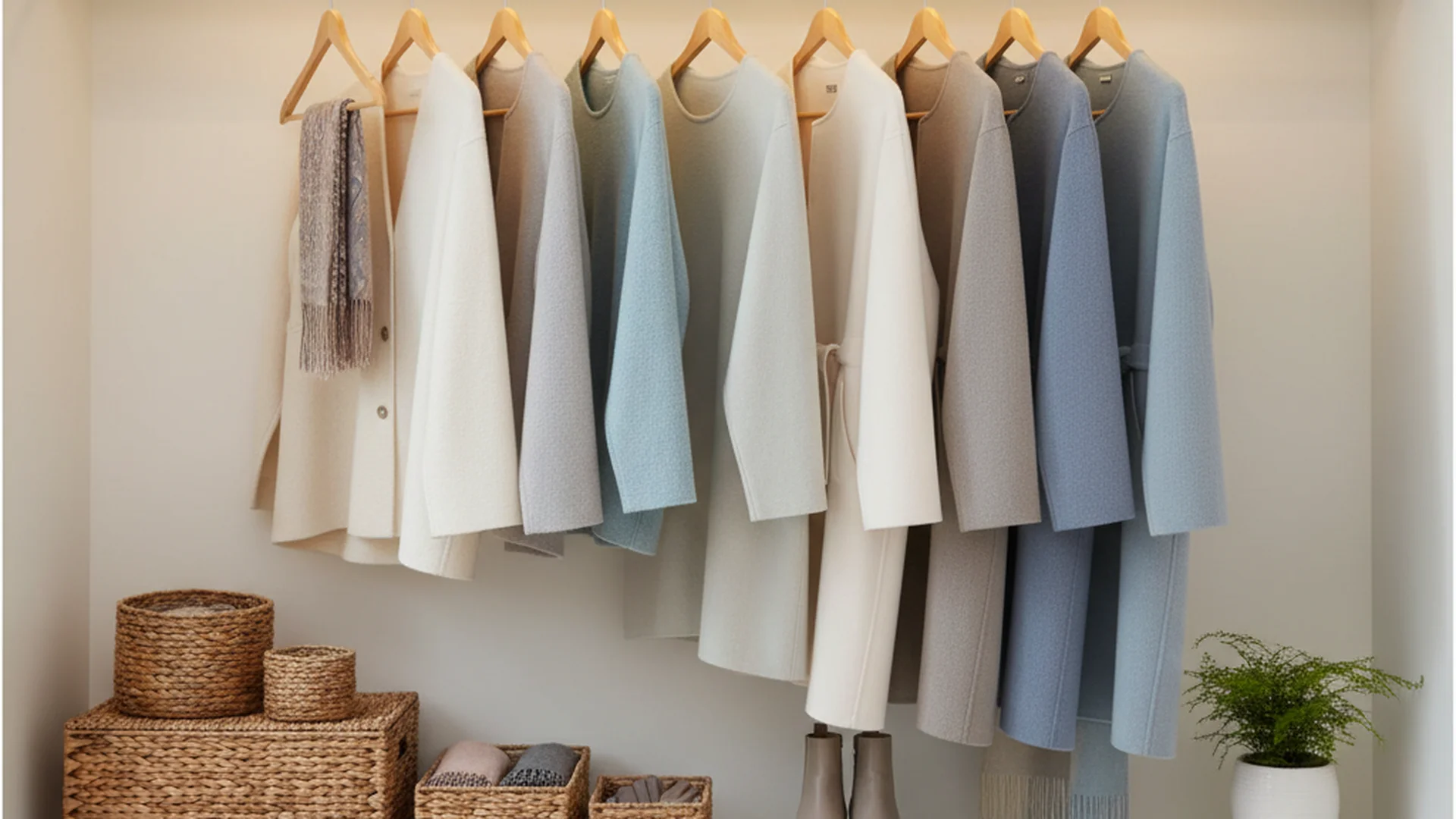
Organization in 2025 is moving toward a minimalist, high-end aesthetic known as "Quiet Luxury." It’s not just about being tidy; it’s about the closet looking like a curated boutique.
Tech-Integrated Closets
Smart closets are no longer a futuristic dream. Adding motion-sensor LED strip lighting under shelves or inside the door frame is a 2025 standard. It provides instant visibility and a sense of luxury every time you open the door.
Micro-Organization for Tech
Modern entryway closets now include dedicated "tech spots."
- AirTag Shelves: Small, labeled dishes for keys and bags equipped with AirTags.
- Smart Umbrella Charging: A small corner for tech-enabled umbrellas that alert your phone if rain is in the forecast.
Material Selection
Swap plastic bins for natural materials. Experts currently recommend:
- Seagrass or wicker baskets for a soft, organic look.
- Dark wood (Acacia or Walnut) shelving systems.
- Embossed or hidden minimalist labels.
Step 5: Handling "The Messy Stuff" (Shoes and Moisture)
The bottom of the closet is where organization often goes to die. Shoes create "shoe mountains" and wet gear causes odors.
Dealing with Wet Gear
Utilize a raised boot tray. For an extra touch of 2025 style, fill the tray with river stones. This allows water to drain away from the soles of your boots, preventing salt damage and allowing for better airflow.
The Elevated Shoe Rack
Never let shoes sit directly on the floor. Use a tiered shoe rack that is elevated at least 2 inches off the ground. This makes it significantly easier to vacuum or swiffer the closet floor, ensuring the space stays clean and allergen-free.
Success: An organized floor prevents "visual noise," making even a small closet feel twice as large.
Common Mistakes to Avoid
Even with the best intentions, it’s easy to fall into these common organization traps:
- Buying Bins Before Planning: As mentioned, buying bins first usually leads to a mismatch of sizes that wastes space.
- Storing Off-Season Gear Front-and-Center: Keeping a heavy parka in the main closet during July takes up 40% of your usable space. Always move off-season items to the highest shelf or under-bed storage.
- Ignoring the Door: Leaving the back of the door empty is like leaving a cabinet unused.
- Storing Chemicals Improperly: If you store cleaning supplies in your coat closet, ensure they are in a specific "Zone" on a high shelf to prevent chemicals from damaging coat fabrics.
- The "Bigger Closet" Fallacy: Most people don't need a bigger closet; they need to remove items that don't belong, like old luggage or half-empty paint cans.
Real-World Example: The "Mini-Mudroom" Conversion
In many 2025 home designs, owners are removing closet doors entirely. By installing a built-in bench with hooks above it and baskets below, the closet is transformed into a "mini-mudroom" niche. This integrates the storage into the hallway decor and forces you to keep the area tidy since it is always on display.
Frequently Asked Questions
How do I fit 10+ coats into a tiny reach-in closet?
What should I do with wet shoes and umbrellas?
How often should I declutter my coat closet?
Is it okay to store cleaning supplies in the coat closet?
Conclusion
Mastering how to organize coat closet spaces is one of the most impactful home projects you can undertake. By implementing the Zone System, embracing 2025's "Quiet Luxury" trends, and avoiding common pitfalls like "shoe mountains," you turn a chaotic storage spot into a streamlined part of your daily routine. Remember, a well-organized closet doesn't just hold your clothes—it holds the key to a stress-free morning.
Success: Following this guide will keep your entryway functional, stylish, and welcoming for years to come.
Cleaning that keeps score
Every task earns points, every streak multiplies them, and Premium adds a household leaderboard plus a monthly Dustagorgon to beat.
- Free forever
- 30 badges to earn
- Up to 6 in a household
No card needed. Set up your rooms in a couple of minutes.