In this article
What you’ll learn
- The One In One Out (OIOO) rule is a maintenance strategy to prevent clutter creep.
- Applying a "Like-for-Like" strategy ensures space budgets remain balanced.
- Modern applications include digital decluttering and sustainable consumerism.
In the world of home organization, few principles are as deceptively simple yet transformative as the one in one out rule. Whether you are a dedicated minimalist or someone struggling to reclaim your kitchen counters from an influx of "stuff," this rule serves as the ultimate gatekeeper for your home. By establishing a strict policy where every new arrival necessitates a departure, you shift your mindset from mindless consumption to intentional living.
In this guide, we will explore the evolution of the one in one out rule into a sophisticated tool for 2025 and 2026, covering everything from its psychological benefits to its global applications in policy and sustainability.
What Is the One In One Out Rule?
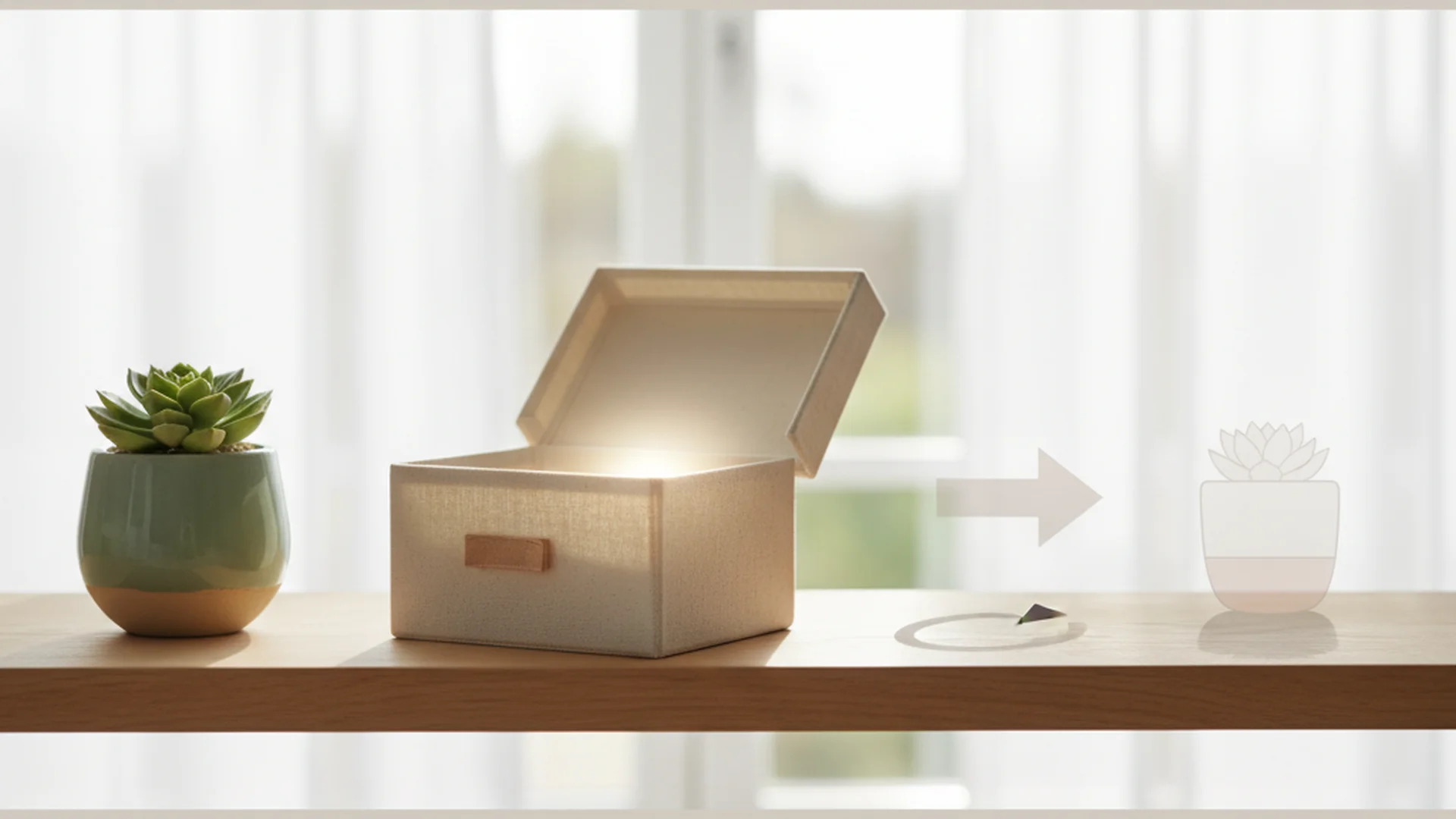
At its core, the one in one out rule (often abbreviated as OIOO) is a maintenance strategy. It dictates that for every new item you bring into your home, an existing item must leave. Experts categorize this as a "status quo" strategy. While it won't necessarily help you declutter a home that is already overwhelmed, it is the single most effective way to prevent "clutter creep"—the slow, silent accumulation of items that eventually leads to a disorganized living space.
Recent studies in environmental psychology have highlighted a direct link between physical clutter and elevated cortisol levels. By implementing OIOO, you aren't just tidying a room; you are actively managing your mental health by reducing the decision fatigue associated with overflowing closets and crowded cabinets.
Note: The OIOO rule is most effective when your home has already reached a "baseline" level of organization that you are happy with.
The Evolution of the Rule in 2025–2026
As we move through 2025 and into 2026, the one in one out rule has evolved beyond simple house cleaning. It has become a pillar of the "Selective Consumer" era. With a 200% surge in purposeful fashion trends, consumers are no longer buying for the sake of volume. Instead, they are using the OIOO rule to justify investing in high-quality, long-lasting pieces over the transient nature of fast fashion.
Global and Legislative Impacts
Interestingly, the principle has moved from the closet to the cabinet office. The European Commission currently utilizes a "One In, One Out" principle to ensure that any new regulatory burden for businesses is offset by removing an equivalent existing burden. Even in international relations, a pilot program between the UK and France in late 2025 utilized an OIOO mindset for asylum processing to maintain balance and fairness.
On a commercial level, new 2026 Extended Producer Responsibility (EPR) laws in California and parts of Europe are forcing manufacturers to adopt this mindset. Companies are now increasingly responsible for the "out" phase of a product's lifecycle, encouraging a circular economy where new sales are tied to the recycling of old units.
Core One In One Out Rule Tips for Success
To make this rule work for you, it is important to apply it with nuance. Simply swapping a new refrigerator for a used postage stamp won't keep your home organized. Here are the essential one in one out rule tips to ensure your system is robust:
1. The "Like-for-Like" Strategy
To maintain the physical balance of your home, the swap should occur within the same category. If you buy a new pair of jeans, an old pair of jeans should be donated or recycled. This maintains your "space budget." If you start swapping kitchen gadgets for t-shirts, you will eventually find your kitchen empty and your closet exploding.
2. Audit Your Space Budgets
Instead of counting every individual item, count your storage capacity. If you have ten hooks for coffee mugs and they are all full, your "space budget" for mugs is at its limit. To bring in a new mug, one hook must be cleared. This visual approach makes the rule much easier to follow for children and visual organizers.
3. Establish Designated "Drop Zones"
The biggest hurdle to OIOO is the "later" procrastination. You bring the new item in, but the old item sits on the counter for three weeks. To combat this, create a permanent "Out Box" near your front door or in your garage. The moment the new item enters the house, the old item goes into the box.
Tip: Keep a "Donation Station" in the bottom of your wardrobe. When you buy a new clothing item, immediately pull the "out" item and place it in the bag.
Real-World Examples of OIOO in Action
To understand how this looks in daily life, let's look at three common scenarios where the one in one out rule provides immediate relief.
Example 1: The Kitchen Gadget Enthusiast
Imagine you see a high-end air fryer on sale. Your counters are already full. Using OIOO, you look at your appliances. You realize you haven't used your bulky bread maker in two years. By selling or gifting the bread maker, you "earn" the space for the air fryer. The result? No new clutter, and a tool you will actually use replaces one that was just gathering dust.
Example 2: The Digital Declutter
The rule applies to your smartphone too. In 2026, digital wellness is at the forefront of productivity. For every new social media app or game you download, delete one that you haven't opened in thirty days. If you follow a new "inspirational" influencer, unfollow one that no longer resonates with your goals.
Example 3: Natural Attrition for Kids
Teaching children the OIOO rule is a masterclass in empathy and resource management. When a child receives a new toy for their birthday, they choose one older toy to "gift" to another child or a local charity. This prevents the toy box from overflowing and teaches the value of sharing.
| Category | "In" Item | "Out" Item (Example) | Exit Route |
|---|---|---|---|
| Wardrobe | New Winter Coat | Old coat with broken zipper | Textile Recycling |
| Kitchen | Modern Blender | Old, leaking food processor | E-waste Center |
| Digital | New Productivity App | Unused calorie tracker | Delete/Uninstall |
| Kids | New Building Blocks | Outgrown toddler puzzles | Donation |
The Ultimate One In One Out Rule Checklist
If you are ready to implement this system, use the following one in one out rule checklist to stay on track during your next shopping trip.
- Identify the "Space Budget": Does the new item have a dedicated shelf, hook, or hanger?
- Select the "Out" Item: Find a similar item that is worn out, unused, or no longer fits your current lifestyle.
- The "Joy Check": Does the new item bring more value or functionality than the one being removed?
- Determine the "Exit Route": Decide immediately if the old item is for donation, resale (eBay/Poshmark), or recycling.
- Physical Removal: Move the "out" item to your car or the "Out Box" before you unbox the new item.
Success: By following this checklist, you ensure that every purchase is intentional and that your home's volume remains stable.
Common Mistakes to Avoid
Even with the best intentions, it is easy to fall into traps that undermine the effectiveness of the one in one out rule.
The Maintenance Trap
The most frequent mistake is attempting to use OIOO to clean a house that is already messy. Remember: OIOO is for maintenance. If your guest room is currently a "doom room" filled with boxes, OIOO will only keep it in that exact state. You must perform a deep declutter first to reach a baseline, then use OIOO to protect that baseline.
Category Mismatching
As mentioned, swapping a toaster for a t-shirt leads to "category bloat." Always try to stick to "Like-for-Like" to ensure your organization systems (closet dividers, drawer organizers) continue to work effectively.
Focusing on Quantity over Quality
Don't get rid of a high-quality, essential tool just to make room for a trendy impulse buy. This leads to "consumer regret." If you can't find anything of lower value to part with, it is a sign that you don't actually need the new item.
Warning: Never use the OIOO rule as an excuse to get rid of someone else's belongings without their permission. The rule works best when adopted individually.
Advanced Strategies: The 1-In-10 Hack
If you are currently overwhelmed and OIOO feels too slow, professional organizers often recommend the 1-in-10 rule. For every new item brought into the home, ten items must leave. This aggressive strategy is used during "reduction phases" to quickly lower the volume of possessions until a manageable baseline is reached. Once you are happy with the level of items in your home, you "gear down" back to the standard one in one out rule.
Frequently Asked Questions
Does the "out" item have to be the same size?
What if I have nothing to get rid of?
How do I handle sentimental items?
Can I apply this to digital files?
Conclusion
The one in one out rule is more than just a cleaning tip; it is a lifestyle shift toward sustainability and mental clarity. As we embrace the 2026 trends of "Purposeful Style" and "Daily Habits," OIOO stands out as the most practical way to navigate a world of endless consumer options. By respecting your "space budget" and making "Like-for-Like" swaps, you can enjoy new purchases without the guilt of accumulating clutter.
Success: Implementing the OIOO rule today will lead to a more peaceful, manageable home by the end of the month. Start small, stay consistent, and watch your stress levels drop as your space opens up.
Cleaning that keeps score
Every task earns points, every streak multiplies them, and Premium adds a household leaderboard plus a monthly Dustagorgon to beat.
- Free forever
- 30 badges to earn
- Up to 6 in a household
No card needed. Set up your rooms in a couple of minutes.