In this article
What you’ll learn
- Messiness is a habit-based volume problem, not a character flaw.
- Implementing 'low-friction' storage is more effective than buying expensive bins.
- Daily micro-habits like the 'Back to One' rule prevent clutter from compounding.
We have all been there: standing in the middle of a room, overwhelmed by a sea of laundry, misplaced mail, and half-finished projects, wondering exactly how to stop being messy. For many, tidiness feels like an elusive personality trait that some people are born with, while others are destined to live in chaos. However, as a professional cleaning consultant, I can tell you that staying organized isn't about your DNA—it’s about your systems. In this comprehensive guide, we will break down the science of clutter and provide actionable steps to transform your home into a sanctuary of order.
The Hidden Cost of Clutter
Before we dive into the "how," we must understand the "why." Clutter isn't just a visual eyesore; it’s a significant drain on your mental and financial resources.
Physical clutter competes for your brain's attention. That constant low-level stimulus wears you down, leaving you less focused and more stressed. A house packed to the rafters keeps its occupants permanently on edge.
The impact also hits your wallet and your schedule:
- Time Loss: Hunting for misplaced keys, remotes and paperwork quietly eats up hours every month.
- Financial Waste: Plenty of people make "redundant purchases"—buying a tool or a spice they already own simply because they couldn’t find the original.
- Lateness: A lot of people turn up late to commitments thanks to clutter-related delays.
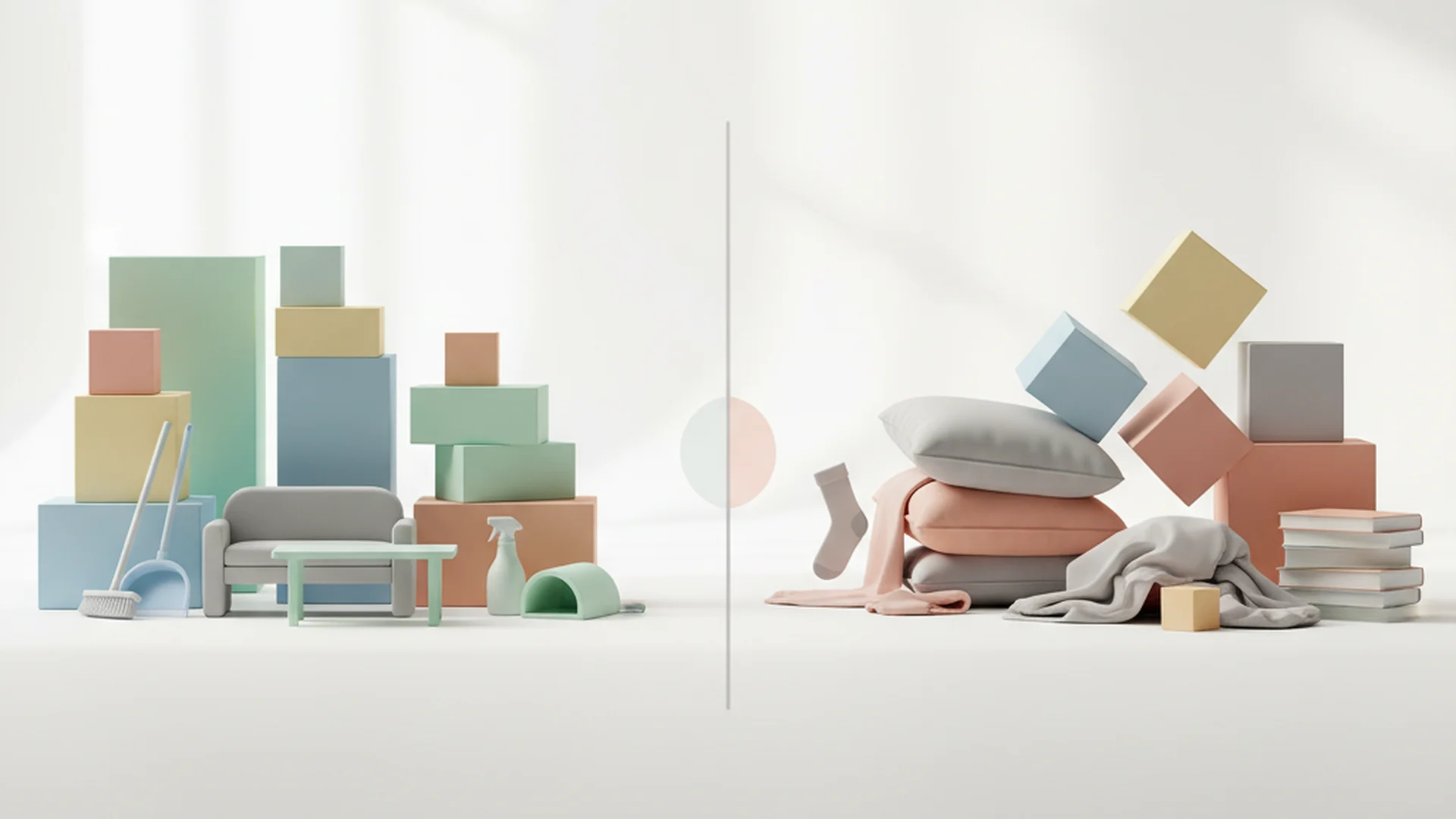
Note: Messiness is often a "volume problem" rather than a "space problem." Most people don't need a bigger house; they need fewer items or better systems for the items they have.
Expert Strategies: How to Stop Being Messy Tips
Transitioning from a "messy person" to a "tidy person" requires shifting your focus from massive cleaning marathons to small, sustainable actions. Here are the most effective strategies used by professional organizers today.
The "Back to One" Rule
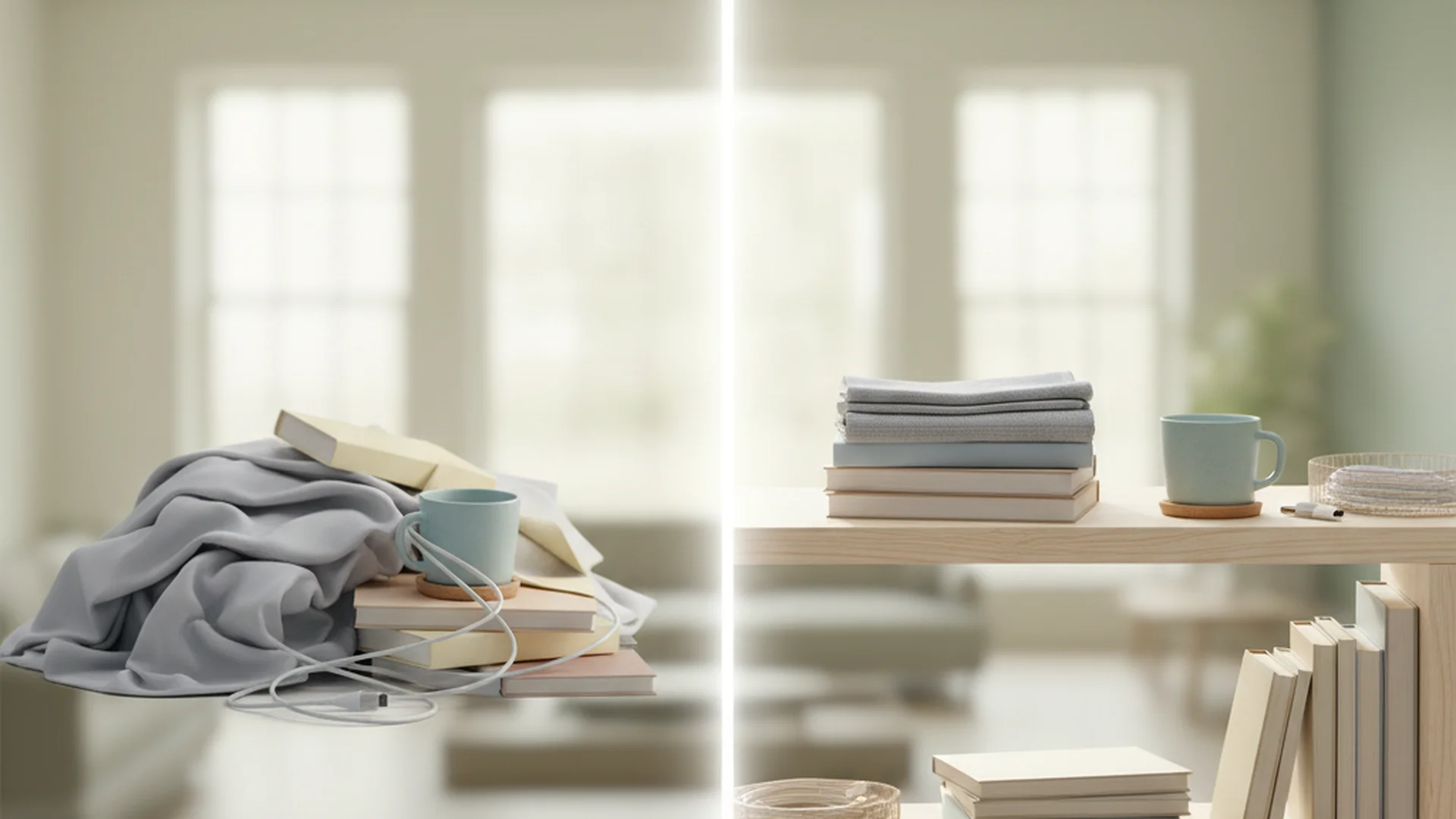
In the film industry, "back to one" means returning the set to its original starting state for the next take. You should apply this to your living room or kitchen. Every night, spend 10–15 minutes returning your primary living space to its "starting state." This prevents the "compounding mess" effect where one pile of mail attracts a stray coat, which then attracts a stack of dishes.
The 2-Minute Rule
This is the gold standard of productivity. If a task takes less than two minutes—hanging up your coat, rinsing a coffee mug, or filing a bill—do it immediately. "Delayed decisions" are the primary building blocks of clutter. When you tell yourself "I'll do that later," you are essentially giving yourself a future chore.
Desire Path Decluttering
Stop fighting your natural habits. If you always drop your mail on the kitchen island, don't try to force yourself to walk it to an office across the house. Instead, place a stylish basket or a small recycling bin exactly where the mail naturally lands. By working with your "desire paths," you reduce the friction required to stay tidy.
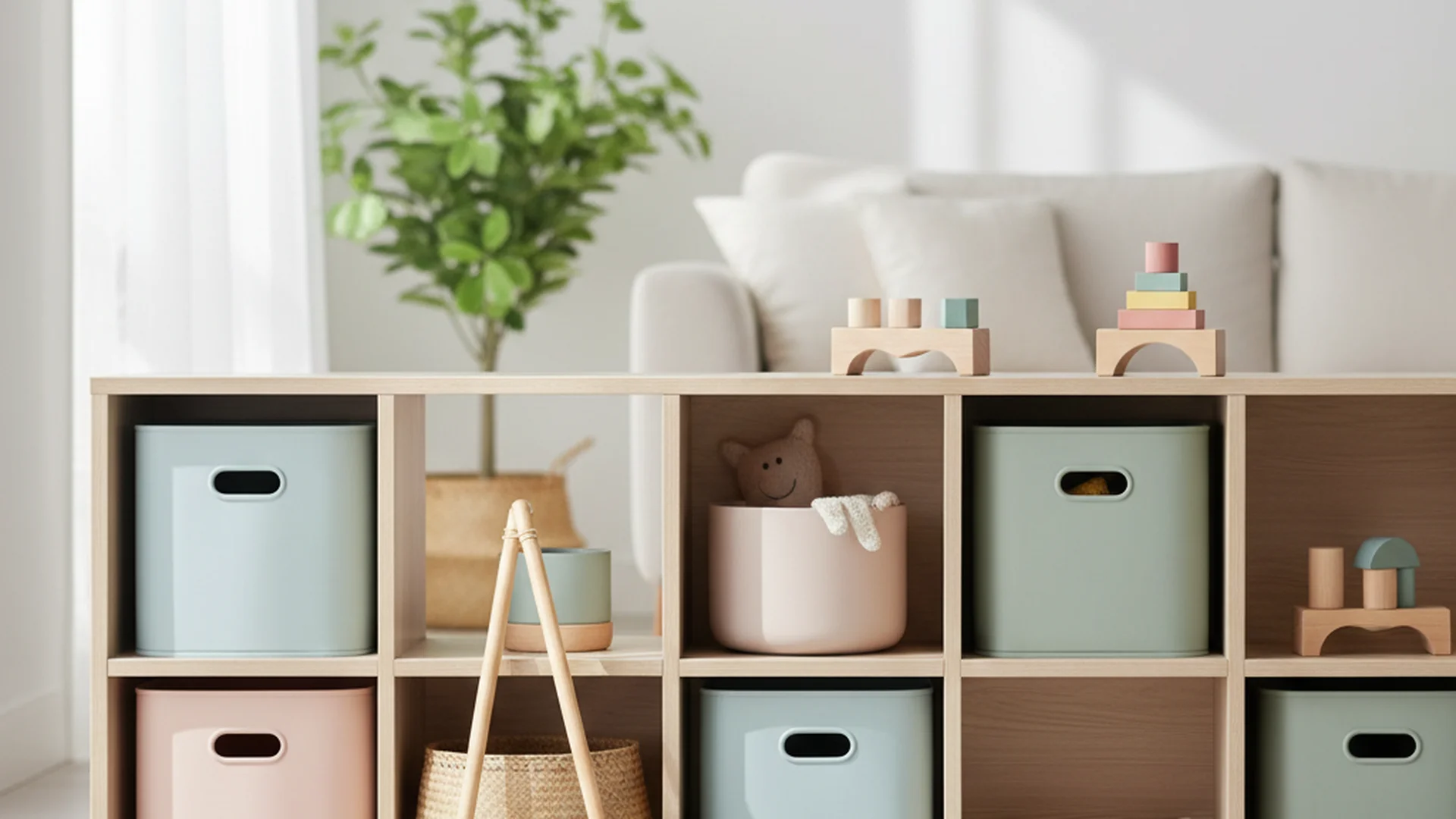
Tip: Use "one-step storage" for items you use daily. If you have to open a closet, then a box, then a lid to put something away, you probably won't do it. Use open bins or wall hooks instead.
2025–2026 Trends in Home Organization
The world of home management is evolving. In 2025 and 2026, we’ve seen a shift away from "aesthetic" organization toward "functional" and "sustainable" systems.
AI-Assisted Organizing
Artificial Intelligence is now a primary tool for those wondering how to stop being messy. People are using AI to generate personalized 30-minute cleaning checklists or to create meal plans that utilize specific ingredients to minimize kitchen waste. By outsourcing the "thinking" part of cleaning, you can focus on the "doing."
The "Underconsumption Core" Movement
There is a massive cultural shift toward owning less. Rather than buying more plastic bins to store items you don't use, the "Underconsumption Core" trend encourages repurposing what you have and prioritizing second-hand finds. This movement focuses on the idea that you cannot organize your way out of having too much stuff.
Magnetic Maximization
With floor space becoming a premium in urban living, 2026 has seen a surge in "magnetic storage." Heavy-duty magnetic caddies are being used on the sides of refrigerators, metal doors, and even wall-mounted magnetic strips to "float" items that usually clutter countertops.
| Strategy | Focus | Benefit |
|---|---|---|
| AI Checklists | Planning | Reduces decision fatigue |
| Underconsumption | Volume | Solves the root cause of mess |
| Magnetic Caddies | Space | Clears high-traffic surfaces |
Real-World Examples of Transformation
Example 1: The Kitchen Counter Magnet
A client of mine, a busy teacher, struggled with a kitchen counter that was always covered in paperwork, keys, and chargers. Instead of trying to keep the counter clear (which failed for years), we installed a "Drop Zone" by the front door with three open baskets. By moving the "landing spot" 5 feet closer to the entrance, the counter stayed clear for the first time in a decade.
Example 2: The Two-Car Garage
A great many households cannot actually park in their garages. I worked with a family who fell into this category. By utilizing "magnetic maximization" and vertical wall tracks, we cleared the floor. The key wasn't better bins; it was getting items off the floor so the cars could actually fit.
Example 3: The ADHD "Visible" System
For those with ADHD, "out of sight" often means "out of mind." One student I consulted with couldn't keep her room clean because her clothes were hidden in dark drawers. We switched to open shelving and clear, lidless bins. Seeing her belongings allowed her to manage them without the mental hurdle of opening doors and drawers.
Success: Moving from "perfect" to "functional" is the fastest way to see results. If you can find what you need in under 60 seconds, you are winning.
Common Mistakes to Avoid
Even with the best intentions, many people fall into traps that actually make their mess worse in the long run.
- Buying Containers First: This is the most common mistake. You cannot organize clutter. If you buy bins before you declutter, you are simply "organizing" garbage. Always purge your items before you buy a single storage box.
- The "All-Day" Cleaning Marathon: Burning yourself out on a 10-hour Saturday cleaning spree is a recipe for failure. That burst of "New Year" energy nearly always fades within a few weeks. Focus on 15-minute micro-habits that you can maintain for years.
- The "Just in Case" Trap: Keeping items for a hypothetical future event creates "decisional paralysis." If an item costs less than $20 and can be replaced in less than 20 minutes, let it go.
- Chasing Pinterest Perfection: Your home is a living space, not a museum. Aim for "functional tidiness"—a state where the home is comfortable and easy to reset.
Warning: Never mix bleach with ammonia-based cleaners while scrubbing down a messy room. Always ensure proper ventilation when using chemical cleaners.
Frequently Asked Questions
Is messiness a personality trait or a habit?
Why can’t I keep my room clean for more than a few days?
How do I stop being messy when I have ADHD?
Does being messy mean I’m lazy?
Conclusion
Learning how to stop being messy is not about a sudden personality transplant; it is about building a bridge between your current habits and a more functional environment. By implementing the 2-minute rule, respecting your desire paths, and reducing the total volume of items in your home, you can break the cycle of "rebound clutter."
Remember, the goal isn't perfection—it’s peace of mind. Start today by spending just 15 minutes bringing your main living space "back to one." You'll be surprised at how quickly these small wins accumulate into a permanently tidy home.
Success: By following the "Back to One" rule daily, you lower your stress levels and win back all the time you would otherwise lose to searching.
Cleaning that keeps score
Every task earns points, every streak multiplies them, and Premium adds a household leaderboard plus a monthly Dustagorgon to beat.
- Free forever
- 30 badges to earn
- Up to 6 in a household
No card needed. Set up your rooms in a couple of minutes.