In this article
What you’ll learn
- Wallets and the cards inside them pick up a surprising amount of bacteria.
- Different materials (leather, fabric, synthetic) require specific cleaning agents.
- Conditioning is a mandatory step for leather to prevent cracking and warping.
We touch our wallets dozens of times a day—at the grocery store, on public transit, and in restaurants—yet they are rarely included in our cleaning routines. If you are wondering how to clean wallet surfaces effectively, you aren't just looking for aesthetic tips; you are performing essential hygiene maintenance. Our wallets are often dirtier than the currency they hold, acting as a portable petri dish for bacteria and grime.
Learning the best way clean wallet interiors and exteriors can extend the life of your accessory by years while keeping your hands and pockets sanitary. In this guide, we will break down the science of wallet germs, provide step-by-step instructions for every material, and look at the eco-friendly trends shaping the 2025–2026 maintenance landscape.
Why Your Wallet is a Germ Hotspot
Before we dive into the "how," we must understand the "why." A wallet that goes everywhere with you picks up bacterial contamination along the way, potentially including Staphylococcus and E. coli. Interestingly, the cards inside are often the worst offenders — a bank card gets handled by strangers, tapped on shared terminals, and dropped into pockets and bags all day long.
Bank cards in particular pass through a lot of hands before they come back to yours. Despite that, most of us never clean a wallet until we see visible dirt. To stay healthy and keep your accessories looking professional, a regular cleaning schedule is non-negotiable.
Step 1: The Preparation (The "Empty & Shake" Rule)
Regardless of the material, you must start with a clean slate. You cannot effectively clean wallet at home settings if there are still receipts and loyalty cards blocking the corners.
- Empty Everything: Remove every coin, bill, and card.
- The Shake-Out: Turn the wallet upside down over a trash can and shake out loose debris.
- Corner Cleaning: Use a straw or a canister of compressed air to blow out lint and dust from the deep crevices of the card slots.
Tip: This is the perfect time to declutter. If you haven't used a loyalty card in six months, shred it or move it to a digital app to prevent overstuffing.
Step 2: Material-Specific Cleaning Guides
The best way clean wallet surfaces depends entirely on what the wallet is made of. Using the wrong cleaner can lead to permanent discoloration or structural damage.
Full-Grain and Genuine Leather
Leather is skin; it needs to be cleaned gently and then rehydrated.
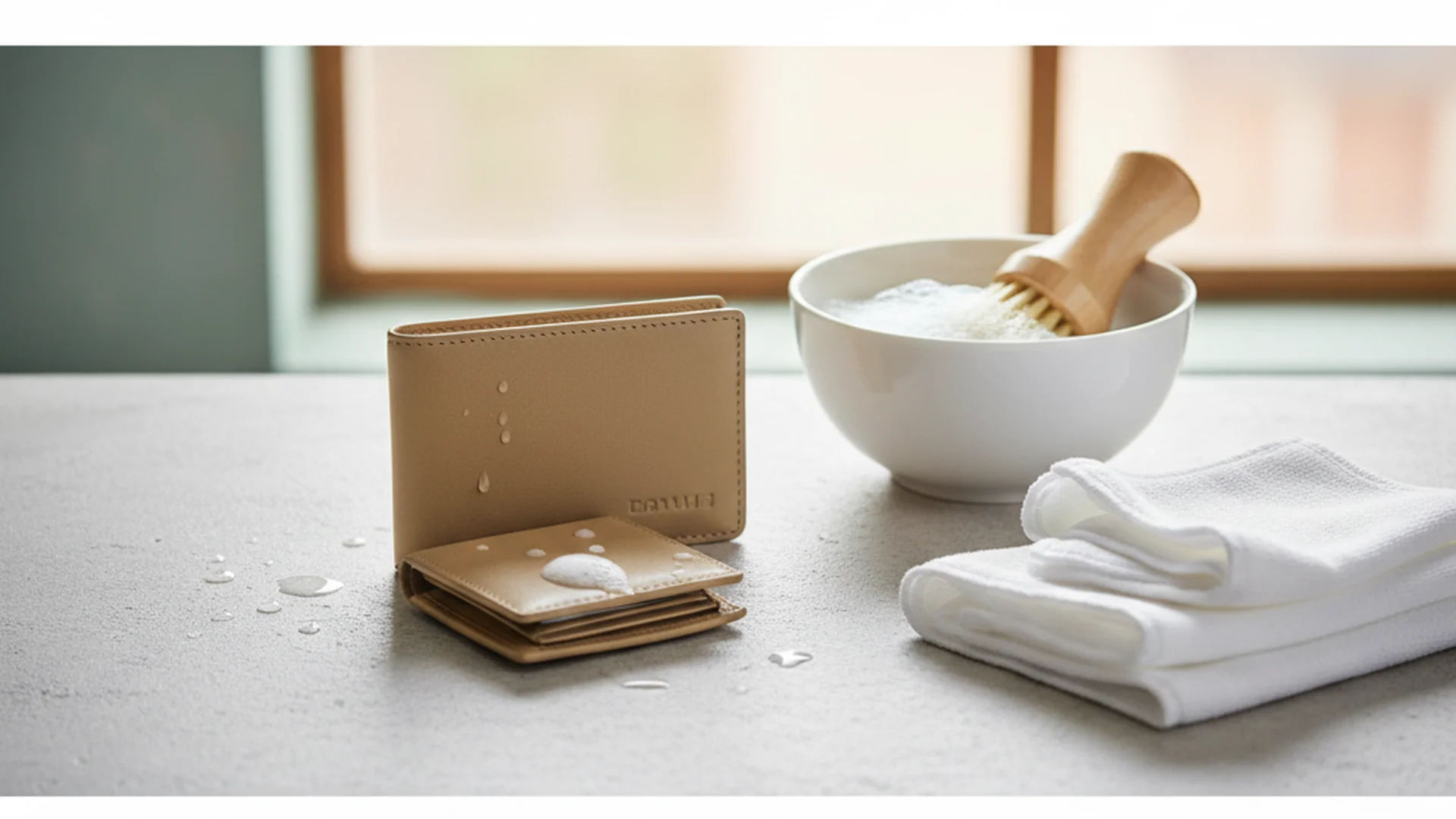
- Clean: Use a pH-balanced leather cleaner. Apply a small amount to a microfiber cloth and work in small, circular motions.
- Wipe: Use a second, slightly damp (not soaking) cloth to remove any soap residue.
- Dry: Always air dry at room temperature.
Warning: Never use a hairdryer or radiator to speed up the drying process. Intense heat causes leather to warp, shrink, and become brittle.
Fabric and Canvas Wallets
Fabric wallets are durable but act like sponges for oils and spills.
- Vacuum: Use a handheld vacuum attachment to remove fine dust from the fabric fibers.
- Spot Clean: Mix warm water with a single drop of mild dish soap. Use a soft-bristled toothbrush to scrub stains gently.
- Rinse: Blot with a cloth dipped in plain water to remove soap.
Synthetics and Recycled Plastics
With the rise of sustainable fashion, many modern wallets are made from recycled ocean plastics or vegan "leathers."
- Wipe: A simple solution of mild hand soap and water is usually sufficient.
- Caution: Avoid abrasive sponges, as synthetic surfaces can develop micro-scratches that trap future dirt and bacteria.
| Material Type | Recommended Cleaner | Drying Method |
|---|---|---|
| Leather | pH-Balanced Soap | Air Dry Only |
| Canvas/Fabric | Mild Dish Soap | Air Dry |
| Vegan Leather | Plant-Based Cleaner | Air Dry |
| Metal/RFID | Alcohol Wipe (70%) | Instant Wipe |
Step 3: The Restoration (Conditioning)
If you are cleaning a leather wallet, the job isn't done until you've conditioned it. Cleaning agents strip away the natural oils that keep leather supple.
To restore the material, apply a high-quality conditioner (like Leather Honey or Bick 4). Apply a thin layer, let it sit for 20 minutes, and buff away the excess with a clean cloth. This prevents the "jerky-like" texture that occurs when leather dries out and cracks.
Success: A well-conditioned wallet will develop a beautiful patina over time rather than looking worn-out and damaged.
Real-World Examples of Wallet Care
Example 1: The Coffee Shop Spill
Imagine you are at a cafe and spill a latte on your canvas wallet. The instinct is to throw it in the washing machine. Don't. The agitation of a washing machine can destroy the internal stiffeners (cardboard or plastic) that help the wallet hold its shape. Instead, blot the liquid immediately and use the "Step 2" fabric cleaning method described above.
Example 2: The Sudden Downpour
You get caught in a rainstorm, and your high-end leather wallet is soaked. The correct response is to pat it dry with a soft cloth immediately and let it air dry in its natural shape. Do not "unfold" it to dry, as it may dry in a warped position. Once dry, apply conditioner to restore the oils washed away by the rain.
Example 3: The Gym Bag Germs
If you keep your wallet in a gym bag, it is exposed to sweat and high humidity. In this case, a monthly disinfection with a diluted vinegar solution (1 part vinegar to 2 parts water) can kill odors and bacteria without damaging the material.
2025–2026 Trends in Wallet Maintenance
The world of accessories is changing, and so is how we care for them.
- Eco-Friendly "Green" Cleaning: Consumers are moving away from harsh aerosols. Plant-based leather cleaners and natural conditioners like beeswax and coconut oil are increasingly the default choice on the shelf.
- Smart Wallet Maintenance: Many wallets now feature built-in AirTag holders or RFID-blocking metal frames. Always power down or remove electronics before cleaning to avoid short-circuiting.
- Sun Smart Storage: Vegan leathers (made from cacti or pineapples) are increasingly popular but are more sensitive to UV light than traditional leather. That calls for "Sun Smart" storage—never leave your wallet on a car dashboard, as it can cause the material to degrade rapidly.
Common Mistakes to Avoid
- Overstuffing: This is the #1 cause of wallet "death." Overstuffing stretches the fibers (especially in leather) and weakens the stitching. No amount of cleaning can fix a wallet that has been permanently deformed by too many receipts.
- The Baby Wipe Blunder: Many people use baby wipes for a quick clean. However, the alcohol and alkaline chemicals in these wipes strip the finish off leather, leading to discoloration.
- Sitting on the Wallet: Keeping your wallet in your back pocket leads to "pocket fading" and uneven wear. Moving your wallet to your front pocket can double its lifespan.
- Using Undiluted Vinegar: While vinegar is a great natural cleaner, using it at full strength can be too acidic for delicate fabrics or leather dyes.
Note: If your wallet has a significant mold or mildew problem, it may require professional cleaning to ensure the spores are completely eradicated.
Frequently Asked Questions
Can I use baby wipes on my leather wallet?
How often should I clean my wallet?
Is vinegar safe for cleaning?
What should I do if my wallet gets soaked in the rain?
Conclusion
Your wallet is a reflection of your personal style and a tool you use every single day. By taking 30 minutes every few months to clean wallet at home settings properly, you protect your health from harmful bacteria and ensure your investment lasts for years to come. Remember: empty, clean, and condition.
Success: Following this routine will keep your wallet looking brand new and keep your pockets germ-free.
Cleaning that keeps score
Every task earns points, every streak multiplies them, and Premium adds a household leaderboard plus a monthly Dustagorgon to beat.
- Free forever
- 30 badges to earn
- Up to 6 in a household
No card needed. Set up your rooms in a couple of minutes.