In this article
What you’ll learn
- Use mild dish soap and warm water for the safest at-home clean.
- Clean your diamonds once a week to prevent oil and grease buildup.
- Avoid abrasive substances like toothpaste and harsh chemicals like bleach.
Diamonds are the hardest natural substance on Earth, yet they possess a unique vulnerability: they are "lipophilic," meaning they naturally attract grease and oils. Whether it is the lotion you applied this morning or the natural oils from your skin, your precious stones are constantly under siege from dulling agents. If you are wondering how to clean diamonds to restore that "just-out-of-the-box" sparkle, you are not alone. While most jewelry owners know that regular maintenance is vital, it is far more common to neglect a piece until it is visibly grimy.
Maintaining your jewelry doesn't require expensive machinery or toxic chemicals. In fact, the most effective way to preserve the brilliance of your engagement ring or heirloom earrings is a consistent, gentle routine. In this guide, we will walk you through the professional-approved steps to clean diamonds at home while navigating the latest industry trends for 2025.
Understanding the Nature of Your Diamond
Before we dive into the scrubbing process, it is important to understand what you are working with. Diamonds sit at a 10 on the Mohs scale of mineral hardness, but "hard" does not mean "indestructible." Diamonds have cleavage planes—structural weak points where a sharp impact can cause the stone to chip or shatter.
Furthermore, because diamonds attract grease, simply touching a stone with your finger transfers enough oil to dim its refractive index. This is why a diamond that looked breathtaking in the jewelry store can look "flat" after just a few days of wear.
Note: Lab-grown diamonds, which are expected to reach a $50 billion market value in the next decade, have the exact same physical and chemical properties as natural diamonds. Therefore, the cleaning methods outlined below apply to both natural and lab-grown stones.
The Gold Standard: How to Clean Diamonds at Home
The best way clean diamonds without risking damage to the metal setting or the stone itself is the "Soak and Scrub" method. This process is gentle enough for weekly use and effective enough to remove stubborn buildup.
Step 1: The Warm Water Soak
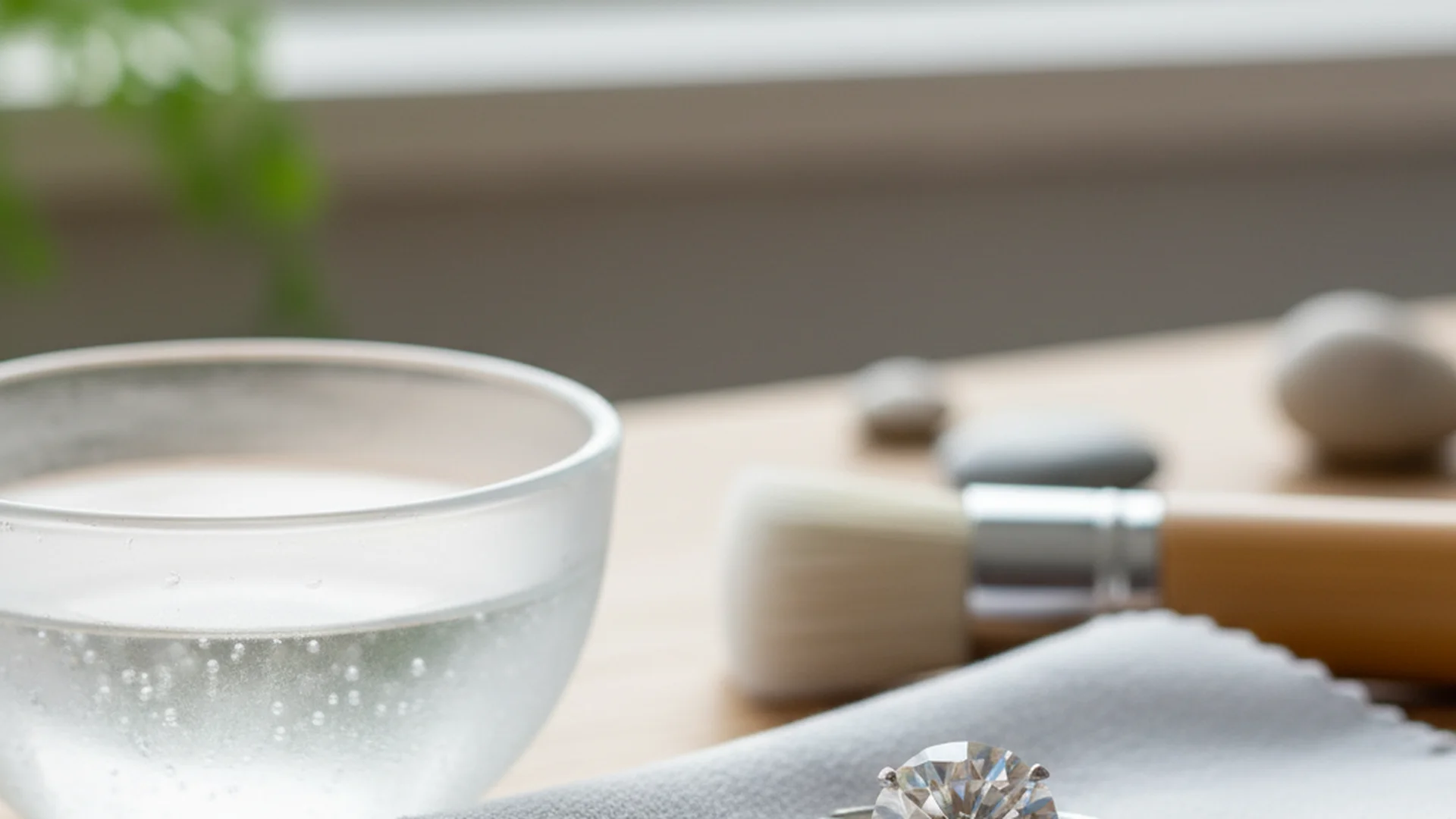
Fill a small bowl with warm (not boiling) water. Add a few drops of a mild, grease-cutting dish soap—Dawn is frequently recommended by jewelers for its ability to break down organic oils without leaving a film. Submerge your jewelry and let it soak for 20 to 40 minutes.
Step 2: Gentle Scrubbing
After the soak, use a new, soft-bristled toothbrush. A children’s toothbrush is ideal because the bristles are softer and the head is smaller, allowing you to reach tight crevices.
Tip: Focus your scrubbing on the underside of the diamond. This is where most lotion, skin cells, and soap scum accumulate, blocking light from entering the stone and reflecting back out.
Step 3: The Safe Rinse
Rinse your jewelry under warm running water.
Warning: Always ensure the sink drain is closed or use a fine-mesh strainer during the rinsing process. Every year, thousands of rings are lost to "the sink disaster." If a ring does fall in, stop the water immediately and check the P-trap (the U-shaped pipe) under the sink.
Step 4: Lint-Free Drying
Pat the piece dry with a microfiber or lint-free cloth. Avoid using paper towels, as the wood pulp fibers can leave tiny scratches on softer metals like 18k gold or platinum.
Success: Regular cleaning once a week prevents the "encrusted" look and keeps your diamond’s light performance at its peak.
Cleaning Methods Comparison
| Method | Safety Level | Best For | Professional Recommendation |
|---|---|---|---|
| Soap & Water | High | Weekly maintenance | Highly Recommended |
| Ultrasonic Cleaner | Medium | Removing hard dirt | Use sparingly/Check prongs |
| Jewelry Pen | High | On-the-go touch-ups | Recommended for travel |
| Ammonia Solution | Medium | Heavy grime | Use only on sturdy settings |
2025-2026 Trends in Diamond Care
The jewelry world is evolving, and how we care for our pieces is shifting toward sustainability and high-tech solutions.
Sustainable Cleaning Solutions
2025 has seen a massive move toward plant-based surfactants. Consumers are moving away from harsh, ammonia-heavy cleaners in favor of biodegradable, non-toxic formulas that are safer for both the environment and sensitive skin.
Digital Product Passports
Many high-end retailers are now including QR-code-enabled "Digital Twins" for their diamonds. By 2026, these digital passports will be standard, allowing you to scan your ring and receive specific care instructions tailored to that exact mounting and stone type.
UV-C Sanitation
Beyond just making a ring look pretty, homeowners are now using small UV-C "jewelry boxes" to sanitize their pieces. This technology kills bacteria and viruses that can live on high-touch items like rings and watches, providing a layer of hygiene that liquid cleaning cannot match.
Common Mistakes to Avoid
Even with the best intentions, it is easy to damage your jewelry if you use the wrong materials.
The Abrasive Trap
Never use toothpaste or baking soda to clean your diamonds. While these won't scratch the diamond itself, they are abrasive enough to create micro-scratches on the gold or platinum setting. Over time, these scratches will make your metal look dull and matte.
Chemical Corrosion
Avoid bleach, chlorine, and acetone. These chemicals can pit or even dissolve the alloys used in gold settings (like nickel or copper). This "stress corrosion" can lead to snapped prongs and lost stones.
Real-World Example: Imagine a swimmer who wears their engagement ring in a chlorinated pool every day. Within a few months, the chlorine can weaken the white gold prongs to the point where they simply snap off during a routine task.
The "Indestructible" Myth
Just because a diamond is a 10 on the Mohs scale doesn't mean it can't be damaged. Mechanical shock—like accidentally hitting your ring against a granite countertop—can cause the stone to crack along its cleavage planes. Always remove your jewelry during heavy lifting or cleaning.
Frequently Asked Questions
How often should I clean my diamond ring?
Can I use Windex to clean my diamond?
Is it safe to use an ultrasonic cleaner at home?
What is the best way to clean diamonds when I'm traveling?
Conclusion
Learning how to clean diamonds is a fundamental part of jewelry ownership. By sticking to the gold standard of mild soap and warm water, you protect your investment and ensure your stones continue to catch the light beautifully. Remember that while diamonds are tough, their settings and their brilliance require a soft touch.
Success: By incorporating a 5-minute weekly soak into your routine, you ensure your jewelry remains a sparkling reflection of your most precious moments.
Cleaning that keeps score
Every task earns points, every streak multiplies them, and Premium adds a household leaderboard plus a monthly Dustagorgon to beat.
- Free forever
- 30 badges to earn
- Up to 6 in a household
No card needed. Set up your rooms in a couple of minutes.