In this article
What you’ll learn
- Only use pH-neutral cleaners to avoid etching
- Dry mopping is the most important daily maintenance task
- Sealing is essential but does not make stone "stain-proof"
Natural stone flooring is a timeless investment that adds unparalleled character and value to any home. Whether you have the rugged durability of granite or the soft, ethereal glow of marble, knowing how to clean stone floors properly is essential for preserving their beauty. However, stone requires a specific touch—using the wrong chemical can cause permanent damage in seconds.
Understanding Your Stone: The Big Three
Before you grab a bucket, you must identify what kind of stone you are walking on. Not all stones are created equal, and their porosity determines how they react to liquids and cleaners.
| Stone Type | Market Share | Durability | Best Finish for 2026 |
|---|---|---|---|
| Granite | 35–40% | Very High | Polished or Honed |
| Marble | 20–25% | Moderate | Leathered |
| Limestone | 15–20% | Moderate | Honed (Matte) |
Granite is the king of durability, making it perfect for high-traffic kitchens. Marble and limestone, however, are calcium-based. This means they are highly sensitive to acids. If you’ve ever seen a "dull spot" on a marble floor after a spill, you’ve witnessed etching—a chemical burn that essentially dissolves the surface of the stone.
Note: Moving into 2026, many homeowners are shifting toward "Leathered" finishes. These textured surfaces are more forgiving than high-gloss polished stone, as they hide water spots and minor scratches much better.
The Best Way to Clean Stone Floors: Daily Maintenance
The biggest enemy of stone isn't actually liquid; it's grit. Small particles of sand and dirt act like sandpaper under your feet, grinding away the protective sealer and creating micro-scratches that dull the stone’s shine over time.
The Power of Dry Mopping
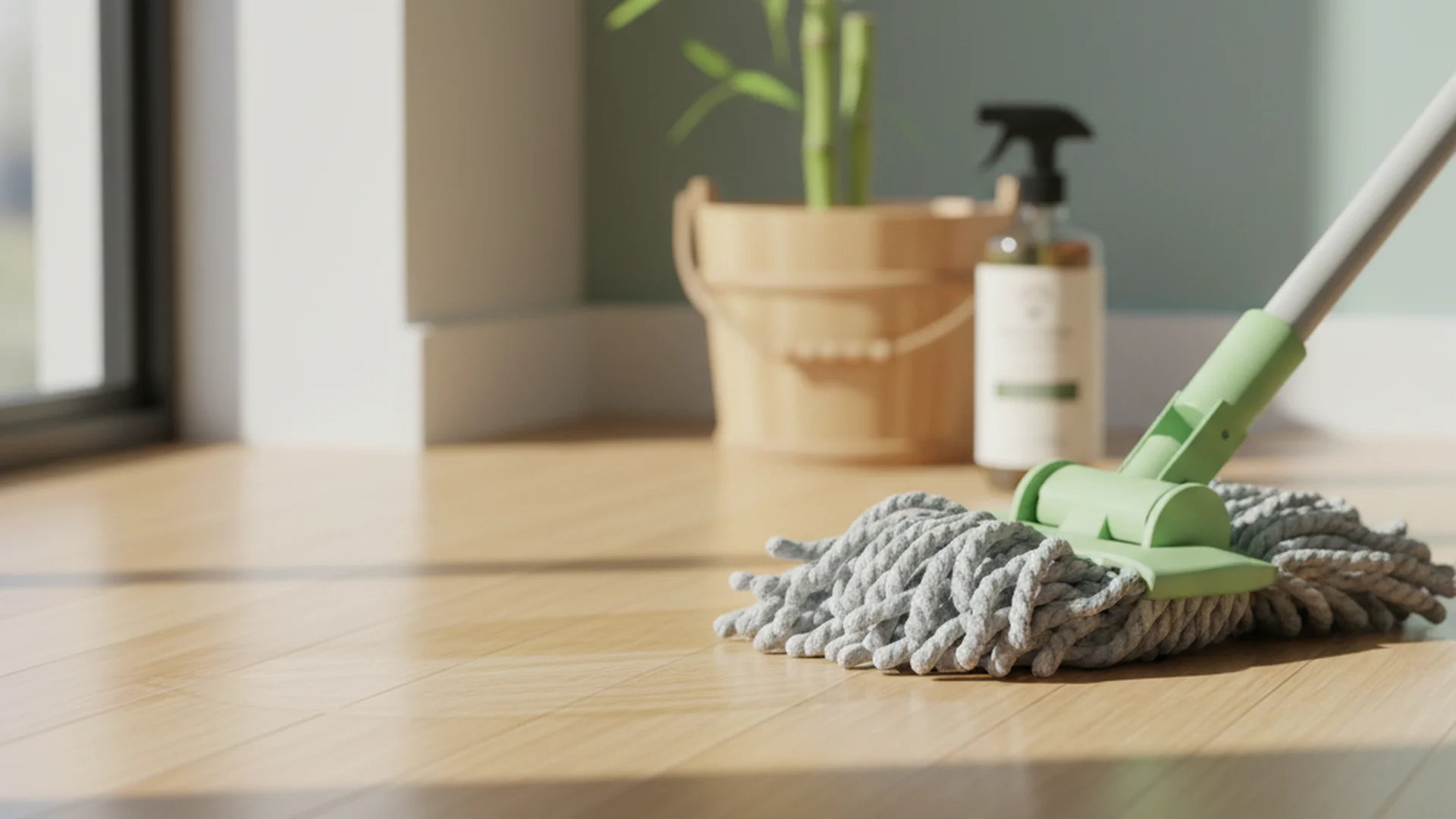
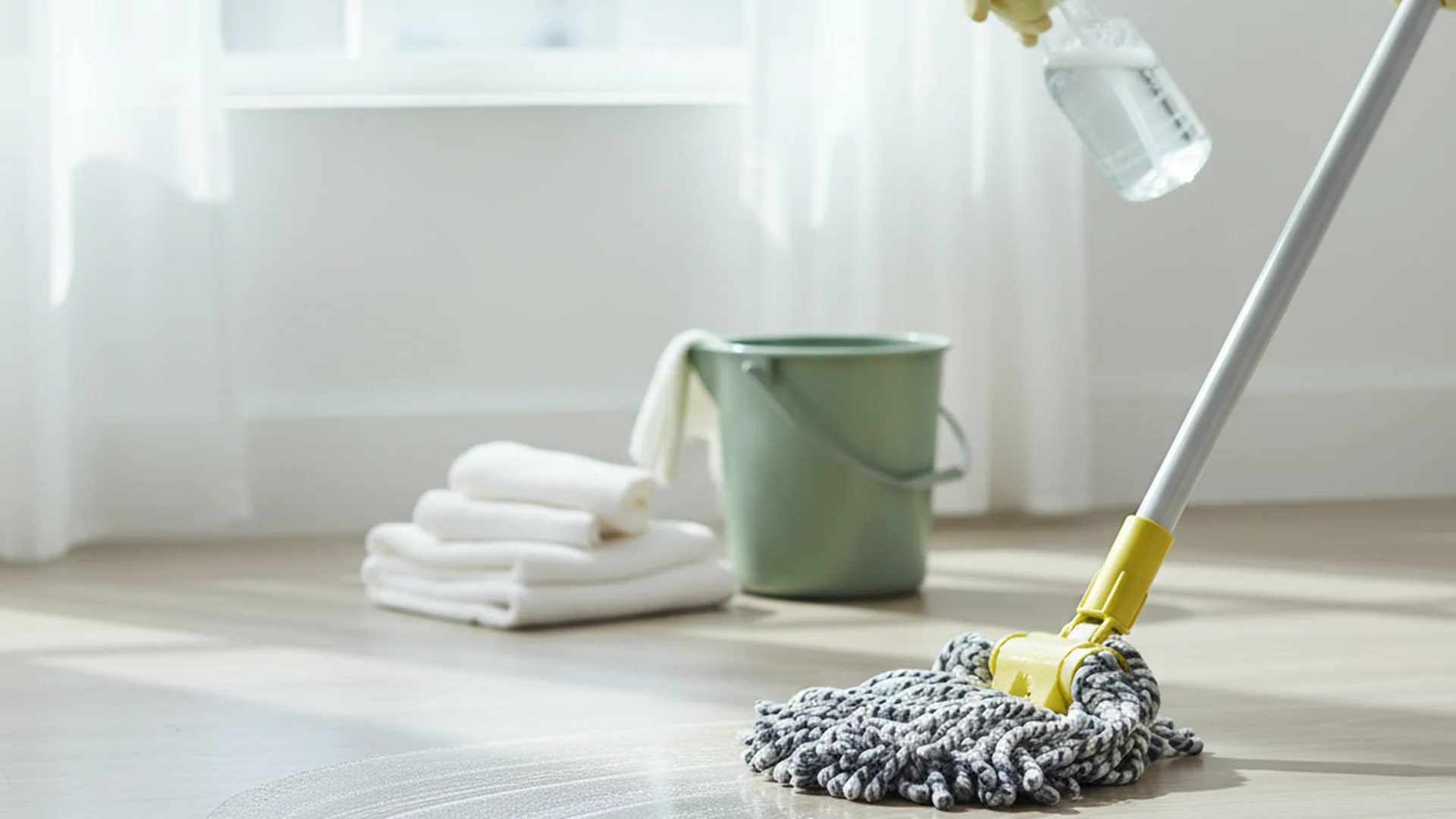
Dry mop daily with a high-quality microfiber flat mop. Unlike traditional string mops, microfiber pads use static electricity to lift and trap fine dust rather than just pushing it into the grout lines.
Tip: Place "walk-off" mats at every entrance. Most of the dirt that damages stone floors is tracked in from the outside, so a good mat strategy cuts your cleaning time dramatically.
The "Blot, Don't Wipe" Rule
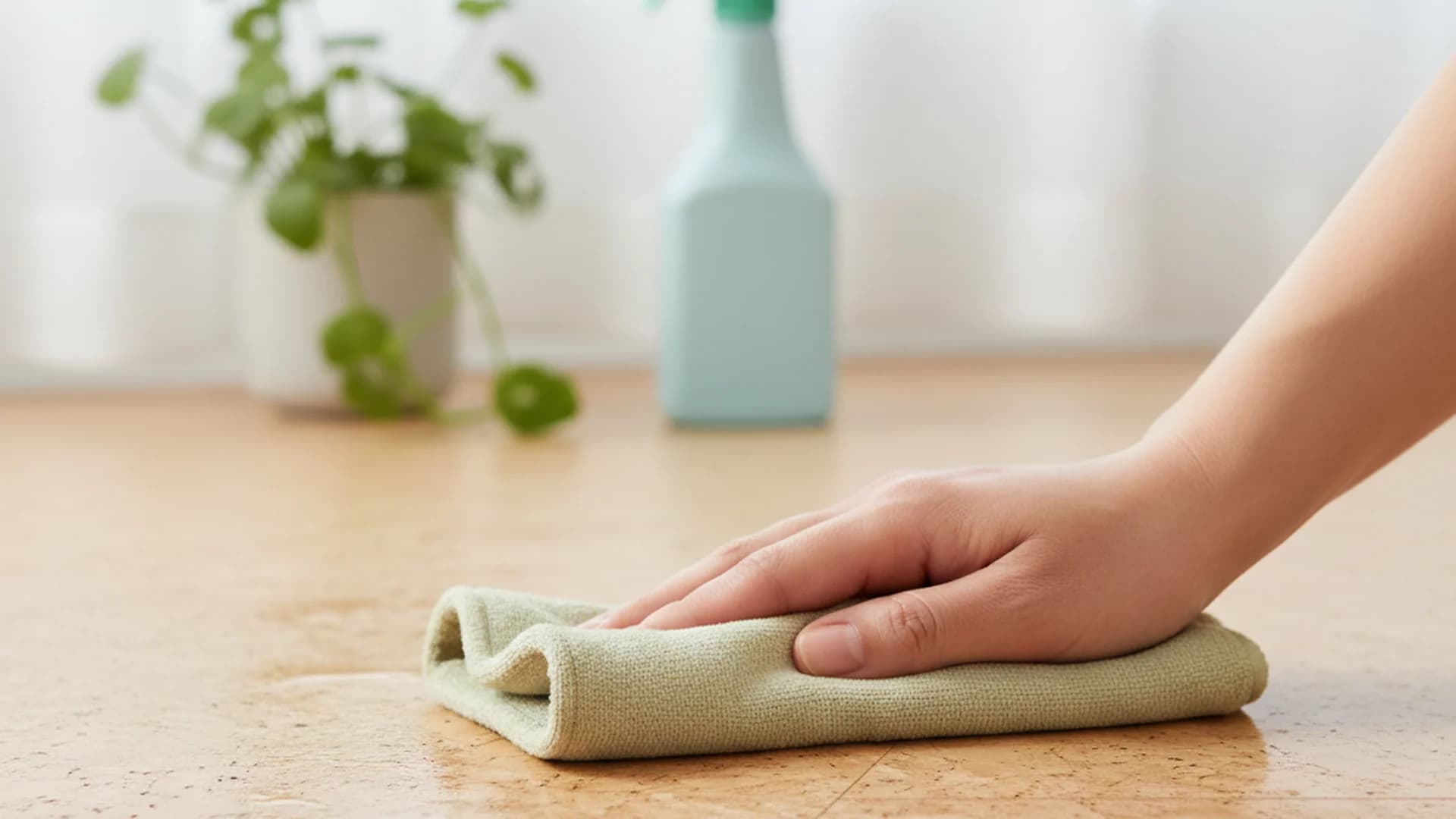
When a spill occurs—especially something acidic like wine, coffee, or orange juice—your instinct is to wipe it up. On natural stone, wiping spreads the liquid and pushes it deeper into the pores. Instead, blot the spill immediately with a clean paper towel.
Warning: Never use vinegar, lemon juice, or "all-purpose" grocery store cleaners on natural stone. These are often acidic or highly alkaline and will cause permanent etching on marble and limestone.
Deep Cleaning: The pH-Neutral Strategy
When it’s time for a deeper clean, the most important rule is the "Neutral Rule." You should only use cleaners with a pH of 7.0.
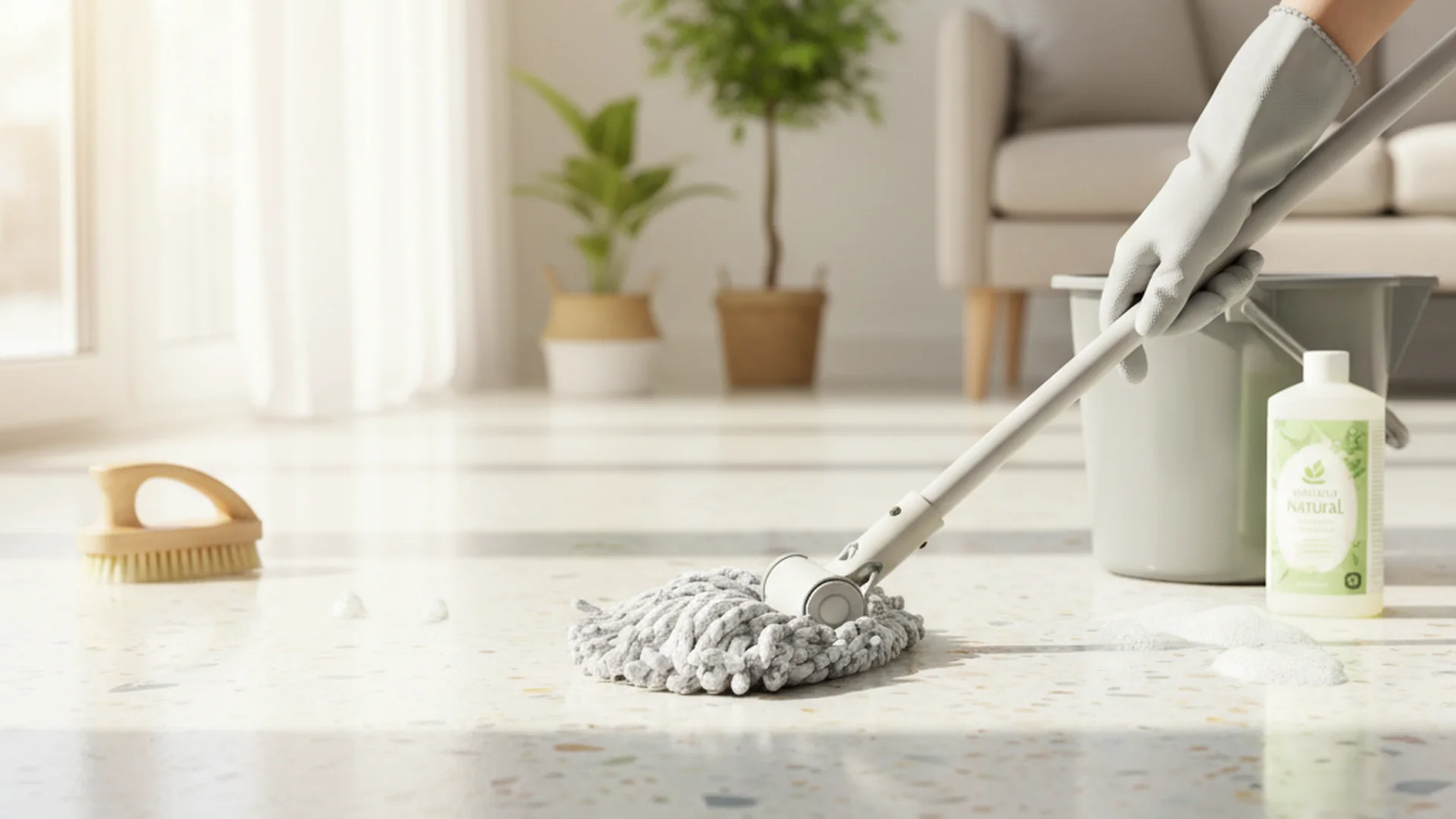
Step-by-Step Mopping Process
- Clear the Area: Remove all rugs and small furniture.
- Dry Mop First: Never wet-mop a floor that has loose grit on it.
- Mix Your Solution: Use warm water and a specialized "Stone Safe" cleaner.
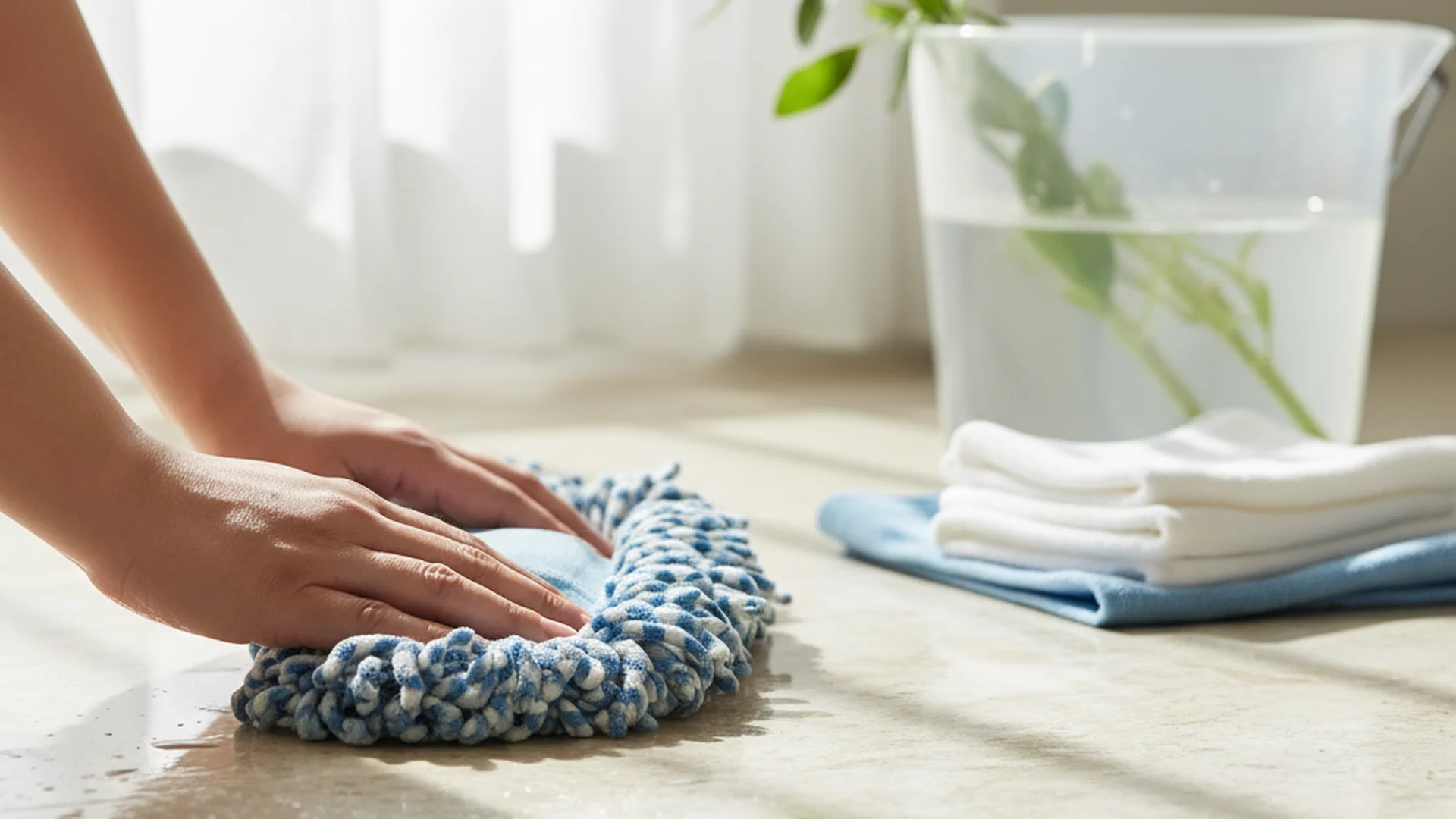
- Damp, Not Wet: Wring your microfiber mop thoroughly. You want a damp mop, not a dripping one.
- Change Water Frequently: If the water in your bucket looks cloudy, you are just spreading dirt around.
Success: Using a dedicated stone soap often contains "optical brighteners" or small amounts of sealer that help maintain the floor's luster with every wash.
The Water Drop Test: When to Reseal
One of the most common questions is how to tell if your sealer is still working. Natural stone is porous, and the sealer acts as a "window of time" (usually 20–30 minutes) to clean a spill before it penetrates.
To check your floor, perform the Water Drop Test:
- Place a few drops of water on various areas of the floor (especially high-traffic spots).
- Wait 5 to 10 minutes.
- If the water beads up, your sealer is healthy.
- If the stone darkens or the water disappears, the stone is absorbing moisture and needs to be resealed immediately.
Note: High-traffic areas like kitchens usually need resealing every 6 to 12 months, while bedrooms might last 3 to 5 years.
Advanced Techniques: Dealing with Stains
Sometimes, despite our best efforts, a stain sets in. This often happens with oils (like cooking grease) or organic pigments.
Using a Poultice
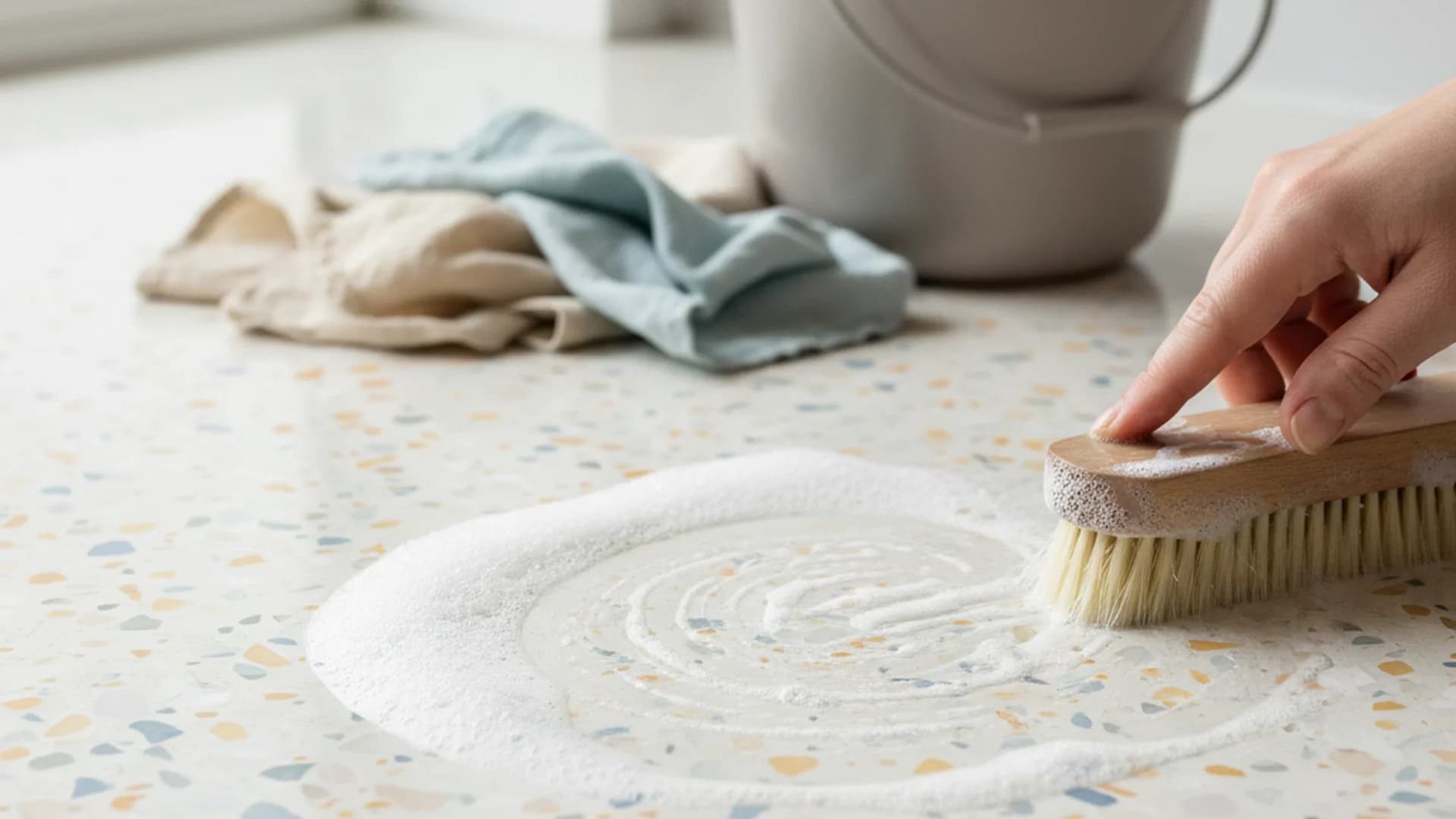
For deep-set stains, a "poultice" is the professional's secret weapon. This is a paste made by mixing a stone-safe cleaning agent with an absorbent powder (like baking soda or a commercial poultice powder).
- Example: For an oil stain on a granite countertop or floor, apply the paste, cover it with plastic wrap (poke a few holes), and let it sit for 24 hours. As the paste dries, it literally "pulls" the oil out of the stone's pores and into the powder.
The Rise of Bio-Based Cleaners
A major trend for 2025-2026 is the surge in demand for plant-derived, biodegradable stone cleaners. These formulas are safer for pets who walk on the floors and improve indoor air quality while being just as effective as synthetic chemicals.
Common Mistakes to Avoid
Even with the best intentions, it is easy to make a mistake that could lead to an expensive professional restoration.
- Using Dish Soap: While "mild," many dish soaps contain fats and oils designed to keep hands soft. These leave a microscopic film on stone that attracts dirt and makes the floor look cloudy over time.
- Over-Wetting the Floor: Excessive water can seep into grout lines and under the tiles. This can lead to "efflorescence"—a white, salty powder that rises to the surface—or even loosen the adhesive holding the tiles down.
- Steam Mopping: Steer clear of steam mops on natural stone. The intense heat can degrade the sealer and, in stones like marble, cause "spalling" or tiny surface cracks.
- Assuming Sealer is "Stain-Proof": This is a dangerous misconception. Sealers are stain-resistant. They buy you time, but they won't protect the stone forever if a spill is left overnight.
Frequently Asked Questions
Can I use vinegar or lemon juice to clean stone?
Is a steam mop safe for natural stone floors?
What is the best mop for stone?
Why does my stone floor look cloudy?
Conclusion
Cleaning stone floors doesn't have to be a daunting task. By sticking to the "Neutral Rule," prioritizing dry mopping, and performing regular water drop tests, you can ensure your floors remain a stunning focal point of your home for decades. Whether you're embracing the 2026 trend of leathered finishes or sticking with classic polished granite, the key is consistent, gentle care.
Success: Proper maintenance can extend the life of your stone floor indefinitely, often outlasting the home itself!
Cleaning that keeps score
Every task earns points, every streak multiplies them, and Premium adds a household leaderboard plus a monthly Dustagorgon to beat.
- Free forever
- 30 badges to earn
- Up to 6 in a household
No card needed. Set up your rooms in a couple of minutes.