In this article
What you’ll learn
- Quartz is non-porous and never requires sealing or professional polishing.
- Mild dish soap and microfiber cloths are the gold standard for daily maintenance.
- Avoid high-pH cleaners like bleach and ammonia to protect the resin bond.
In the world of modern kitchen design, quartz has officially claimed the throne, and it is now the go-to surface for kitchen remodels. However, because it is an "engineered stone" rather than a slab of pure rock, knowing how to clean quartz countertops requires a specific approach to protect your investment. Whether you are dealing with a spilled glass of Cabernet or daily crumbs, maintaining that factory-fresh shine is simpler than you might think—provided you use the right tools.
Understanding the Anatomy of Your Quartz
Before we dive into the scrubbing, it is important to understand what you are actually cleaning. Unlike granite or marble, which are sliced directly from the earth, quartz is a manufactured product. It typically consists of 90–95% crushed natural quartz crystals bound together by 5–10% polymer resins and pigments.
This composition is exactly why quartz is 100% non-porous. It won’t harbor bacteria, it won't absorb moisture, and—most importantly—it never needs to be sealed. However, that same resin that makes it durable also makes it sensitive to certain chemicals and high heat.
Note: Because quartz is engineered with resin, it is susceptible to "thermal shock." Always use a trivet for hot pans, as temperatures exceeding 300°F can cause the resin to yellow or crack.
The "Daily Three" Routine for Quartz Care
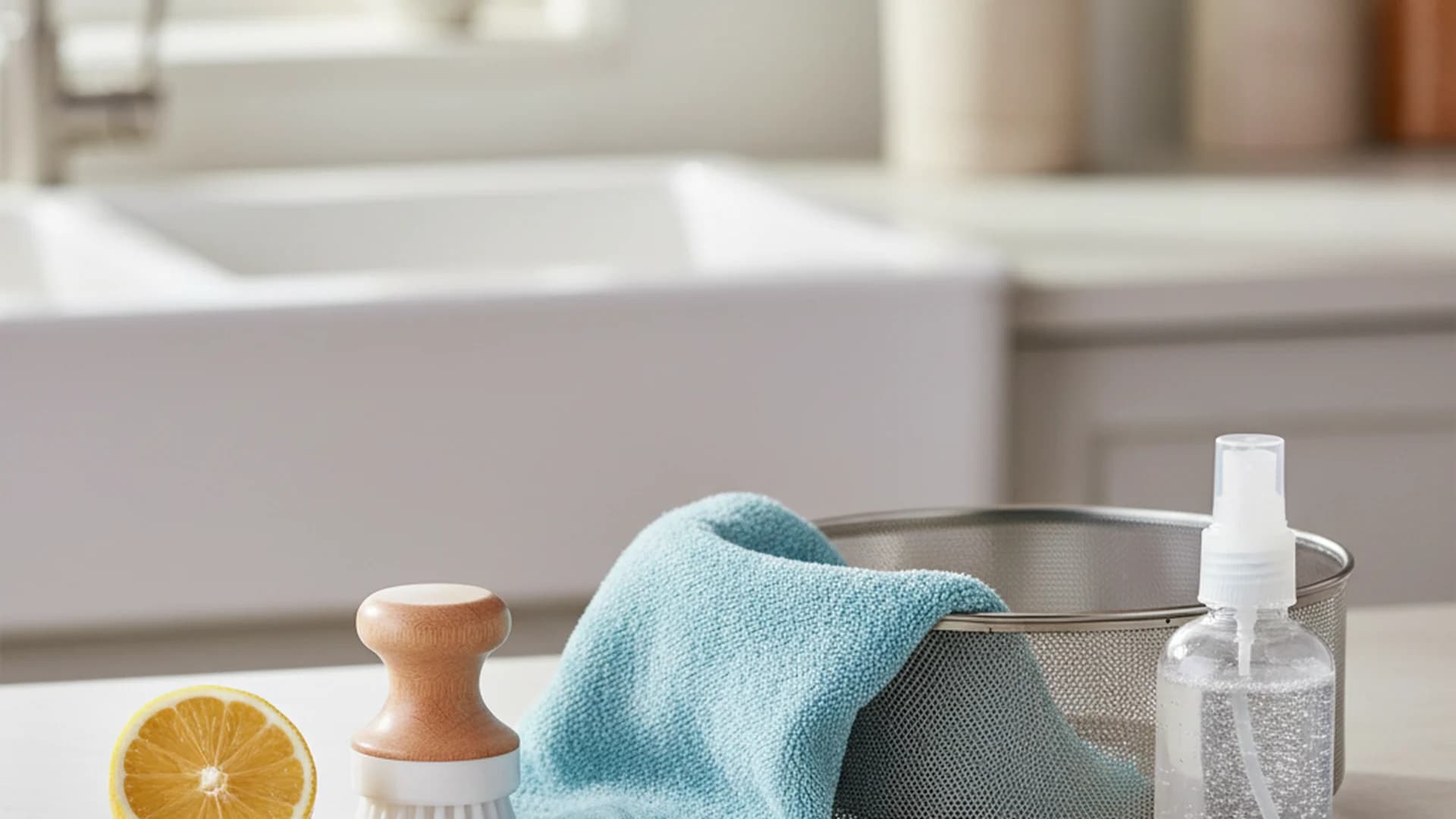
For 99% of your cleaning needs, you don’t need specialized stone cleaners or expensive sprays. In fact, a minimalist approach does the best job of preserving the surface's integrity.
1. Warm Water and Mild Dish Soap
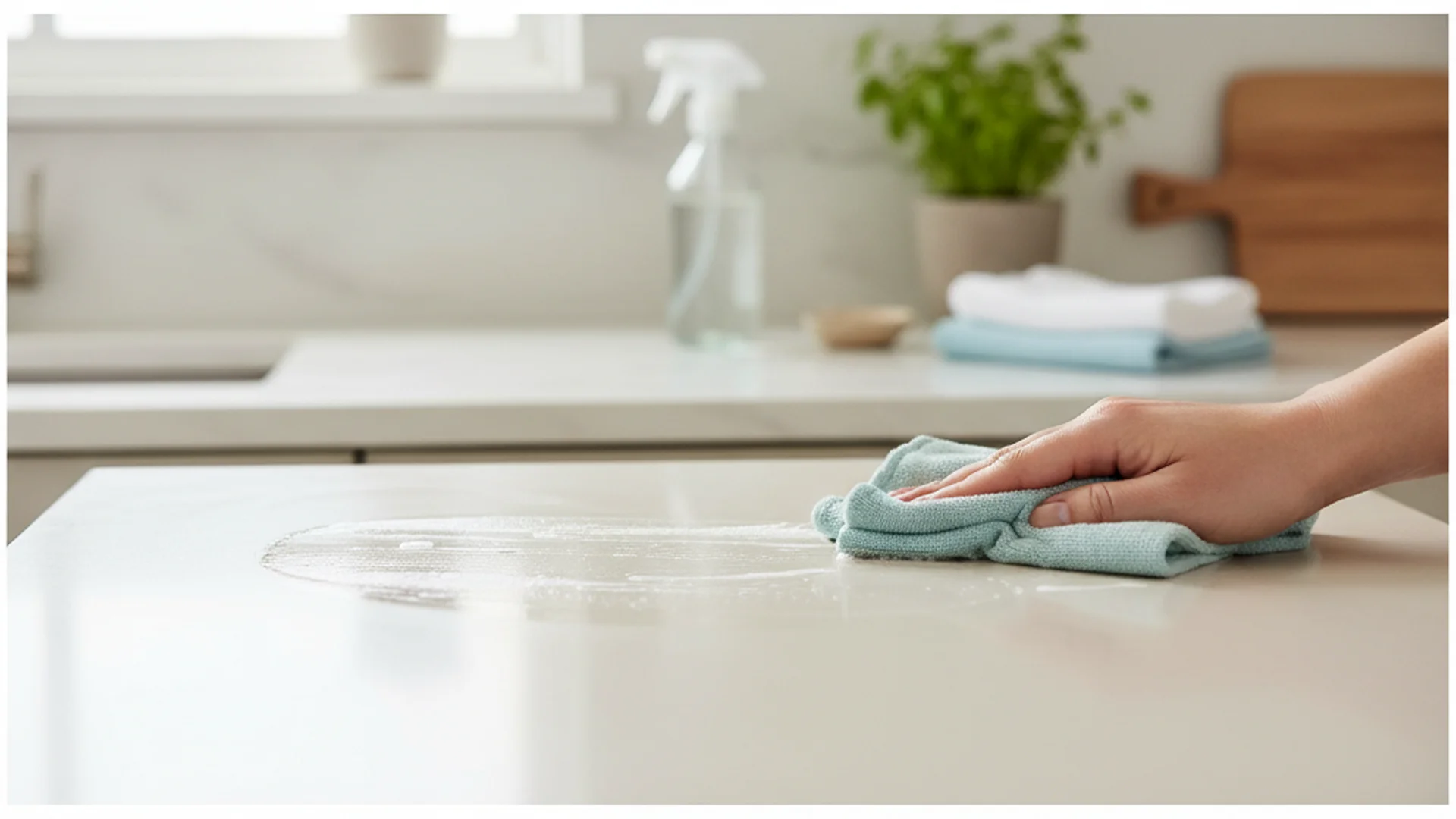
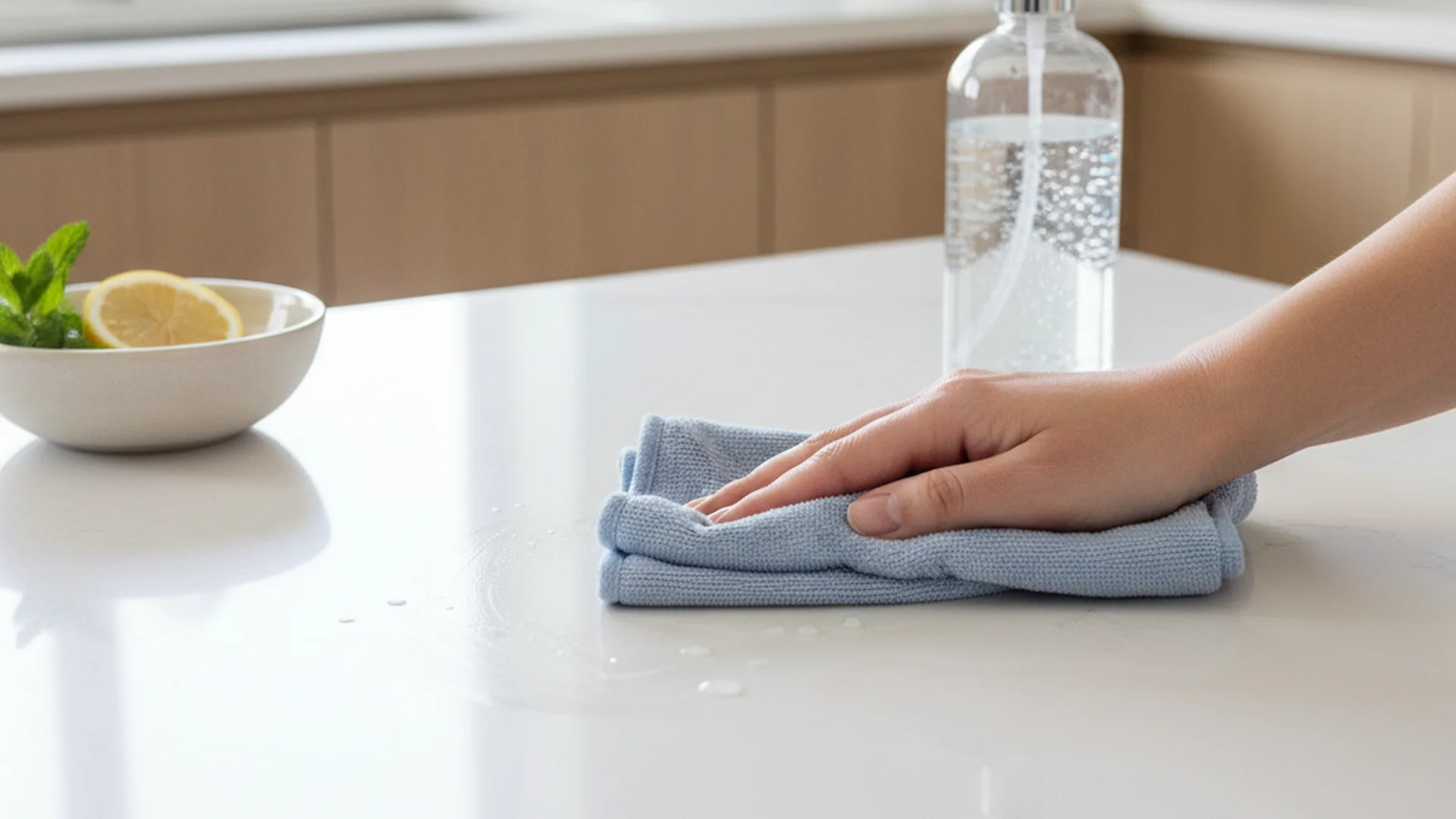
The primary method for how to clean quartz countertops involves a simple solution of warm water and a few drops of pH-neutral dish soap (like Dawn). This is effective enough to break down surface grease without compromising the resin bond.
2. Microfiber Cloths are Essential
While it is tempting to reach for a paper towel, microfiber is the superior choice. Microfiber cloths are designed to capture microscopic particles and bacteria that paper towels often just smear around. They also provide a gentle polishing action that keeps the surface looking reflective.
3. The "Buff Dry" Finish
The most common complaint homeowners have about quartz is "cloudiness" or "hazing." This is usually not damage, but rather dried soap residue or hard water minerals. To prevent this, always follow your wet wipe-down with a dry microfiber cloth to buff the surface to a streak-free shine.
Success: Regularly buffing your counters dry after cleaning prevents the buildup of "film" that often plagues high-gloss quartz finishes.
How to Clean Quartz Countertops Naturally
Many homeowners are moving away from traditional household cleaners in favor of eco-friendly alternatives. If you want to know how to clean quartz countertops naturally, you have two powerful allies already in your pantry: isopropyl alcohol and baking soda.
The Chemical-Free Shine Spray
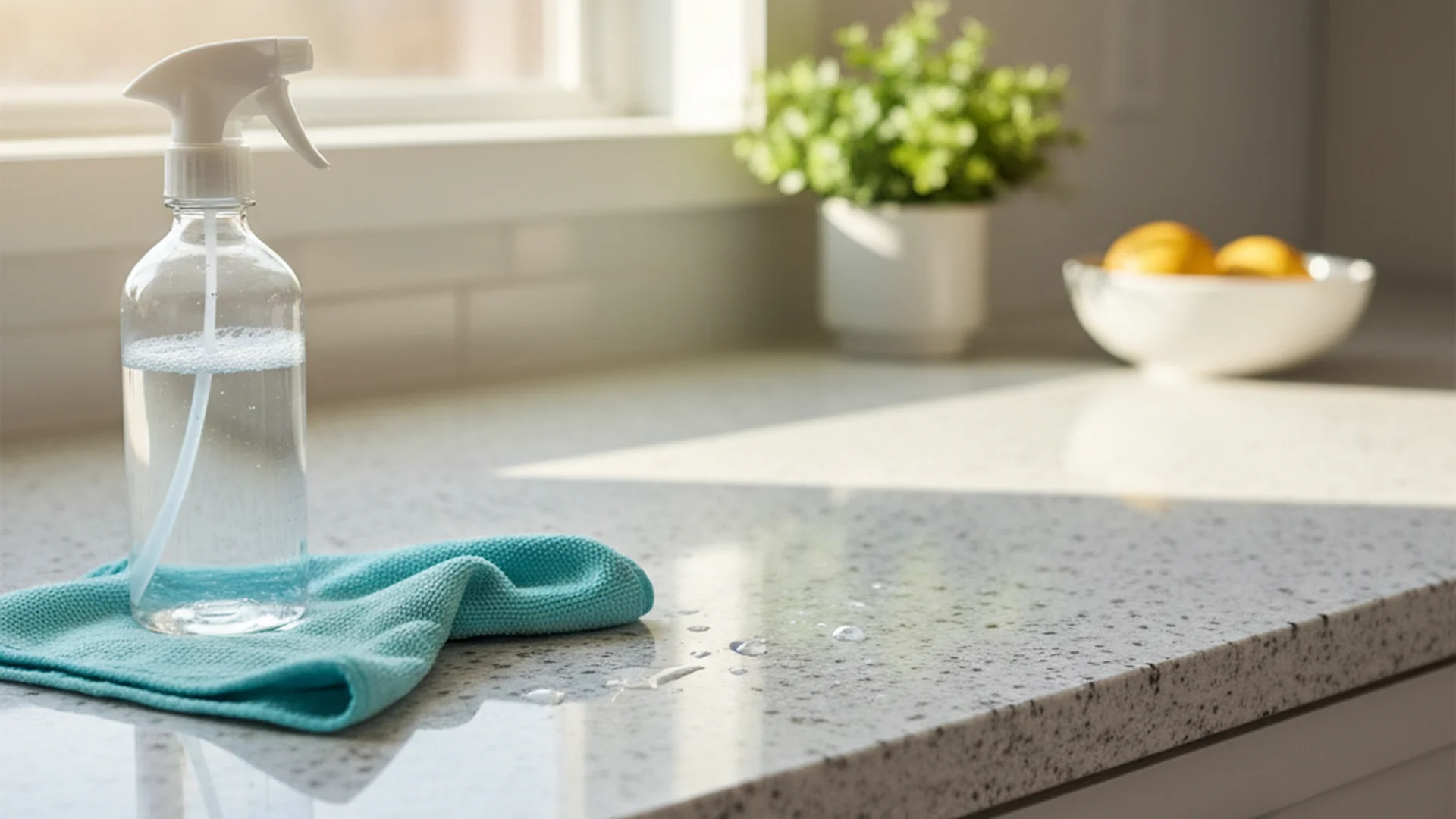
If you prefer a dedicated spray bottle for your counters but want to know how to clean quartz countertops without chemicals, try this DIY mixture:
- 1 part water
- 1 part 70% Isopropyl (rubbing) alcohol
- 2 drops of essential oil (optional, for scent)
The alcohol acts as a natural disinfectant and degreaser that evaporates quickly, leaving a streak-free finish that rivals any commercial product.
Removing Organic Stains with Baking Soda
For organic stains like tea, coffee, or red wine that have sat a bit too long, a baking soda paste is your best friend. Mix baking soda with a small amount of water to create a thick paste. Apply it to the stain, let it sit for 5–10 minutes, and wipe it away with a damp cloth. This provides just enough gentle abrasion to lift the stain without scratching the resin.
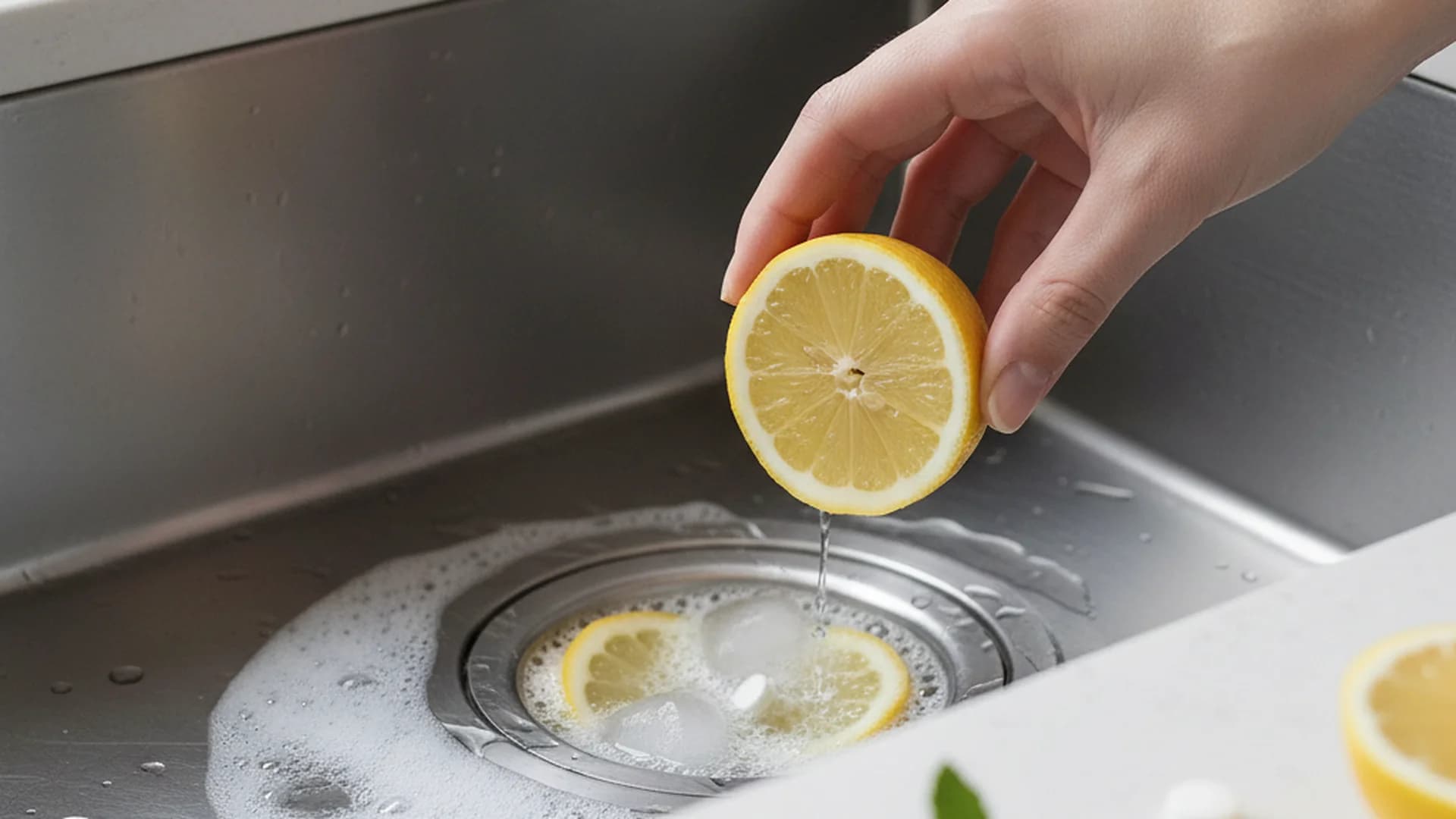
Tip: If you use vinegar or lemon juice for cleaning other parts of your home, use extreme caution on quartz. While it is more resistant than marble, undiluted acid can eventually dull the resin. Always dilute 1:1 with water and rinse immediately.
Real-World Examples: Handling Common Messes
Example 1: The "Permanent" Ink Incident
Imagine a child leaves a stray mark from a permanent marker on your white Calacatta quartz. Do not reach for the bleach! Instead, dampen a cotton ball with 70% isopropyl alcohol and gently dab the mark. The alcohol breaks down the ink without affecting the quartz resin.
Example 2: The Dried-On Dough
If you are an avid baker, you know that dried flour and dough can be like concrete. Instead of using a metal knife (which can scratch), use a plastic putty knife or the edge of a plastic credit card to gently lift the residue. Follow up with your soap and water routine.
Example 3: The Sticky Residue
After removing a price tag or a piece of tape, you might find a sticky residue. Use a citrus-based cleaner like Goo Gone or a small amount of vegetable oil to dissolve the adhesive, then clean the area thoroughly with soap and water to remove the oil.
2025-2026 Trends in Quartz Maintenance
The industry is evolving, and so are the products we use to maintain our homes. Here are a few trends to watch for in the coming year:
- Probiotic Cleaners: A major 2026 trend is the shift toward "microbiome-friendly" cleaning. These cleaners use live enzymes that continue to eat away at organic matter (like food grease) for up to 72 hours after you've finished wiping.
- Honed and Leathered Finishes: While polished quartz is classic, matte (honed) finishes are surging in 2026. Be aware that these surfaces show fingerprints and oils more easily, meaning you may need to use the alcohol-water spray more frequently than you would on a polished slab.
- Nanotechnology Coatings: Many new 2025 quartz slabs are manufactured with molecular-level finishes that are even more resistant to "fingerprint transfer," making daily maintenance even faster.
| Cleaner Type | Recommended? | Reason |
|---|---|---|
| Mild Dish Soap | Yes | pH-neutral and safe for resin |
| Isopropyl Alcohol | Yes | Disinfects and leaves no streaks |
| Baking Soda | Yes | Great for organic stains |
| Ammonia-Free Glass Cleaner | Yes | Good for quick shine |
| Bleach/Oven Cleaner | No | Can cause permanent discoloration |
Common Mistakes to Avoid
Even though quartz is incredibly durable, it isn't indestructible. Avoid these four common pitfalls to ensure your countertops last for decades:
- Using Abrasive Pads: Never use steel wool or the green side of a heavy-duty sponge. These create microscopic scratches that will eventually turn your glossy finish into a dull, matte mess.
- The "Windex" Habit: Many people reach for window cleaner for a quick shine. However, most window cleaners contain ammonia. While one use won't ruin your counter, repeated use of ammonia can strip the shine from the polymer resins. If you must use glass cleaner, ensure it is labeled ammonia-free.
- Applying Sealer: This is the most common mistake. Because quartz is non-porous, the sealer has nowhere to go. It will sit on top of the stone, drying into a patchy, sticky film that is incredibly difficult to remove.
- High-pH Chemicals: Avoid "power" cleaners, drain cleaners, or paint removers. These high-alkaline chemicals can break the bond between the quartz crystals and the resin, leading to permanent surface damage.
Warning: Never use a metal scraper on quartz. Metal can leave "metal marks" (which look like scratches but are actually deposits of the metal itself) or cause physical gouges in the resin.
Frequently Asked Questions
Can I use vinegar or lemon juice to clean quartz?
Does quartz need to be sealed annually like granite?
Is quartz heat-proof?
How do I remove stubborn hard water stains?
Conclusion
Mastering how to clean quartz countertops doesn't require a cabinet full of specialized chemicals. By sticking to the "Daily Three"—warm water, mild soap, and a microfiber cloth—you can keep your surfaces looking brand new for the life of your home. As we move into 2026, the focus is shifting toward natural, probiotic-friendly cleaning methods that protect both your family and your high-end finishes. Treat your quartz with a little bit of daily care, avoid the "Never List" of harsh chemicals and heat, and your countertops will remain the stunning centerpiece of your kitchen for years to come.
Success: By following these simple maintenance steps, you are protecting a major home investment that is designed to last 25 years or more.
Cleaning that keeps score
Every task earns points, every streak multiplies them, and Premium adds a household leaderboard plus a monthly Dustagorgon to beat.
- Free forever
- 30 badges to earn
- Up to 6 in a household
No card needed. Set up your rooms in a couple of minutes.