In this article
What you’ll learn
- Use pH-neutral soap and warm water for daily cleaning.
- Avoid acidic cleaners like vinegar and lemon to prevent etching.
- Reseal every 1–3 years or as indicated by the 'Water Test.'
Granite remains the undisputed king of kitchen design in 2025 and 2026, prized for its unique patterns and legendary durability. However, many homeowners are still unsure about the specific steps required for its upkeep. If you are wondering how to clean granite countertops without damaging the expensive sealant or dulling the stone’s natural luster, you are in the right place. Proper maintenance not only keeps your kitchen looking pristine but also protects an investment that can last over 30 years and significantly boost your home’s resale value.
Why Granite Requires Special Care
Granite is a natural igneous rock, meaning it was forged under intense heat and pressure. While it is incredibly hard—harder than steel, in fact—it is also naturally porous. Without a protective barrier, liquids can seep into the microscopic pores of the stone, leading to permanent staining or bacterial growth.
In 2025, we are seeing a shift toward more sustainable, chemical-free homes. Homeowners are increasingly looking for ways to maintain these surfaces using items already found in their pantries. Learning how to clean granite countertops naturally is not just about saving money; it’s about preserving the longevity of the stone and the health of your family.
The Natural Cleaning Toolkit
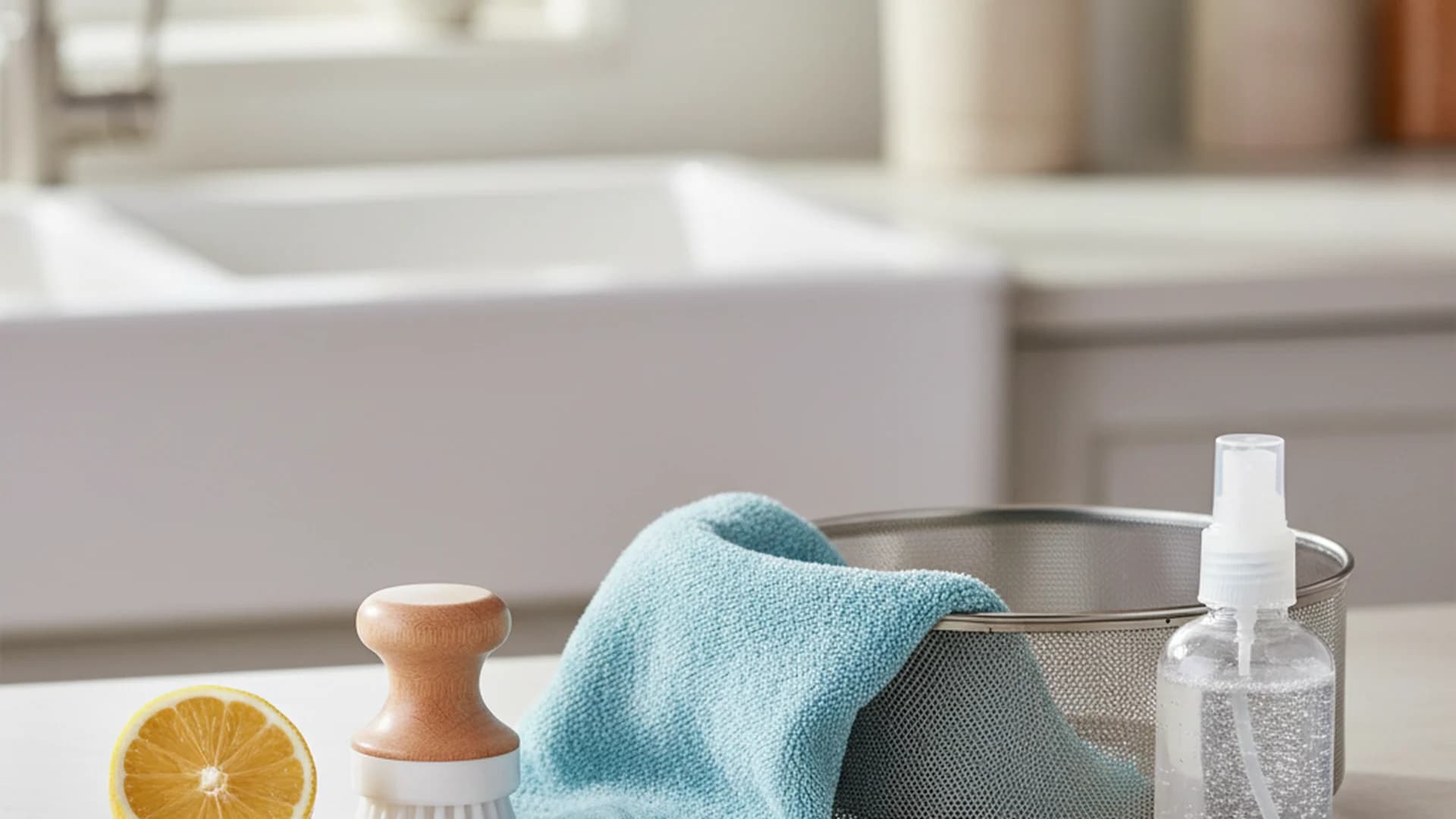
You don't need expensive, specialized sprays to keep your stone sparkling. In fact, many commercial "granite cleaners" contain volatile organic compounds (VOCs) that are unnecessary for daily hygiene. To learn how to clean granite countertops without chemicals, you only need three basic components:
- Warm Water: The universal solvent that loosens most surface debris.
- Mild Dish Soap: Specifically a pH-neutral variety (like vegetable-based castile soap).
- 70% Isopropyl Alcohol: The gold standard for natural disinfection.
Tip: Use distilled water in your cleaning solutions to prevent mineral buildup (hard water spots), which can make dark granite look cloudy over time.
Step-by-Step: Daily Maintenance
The best way to care for your stone is through consistent, gentle cleaning. Follow this daily routine to keep your counters looking brand new.
Step 1: Clear and Dust
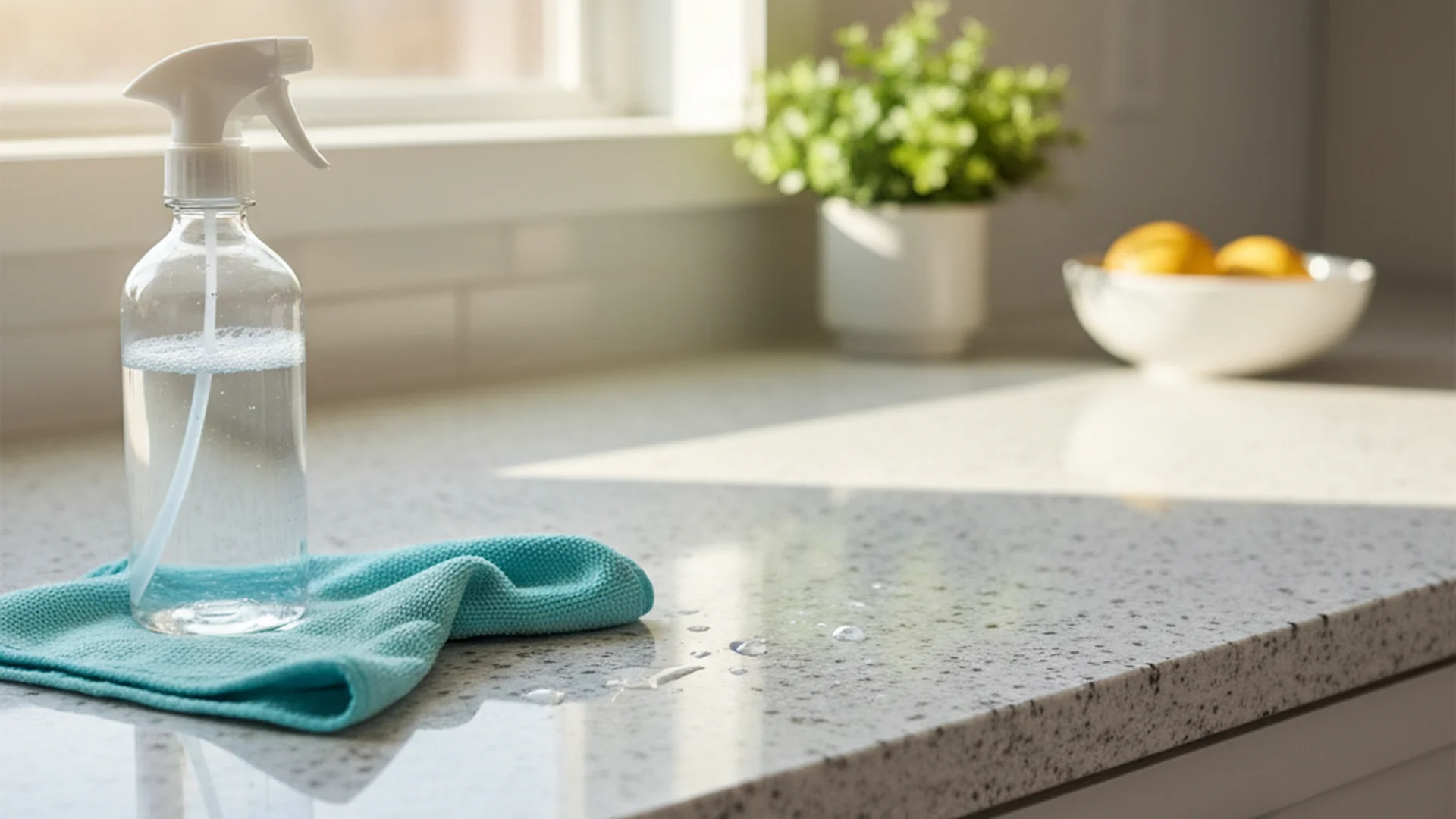
Remove all appliances and décor from the surface. Use a dry microfiber cloth to sweep away crumbs and dust. Using a microfiber cloth is essential because it traps particles rather than pushing them around, which prevents microscopic scratches.
Step 2: The Soap and Water Wipe
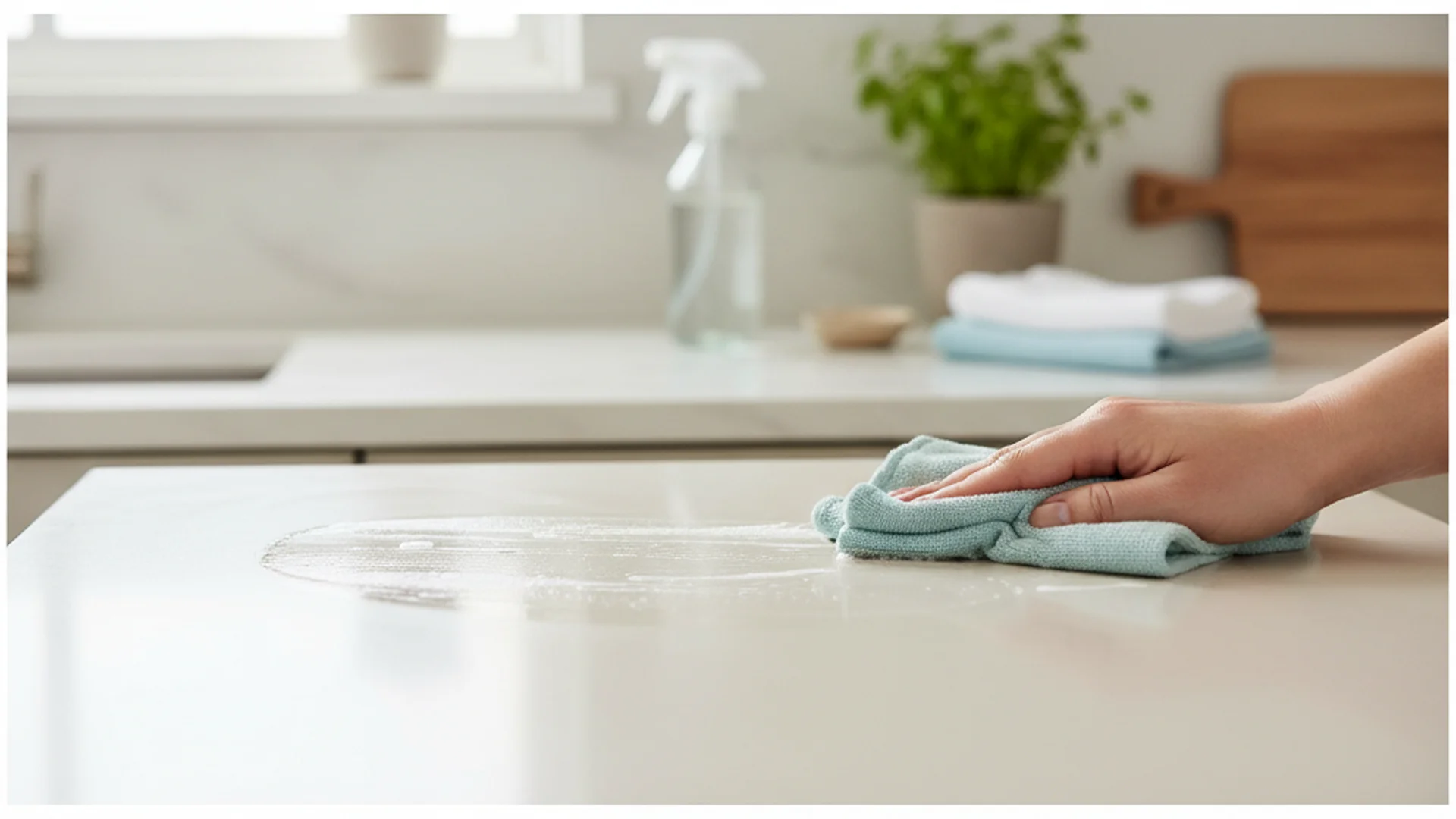
Mix a few drops of pH-neutral dish soap with warm water. Dampen your cloth and wipe the entire surface. This removes grease and light spills from daily meal prep.
Step 3: Buff to a Shine
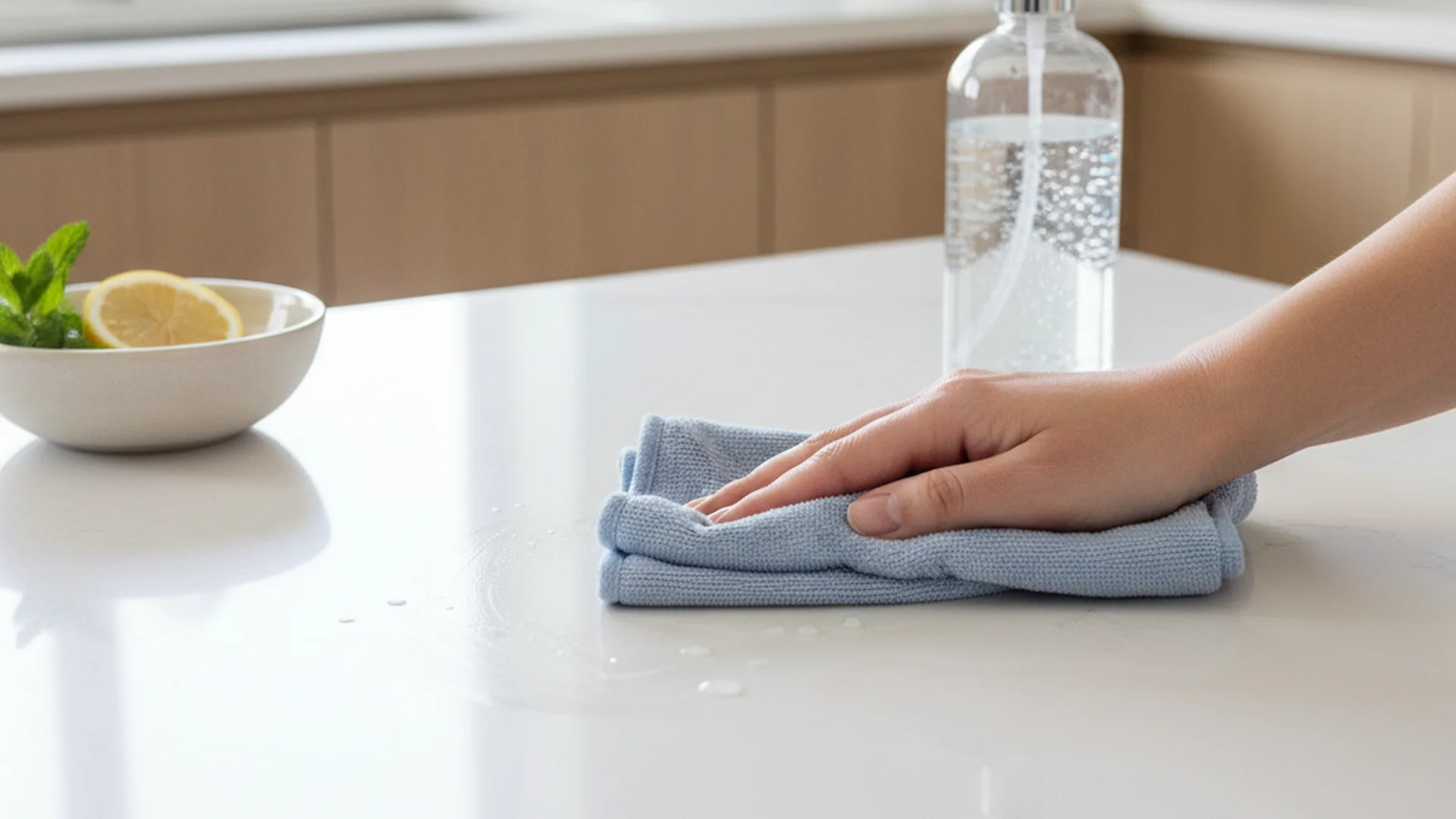
Never let granite air dry. Air drying often leaves behind unsightly streaks or water spots. Use a fresh, dry microfiber cloth to buff the stone in a circular motion until it shines.
Success: Regular buffing with a dry cloth after cleaning is the secret to that "showroom shine" seen in professional kitchen photos.
Deep Cleaning and Natural Disinfection
While soap and water handle the grime, you occasionally need to sanitize the area, especially after handling raw meat or during flu season.
To create a natural disinfectant, mix a 50/50 solution of water and 70% isopropyl alcohol.
- Spray: Lightly mist the entire countertop.
- Wait: Let the solution sit for 3 to 5 minutes. This "dwell time" is what actually kills the bacteria.
- Wipe: Clean it off with water and buff dry.
Real-World Example: The Sunday Roast
Imagine you’ve just finished prepping a large family dinner with raw chicken on your counters. Instead of reaching for a bleach-based wipe (which can strip your sealant), use the alcohol-water mixture. It provides hospital-grade disinfection without the harsh chemical residue or the risk of etching the stone.
The Science of Sealing: The Water Test
The sealant is the most important part of your granite’s defense system. While the stone itself is durable, the sealant is what makes it "stain-proof." Recent 2025 innovations have introduced nanoparticle sealers, which penetrate deeper into the stone than traditional silicone versions, sometimes lasting up to 10 years.
However, most homes still use standard sealers that require attention every 1 to 3 years. How do you know when it’s time? Use the Water Test.
- Pour a few drops of water onto various spots on your counter.
- Wait 10–15 minutes.
- The Result: If the water is still beaded on top, your seal is strong. If the stone has absorbed the water and created a dark spot, your sealant has worn down and needs to be reapplied.
Note: Heavy-use areas, such as the space directly around the kitchen sink, may lose their seal faster than decorative islands. Test these areas more frequently.
Troubleshooting: How to Remove Stains
If you discover a stain that won't come up with soap and water, don't panic. For oily stains (like butter, milk, or cooking oil), you can use a baking soda poultice.
- Mix baking soda and a small amount of water to create a thick paste (consistency of peanut butter).
- Apply the paste directly to the stain.
- Cover the area with plastic wrap and tape down the edges.
- Let it sit for 12 to 24 hours. The baking soda will literally "pull" the oil out of the stone's pores.
- Wipe away and repeat if necessary.
Real-World Example: The Olive Oil Ring
You left a bottle of olive oil on the counter overnight, and now there’s a dark, circular shadow. A standard wipe-down won't work because the oil is inside the stone. Using the poultice method described above is the only way to draw that oil back to the surface without using industrial solvents.
Common Mistakes to Avoid
Even well-meaning homeowners can accidentally damage their stone. Avoid these common pitfalls to ensure your granite lasts a lifetime.
| Mistake | Why It's Dangerous | The Alternative |
|---|---|---|
| Using Vinegar/Lemon | The acid "etches" the stone and eats the seal. | pH-neutral soap or alcohol solution. |
| The "Windex" Method | Ammonia can permanently dull the polish. | Specialized stone cleaner or soap/water. |
| Scouring Pads | Steel wool or green scrubbies cause micro-scratches. | Soft microfiber or sponges. |
| Cutting Directly on Stone | It won't hurt the stone, but it ruins your knives. | Always use a cutting board. |
| Hot Pans without Trivets | Heat can crack the sealant or the resin glue in seams. | Always use a trivet or hot pad. |
Warning: Never mix bleach and ammonia-based cleaners. While you should avoid both on granite, mixing them creates toxic chloramine gas.
Frequently Asked Questions
Can I use vinegar to clean my granite?
Is it safe to cut directly on granite?
How do I remove oily stains like grease or milk?
Why does my granite look cloudy?
Conclusion
Mastering how to clean granite countertops is a simple but vital skill for any homeowner. By sticking to pH-neutral soaps, utilizing the power of isopropyl alcohol for disinfection, and performing the water test annually, you protect both the aesthetic beauty and the functional integrity of your kitchen. Remember, granite is an investment in your home’s future value—treat it with the gentle care it deserves, and it will remain a centerpiece for decades to come.
Success: Following these professional maintenance tips ensures your granite countertops remain the most durable and beautiful feature of your home.
Cleaning that keeps score
Every task earns points, every streak multiplies them, and Premium adds a household leaderboard plus a monthly Dustagorgon to beat.
- Free forever
- 30 badges to earn
- Up to 6 in a household
No card needed. Set up your rooms in a couple of minutes.