In this article
What you’ll learn
- Monthly cleaning is the
- Never mix vinegar and baking soda together; use them in separate cycles for maximum efficacy.
- Modern sensors perform better on dirty dishes than pre-rinsed ones.
We often think of our dishwashers as self-cleaning machines. After all, they spend their lives swishing hot, soapy water around. However, if you have noticed your plates coming out with a gritty film or a musty odor greeting you every time you open the door, it is time to learn how to clean dishwasher units the right way. Neglecting this essential kitchen appliance doesn't just result in dirty forks; it can lead to mechanical failure and increased energy bills.
In this guide, we will explore the most effective, practical methods to restore your machine to peak performance. Whether you are dealing with hard water buildup or trapped food particles, knowing how to clean dishwasher naturally will ensure your appliance runs efficiently for its full expected lifespan of ten years or more.
Why Proper Dishwasher Maintenance Matters in 2025
Before we dive into the "how-to," it is important to understand the "why." Modern dishwashing technology has advanced significantly, making these machines marvels of sustainability. A modern dishwasher uses only 3 to 4 gallons of water per load. Compare this to the 27 gallons used during average hand washing, and it is clear that keeping your machine in top shape is a win for the environment and your wallet.
Furthermore, a clean dishwasher is a sanitary dishwasher. Machine washing removes far more bacteria from your plates than hand washing with a tea towel ever will. However, this effectiveness plummets if the machine's internal components are coated in "biofilm"—a layer of bacteria and mold that can thrive in damp, warm environments.
Note: High-temperature cycles (70°C/158°F) are essential for inactivating pathogens like E. coli. If your dishwasher isn't reaching these temperatures due to mineral buildup on the heating element, your dishes may not be truly sanitized.
How to Clean Dishwasher Naturally: The 3-Step Routine
The most effective way to maintain your appliance is to learn how to clean dishwasher without chemicals. Harsh industrial cleaners can sometimes degrade the plastic components of newer models. Instead, a natural three-step process using household staples does the job just as well.
Step 1: The Filter Deep-Clean
The filter is the heart of your dishwasher's drainage system. Its job is to catch food particles so they don’t get redeposited on your clean dishes. When this becomes clogged, it creates a "Dirty Filter Penalty," reducing cleaning efficiency by up to 20%.
- Remove the bottom rack: Slide it all the way out to reveal the floor of the dishwasher.
- Unscrew the filter: Most modern filters consist of a cylindrical plastic mesh. Twist it counter-clockwise to remove.
- The Soak: Place the filter in a bowl of warm, soapy water for 10 minutes.
- The Scrub: Use an old, soft toothbrush to gently remove any stubborn debris or grease trapped in the mesh.
- Rinse and Replace: Rinse under clear water and lock it back into place.
Tip: If you use your dishwasher daily, aim to clean the filter once a week to prevent odors and drainage issues.
Step 2: The Vinegar Rinse (Mineral Removal)
Hard water is the enemy of any water-based appliance. Over time, calcium and magnesium deposits (limescale) clog the tiny holes in the spray arms and coat the interior walls.
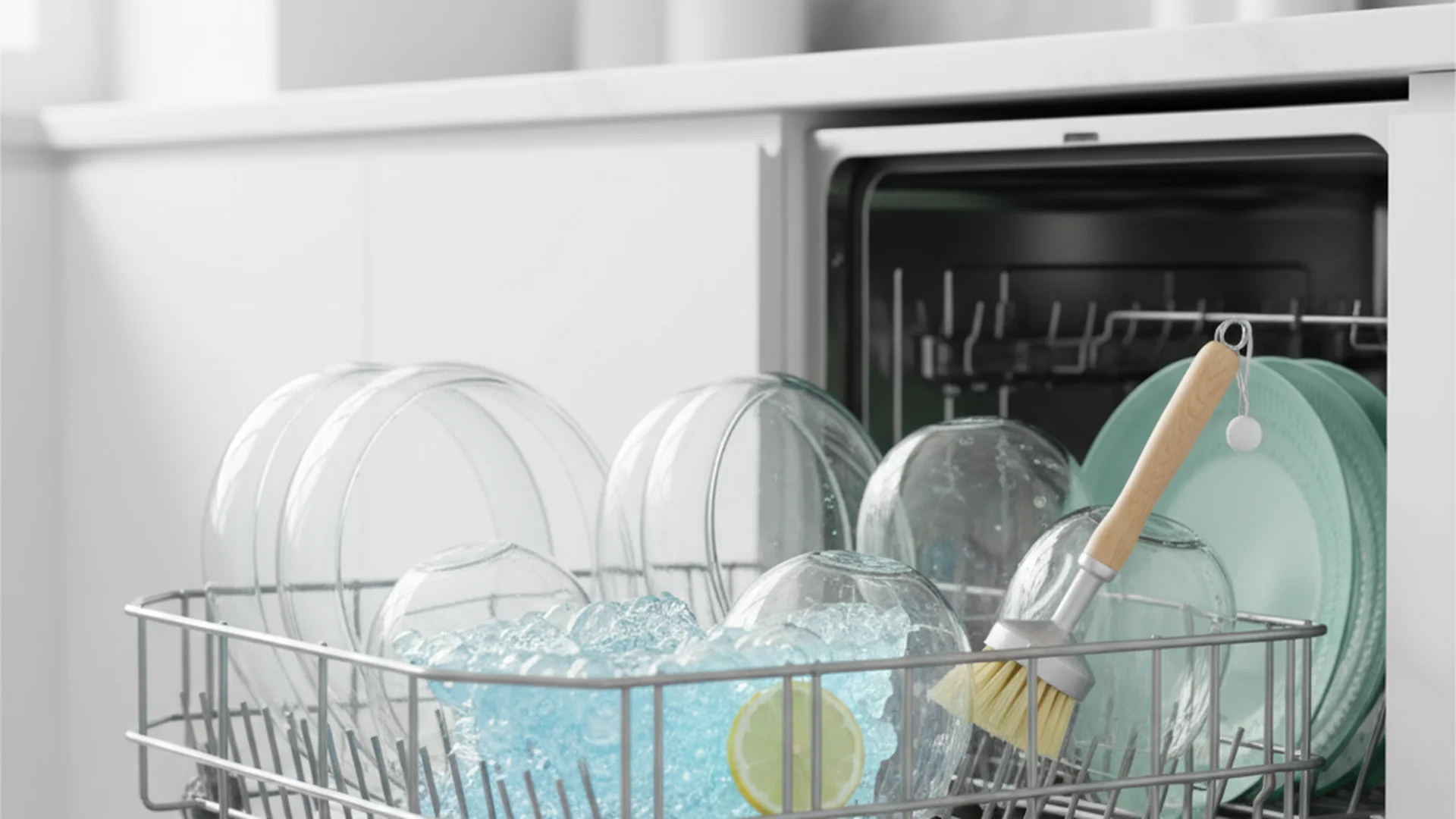
- Prepare the bowl: Fill a dishwasher-safe bowl with 1 cup of plain white vinegar.
- Placement: Place the bowl upright on the top rack of an empty dishwasher.
- Run the cycle: Select the hottest possible setting and run a full cycle. The vinegar will slowly disperse, breaking down grease and dissolving mineral deposits.
Warning: While vinegar is excellent for cleaning, its high acidity (pH 2.0) can degrade rubber gaskets and seals if used weekly. Limit this treatment to once a month.
Step 3: The Baking Soda Deodorizer
Once the minerals are gone, it’s time to tackle smells and remaining stains. This is the final touch in the how to clean dishwasher naturally process.
- Sprinkle: Take 1 cup of baking soda and sprinkle it across the floor of the empty dishwasher.
- Short Cycle: Run a short, hot cycle. Baking soda acts as a mild abrasive to lift surface stains and is a powerful natural deodorizer.
Success: This two-part cycle (vinegar followed by baking soda) ensures that both acidic and basic soils are neutralized, leaving your machine smelling fresh and looking like new.
Advanced Maintenance: Spray Arms and Seals
Even after the three-step process, two areas are often overlooked: the spray arms and the door seals.
Clearing the Spray Arms
The spray arms distribute water throughout the machine. If the small holes are blocked, you'll find "blind spots" where dishes remain dirty.
- The Toothpick Trick: Every few months, inspect the spray arms. Use a toothpick or a small piece of wire to clear out any mineral chunks or seeds stuck in the water jets.
Cleaning the Gaskets
The rubber seal around the door (the gasket) is a prime location for mold growth because it stays damp.
- The Solution: Wipe the seal down with a damp cloth dipped in a vinegar-water solution. This prevents the "musty dishwasher smell" from developing between deep cleans.
| Component | Maintenance Action | Recommended Frequency |
|---|---|---|
| Filter | Soak & Scrub | Weekly/Monthly |
| Interior | Vinegar Rinse | Monthly |
| Floor | Baking Soda | Monthly |
| Spray Arms | Clear Holes | Every 3 Months |
| Door Seal | Wipe Down | Weekly |
Common Mistakes to Avoid
Many homeowners inadvertently damage their machines while trying to keep them clean. Here are the top pitfalls to avoid:
- Mixing Vinegar and Baking Soda: You may have seen "DIY" hacks suggesting you mix these two. However, the chemical reaction creates a foam that neutralizes the cleaning power of both. Always use them in separate cycles.
- Using Regular Dish Soap: Warning: Never use liquid hand dish soap in your dishwasher. It creates excessive suds that can leak out of the unit and fry the internal electronic components, leading to an expensive repair bill.
- Pre-Rinsing Too Much: Modern 2025/2026 models feature sophisticated turbidity sensors. These sensors "eye" how dirty the water is to determine cycle length. If you pre-rinse your dishes until they are spotless, the sensor assumes the load is clean and runs a shorter, cooler cycle that may actually leave bacteria behind.
- Closing the Door Immediately: Trapping moisture inside a warm, dark box is an invitation for mold.
Tip: To ensure the first cycle of your dishwasher is hot enough to activate your detergent immediately, run the kitchen sink until the water is hot before pressing "Start" on the machine.
Real-World Examples of Dishwasher Care
Example 1: The "Hard Water" Rescue
A homeowner in Arizona noticed a white, chalky film on all her glassware. Despite using expensive detergents, the dishes looked "dirty." By implementing the Monthly Vinegar Rinse, she dissolved the limescale buildup on the heating element, allowing the machine to reach the correct temperature and leaving the glasses crystal clear.
Example 2: The "Mystery Odor" Solution
A family in a humid climate struggled with a persistent "wet dog" smell in their kitchen. They discovered that while they were cleaning the interior, they were ignoring the Filter. After removing a trapped piece of salmon skin from the mesh filter and running a Baking Soda cycle, the smell vanished instantly.
Example 3: The AI Notification
A user with a 2026 Bosch model received a "Reduced Flow" alert on their smartphone. Instead of calling a technician, they followed the "AI-Powered Maintenance" suggestion to check the Spray Arms. They found a small popcorn kernel wedged in a water jet. Clearing it saved them a $150 service call.
Frequently Asked Questions
Can I clean my dishwasher with vinegar and baking soda at the same time?
How often should I clean the filter?
Is it okay to use regular dish soap in a dishwasher?
Do I need to pre-rinse my dishes?
Conclusion
Mastering how to clean dishwasher components isn't just about aesthetics; it is about hygiene, efficiency, and sustainability. By following a simple routine of cleaning the filter, running a monthly vinegar rinse, and finishing with a baking soda deodorizer, you can ensure your dishes come out sparkling every time.
As we move into 2026, appliance technology is making maintenance easier with AI alerts and self-cleaning filters, but the fundamentals of natural care remain the same. Take care of your dishwasher, and it will take care of your family’s health for years to come.
Success: A clean dishwasher uses less energy, lasts longer, and provides the ultimate peace of mind that your family's dinnerware is truly sanitized.
Cleaning that keeps score
Every task earns points, every streak multiplies them, and Premium adds a household leaderboard plus a monthly Dustagorgon to beat.
- Free forever
- 30 badges to earn
- Up to 6 in a household
No card needed. Set up your rooms in a couple of minutes.