In this article
What you’ll learn
- Wood boards naturally kill bacteria faster than plastic ones.
- Avoid the dishwasher for wood and bamboo to prevent cracking.
- Use lemon, salt, and vinegar for a deep, chemical-free clean.
Did you know that your kitchen might be harboring a hidden health hazard? The average cutting board can carry far more bacteria than a toilet seat. This isn't usually due to bathroom habits, but rather the result of cross-contamination from raw meats and improper sanitization. Knowing how to clean cutting board surfaces correctly is not just about aesthetics; it is a fundamental requirement for food safety in the modern home.
As we move into 2025 and 2026, the way we look at kitchen hygiene is evolving. From the surge in high-tech titanium boards to a renewed focus on natural, chemical-free sanitization, maintaining your prep surfaces requires a blend of traditional wisdom and modern science. Whether you are dealing with a seasoned heirloom wooden block or a modern composite board, this guide will walk you through the essential steps to keep your kitchen safe.
Cutting Board Materials: Wood, Plastic and Bamboo
Before we dive into the cleaning process, it is vital to understand the materials we are working with. For decades, many believed plastic was safer because it is non-porous. The reality is more complicated.
Wood vs. Plastic: The Great Debate
Wood performs surprisingly well: the overwhelming majority of bacteria applied to a wooden board disappears within minutes. Wood has a natural capillary action that pulls bacteria into the grain, where the pathogens die off as the wood dries.
In contrast, plastic boards often harbor bacteria within the deep grooves left by knives. While plastic is dishwasher safe, once it is scarred, it becomes a breeding ground for germs. Scored plastic also sheds microplastic particles straight into whatever you are chopping.
The Rise of Bamboo and Composites
Bamboo is an increasingly popular choice because it is harder and less porous than many hardwoods. It resists moisture well, but its hardness can dull high-end kitchen knives faster than traditional maple or walnut.
Note: Regardless of the material, plastic boards in home kitchens tend to carry noticeably more gut bacteria than wooden ones — which is why material choice and thorough cleaning both matter.
How to Clean Cutting Board Naturally (Step-by-Step)
Many homeowners are looking for ways how to clean cutting board without chemicals to avoid ingesting residues from harsh detergents. Here is the gold-standard natural cleaning method.
1. The Daily Clean
For everyday fruit and vegetable prep, a simple wash is usually sufficient. Use hot water and a mild, plant-based dish soap.
Warning: Never soak a wooden cutting board in a sink full of water. Prolonged exposure to moisture causes the wood fibers to swell, leading to warping and cracks that harbor bacteria.
2. The Lemon and Salt Scrub (Deep Clean)
This is the most effective way to clean a cutting board naturally while removing stubborn stains and odors.
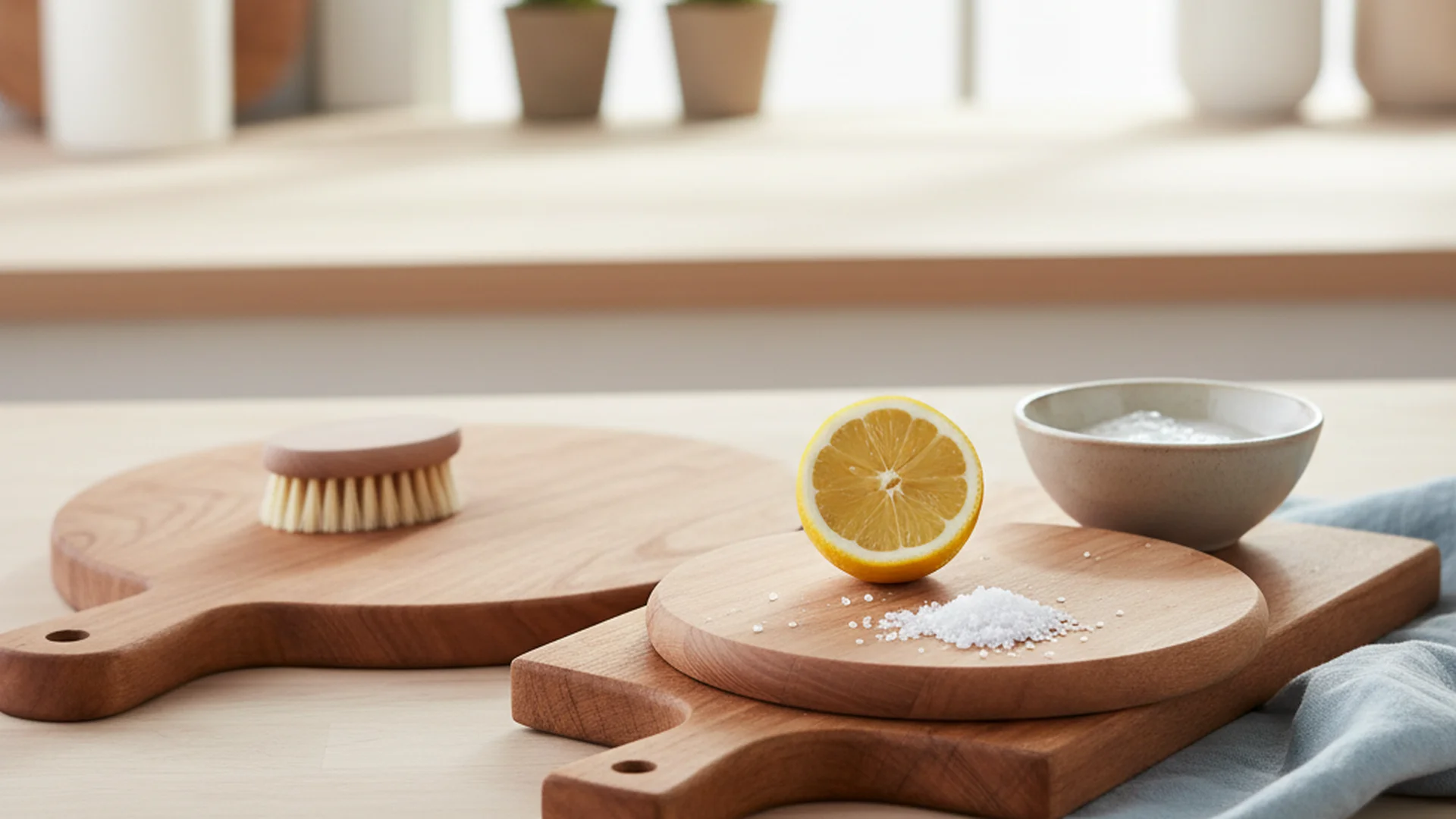
- Step 1: Sprinkle a generous layer of coarse sea salt over the surface of the board.
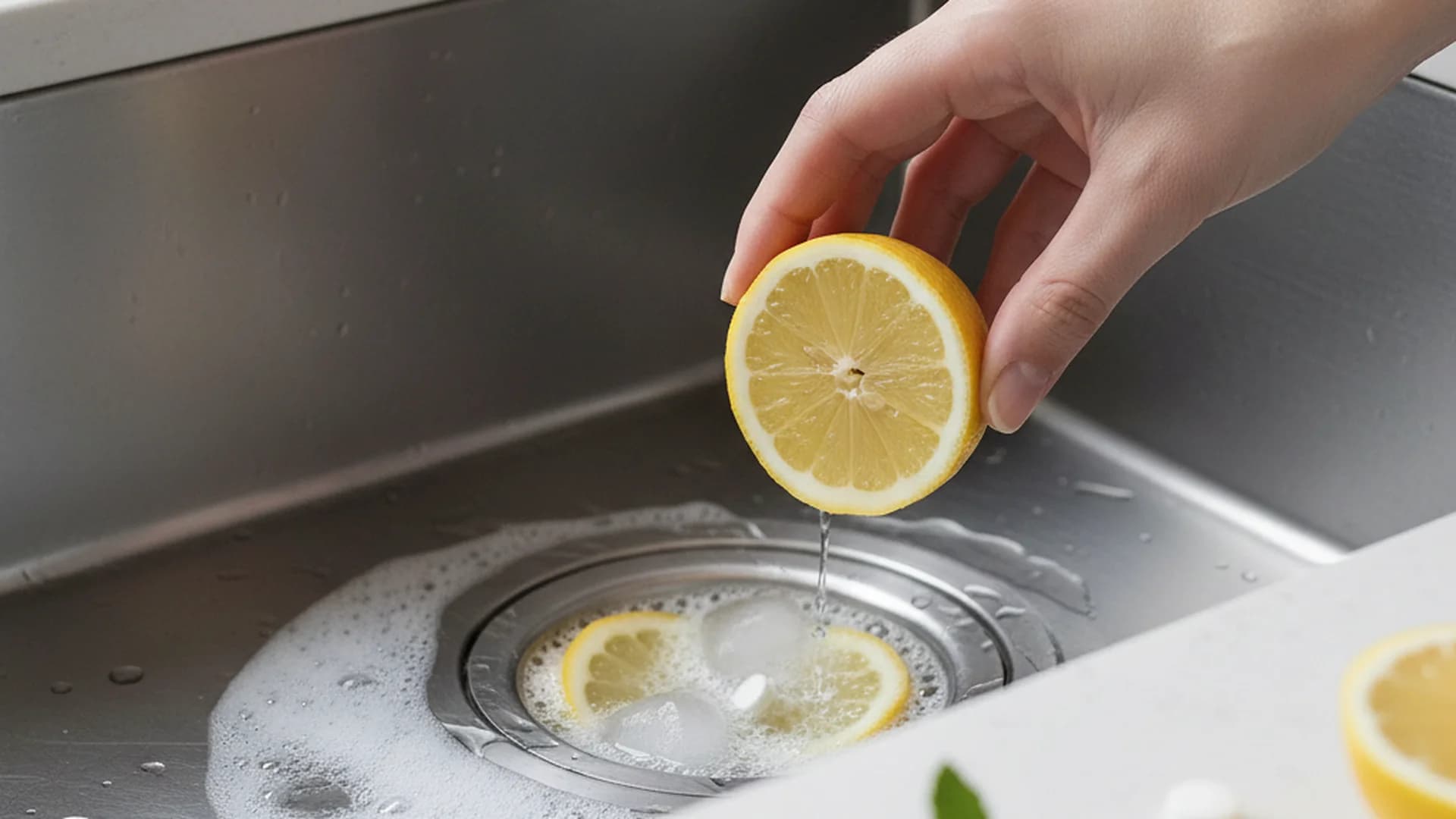
- Step 2: Take half a lemon and, with the cut side down, scrub the salt into the wood in a circular motion.
- Step 3: As the lemon juice reacts with the salt, it forms an abrasive paste that lifts stains and kills surface bacteria.
- Step 4: Let the paste sit for 5 minutes before rinsing with hot water.
3. Vinegar Sanitization
If you’ve been working with high-risk foods like raw poultry, you need a stronger disinfectant. Spray the surface with a solution of 1 part white vinegar to 4 parts water. The acetic acid provides a powerful antimicrobial punch without the need for bleach.
4. Deodorizing with Baking Soda
For boards that have "soaked up" the smell of garlic or onions, create a paste using equal parts baking soda and water. Rub it onto the board, let it sit for 10 minutes, and rinse. This neutralizes organic acids and eliminates odors.
Success: Using these natural methods not only keeps your food safe but also extends the life of your board by avoiding the drying effects of harsh industrial chemicals.
Real-World Examples of Cutting Board Care
Example 1: The Thanksgiving Poultry Prep
Imagine you've just finished prepping a 20-pound turkey. The board is covered in raw juices. In this scenario, a "quick rinse" is dangerous. The professional approach involves an immediate scrape of debris, a hot soapy wash, followed by a vinegar spray sanitization. This prevents the bacteria from entering the "Danger Zone" (40°F - 140°F) where they multiply rapidly.
Example 2: The Stinky Salsa Board
You’ve just chopped three white onions and five cloves of garlic for a fresh salsa. Your board now smells like a pungent garden. By using the baking soda paste method mentioned above, you can neutralize those volatile sulfur compounds, ensuring your next task—slicing apples—doesn't result in onion-flavored fruit.
Example 3: Restoring an Heirloom Block
You find an old, dry, grey-looking wooden board at a thrift store or in the back of a cabinet. By performing the lemon and salt scrub, followed by a thorough drying and a heavy application of food-grade mineral oil, you can bring the wood back to life, sealing the pores and restoring its natural luster.
Essential Maintenance and Oiling
If you want to know how to clean cutting board surfaces for the long term, you must talk about maintenance. Cleaning removes things; oiling keeps things out.
| Maintenance Task | Frequency | Purpose |
|---|---|---|
| Hot Soapy Wash | After Every Use | Removes surface debris and bacteria |
| Lemon & Salt Scrub | Weekly / Monthly | Deep cleans and removes stains |
| Food-Grade Oiling | Once a Month | Creates a hydrophobic barrier |
| Board Scraping | Yearly | Removes deep knife grooves |
The Correct Way to Oil
Use only food-grade mineral oil or specialized beeswax creams. Apply a generous layer, let it soak in overnight, and wipe off the excess in the morning.
Tip: Always dry your boards upright in a rack. Laying them flat to dry traps moisture underneath, which is the primary cause of mold growth and wood rot.
Common Mistakes to Avoid
- Using Vegetable or Olive Oil: These are food products that will eventually go rancid. They will create a sticky, foul-smelling film on your board that is highly unhygienic.
- The Dishwasher Trap: Unless your board is specifically labeled as dishwasher safe (like some high-density plastics or the new 2025 titanium models), keep it out of the machine. The high heat and humidity are "wood killers."
- Ignoring the Backside: Bacteria don't just stay on the top. Raw meat juices can run down the sides and contaminate the underside. Always wash both sides of the board.
- The "Quick Rinse": Rushing the cleaning process after cutting meat is a recipe for cross-contamination. Always use a surfactant (soap) or an acid (vinegar) to break down bacterial membranes.
Cutting Board Trends for 2025-2026
The kitchen industry is currently undergoing a massive shift toward "Forever Materials" and antimicrobial technology.
- Titanium and Stainless Steel: These are the "gold standard" for 2026. They are non-porous, impossible to scratch deeply, and 100% dishwasher safe. They are becoming the preferred choice for raw meat prep.
- Silver-Ion Coatings: New plastic models are incorporating silver-ion treatments directly into the material. These ions inhibit bacterial metabolism, providing a secondary layer of protection between washes.
- Wheat Straw Composites: For the eco-conscious, these boards offer a biodegradable alternative to plastic while remaining more durable than traditional wood.
Frequently Asked Questions
Can I put a wooden cutting board in the dishwasher?
Is it safe to cut raw meat on a wooden board?
How often should I replace my cutting board?
Why is my wooden board turning grey?
Conclusion
Mastering how to clean cutting board surfaces is a simple yet vital part of maintaining a healthy home. By choosing the right materials—leaning toward wood for its natural defenses or titanium for its durability—and utilizing natural cleaning agents like lemon, salt, and vinegar, you can ensure your kitchen remains a safe space for food preparation. Remember, the key to a long-lasting board is not just how you wash it, but how you dry and maintain it.
Success: Consistent oiling and upright drying can make a high-quality wooden cutting board last for decades, becoming a centerpiece of your kitchen rather than a disposable tool.
Cleaning that keeps score
Every task earns points, every streak multiplies them, and Premium adds a household leaderboard plus a monthly Dustagorgon to beat.
- Free forever
- 30 badges to earn
- Up to 6 in a household
No card needed. Set up your rooms in a couple of minutes.