In this article
What you’ll learn
- Always use pH-neutral cleaners to avoid etching the sealer.
- Avoid vinegar and steam mops, which can damage the finish.
- Microfiber dust mopping is the best defense against abrasive grit.
In the world of modern interior design, concrete has transitioned from a humble subfloor to a high-end finish. Whether you have polished concrete in your living room or a sealed slab in your garage, knowing how to clean concrete floors properly is essential for maintaining that industrial-chic aesthetic. As we move into 2025 and 2026, the popularity of these durable surfaces continues to surge, with residential adoption growing at nearly 5% annually. However, many homeowners mistakenly treat concrete as "indestructible." In reality, concrete is a porous, living material that requires specific care to prevent permanent staining and dulling.
The Golden Rule: pH Neutrality
The single most important factor in concrete care is the chemical balance of your cleaning solution. Because concrete is alkaline and usually protected by a decorative sealer, it is highly sensitive to pH levels.
The best way to clean concrete floors is to use a pH-neutral cleaner. These solutions are specifically formulated to break down dirt and oils without reacting with the concrete or stripping away the protective wax or resin coating. If you use something too acidic (like vinegar) or too alkaline (like ammonia), you risk "etching" the floor—a chemical reaction that creates a permanent dull spot that cannot be wiped away.
Warning: Never use vinegar, lemon juice, or bleach on sealed concrete floors. These substances will eat through the sealer and leave the surface vulnerable to moisture and deep-set stains.
The Professional Routine: Daily and Weekly Care
To keep your floors looking like they were just polished, consistency is more important than heavy scrubbing.
Daily: The Microfiber Sweep
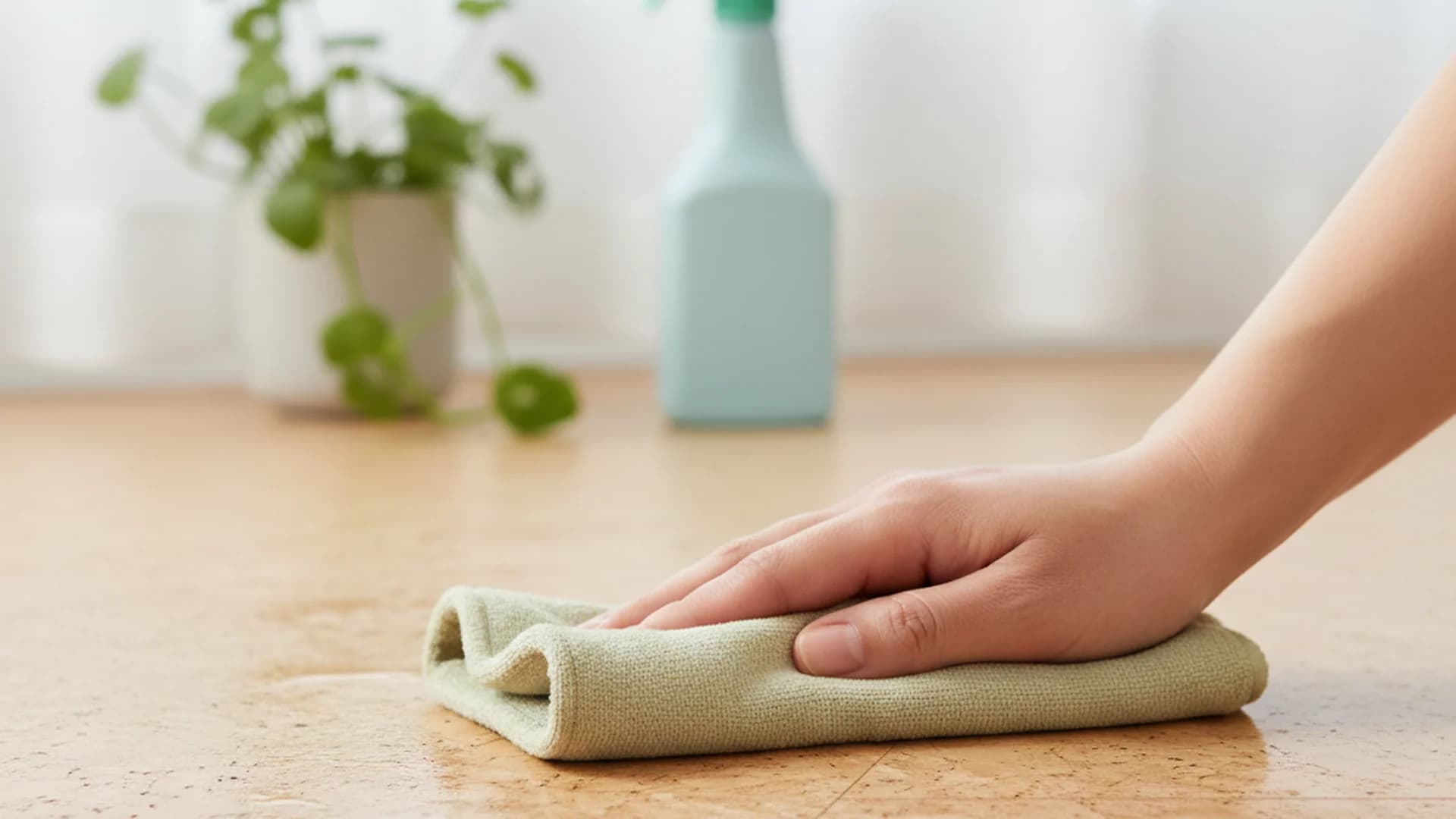
Fine grit and dust act like sandpaper under your feet. Every time you walk across a dusty concrete floor, you are micro-scratching the finish. Use a microfiber dust mop daily to lift and trap these particles. Unlike traditional brooms, microfiber uses static electricity to ensure the dust is removed rather than just pushed into the air.
Weekly: The Damp Mop
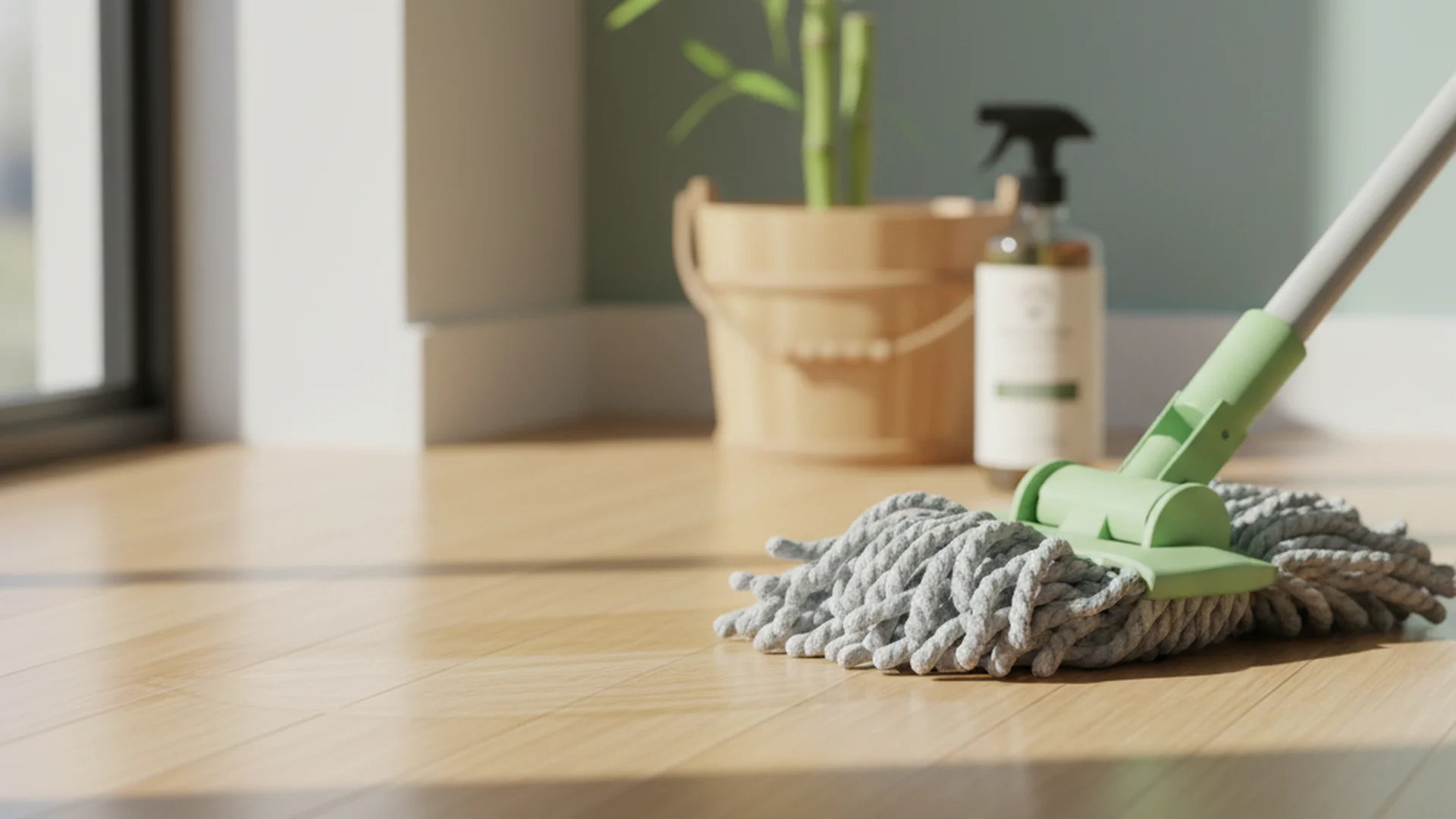
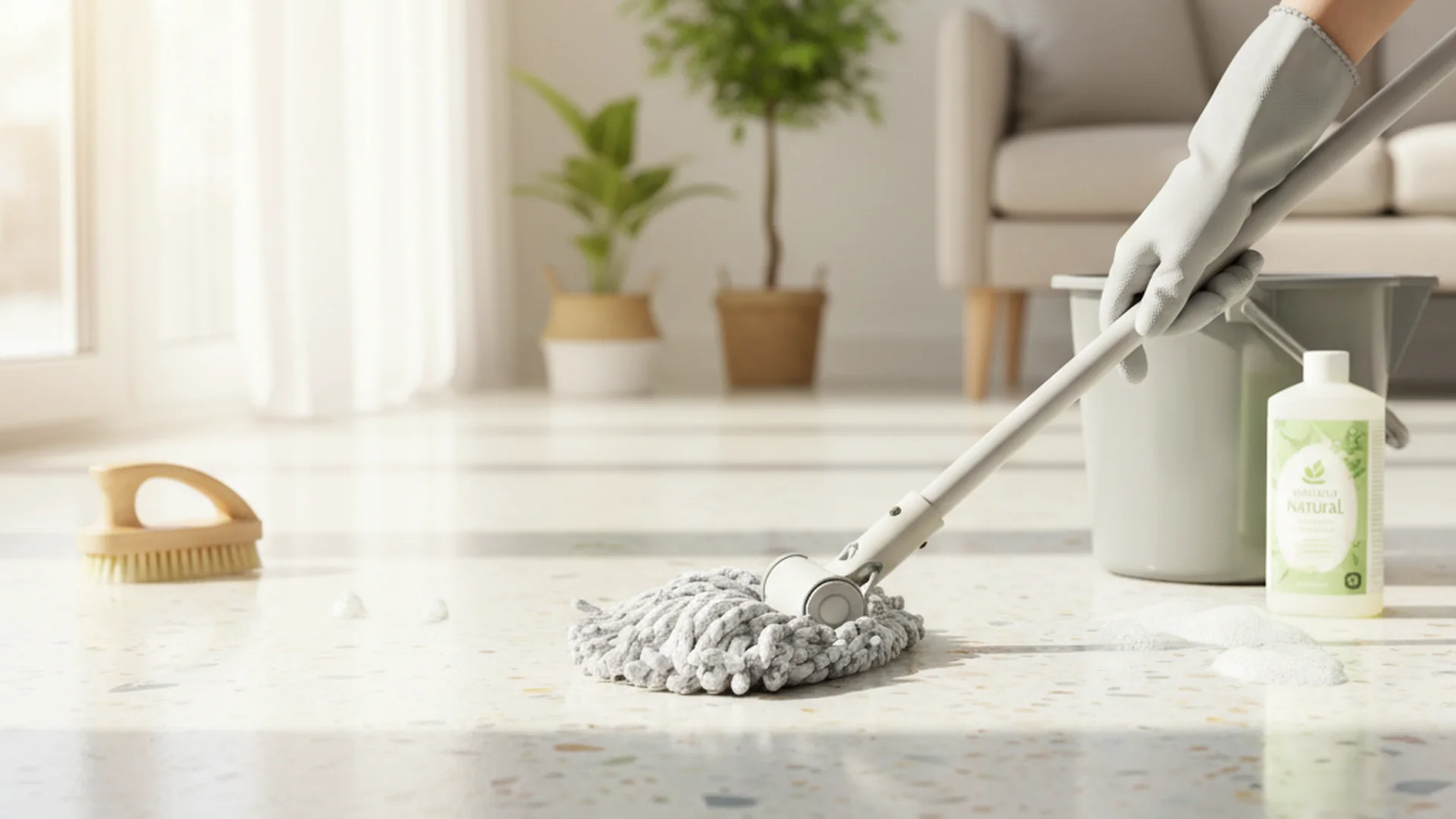
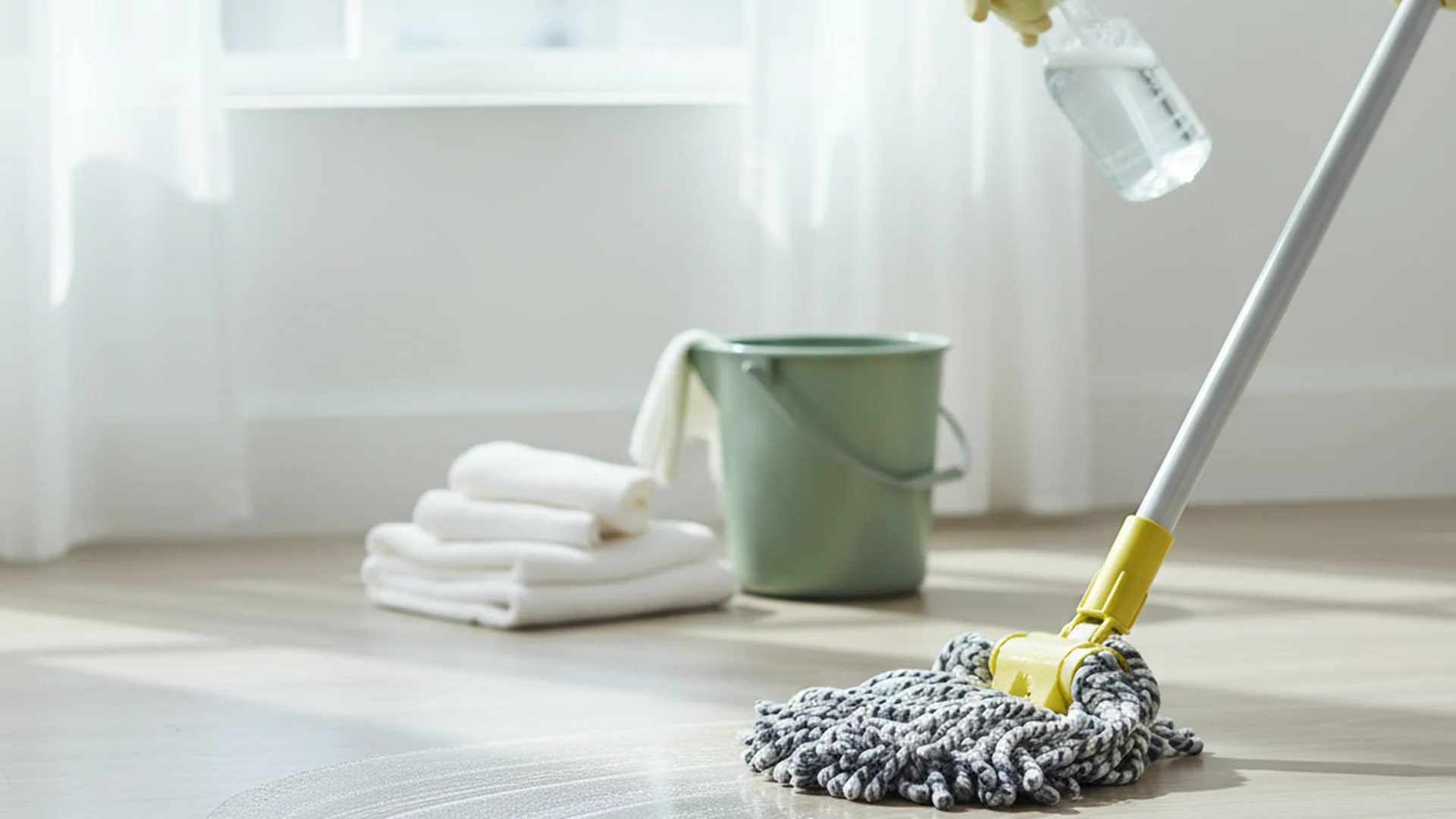
For your weekly deep clean, use the "Two-Bucket Method." Fill one bucket with water and your pH-neutral cleaner, and fill the second with clean rinse water.
- Dip your microfiber mop into the cleaning solution and wring it out until it is just damp.
- Mop a small section of the floor.
- Rinse the dirty mop in the clean water bucket before dipping it back into the cleaning solution.
- This prevents you from spreading dirty water across the porous surface.
Success: Using the two-bucket method ensures that dirt is actually removed from the home, resulting in a streak-free finish and a longer-lasting sealer.
| Cleaner Type | Recommended? | Why? |
|---|---|---|
| pH-Neutral Soap | Yes | Safe for all sealers and won't etch. |
| Vinegar/Water | No | Acidic; strips sealer and dulls shine. |
| Bio-Enzymatic | Yes | Great for organic stains and pet odors. |
| Steam Mop | No | Heat can cause the sealer to peel or cloud. |
Troubleshooting Stains: Real-World Examples
Even with the best maintenance, life happens. Here is how to handle the most common concrete floor challenges.
Example 1: The Red Wine Spill (Kitchen)
Imagine you’re hosting a dinner party and a glass of Merlot hits the polished concrete. Because concrete is naturally porous, you have a very short window of time.
- Action: Immediately blot (don't rub) the spill with a paper towel.
- Solution: Use a pH-neutral cleaner. If a shadow remains, do not scrub with a brush. Instead, apply a mixture of water and a professional concrete degreaser designed for organic stains.
Example 2: The Winter Salt Shadow (Entryway)
In colder climates, road salt is tracked in and leaves white, crusty rings known as efflorescence.
- Action: This isn't just dirt; it's salt being pulled through the concrete.
- Solution: Clean with a specialized salt neutralizer or a very dilute pH-neutral cleaner. Ensure the floor is dried completely to prevent the salt from re-settling.
Example 3: The Garage Oil Spot (Driveway/Garage)
Old oil stains are the bane of concrete garages.
- Action: Create a poultice. Mix baking soda and a little water (or a bio-enzymatic cleaner) into a thick paste.
- Solution: Spread the paste over the oil spot, cover it with plastic wrap, and let it sit for 24 hours. As the paste dries, it literally "pulls" the oil out of the concrete's pores.
Tip: For stubborn grease, look for "living" cleaners. These bio-remediation products contain microbes that continue to eat oil molecules for days after application.
Common Mistakes to Avoid
Even seasoned cleaners often fall into traps that can ruin a concrete finish.
- Over-wetting the Floor: Using a soaking wet mop is dangerous. Water can seep into micro-cracks or joints, leading to mold growth beneath the slab or a white salty powder on the surface called efflorescence.
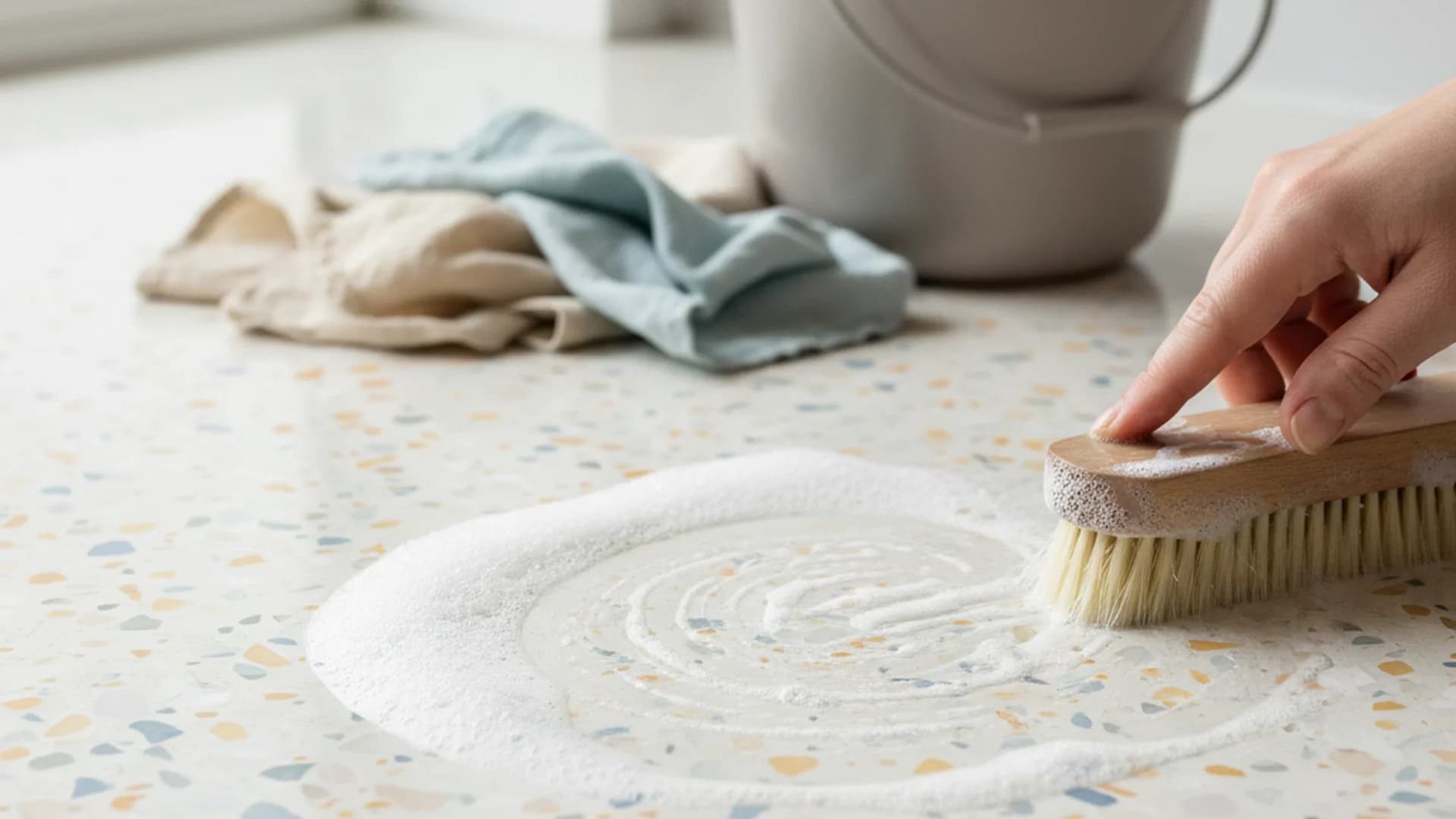
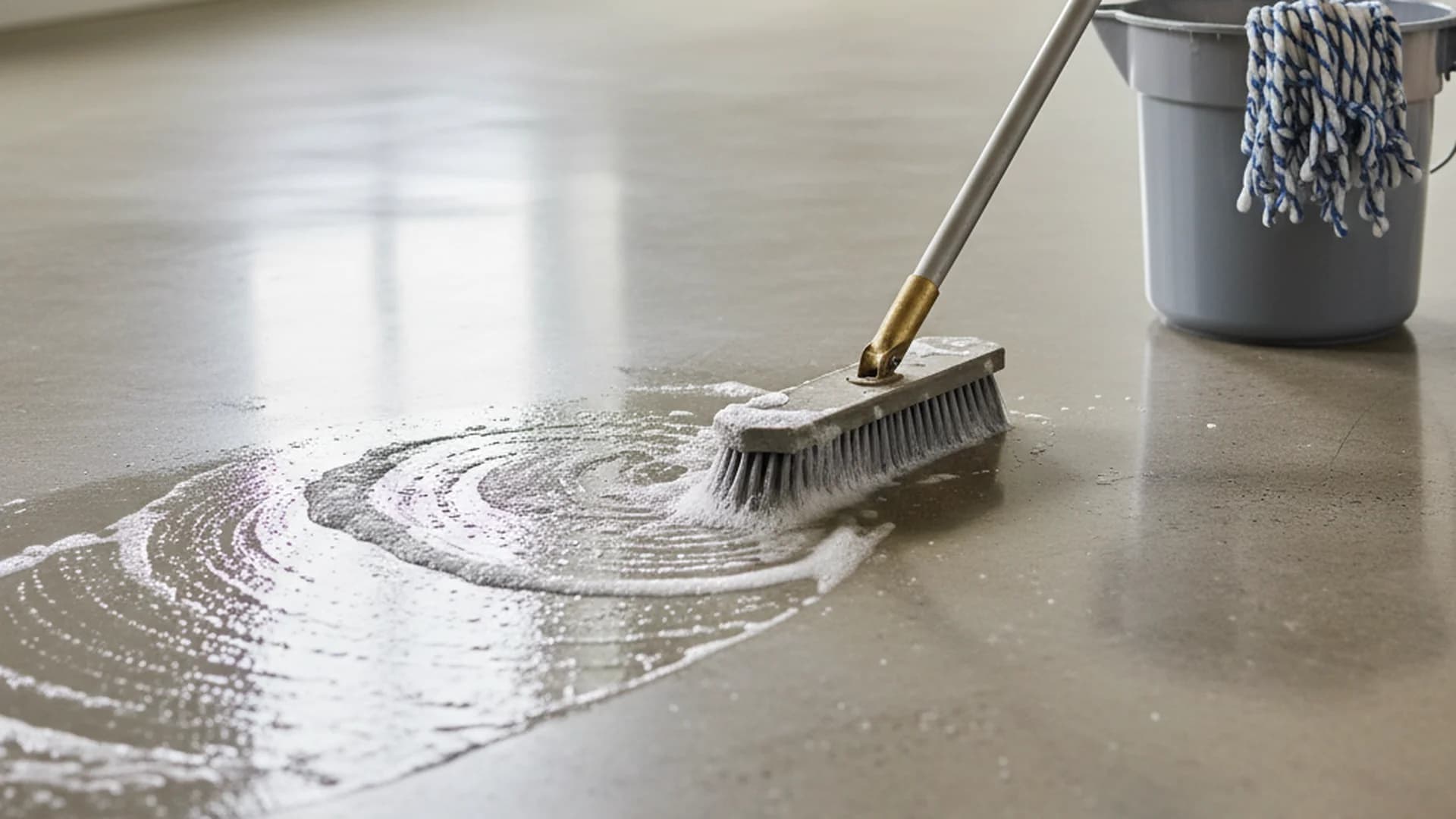
- Using Abrasive Tools: Wire brushes and stiff-bristled scrubbers leave permanent micro-scratches. Stick to soft nylon brushes if scrubbing is necessary.
- Neglecting the Sealer: Many believe concrete is maintenance-free. In reality, indoor floors need resealing every 2–5 years. Neglecting this leads to the concrete "dusting," where the surface literally starts to break down into fine powder.
- Using Steam Mops: While great for tile, the high-heat moisture of a steam mop can cause a "blushing" effect on concrete, where the sealer turns a cloudy white and begins to peel.
Note: If your floor looks dull even after cleaning, it likely isn't dirty—it's likely that the protective wax or sealer has worn down and needs a fresh application.
What’s New in 2025–2026?
The world of concrete care is evolving rapidly. We are seeing a major shift toward "tactile diversity." While high-gloss, mirror-like finishes were popular a few years ago, the 2026 trend favors matte and satin finishes. These finishes are much more forgiving, as they hide dust and minor scratches far better than their high-shine predecessors.
Technological integration is also changing how to clean concrete floors. High-end residential installs now feature embedded IoT sensors that monitor moisture levels to alert homeowners of potential leaks before mold can form. Furthermore, the rise of robotic floor scrubbers has reached the home market. Modern "mop-and-vacuum" robots are now being specifically calibrated for hard, sealed surfaces, allowing for daily maintenance without human intervention.
Frequently Asked Questions
Can I use vinegar to clean my concrete floors?
Is it safe to use a steam mop on concrete?
How often should I reseal my concrete floors?
How do I remove oil stains from a garage floor?
Conclusion
Mastering concrete floor cleaning tips is about working smarter, not harder. By choosing pH-neutral cleaners, ditching the acidic pantry staples, and staying on top of daily dust removal, you can ensure your floors remain a stunning focal point for decades. As we move into 2026, the shift toward sustainable, bio-remediation cleaners and matte finishes makes it easier than ever to maintain a beautiful, industrial-chic home.
Success: Following these professional guidelines will protect your investment and keep your concrete surfaces looking brand new with minimal effort.
Cleaning that keeps score
Every task earns points, every streak multiplies them, and Premium adds a household leaderboard plus a monthly Dustagorgon to beat.
- Free forever
- 30 badges to earn
- Up to 6 in a household
No card needed. Set up your rooms in a couple of minutes.