In this article
What you’ll learn
- Coffee reservoirs are among the germiest spots in the average home.
- Natural descaling with citric acid is often more effective and pleasant than vinegar.
- Cleaning (removing oils) and descaling (removing minerals) are two distinct, essential tasks.
For many of us, the morning doesn't truly begin until the first drop of caffeine hits the mug. However, if your daily brew has started to taste a bit bitter or "burnt," the culprit might not be your beans—it might be your machine. Learning how to clean a coffee maker is more than just a matter of kitchen etiquette; it is a critical hygiene practice and a requirement for machine longevity. As we move into 2025, new coffee trends and machine technologies have changed the way we maintain our appliances, but the fundamental need for a deep clean remains as vital as ever.
The Hidden Dangers in Your Coffee Maker
It is a sobering reality: your coffee machine might be one of the dirtiest items in your kitchen. Coffee reservoirs are notorious for harbouring yeast and mold. Because these machines provide a dark, damp, and warm environment, they are the perfect breeding ground for microorganisms that can cause allergic reactions or infections.
Despite this, plenty of people clean their machines less than once a month, and some have never cleaned theirs at all. Neglecting your machine doesn't just impact your health; it directly affects the flavor profile of your coffee. Coffee beans contain natural oils that, over time, cling to the internal components and brew basket. When these oils go rancid, they impart a "burnt" or acrid flavor to every cup you brew.
Cleaning vs. Descaling: What’s the Difference?
Before diving into the process, it is important to distinguish between the two types of maintenance your machine requires.
- Cleaning: This refers to removing coffee oils, residue, and physical debris. This is usually done with soap and water on removable parts or with specialized cleaning tablets for the internal components.
- Descaling: This is the process of removing mineral buildup (limescale) caused by "hard" tap water. Limescale acts like plaque in your machine's "arteries," slowing down the water flow and eventually causing the heating element to fail.
Note: Descaling is the most important step for the longevity of your machine. In hard water areas, you should perform this monthly.
How to Clean a Coffee Maker Naturally
If you want to know how to clean a coffee maker naturally to avoid harsh industrial chemicals, you have two primary options: white vinegar or citric acid. Both are highly effective, though they work in slightly different ways.
The Citric Acid Method (Preferred)
Citric acid has become the go-to choice over vinegar. It is a powerful descaler, has no lingering smell, and rinses away much faster.
- The Mixture: Mix 2 tablespoons of citric acid powder with one quart of warm water until dissolved.
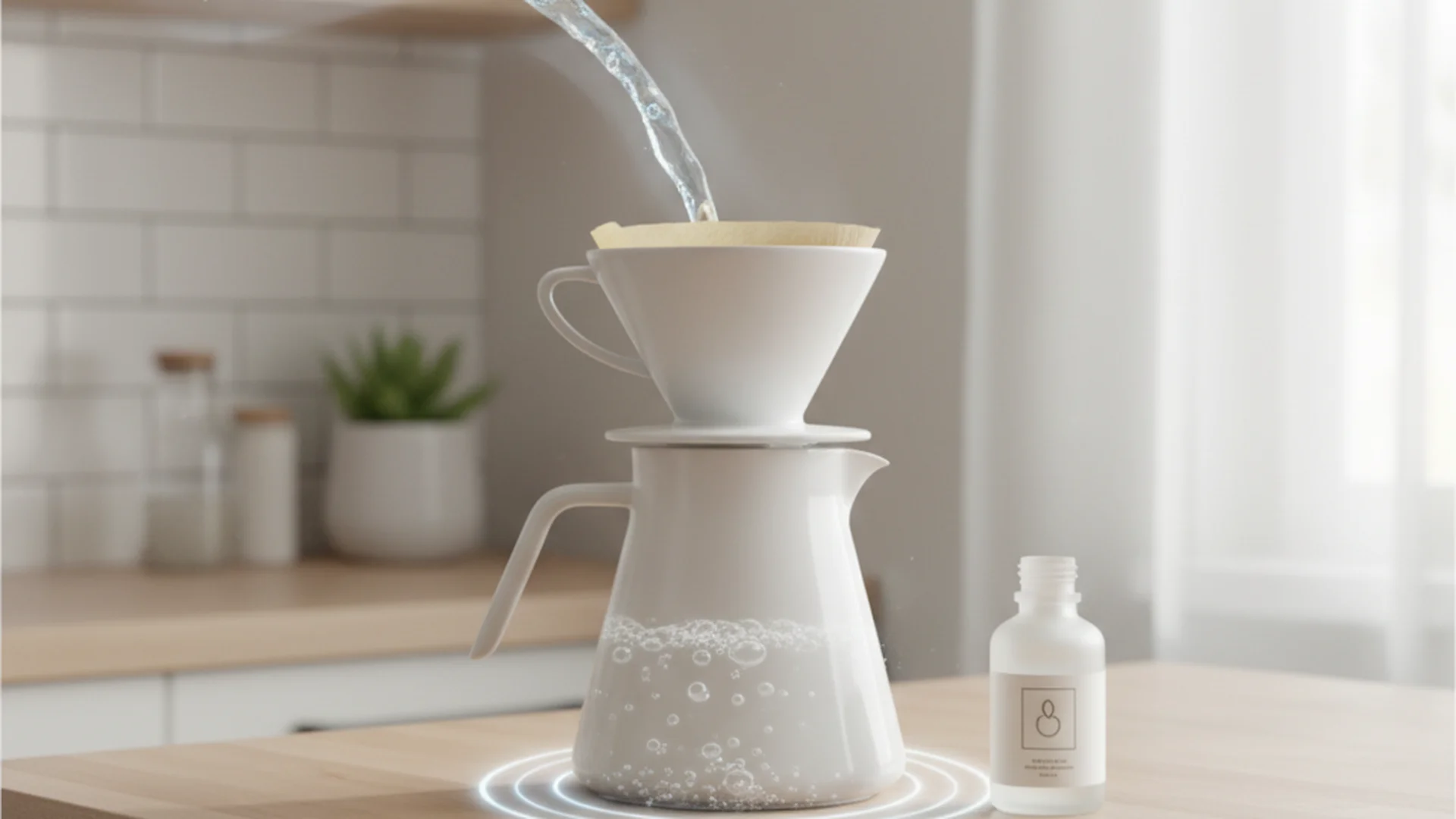
- The Process: Pour the solution into the reservoir and run a full brewing cycle.
- The Rinse: Run two cycles of plain, filtered water to ensure all acidity is gone.
Success: Using citric acid is the best way to learn how to clean a coffee maker without chemicals while avoiding the pungent odor that vinegar leaves behind for days.
The White Vinegar Method
If you don't have citric acid on hand, white vinegar is a reliable household staple.
- The Mixture: Use a 1:1 ratio of white vinegar and water.
- The Process: Fill the reservoir and start the brew cycle.
- The Pause: Halfway through the cycle, turn the machine off. Let it sit for 30 to 60 minutes. This "Pause and Soak" method allows the acid to dissolve stubborn mineral deposits inside the heating element.
- Completion: Finish the cycle and run three cycles of plain water.
Warning: While vinegar is effective, its high acidity can damage rubber seals over time if used too frequently or at full strength. Always dilute it.
2025-2026 Trends in Coffee Maker Maintenance
The world of coffee is evolving, and so are our machines. In 2025, we have seen a massive shift toward AI-driven maintenance. High-end machines now feature predictive cleaning alerts. Instead of just counting the number of cups brewed, these sensors detect actual limescale levels and water flow resistance to tell you exactly when a deep clean is needed.
Furthermore, the rise of "super-automatic" machines, like the De'Longhi Eletta Explore, has introduced tube-free milk systems. These systems, such as the LatteGo, consist of only two parts and can be cleaned in seconds under a tap, significantly reducing the risk of bacterial growth in milk lines.
Another major trend is the move toward non-toxic construction. Consumers are increasingly choosing machines with BPA-free, stainless steel, or glass internal paths to avoid chemical leaching under high heat. If you have one of these newer models, you must be careful to use non-abrasive cleaners to maintain the integrity of these premium materials.
Common Mistakes to Avoid
Even well-intentioned cleaning can go wrong if you use the wrong methods. Here are the most frequent errors:
Using Scented Dish Soap
Never use "Mountain Spring" or "Lavender" scented soaps on your filter basket or carafe. Plastic is porous and will absorb these scents. Your next several dozen cups of coffee will taste like perfume. Stick to unscented, mild detergents.
Using 100% Distilled Water
It seems logical—no minerals means no scale. However, many manufacturers warn against this. Distilled water is "ion-hungry." Because it has been stripped of all minerals, it can actually leach metal ions from your machine’s internal copper or brass components, leading to premature structural failure. Always use filtered water instead.
Ignoring the Showerhead
Most people focus on the pot and the reservoir. However, the showerhead—the part that drips water onto the grounds—is a prime spot for mold and oil accumulation. If your showerhead is removable, soak it in a vinegar solution once a month.
Real-World Example: The "Hard Water" Disaster
Consider the case of a small office in Arizona (a hard water region). They used their machine 20 times a day but only descaled once a year. Eventually, the machine simply stopped pumping. Upon inspection, the internal tubes were almost entirely blocked by white calcium deposits. By switching to a monthly citric acid routine, they extended the life of their replacement machine by four years and counting.
Step-by-Step Deep Cleaning Checklist
To ensure your machine stays in peak condition, follow this monthly checklist:
- Disassemble: Remove the carafe, filter basket, and any removable reservoir parts.
- Soak: Soak these parts in warm, soapy water (unscented).
- The Interior: Use the "Pause and Soak" method with a natural descaler (citric acid or vinegar).
- The Needle/Showerhead: Use a paperclip or a specialized tool to clear any coffee grounds from the exit needles or showerhead holes.
- The Exterior: Wipe down the heating plate and the outer casing.
- The Dry Out: This is the most overlooked step. Leave all lids and compartments open for at least two hours to ensure the machine dries completely, preventing mold growth.
Tip: If you have a pod-based machine (like a Keurig), the exit needle is often the source of "short cups." Regular cleaning of this tiny component can restore your machine's volume.
Frequently Asked Questions
Can I use baking soda to clean my coffee maker?
How often should I deep clean if I only use the machine once a day?
Why does my coffee still taste bitter after cleaning?
Is it safe to put coffee maker parts in the dishwasher?
Conclusion
Taking the time to learn how to clean a coffee maker properly is the best investment you can make for your morning routine. By using natural methods like citric acid and avoiding common pitfalls like scented soaps or distilled water, you ensure that every cup is hygienic and flavor-pure. Remember, a clean machine doesn't just make better coffee—it lasts longer, saving you money and reducing electronic waste.
Success: Following these steps will result in faster brew times, quieter operation, and significantly better-tasting coffee.
Cleaning that keeps score
Every task earns points, every streak multiplies them, and Premium adds a household leaderboard plus a monthly Dustagorgon to beat.
- Free forever
- 30 badges to earn
- Up to 6 in a household
No card needed. Set up your rooms in a couple of minutes.