In this article
What you’ll learn
- Master the freeze and hot water methods for safe wax removal
- Neutralize frying odors using the vinegar simmer technique
- Adopt 2025 trends like air frying and eco-friendly enzyme cleaners
Hanukkah, the beautiful eight-day "Festival of Lights," is a time for family, reflection, and—of course—delicious fried foods. However, for the person in charge of the household maintenance, it also presents a unique set of challenges. Between the stubborn wax drippings on the hanukkiah (menorah) and the heavy scent of oil that seems to permeate every curtain and rug, hanukkah cleaning can feel like a marathon.
Unlike Passover, which requires a rigorous religious "spring cleaning" to remove every crumb of chametz, Hanukkah cleaning is more about managing the practical aftermath of oil and light. By following a structured hanukkah cleaning guide, you can focus more on the blessings and less on the grease splatters.
The Menorah Clinic: Safely Removing Wax
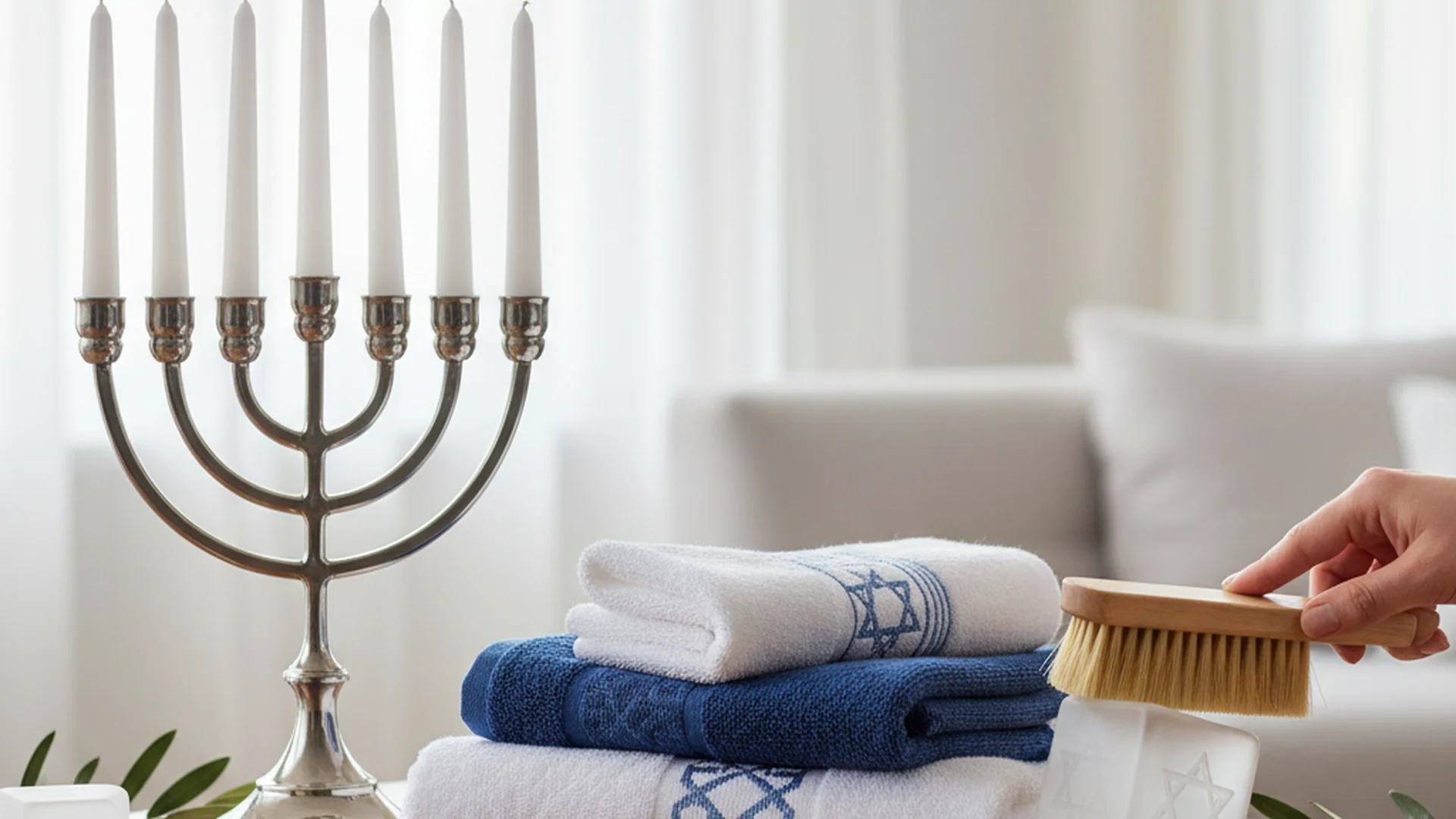
The centerpiece of the holiday is the menorah, but by the third or fourth night, it often becomes encrusted with colorful wax. Candle fires are far more common during the December holidays, so keeping your menorah clean isn't just about aesthetics; it’s a vital safety measure to ensure new candles sit securely in their holders.
The Freeze Method
This is the gold standard for silver, gold-plated, or sturdy metal menorahs.
- Freeze: Place the wax-covered menorah in the freezer for about 45 minutes.
- Contract: The cold temperature causes the wax to contract and pull away from the metal surface.
- Pop: Use a plastic scraper or even an old credit card to gently pop the wax off.
Tip: Never use a metal knife to scrape wax. This is the most common cause of permanent scratches on heirloom silver.
The Hot Water Bath
For intricate filigree or delicate designs where scrapers can't reach, heat is your friend.
- Prepare: Line a large pot with parchment paper. This is a crucial step—the parchment catches the melting wax so it doesn't coat your cooking pot.
- Submerge: Fill the pot with very hot (but not boiling) water and a drop of grease-cutting dish soap.
- Melt: Submerge the menorah. The wax will melt and float to the surface.
- Dry: Once the wax is gone, remove the menorah and buff it with a soft microfiber cloth.
Warning: Never use boiling water on a glass menorah. The "thermal shock" can cause the glass to crack or shatter instantly.
| Menorah Material | Recommended Cleaning Method | Tool to Use |
|---|---|---|
| Sterling Silver | Freeze Method | Plastic Scraper |
| Brass | Hot Water Bath | Microfiber Cloth |
| Glass | Warm Soap Soak | Soft Sponge |
| Stone/Marble | Handheld Steamer | Paper Towel |
The Latke-Proof Kitchen: Managing Grease and Splatter
Traditional foods like latkes (potato pancakes) and sufganiyot (jelly donuts) are fried in oil to commemorate the miracle of the oil that lasted eight days. Oil use in the kitchen climbs dramatically during this week, which means your surfaces are under a constant "micro-mist" of grease.
Pre-emptive Strikes
The best way to handle hanukkah cleaning is to prevent the mess from landing in the first place.
- Splatter Guards: Always use a fine-mesh splatter guard over your frying pans.
- Surface Shielding: Cover nearby small appliances (like your toaster or coffee maker) with parchment paper or clean kitchen towels while frying.
- The Floor Factor: Place a washable rug or a few sheets of newspaper in front of the stove to catch the inevitable oil pops that make floors dangerously slippery.
Degreasing the Hub
Your stove hood filter is the unsung hero of the holiday. Because it works overtime during Hanukkah, it can become clogged, reducing its efficiency and becoming a fire hazard.
Note: Clean your stove hood filters after the fourth night and again once the holiday concludes. A concentrated citrus-based degreaser is the most effective tool for this job.
Combating "Latke Lingering" (Odor Elimination)
We all love the smell of latkes while they are frying, but no one wants their bedroom to smell like a potato pancake three days later. Fried oil particles are heavy; they settle on fabrics like curtains, rugs, and upholstery.
The Vinegar Simmer
While you are frying, set a small pot on the back burner filled with one part water and one part white vinegar. Let it simmer on low. The acetic acid in the vinegar neutralizes the airborne alkaline odors of the grease before they can settle into your furniture.
The Baking Soda Buffer
For a deep-seated smell, place small bowls of baking soda or activated charcoal around the kitchen and living area. These act as "odor magnets."
Success: Using the vinegar simmer method can reduce lingering oil smells by up to 80% within the first 24 hours of cooking.
Modern Cleaning Trends for 2025–2026
The way we celebrate is evolving, and so is our hanukkah cleaning guide. In 2025, several new trends have emerged to make the post-holiday cleanup easier and more eco-friendly.
The Air Fryer Revolution
A significant trend in 2025 is the shift toward "cleaner" Hanukkah celebrations. Many families are opting for high-capacity air fryers to cook their latkes. This reduces oil usage by nearly 90%, virtually eliminating the airborne grease mist.
Cleaning Hack: To clean an air fryer after a latke marathon, add a little water and dish soap to the basket and run it for 3 minutes at 350°F. The steam will loosen all the stuck-on bits, making it a breeze to wipe out.
Eco-Friendly Enzyme Cleaners
2026 is seeing a move away from harsh chemical degreasers. DIY enzyme cleaners—made from fermented orange peels and white vinegar—are becoming the preferred choice for tackling holiday grease. These are non-toxic, biodegradable, and leave a fresh citrus scent that complements the holiday atmosphere.
Smart Menorah Maintenance
With the rise of LED and electric menorahs for modern apartments, cleaning has shifted to electronics care.
- Use compressed air to blow dust out of the "flame" sockets.
- Use an electronic-safe microfiber cloth to remove fingerprints from the base without damaging the internal circuitry.
Common Mistakes to Avoid
Even the most experienced holiday hosts can fall into these cleaning traps:
- Pouring Oil Down the Drain: This is a recipe for a plumbing disaster. Fat, oil, and grease (FOG) solidify in pipes. Always collect used oil in a jar or tin and dispose of it in the trash, or look for a local biofuel recycling program.
- Neglecting the Oven: If you keep your latkes warm in the oven, grease can vaporize and coat the interior. If not wiped down, this residue will smoke the next time you bake.
- Using Abrasive Sponges: Avoid "green" scrubby pads on polished menorahs; they will dull the finish permanently.
- Wait-and-See Odor Control: If you don't ventilate during the cooking process, the smell will be much harder to remove later. Open a window or turn on the exhaust fan as soon as the oil hits the pan.
Warning: If you use a handheld power-steamer to melt wax, be careful of the runoff. The melted wax will be liquid and can stain wood or stone if not caught immediately with a paper towel.
Frequently Asked Questions
How do I get wax off a silver menorah without scratching it?
How do I get the smell of fried oil out of my house?
Can I put a brass menorah in the dishwasher?
What is the best way to clean a glass oil-burning menorah?
Do I need to deep clean for Hanukkah like I do for Passover?
Conclusion
Hanukkah is a time of warmth, light, and joy. While the "grease factor" and the "wax wall" might seem daunting, having a plan makes all the difference. By using the right tools—like the freeze method for your menorah and the vinegar simmer for your kitchen—you can keep your home inviting throughout the eight nights.
A final check on the eighth night: wipe down your stove, clear the last of the wax, and dispose of your cooking oil responsibly. You’ll wake up the next morning with a clean home and beautiful memories of the Festival of Lights.
Success: Implementing a daily 10-minute "oil wipe-down" during Hanukkah prevents grease from hardening, making the post-holiday cleanup 70% faster.
Cleaning that keeps score
Every task earns points, every streak multiplies them, and Premium adds a household leaderboard plus a monthly Dustagorgon to beat.
- Free forever
- 30 badges to earn
- Up to 6 in a household
No card needed. Set up your rooms in a couple of minutes.