In this article
What you’ll learn
- Dopamine is a motivation chemical, not just a reward signal.
- Sensory stacking (visuals, sounds, scents) reduces the "friction" of starting a chore.
- A structured "Dopamine Menu" helps manage executive dysfunction and ADHD burnout.
Imagine if the simple act of scrubbing a counter or folding laundry didn't feel like a heavy emotional burden, but rather a vibrant hit of pure motivation. This is the core philosophy behind a dopamine cleaning routine. For years, we have been told that cleaning should be a sterile, minimalist, and quiet endeavor. However, for those of us who struggle with executive dysfunction—or simply find traditional chores soul-crushing—the clinical approach doesn't work. By "dressing" your cleaning routine in the same way you might wear a bright, bold outfit to boost your mood, you can hack your brain’s reward system and turn maintenance into a celebration.
How the "Dopa-Clean" Works
To understand why a dopamine cleaning routine is so effective, we have to look at how our brains process motivation. Dopamine is often misunderstood as the "pleasure" chemical that arrives after we finish a task. In reality, it is the neurotransmitter of motivation and anticipation. It is the fuel that gets you off the couch, not just the trophy at the finish line.
When you create a cleaning environment that is visually vibrant and sensory-rich, you are providing your brain with "earned" dopamine. This is vastly different from the "cheap" dopamine found in doom-scrolling on social media.
People who describe their homes as "restorative" or "organized" tend to feel calmer through the day than those who describe them as cluttered and unfinished. And when you wash dishes mindfully—paying attention to the warmth of the water and the scent of the soap—the chore itself becomes noticeably less stressful and more absorbing.
Note: For individuals with ADHD, the "activation energy" required to start a task is often the biggest hurdle. Dopamine dressing your routine lowers this barrier by making the start of the task more attractive.
Creating Your Personal "Dopamine Menu"
A central pillar of dopamine cleaning routine help is the creation of a "Dopamine Menu" (or Dopa-menu). This is a curated list of activities and environmental tweaks that spark joy and keep your brain engaged while your body moves.
Think of your cleaning routine as a three-course meal:
1. Starters (5-Minute Quick Wins)
These are tasks that provide an immediate hit of accomplishment.
- Wiping down a single mirror.
- Clearing the "doom pile" off the coffee table.
- Emptying the dishwasher while the coffee brews.
- Example: Sarah, a busy graphic designer, starts her routine by clearing only the "left counter." Seeing that one clean surface provides the visual proof of progress she needs to keep going.
2. Mains (The Heavy Lifting)
These are your deep-cleaning tasks that require more sustained focus.
- Vacuuming the entire downstairs.
- Scrubbing the bathtub.
- Organizing the pantry.
3. Sides (Sensory Enhancements)
These are the "dopamine dressing" elements that make the "Mains" bearable.
- Listening to an immersive "High-Tempo Housework" playlist.
- Lighting a luxury candle that smells like grapefruit or vanilla.
- Wearing your favorite "cleaning outfit" (think bright colors or comfy textures).
| Menu Category | Purpose | Examples |
|---|---|---|
| Starters | Build Momentum | Clear one sink, toss out expired mail |
| Mains | Essential Maintenance | Mop floors, clean bathroom |
| Sides | Sensory Stimulation | Podcasts, neon tools, essential oils |
Tip: Keep your Dopamine Menu printed on your fridge. When you feel "stuck," you don't have to think—just pick one Starter and one Side to begin.
Sensory Stacking: The Secret to Staying Motivated
One of the best dopamine cleaning routine tips is the concept of "Sensory Stacking." This involves layering multiple pleasant sensations on top of a chore to drown out the boredom.
Visual Stimulation
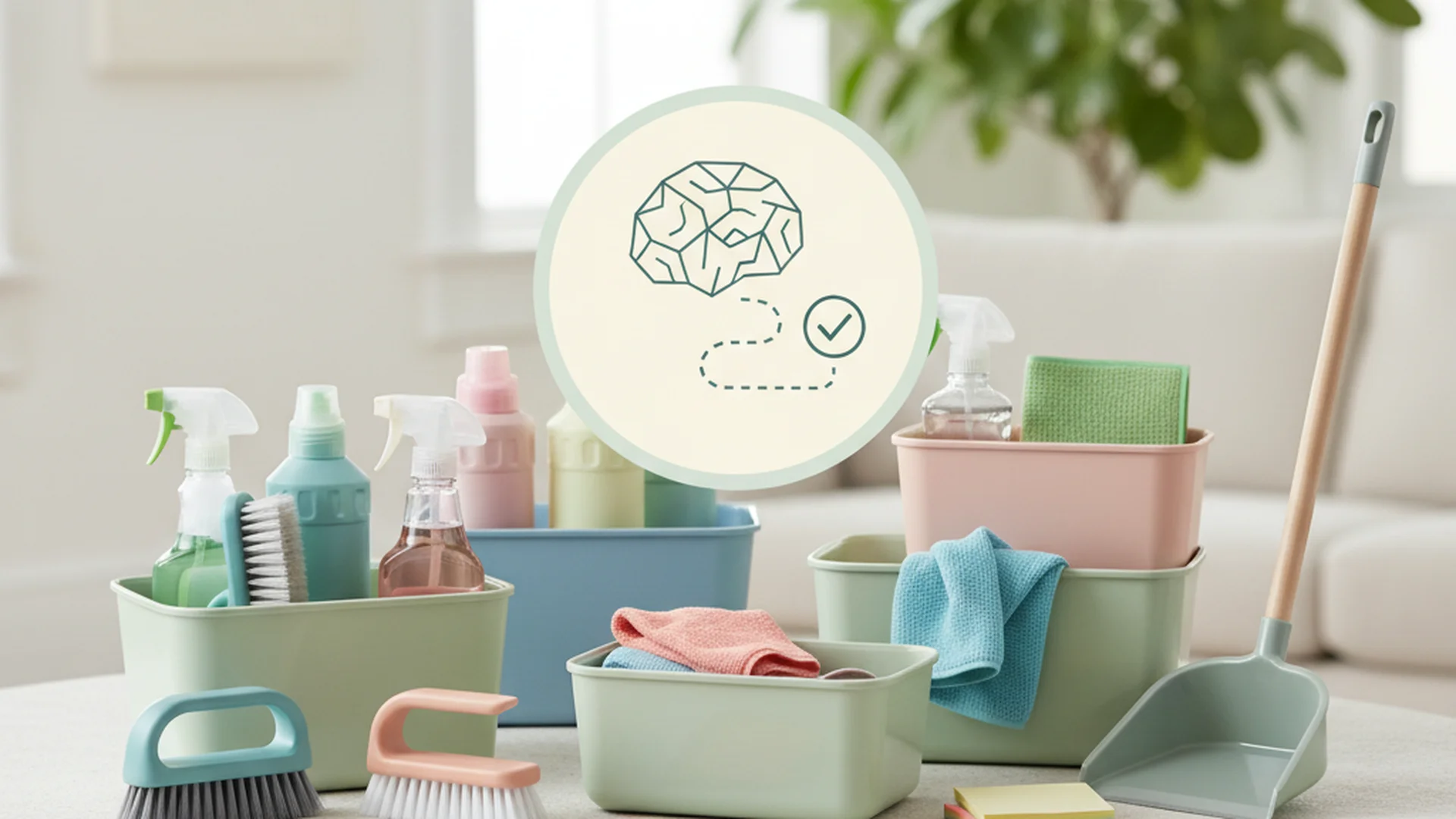
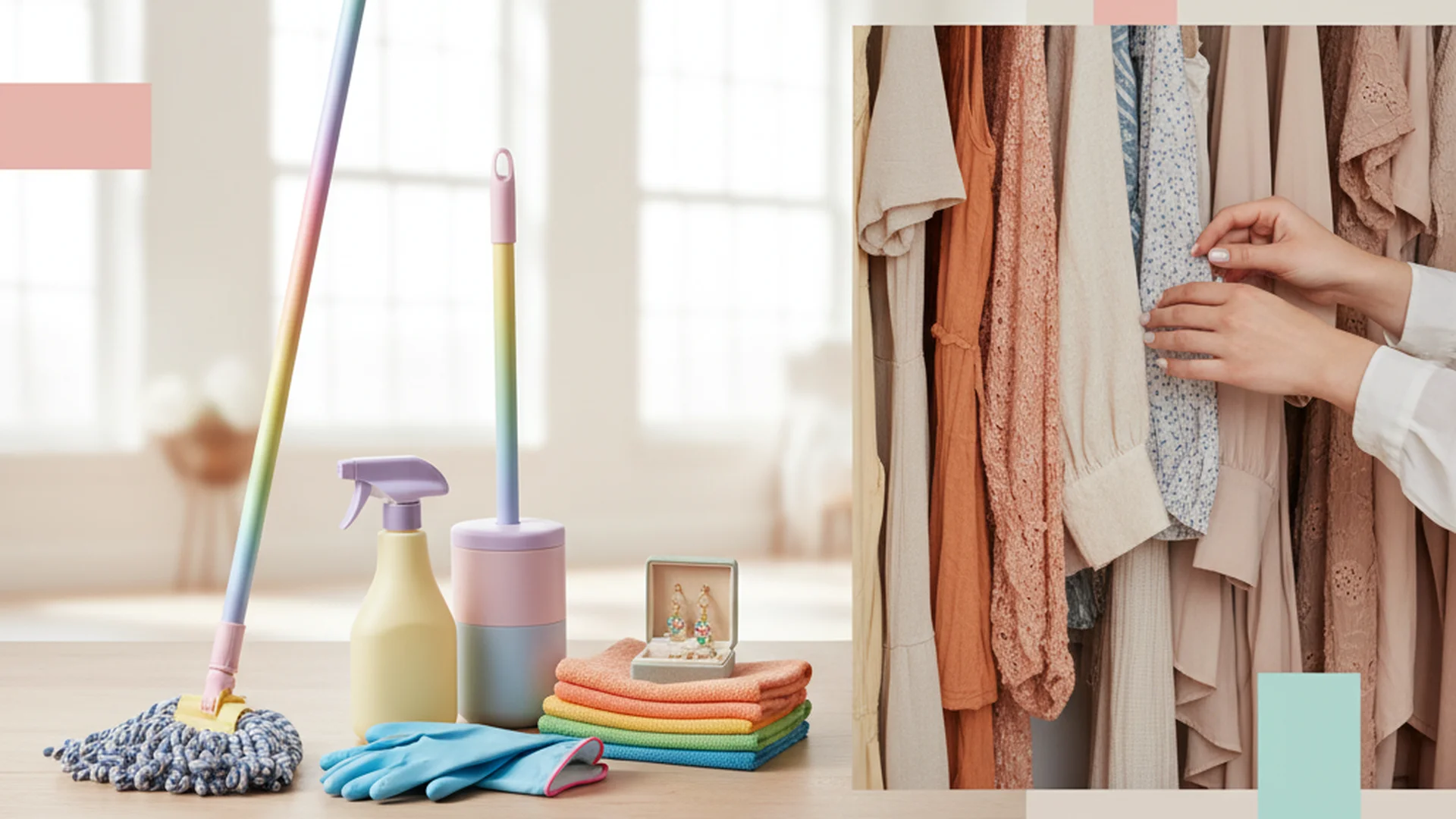
Does the color of your cleaning tools matter? Absolutely. Traditional cleaning supplies are often grey, white, or clinical blue. To dopamine dress your routine, swap these for tools that make you smile.
- Real-World Example: Mark found that switching from a standard sponge to a neon pink "Scrub Daddy" and using a bright yellow glass spray bottle made him far more likely to actually wipe down his kitchen. The visual pop makes the tools feel like toys rather than instruments of labor.
Auditory Energy
Silence can be the enemy of motivation for a neurodivergent brain. Use auditory cues to signal that "cleaning time" has begun. This could be a specific upbeat playlist, an audiobook you only allow yourself to listen to while cleaning, or a "body doubling" live stream where you watch others clean in real-time.
Olfactory Rewards
The smell of bleach is associated with hospitals and "work." Instead, opt for high-quality, essential-oil-based cleaners. Scents like eucalyptus, peppermint, and citrus are known to boost alertness and mood.
Warning: While aromatherapy is great, never mix different cleaning chemicals (like bleach and ammonia) in an attempt to create a custom scent. This can create toxic fumes.
Gamification and the "Checklist High"
To make a dopamine cleaning routine feel like a game, you need to provide your brain with constant feedback. This is where gamification comes in.
- The Pomodoro Technique: Set a timer for 20 minutes of "power cleaning" followed by a 5-minute "scrolling break." The race against the clock creates a sense of urgency that can trigger a dopamine release.
- Visual Trackers: Use a physical checklist. There is a tangible neurological "hit" of accomplishment when you physically cross an item off a list. Digital apps often lack this sensory satisfaction.
- Before and After Photos: Even if you never show them to anyone, taking a photo of a messy room and then a clean one provides "visual proof" of your hard work. This validates the effort in your brain's reward center.
Success: By treating a cleaning session like a 20-minute "sprint" rather than a 4-hour marathon, you avoid the "wall of awful" that leads to procrastination.
Common Mistakes to Avoid
While the dopamine cleaning routine is a powerful tool, it’s easy to fall into a few common traps:
- Productive Procrastination: This happens when you spend three hours "setting the stage"—buying the perfect neon bins, making a 10-hour playlist, or color-coding your labels—but never actually pick up a vacuum.
- All-or-Nothing Thinking: You don’t need to dopamine dress the entire house. If you try to make every square inch of your routine a "party," you will eventually burn out.
- The "Dopamine Detox" Myth: Don't try to "starve" yourself of fun to make chores seem better. Instead, focus on replacing low-value dopamine (mindless scrolling) with the high-value dopamine of a finished task.
- Ignoring "Low-Power" Days: Not every day is a high-energy day. If you aren't feeling the "party vibes," it's okay to switch to "Low-Power Mode"—doing only the bare essentials (like the dishes) without the bells and whistles.
Recent Trends: The 2025 Cleaning Landscape
As we move into 2025 and 2026, the dopamine cleaning routine is evolving with new technology and cultural shifts:
- Cluttercore but Clean: We are moving away from sterile minimalism. The new trend is "Dopamine Decorating," where you organize your colorful collections so they are visible and celebrated rather than hidden away in grey boxes.
- AI Cleaning Personalization: New apps are now using AI to analyze your "energy cycles." They might suggest a heavy "Main" task (like mopping) during your 10 AM focus peak and a "Side" task (like folding laundry while watching TV) during your 4 PM energy slump.
- Virtual Body Doubling: The "CleanSesh" social trend has exploded. Thousands of people now join live streams to clean "together" virtually, providing the social accountability that many ADHD brains need to stay on track.
Frequently Asked Questions
What is a Dopamine Menu for cleaning?
How can I make cleaning feel like a game?
Does the color of my cleaning tools really matter?
How do I start a dopamine cleaning routine if I'm overwhelmed?
Conclusion
The dopamine cleaning routine isn't about being perfect; it's about being kind to your brain. By embracing sensory stacking, colorful tools, and the power of the "Dopamine Menu," you can transform your home maintenance from a source of shame into a source of inspiration. Remember, the goal is to create an environment that supports your mental health, not one that fits into a minimalist magazine.
Success: You’ve learned that cleaning doesn't have to be a chore—it can be a sensory-rich experience that leaves both your home and your mind feeling refreshed.
Cleaning that keeps score
Every task earns points, every streak multiplies them, and Premium adds a household leaderboard plus a monthly Dustagorgon to beat.
- Free forever
- 30 badges to earn
- Up to 6 in a household
No card needed. Set up your rooms in a couple of minutes.