In this article
What you’ll learn
- Understand that a messy room is a symptom of health, not a character flaw.
- Use the '5 Things' method to break down overwhelming messes into manageable categories.
- Focus on function over aesthetics to reduce the executive functioning load.
If you are currently sitting in a space that feels unmanageable, you are not alone. The phenomenon of the "depression room" has gained significant visibility on platforms like TikTok and Reddit, but the reality behind the screen is often one of deep fatigue and isolation. Engaging in depression room cleaning isn’t just about picking up clothes; it’s a restorative act of self-care that requires navigating significant emotional and executive functioning hurdles.
When you are in the midst of a depressive episode, your brain’s ability to plan, initiate, and complete tasks is compromised. What others see as "laziness" is actually a clinical struggle with energy and motivation. This guide is designed to help you navigate the process of cleaning your room with compassion, using gentle methods and low-energy hacks to help you feel like yourself again.
The Psychology of the "Depression Room"
It is a common misconception that a messy room causes depression, or that depression simply causes a messy room. In reality, it is a bidirectional cycle. Your environment and your state of mind feed into each other constantly.
- The Cortisol Connection: Living surrounded by clutter tends to keep stress humming in the background. Clutter can trigger a steady release of cortisol, the body’s primary stress hormone, which may worsen symptoms of anxiety and depression.
- Cognitive Load: When your brain is already fighting for every ounce of energy, a cluttered room creates "visual noise." That extra noise makes it harder to make decisions or find the motivation to start.
- The Shame Cycle: Many individuals feel a deep sense of shame regarding their living conditions, leading to isolation. Hoarding tendencies and depression frequently go hand in hand, illustrating how deeply our mental health is tied to our physical surroundings.
Note: A "depression room" is a reflection of a struggle, not a failure of character. You deserve a functional space regardless of how it looks right now.
Where to Even Start? The "5 Things" Method
The most common question people ask is, "Where do I even start?" When you look at a room covered in laundry, dishes, and trash, your brain sees one massive, impossible task. The key to successful depression room cleaning is breaking that "one task" into smaller, non-threatening categories.
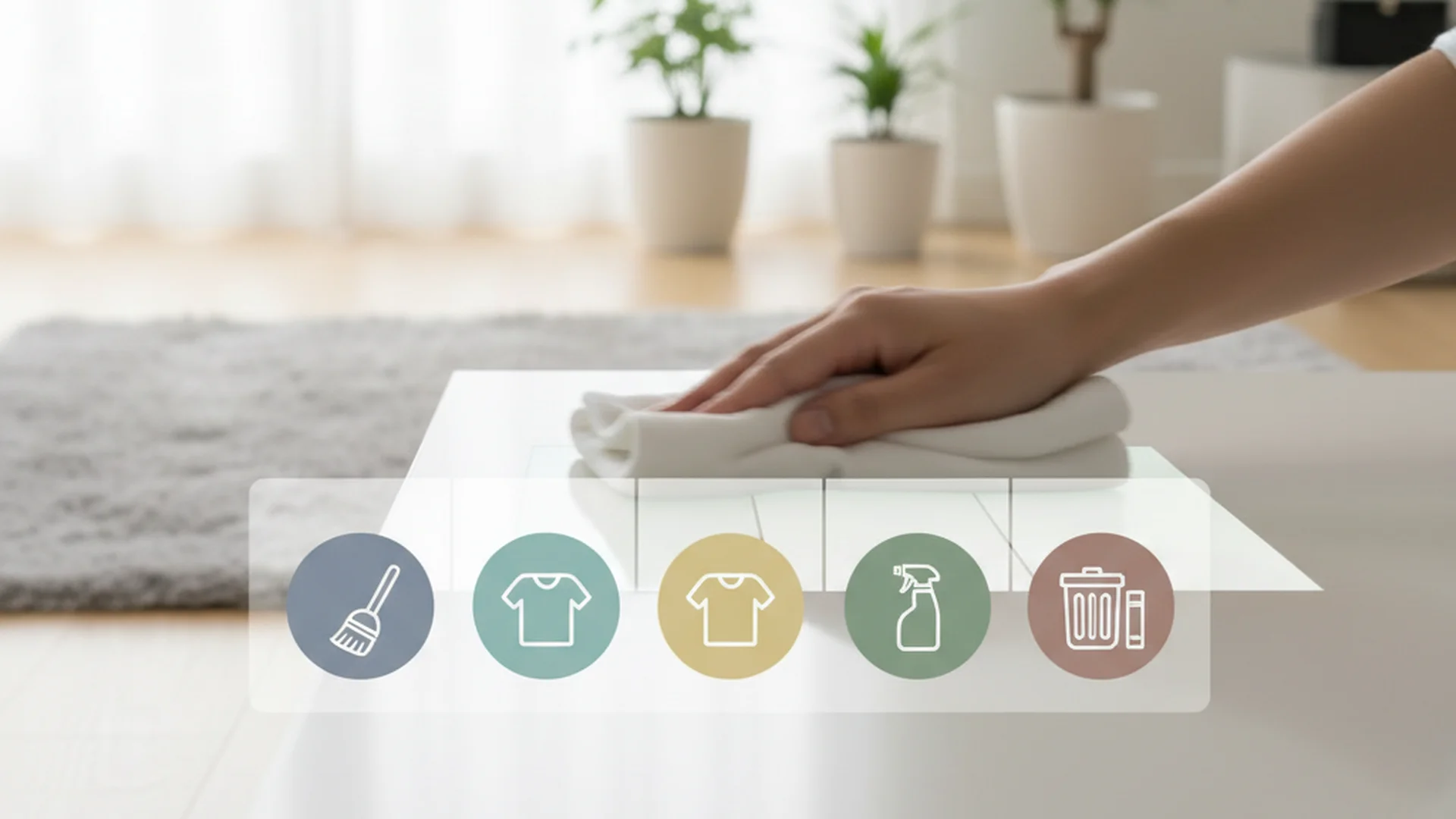
Popularized by author and therapist KC Davis, the "5 Things" method suggests that there are only five things in any messy room. By focusing on only one category at a time, you bypass the "decision fatigue" that often causes paralysis.
1. Trash
Grab a large trash bag. Don't worry about recycling or sorting yet. Simply walk around the room and pick up anything that is clearly garbage—food wrappers, empty bottles, or scrap paper. Do not look at anything else.
2. Dishes
Collect every dish, mug, and utensil. Take them to the kitchen. You do not have to wash them yet; just get them out of your living space.
3. Laundry
Gather all clothes and linens. Don't worry about what is clean or dirty. Put them all in a hamper or a pile in the corner. If you have the energy, start one load of "comfort" items, like your favorite hoodie or pillowcase.
4. Things That Have a Place
Pick up items that have a designated home (e.g., a book that goes on a shelf or a remote that goes on the TV stand). Put them back. If a "place" is currently cluttered, just put the item in the general vicinity.
5. Things That Do Not Have a Place
These are the items that drift around because they don't have a specific home. Collect them in a single box or basket. You can deal with "organizing" them on a day when you have more energy.
Tip: If you find something that doesn't belong in the category you are currently working on, ignore it for now. Staying focused on one category prevents you from "ping-ponging" around the room and getting exhausted.
Low-Energy Hacks for When You’re Overwhelmed
Sometimes, even the "5 Things" method feels like too much. When your energy is near zero, you need "gentle metrics" to make progress without burning out.
The 10-Minute Rule
Tell yourself you will only clean for 10 minutes. Set a timer. When the timer goes off, you have full permission to stop. Often, the hardest part of depression room cleaning is the transition from rest to action. Once the momentum starts, you might find you want to keep going—but if you don't, those 10 minutes still count as a victory.
Body Doubling
Body doubling is a productivity tool where you perform a task in the presence of someone else. This doesn't mean they have to help you clean; they just need to be there.
- Example 1: Invite a non-judgmental friend over to sit on your bed and scroll on their phone while you tackle the laundry.
- Example 2: Join a "Clean With Me" live stream on TikTok or YouTube. Seeing others work can provide the social "nudge" needed to start.
Task Stacking
In 2025, a popular trend involves pairing a low-dopamine task (cleaning) with a high-dopamine activity. This is called task stacking.
- Example 3: Only listen to your favorite true-crime podcast or a specific audiobook while you are cleaning. This creates an incentive to keep moving because you want to hear what happens next.
| Task Level | Strategy | Goal |
|---|---|---|
| Zero Energy | 5-Minute Trash Sweep | Remove odors and clear floor space. |
| Low Energy | The "10-Minute Rule" | Build momentum without commitment. |
| Medium Energy | The "5 Things" Method | Categorize and clear the entire room. |
| High Energy | Deep Cleaning / Organizing | Scrubbing surfaces and finding homes for "drifters." |
Warning: Avoid "all-or-nothing" thinking. If you can only clear the trash today, that is a 100% success. You do not need to finish the whole room for the effort to be valid.
Modern Trends: Cleaning as a Self-Care Ritual
The narrative around cleaning is shifting in 2025-2026, away from "chores" and toward "sanctuary building." This involves using sensory experiences to make the process less clinical and more therapeutic.
- Mindful Cleaning: Instead of rushing, focus on the sensory details. The smell of the lemon cleaner, the warmth of the dishwater, or the visual satisfaction of a cleared nightstand. This helps ground you in the present moment and reduces anxiety.
- Tech-Assisted Maintenance: If your budget allows, lean on technology. AI-driven robot vacuums can maintain a "baseline" of cleanliness, preventing the floor from becoming overwhelming during a depressive dip. UV-C wands are also trending for quickly sanitizing high-touch surfaces without the need for heavy scrubbing.
- The "Closing Duties" Mindset: Adopted from the service industry, this involves doing 2–3 small tasks at night to "set up" your future self. It might be as simple as clearing the clutter off your bedside table so you wake up to a clean surface.
Common Mistakes to Avoid
When seeking depression room cleaning help, it is just as important to know what not to do as it is to know the steps.
- Using Shame as Motivation: Shaming yourself for the mess only drains the limited energy you have. Shame is a "heavy" emotion; compassion is "light" and fuel-efficient.
- Waiting for Motivation: Motivation is often a result of action, not a prerequisite. If you wait to feel like cleaning, you may wait weeks. Start small, and the feeling of accomplishment will create the motivation for the next step.
- Focusing on Perfection: A depression room does not need to look like a Pinterest board. Focus on function over aesthetics. Is there a path to the bed? Do you have a clean cup? Are there no rotting food items? If yes, the room is "clean enough."
- Tackling Sentimental Items First: Never start with the "junk drawer" or old photos. These require high emotional energy. Stick to "functional" items like trash and laundry first.
Success: Most people feel a little lighter mentally once a space is cleared. You aren't just cleaning a room; you are clearing space for your mental recovery.
Frequently Asked Questions
Is my room "dirty" or just "untidy"?
How do I stop the mess from coming back?
Why does cleaning feel physically painful when I’m depressed?
Can I hire help for a depression room?
Conclusion: Building Your Functional Sanctuary
Cleaning a depression room is a marathon, not a sprint. Some days, your only victory might be moving one plate to the kitchen, and that is enough. By using the "5 Things" method and rejecting the myth of laziness, you can slowly reclaim your space.
Remember, you deserve to live in an environment that supports your well-being. Your room is a tool for your life, not a museum of your failures. Start with one trash bag, set a timer for ten minutes, and be gentle with yourself as you navigate the way back to a functional home.
Success: Every item you pick up is a vote for your future self. You are doing the hard work of healing, one step at a time.
Cleaning that keeps score
Every task earns points, every streak multiplies them, and Premium adds a household leaderboard plus a monthly Dustagorgon to beat.
- Free forever
- 30 badges to earn
- Up to 6 in a household
No card needed. Set up your rooms in a couple of minutes.