In this article
What you’ll learn
- Cluttered environments are closely linked to higher stress and a sense of being on edge at home.
- Somatic cleaning and "scent-scaping" are emerging 2025 trends for nervous system regulation.
- Distinguishing between decluttering and cleaning prevents mental burnout and decision fatigue.
We have all experienced that heavy, sinking feeling when walking into a kitchen piled high with dishes or a bedroom where the floor has vanished beneath a sea of laundry. It isn’t just about the physical mess; it is about the mental weight that mess carries. In recent years, the concept of cleaning mental wellness has moved from a niche lifestyle trend to a widely recognised approach to psychological health. Understanding how our external environment mirrors and influences our internal state is the first step toward creating a home that heals rather than hinders.
Whether you are navigating the unique hurdles of ADHD or simply trying to find a sense of calm in a chaotic world, finding the right cleaning mental wellness tips can transform a chore into a restorative ritual. By shifting our perspective from "work that must be done" to "self-care that supports the soul," we can unlock a powerful tool for emotional regulation and mental clarity.
Why Your Brain Craves Order
The link between our surroundings and our psyche isn't just "in your head"—it's in your hormones. When we talk about cleaning mental wellness, we are discussing a biological response to environmental stimuli.
The Cortisol Connection
There is a direct link between how you experience your home and how stressed you feel in it. People who describe their homes as "cluttered" or full of "unfinished projects" tend to stay keyed up, with cortisol—the body’s primary stress hormone—running high. Sustained high cortisol leads to fatigue, anxiety, and sleep disturbances. Conversely, when a home feels "restful" or "restorative," that tension tends to ease off through the evening, allowing for better recovery.
Cognitive Load and Visual Noise
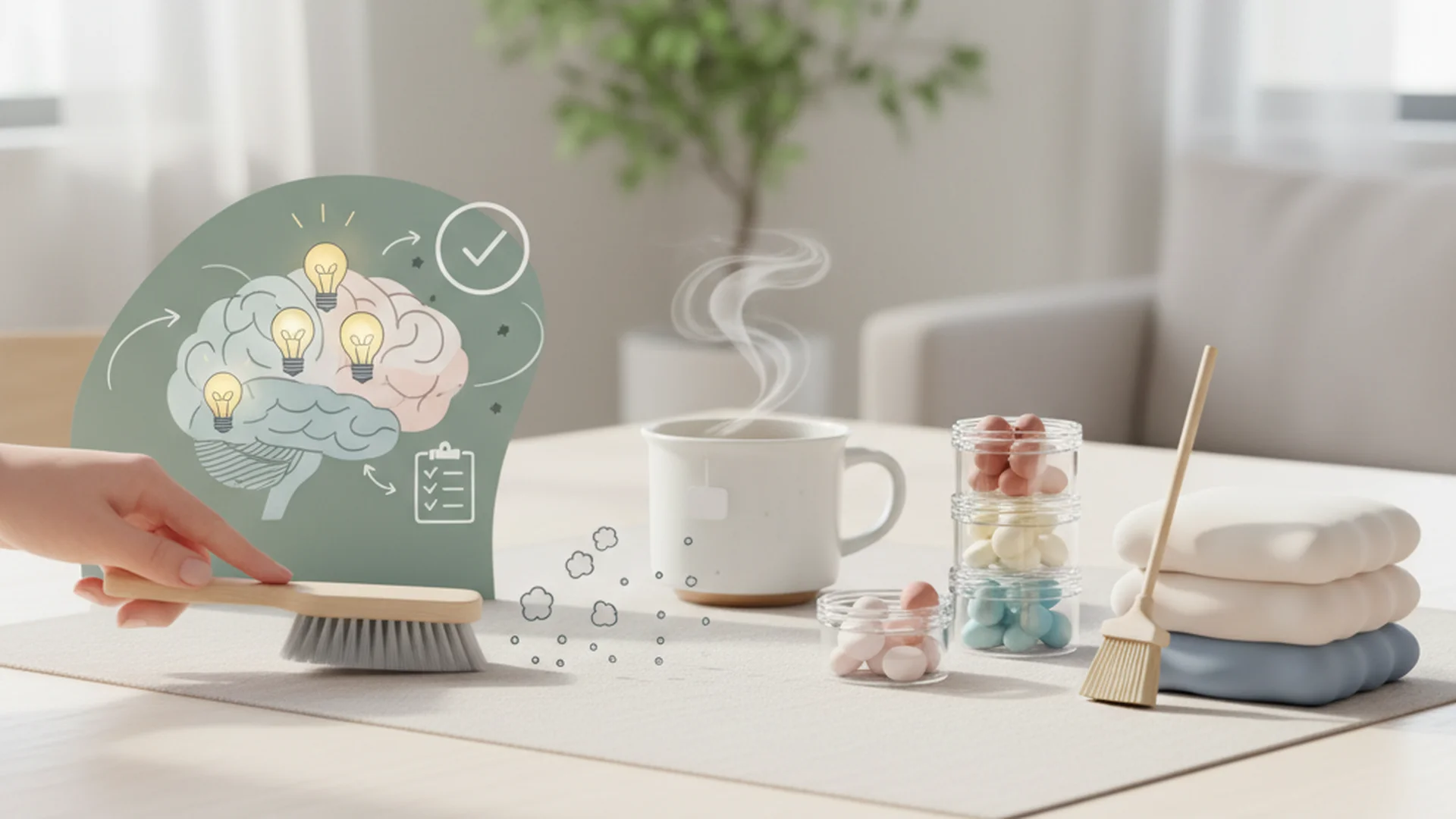
Think of your brain like a computer with limited RAM. Physical clutter competes for your attention. Every stray shoe or stack of mail is a piece of "visual noise" that your brain has to process, even if you aren't looking directly at it. This constant competition for focus results in decreased performance and increased mental exhaustion. When you clear the environment, you effectively free up "bandwidth" for your brain to process information and regulate emotions more effectively.
What This Feels Like Day to Day
Most people notice it without needing the theory: they feel better in a clean home, get a genuine sense of accomplishment from finishing a task, and find that a tidy space takes the edge off their stress and anxiety.
Note: If you find it impossible to keep your entire home clean, focus on one "Sanctuary Space" (like your bed or a reading chair) to keep clear of clutter.
Real-World Examples: Cleaning as a Wellness Tool
To understand how to apply cleaning mental wellness help in your daily life, let’s look at three common scenarios where cleaning serves as a therapeutic intervention.
Example 1: The "Depression Sink" Reset
When struggling with a low mood, a full sink of dishes can feel like a mountain. Instead of aiming for a "perfect" kitchen, the wellness approach involves "functional cleaning."
- The Action: Set a timer for five minutes. Only wash the items you need for your next meal.
- The Result: You break the paralysis of "all-or-nothing" thinking and regain a sense of agency over your immediate environment.
Example 2: The Morning Energy Reset
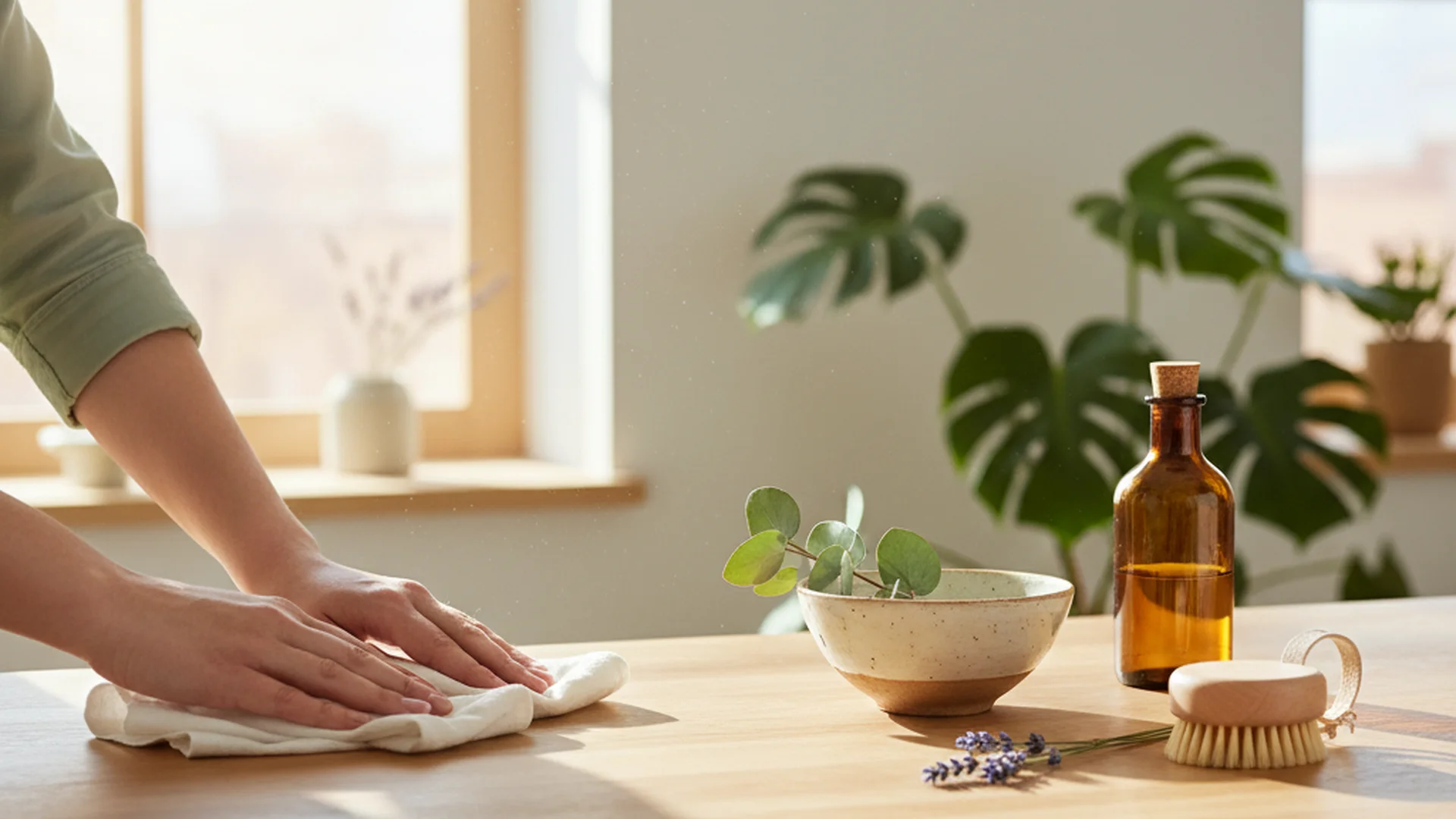
Using the 2026 trend of scent-scaping, a homeowner uses a citrus-based spray to wipe down the bathroom vanity every morning.
- The Action: A quick 2-minute wipe-down accompanied by the energizing scent of lemon and grapefruit.
- The Result: The olfactory stimulation signals to the brain that the day has begun, providing a sensory "anchor" that helps regulate the nervous system for those with ADHD.
Example 3: The "Closing Shift" Ritual
Treating your home like a workplace "closing shift" helps transition from a high-stress workday to a relaxing evening.
- The Action: Spending 10 minutes clearing the coffee table and putting away shoes before sitting down for dinner.
- The Result: You signal to your brain that "work time" is over and "rest time" has begun, reducing evening anxiety.
Tip: Use "Somatic Cleaning" techniques. Focus on the feeling of warm water on your hands or the rhythmic sound of the vacuum to ground yourself in the present moment.
2025-2026 Trends: The Future of Mindful Maintenance
The world of home care is evolving. As we move into 2025 and 2026, the focus has shifted from "spotless perfection" to "nervous system regulation."
| Trend Name | Core Concept | Wellness Benefit |
|---|---|---|
| Somatic Healing | Slow, intentional movements while cleaning. | Regulates the nervous system; prevents burnout. |
| The Probiotic Home | Using bio-based cleaners that support a healthy microbiome. | Boosts physical and mental immunity. |
| Scent-scaping | Using functional fragrances (citrus for energy, lavender for sleep). | Improves mood through olfactory triggers. |
| Underconsumption Core | Owning fewer, higher-quality items. | Reduces the mental load of managing "stuff." |
| AI Wellness Sync | Apps that adjust chores based on energy/menstrual cycles. | Prevents "guilt-tripping" on low-energy days. |
The Rise of Underconsumption Core
One of the most significant shifts in cleaning mental wellness is the "Underconsumption Core" movement. Social media is moving away from massive "hauls" toward celebrating having "just enough." For those seeking cleaning mental wellness help, this is a game-changer. Fewer items mean fewer decisions, less to organize, and a significantly lower mental load.
Success: Embracing underconsumption isn't about deprivation; it's about the mental freedom that comes from not having to manage a surplus of possessions.
Best Practices for Mindful Cleaning
If you are ready to use cleaning as a tool for mental health, follow these strategies:
1. The 5-Minute Rule
If a task takes less than five minutes—such as hanging up a coat, making the bed, or putting a dish in the dishwasher—do it immediately. This prevents "task-stacking," where dozens of tiny chores pile up into one giant, overwhelming monster that triggers a "freeze" response.
2. "Done is Better Than Perfect"
Perfectionism is the primary enemy of cleaning mental wellness. A home is a living space, not a museum. Shift your goal from "spotless" to "livable." If you only have the energy to clear the floor but not vacuum it, that is still a win.
3. Top-to-Bottom Reset
Instead of trying to tackle the whole house—which often leads to ADHD "side-questing"—choose one sanctuary space. Keeping your bedroom tidy ensures that no matter how chaotic the rest of the house feels, you have a calm, neutral place to retreat and recharge.
Warning: Avoid "Marathon Cleaning" sessions. Cleaning for 5 hours straight can lead to physical exhaustion and a "rebound" mess the next day. Stick to 15-minute bursts.
Common Mistakes to Avoid
Even with the best intentions, certain cleaning habits can actually increase stress. Here is what to watch out for:
- Mistake: Decluttering and Cleaning Simultaneously. Decluttering is a high-level cognitive task (making decisions on what to keep). Cleaning is a physical, rhythmic task. Doing both at once leads to decision fatigue. The Fix: Declutter on Saturdays; clean on Sundays.
- Mistake: Viewing Mess as a Moral Failure. Many people carry shame regarding their homes, believing a mess means they are "lazy." The Fix: View a mess as "unfinished business" or a sign of a busy life, rather than a reflection of your character.
- Mistake: The "All-or-Nothing" Mentality. "If I can't deep-clean the whole bathroom, I won't do anything." The Fix: Wipe the mirror. That’s it. Small wins build momentum.
- Mistake: Ignoring Shared Responsibility. When one person carries the entire "mental load" of the home, the stress of it rarely lets up. The Fix: Distribute tasks based on capacity and interest. Shared responsibility is a key indicator of lower stress for everyone in the household.
Frequently Asked Questions
Is "stress cleaning" healthy?
How do I clean when I’m too depressed to start?
Can decluttering help with anxiety?
What is "Somatic Cleaning"?
How do I handle cleaning with ADHD?
Conclusion
Cleaning for mental wellness isn't about having a "Pinterest-perfect" home; it’s about creating an environment that supports your brain's ability to rest, focus, and thrive. By implementing small cleaning mental wellness tips, such as the five-minute rule or somatic grounding, you can transform your relationship with your living space. Remember, your home is there to serve you—not the other way around. Treat your space with the same kindness and patience you would offer a dear friend, and you'll find that a tidier home truly does lead to a tidier mind.
Success: By choosing one small task today, you are actively lowering your cortisol and reclaiming your mental space.
Cleaning that keeps score
Every task earns points, every streak multiplies them, and Premium adds a household leaderboard plus a monthly Dustagorgon to beat.
- Free forever
- 30 badges to earn
- Up to 6 in a household
No card needed. Set up your rooms in a couple of minutes.