In this article
What you’ll learn
- Focus on 'Engine Rooms' to maximize impact in minimal time.
- Implement the 'Closing Shift' strategy to prevent morning clutter.
- Transition from marathon cleaning to micro-habit cleaning for better mental health.
If you’re struggling to keep your home tidy while balancing a career, family, and a social life, you aren't alone. In 2025, "time poverty" is the leading reason households fall behind on chores. Finding the energy for cleaning when no time seems to exist in your schedule can feel like an impossible puzzle. However, maintaining a hygienic and organized sanctuary doesn't require a dedicated "cleaning day." By shifting your perspective from marathon sessions to strategic micro-tasks, you can reclaim your home without sacrificing your precious weekend hours.
The Reality of Modern Time Poverty
The struggle to keep up with housework isn't just in your head. Plenty of people find keeping their home clean harder than their full-time job. This is especially true for families; parents routinely spend more hours managing household chores than anyone else in the house.
This constant pressure leads to a phenomenon known as "cleaning shame," the flush of embarrassment when guests turn up unannounced. But the stakes are higher than mere social optics. Hygiene is a critical factor in home health, and a single bacterium can multiply into millions within a day. Neglecting high-touch surfaces like doorknobs and light switches can quickly turn a busy home into a germ hub. Furthermore, hidden dirt is a silent resident; just 1 square meter of carpet can hide up to 1kg of dirt, much of which remains invisible to the naked eye.
High-Impact Strategies for Busy Schedules
When you are looking for a cleaning when no time guide, the first rule is to stop trying to do everything at once. Traditional cleaning models are built on the idea of having large blocks of free time—a luxury most of us don't have in 2025.
The 20/10 Method
Popularized by Rachel Hoffman, the 20/10 method is a game-changer for those prone to burnout. It involves cleaning for 20 minutes followed by a strict 10-minute break. This isn't just about the work; it’s about the psychological permission to stop.
Tip: Set a physical timer on your phone. When it goes off, you must stop, even if you are in the middle of a task. This prevents the "all-or-nothing" mentality that leads to procrastination.
The "Closing Shift" Strategy
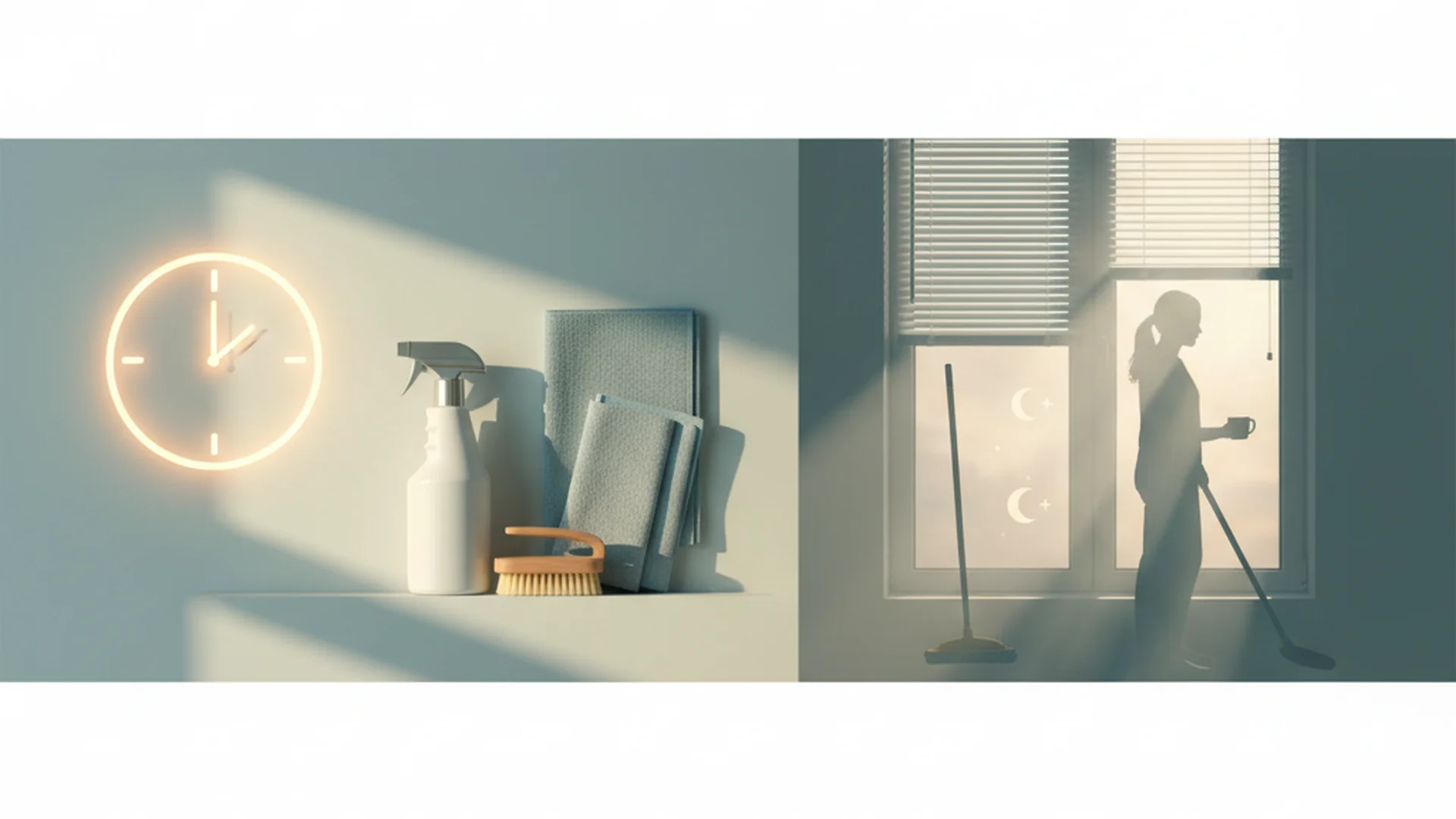
Borrowed from the retail and restaurant industry, the "Closing Shift" involves a 15-minute "reset" at night. Think of it as preparing the "store" (your home) for the next day's "customers" (your family).
- Load the dishwasher.
- Wipe down the primary kitchen counter.
- Clear the entryway of shoes and bags.
- Reset the couch cushions.
Success: Waking up to a clean kitchen and a clear entryway takes the edge off the morning, setting a productive tone for the rest of the day.
Modern Cleaning Trends: 2025 and Beyond
The way we clean is changing rapidly thanks to technological and biological innovations. If you are short on time, leveraging these advancements is essential.
Probiotic and Enzyme Cleaning
We are moving away from the era of harsh, "scorched-earth" chemicals. 2025 has seen a massive surge in "microbiome-friendly" cleaners. These products use live beneficial bacteria or enzymes that continue to "eat" grime, grease, and odors for up to 72 hours after application. This means you spend less time scrubbing because the product continues to work while you sleep.
Agentic AI and Home Robotics
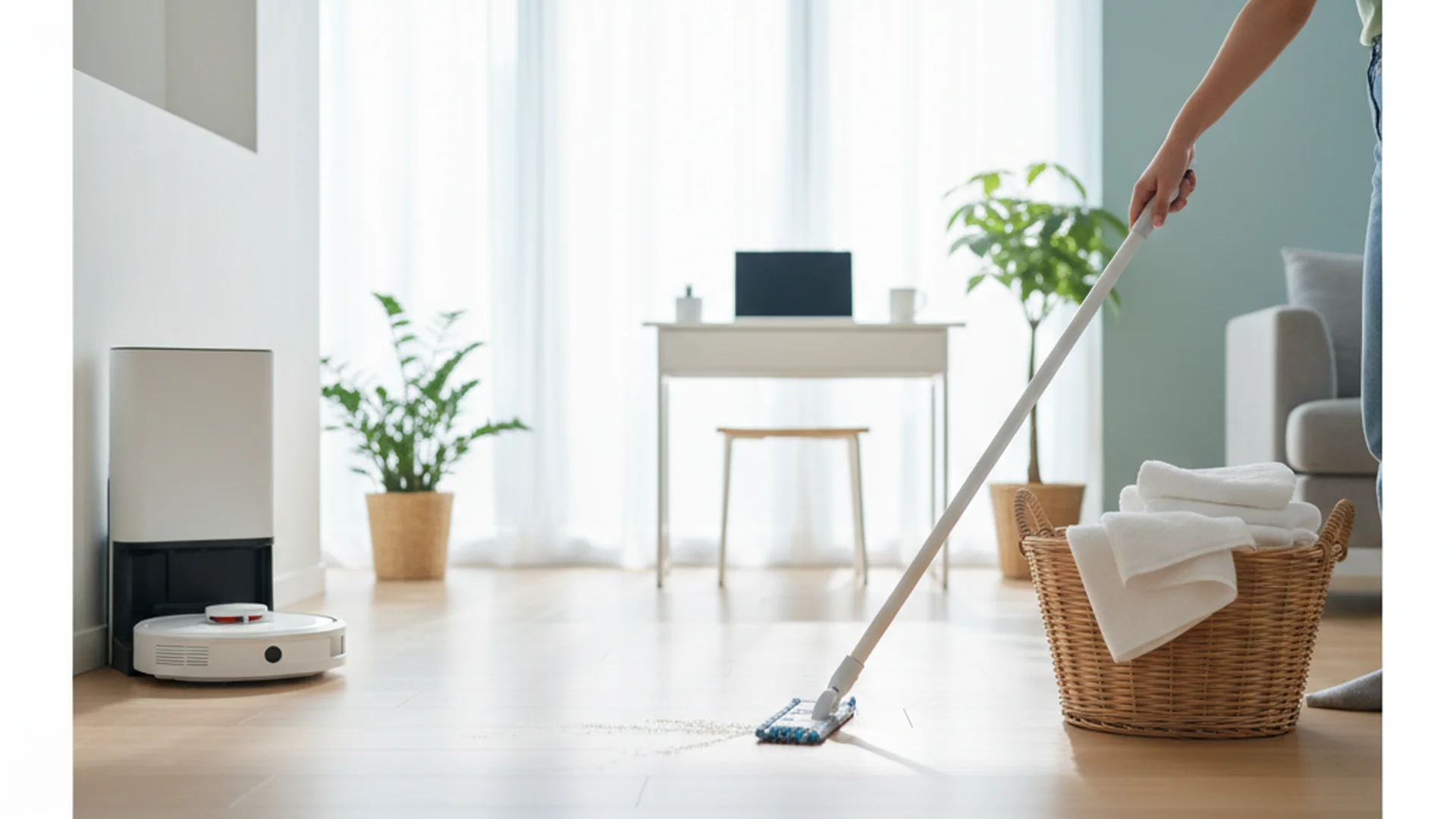
While the original Roombas were helpful, 2026 marks the rise of "Agentic AI" robots. Prototypes like the 1X Neo or Tesla Optimus are beginning to assist with complex tasks that previously required human intervention, such as folding laundry, matching socks, and loading dishwashers. For the time-poor individual, investing in smart home integration is no longer a luxury—it’s a time-management strategy.
Sensory Cleaning as Self-Care
Cleaning is being rebranded from a chore into a ritual. Using high-end, essential-oil-based scents (like "Butter Yellow" or "Cloud Dancer" palettes) can turn a 10-minute scrub into a sensory break. When the house smells like a spa, the psychological burden of the task decreases significantly.
Note: A "Minimalist Cleaning Kit" is now preferred over a cabinet full of bottles. All you truly need is one high-quality multipurpose concentrate, a stack of microfiber cloths, and a steam mop.
Real-World Examples: Cleaning in the Gaps
Example 1: The "Phone Call Dust"
Sarah, a project manager, spends three hours a day on conference calls. She keeps a microfiber mitt in her desk drawer. During "listen-only" portions of her meetings, she wipes down her desk, monitors, and nearby bookshelves. By the end of the week, her entire office is dusted without her ever setting aside "cleaning time."
Example 2: The Shower Wipe-Down
Mark, a father of two, uses the "multitask while wet" method. Every morning while he is in the shower and letting his hair conditioner set, he uses a squeegee and a quick-mist enzyme spray on the glass and tiles. This 30-second habit prevents soap scum buildup, eliminating the need for a heavy scrub on the weekends.
Example 3: The Laundry Basket Blitz
Imagine guests are arriving in 10 minutes and the living room is a disaster. Use the "Laundry Basket Blitz." Grab a large basket, walk through the common areas, and toss in everything that is out of place—toys, mail, stray shoes. Hide the basket in a closet. This doesn't "clean" the items, but it instantly "tidies" the space for social comfort.
Warning: Don't let the "hidden" laundry basket stay hidden for more than 48 hours, or it will become a "doom basket" that adds to your mental load.
Cleaning Efficiency: The Top-to-Bottom, Left-to-Right Rule
When you finally have 30 minutes for cleaning when no time tips are no longer enough, you need to move like a professional. Professionals always clean from the highest point (ceiling fans, top shelves) down to the floors. This ensures that any dust you dislodge falls onto uncleaned surfaces.
Move in an "S-Pattern" when wiping surfaces. Circular wiping just redeposits the dirt you just picked up. By moving in a continuous "S" shape from one side to the other, you ensure the dirt is actually captured by the cloth.
| Room | "Engine Room" Task | Time Investment |
|---|---|---|
| Kitchen | Dishes & Counter Wipe | 10 Minutes |
| Living Room | Pillow Fluff & Floor Clear | 5 Minutes |
| Bathroom | Mirror & Sink Wipe | 3 Minutes |
| Entryway | Shoe Organization | 2 Minutes |
Common Mistakes to Avoid
Even the best-intentioned cleaners can waste time by following outdated advice. Here are the top mistakes to avoid when you are on a tight schedule:
- Circular Wiping: As mentioned, this is inefficient. Use the "S" motion to actually remove debris.
- Putting a Wet Toilet Brush Away: Placing a wet brush back in its holder creates a breeding ground for bacteria. Let it drip-dry over the bowl by wedging it under the seat for 10 minutes first.
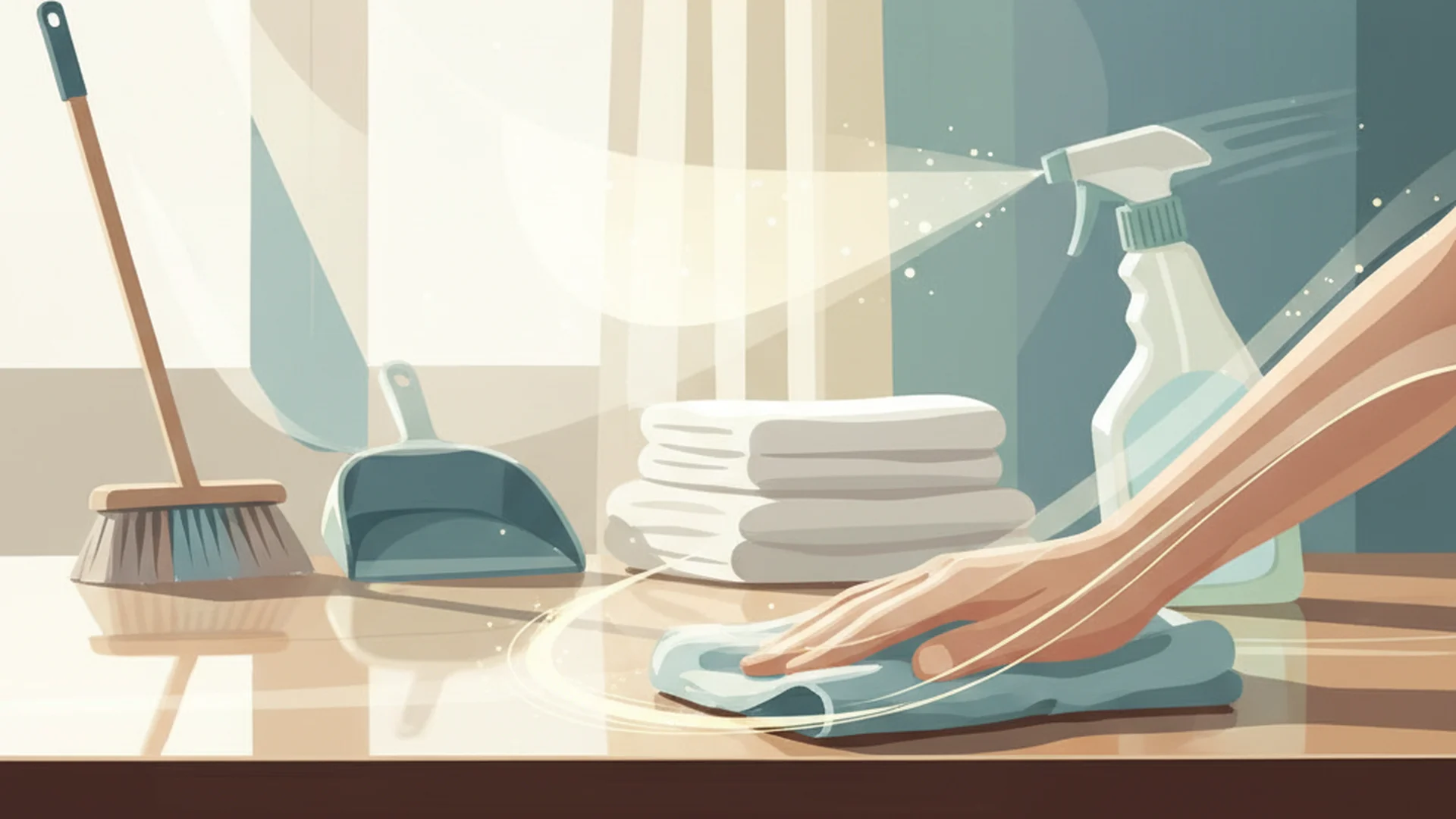
- Spraying Product Directly on the Surface: This leads to "over-wetting" and residue buildup, which actually attracts more dust. Spray your microfiber cloth instead for better control.
- Marathon Cleaning: The "I’ll do it all on Saturday" mentality is the #1 cause of household stress. Breaking it into 10-minute daily chunks is far more sustainable for maintaining long-term cleanliness and mental well-being.
- Vacuuming with a Full Bag: A vacuum that is more than half full loses significant suction. You’ll end up passing over the same spot three times instead of once, doubling your work time.
Frequently Asked Questions
How can I clean my house in 45 minutes or less?
What is the best way to maintain a routine when my schedule is unpredictable?
How do I clean while multitasking?
Is a 'tidy' home the same as a 'clean' home?
What are the absolute minimum chores I should do daily?
- Complete all dishes (no dirty sinks overnight).
- Perform a high-traffic floor sweep (entryway and kitchen).
- Clear one "hot spot" counter where mail and clutter tend to accumulate.
Conclusion
Cleaning when you have no time isn't about working harder; it's about working smarter. By adopting the 2025 "Closing Shift" mentality, utilizing enzyme-based cleaners that work passively, and avoiding common time-wasting mistakes like circular wiping, you can maintain a home that supports your mental health rather than draining it. Remember, your home is there to serve you—not the other way around.
Embrace the micro-habit. A five-minute wipe-down today is a gift to your "tomorrow self." Start small, stay consistent, and watch as the "cleaning shame" disappears, replaced by the peace of a well-managed home.
Success: By implementing just two of these strategies this week, you can reduce your weekend cleaning time by up to three hours.
Cleaning that keeps score
Every task earns points, every streak multiplies them, and Premium adds a household leaderboard plus a monthly Dustagorgon to beat.
- Free forever
- 30 badges to earn
- Up to 6 in a household
No card needed. Set up your rooms in a couple of minutes.