In this article
What you’ll learn
- Regular cleaning extends appliance lifespan by 2–4 years.
- Never mix vinegar and baking soda in the same cycle.
- Front-load gaskets and filters are the primary sources of hidden mold.
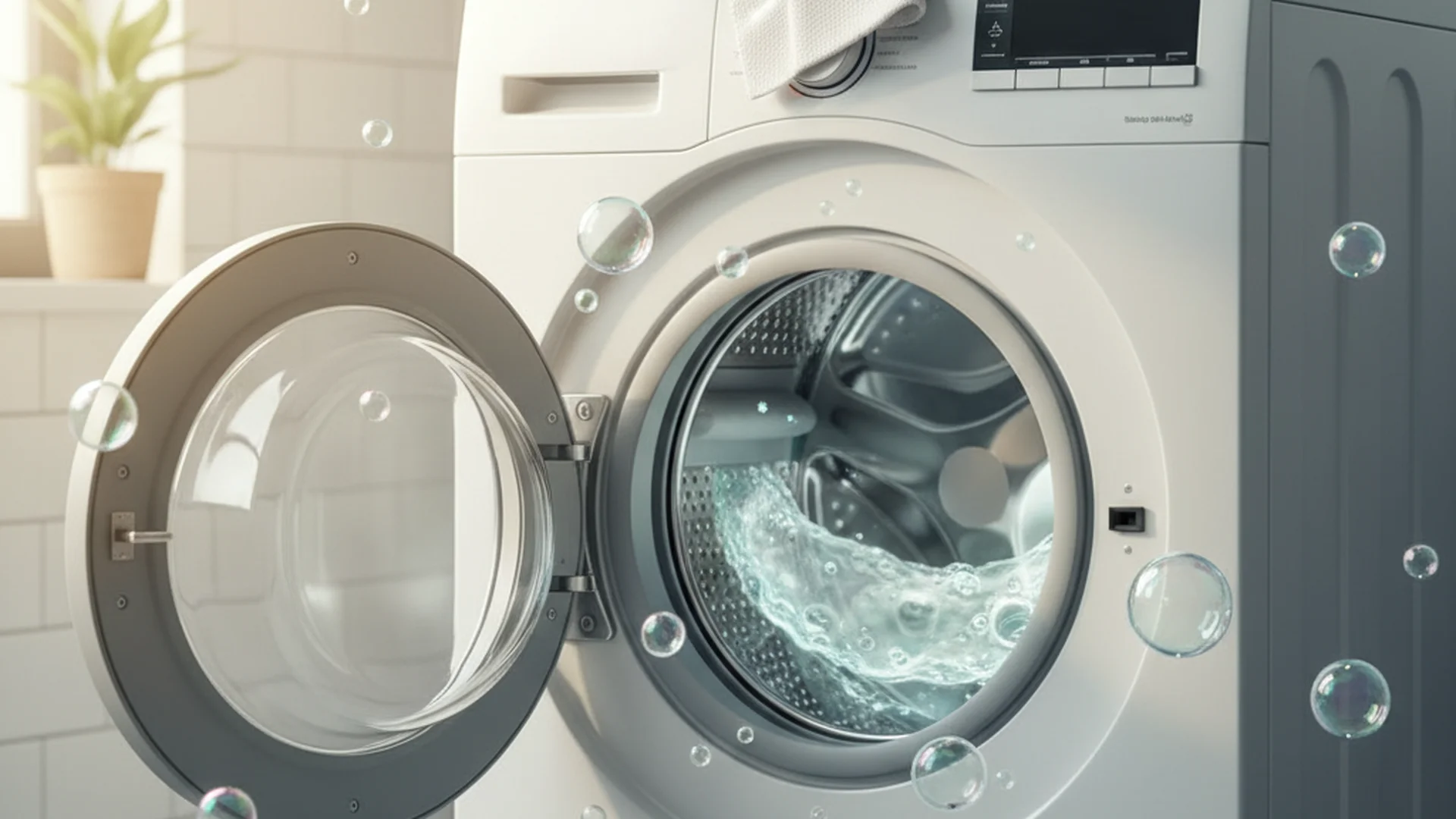
Most homeowners view the washing machine as a cleaning tool, but rarely do they consider that the tool itself requires maintenance. In my years as a professional cleaning consultant, I’ve seen the consequences of neglecting this vital appliance. From mysterious odors on "clean" clothes to skyrocketing energy bills, the culprit is almost always a buildup of biofilm and limescale. Learning how to clean washing machine components properly is not just about aesthetics; it is a critical step in maintaining household hygiene and appliance longevity.
A great many household washing machines harbour significant levels of mold and bacteria without their owners ever realising it. This isn't just a surface issue; these pathogens can survive eco-friendly, low-temperature cycles and transfer directly to your linens.
Why Your Washing Machine Needs a Deep Clean
The modern washing machine is a marvel of engineering, but it has a significant weakness: the "eco" cycle. While lower temperatures are better for the environment, they fail to kill bacteria like E. coli or Pseudomonas. Over time, undissolved detergent and fabric softener combine with minerals from your water to create "scrud"—a waxy, grey sludge that coats the outer drum.
The Impact on Efficiency and Lifespan
When limescale builds up on the heating element and detergent sludge clogs the internal hoses, your machine has to work significantly harder. This can increase your energy consumption by up to 15% per cycle. By following a regular cleaning schedule, you can extend the lifespan of your unit by 2 to 4 years, saving you thousands in premature replacement costs.
The Front-Load Liability
If you own a front-loading machine, you are likely already aware of the "musty smell" phenomenon. Due to their airtight design, these units are prone to mold growth in the rubber gasket. It is a well-documented weak point, and one that has generated its share of manufacturer complaints and legal action over the years.
How to Clean Washing Machine Units Naturally
Many people prefer to clean washing machine naturally to avoid harsh chemicals that can irritate sensitive skin. The most effective way to do this is the "1-2 Punch" method, which utilizes the descaling power of vinegar and the deodorizing properties of baking soda—but never at the same time.
Step 1: The Vinegar Descale
Pour 2 cups of white vinegar into the detergent dispenser or directly into the drum. Set your machine to the hottest, longest cycle available. The acetic acid in the vinegar breaks down the mineral deposits and soap scum that have adhered to the drum and internal pipes.
Note: Vinegar is an acid, while baking soda is a base. Mixing them in the drum creates a spectacular bubbling reaction, but the result is essentially salty water and CO2, which has zero cleaning power. Always use them in separate cycles.
Step 2: The Baking Soda Neutralizer
Once the first cycle is complete, sprinkle ½ cup of baking soda directly into the drum. Run a second hot cycle. The baking soda acts as a mild abrasive to scrub away any loosened residue and neutralizes any lingering odors from the vinegar or the mold it killed.
Success: This two-step process ensures that you clean washing machine with vinegar effectively while also polishing the drum surface for a like-new finish.
| Cleaning Agent | Best For | Frequency |
|---|---|---|
| White Vinegar | Mineral buildup and soap scum | Monthly |
| Baking Soda | Neutralizing odors and light scrubbing | Monthly |
| Bleach | Killing black mold and heavy bacteria | Quarterly |
| Citric Acid | Severe limescale in hard-water areas | Bi-annually |
Cleaning Protocols for Different Machine Types
The approach to cleaning depends heavily on whether you have a top-load or front-load model. Each has specific "hidden" areas that require manual attention.
Maintenance for Front-Load Machines
- The Gasket Wipe: After every wash, use a microfiber cloth to wipe the moisture from the rubber door seal. This prevents the "bio-load" from settling.
- Filter Maintenance: Most front-loaders have a small access door at the bottom. Once a month, drain the manual hose into a shallow bowl and unscrew the debris filter. You’ll likely find hair, coins, and a thick coating of slime.
- Ventilation: This is the most important tip I give my clients: Leave the door and the detergent drawer ajar between uses. If you seal a damp machine, you are creating a petri dish for mold.
Maintenance for Top-Load Machines
- The Soak Method: Fill the drum with hot water and add 4 cups of vinegar. Pause the machine and let it sit for one hour. This allows the acid to dissolve the "scrubbing bubbles" of dried detergent that splash up under the agitator.
- Agitator Care: If your machine has a central agitator, scrub the top and the rim where the water line hits. This area often develops a sticky film that traps lint and hair.
Warning: Excessive use of undiluted vinegar can eventually dry out rubber gaskets. Always ensure the vinegar is diluted by the water in the cycle, or follow up with a plain water rinse.
Common Mistakes to Avoid
In my consulting work, I see the same three mistakes repeatedly. Avoiding these will save you from expensive repair calls.
- The "Self-Clean" Trap: Many users believe the "Self-Clean" button is a magic fix. In reality, these cycles often only rinse the drum. They do nothing for the manual filter, the detergent drawer, or the space behind the gasket.
- Using Too Much Detergent: Modern High-Efficiency (HE) machines require only 2 tablespoons of detergent. Using more creates an excess of suds that can't be rinsed away, leading to "scrud" buildup.
- Ignoring the Detergent Drawer: Mold often starts here because it is a dark, damp environment. Most drawers can be popped out with a release lever—soak it in warm, soapy water monthly.
Real-World Examples
Case Study 1: The Pet Owner
Sarah, a client with two Golden Retrievers, found her machine smelling like "wet dog" even after cleaning. We discovered that dog hair had combined with detergent to form a felt-like plug in her drain pump filter. Once we established a bi-weekly filter cleaning routine, the smell vanished.
Case Study 2: The Hard Water Crisis
A family in Arizona noticed their machine's cycle time was increasing. Upon inspection, the heating element was coated in a 1/4 inch layer of limescale. By switching to a citric acid-based descaler every 60 days, they restored the machine's efficiency and lowered their monthly energy bill by $12.
Case Study 3: The "Eco-Only" Household
Mark only washed in cold water to save energy. Within six months, a thick black biofilm had formed behind the drum. I recommended one "Sanitize" cycle (extra hot) per month with bleach to kill the pathogens that cold water couldn't touch.
2025–2026 Trends in Appliance Hygiene
As we move into 2025, the technology behind machine maintenance is evolving. We are seeing a shift away from manual scrubbing toward integrated solutions.
- AI-Driven Maintenance: Newer models now feature sensors that detect "bio-load" (the level of organic matter in the water). Your smartphone will receive a push notification when a cleaning cycle is mandatory based on your specific usage.
- Ozone Cleaning: High-end 2026 models are integrating ozone generators. Ozone is a powerful oxidizer that sanitizes the drum during every load, virtually eliminating the need for separate deep-cleaning cycles.
- UV-C Sterilization: Manufacturers like Samsung and LG are adding UV-C lights to the "Tub Clean" cycles to kill 99.9% of bacteria without the use of chemical additives.
Tip: If you are shopping for a new machine in 2025, look for models with "Antimicrobial Gaskets," which are treated with zinc or silver ions to prevent mold growth.
Frequently Asked Questions
Can vinegar and baking soda damage my machine?
Why does my machine still smell after I clean it?
How often should I actually clean it?
Should I use bleach or vinegar?
Conclusion
Cleaning your washing machine is an essential part of home maintenance that pays dividends in hygiene, efficiency, and appliance longevity. By implementing the "1-2 Punch" natural cleaning method and attending to the manual filters, you ensure that your clothes are truly clean—not just "rinsed."
Success: Following this monthly guide will keep your machine running efficiently for years to come while keeping your home free of hidden mold and bacteria.
Cleaning that keeps score
Every task earns points, every streak multiplies them, and Premium adds a household leaderboard plus a monthly Dustagorgon to beat.
- Free forever
- 30 badges to earn
- Up to 6 in a household
No card needed. Set up your rooms in a couple of minutes.